
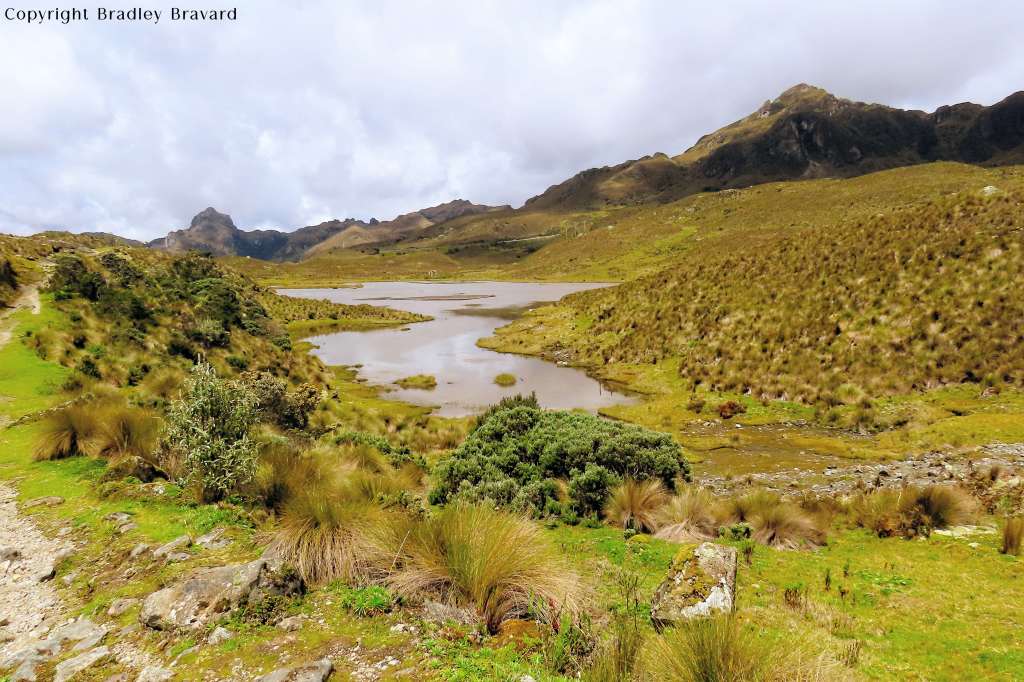
My wife and I had the opportunity to spend 2 weeks in Ecuador. We had never traveled anywhere in South America before and this was a delightful experience. We met some kind people, saw some impressive sights, and ate some delicious food. It’s a lovely country and we look forward to returning.
One of my pet peeves about U.S. culture is how loud everyone is, frequently manifested by loud music in restaurants. I was surprised to find that Ecuadorians like their restaurants even louder – we found one restaurant after another playing electronic dance music, or something similar, at dance club volumes. The same applied to many retail businesses. This noise, music along with barking dogs, which I’ve read is constant throughout Ecuador, including cities, was the only real low point of our travel. Shortly after returning home, I wasn’t surprised (because the algorithms can read our minds) to find this GQ article by Joe Holder featured in my news feed. I agree wholeheartedly with Mr. Holder’s premise – we humans have created a noisy world that is harming us more than we realize. A multi-day retreat of silent contemplation would do us all good. I disagree with Mr. Holder on this point: “You can implement a ‘silent retreat’ structure even if you can’t actually go on a retreat.” I’m sure this is true for some, but many people in the U.S. (and, probably, most of the developed world) can’t easily escape the relentless bombardment of “civilization” – leaf blowers, lawn mowers, chainsaws, barking dogs, roaring traffic, blaring music, etc. If you’re in a position to schedule your own silent retreat, take advantage of the opportunity.
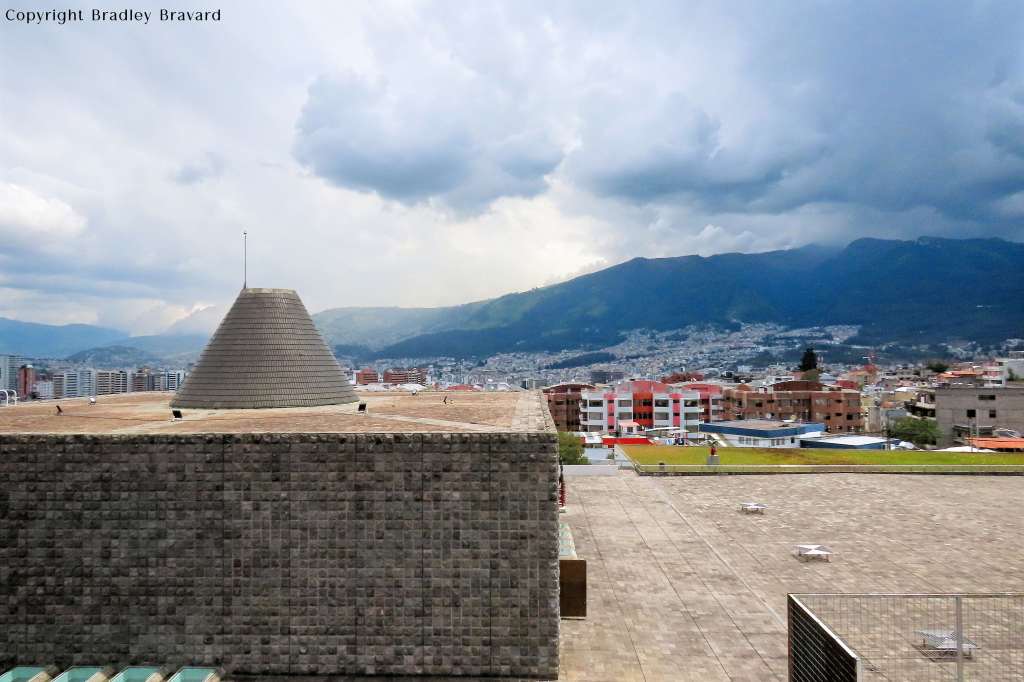
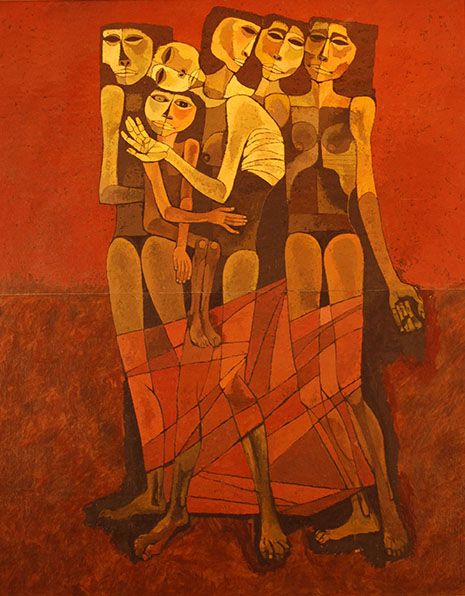
While in Ecuador, we visited the Chapel of Man – La Capilla del Hombre – established by Oswaldo Guayasamín (1919-1999) in his native city of Quito. The Chapel is partly a museum and tribute to Guayasmín’s art, which is extraordinary, but it is more than that, and the “more” is difficult to define. Guayasamín, an atheist, wanted the Chapel, like his art, to invite contemplation on the experiences of common people: “How is it possible that there are churches for gods we are not sure existed, and for saints who we aren’t sure were saints, but for the real man who forged this continent for thousands of years to our time there is no space for meditation.” Guayasamín used his art to reflect his anger at colonialism and the treatment of indigenous cultures, not just in Ecuador but throughout the world. My best recommendation is to see La Capilla del Hombre first-hand, but Guayasamín’s work is fascinating so any available collection or publication of his art is well worth your time.
While traveling I re-read In the Light of What We Know by Zia Haider Rahman, a novel I first read about six years ago. I appreciate ITLOWWK even more now, partly because I’ve since read Graham Greene’s The End of the Affair and better understand the references to it in Rahman’s book. Despite this being a novel, Rahman does as good a job as anyone else I’ve read in explaining the driving forces behind the 2008 “econ-apocalypse,” the myth of “reconstruction” in Afghanistan in the early 2000’s, and the greater context of imperialistic capitalism.
- P. 19: “What smart senator doesn’t know he can marshal the support of a people primed to believe they can do the things their boys, their heroic selves, do on the big screen? Reality is no match for the fantasy. But don’t suppose the senators and congressmen know any better; how many of these same senators, themselves reared on a diet of satellite images of laser-red targeting crosses hovering over enemy bases, of crouching silhouettes of special ops entering enemy tents in the desert, a diet of stealth and victory, how may senators have taken their conception of what American can do from what they’ve seen on the American move screen?”
- P. 120: “Isn’t there a convention that if you don’t know who the author is, you can always attribute it to Churchill?”
- P. 231: “Making victory alone your goal is to make failure of the worst kind a foregone conclusion.”
- P. 270: “You know the refrain: I just want to go back to how things were. This seems short-sighted. How things were might well have led you to the way things have woefully become.”
- P. 325: “The Saudi royal family keeps oil prices low. Americans may complain about the high price of oil, but a democratic Saudi Arabia or an unfriendly one would hike prices and gouge the world markets for what they’re worth. Why do they keep it low? Because they’ve earned protection or a blind eye from America, as the royal family’s needs dictate. Washington has been paid off, defense contractors are kept in fine fettle, and the U.S. Navy takes care of Saudi national defense to boot. It works like a tax on Americans. Who, after all, pays for the American aircraft carriers and fighter jets that protect Saudi Arabia? Who pays for the oil but the U.S. citizen? One in five dollars earned from oil-hungry Americans buys off Washington and defense contractors.”



 The Creative Life Adventure
Leave a comment