This isn’t an easy life we’ve chosen. But there’s no way to get through it without the truth.
Margo Martindale as Claudia
The Americans S1E8
I’ve been distracted by other activities in recent months, but I found a common theme in various media recently and felt moved to share it.
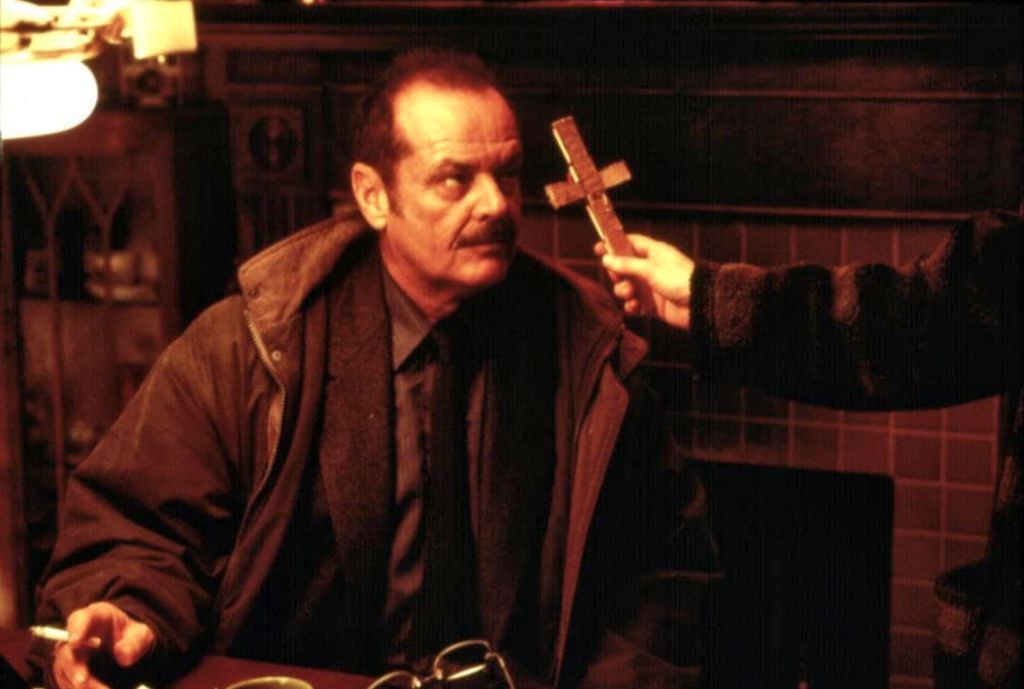
The instigator of this thinking was The Pledge, the 2001 film directed by Sean Penn, starring Jack Nicholson, and featuring an astonishingly talented supporting cast. When a young girl is found murdered on the night police investigator Jerry Black (Nicholson) is retiring, Black volunteers to deliver the news to the girl’s parents. Her mother (Patricia Clarkson), a deeply religious woman, raises a cross and demands that Black swear on his soul that he will find her daughter’s killer. While Black makes the promise, his facial expressions make it clear that he’s telling the mother what she wants to hear in order to get on with his investigation. (If you want to avoid spoilers, skip ahead to the next paragraph.) A suspect is arrested and declared guilty before taking his own life, but Black never believes the crime has been solved. In retirement, he gradually becomes immersed in a quest to honor his pledge, becoming increasing disconnected from reality in the process. In the end, Black keeps his promise, but loses his sanity along the way, ending up alone and muttering to himself, a victim of his own insincere commitment.
The theme was continued somewhat when I read Formation: Building a Personal Canon, Part I, a memoir by pianist, composer, bandleader Brad Mehldau. I’ve been a big fan of Mehldau’s music for years. His journey has been a very troubled one, particularly during the early 1990s when he fell prey to a different kind of false promise, that offered by heroin. The deceptive substance provided him brief periods of euphoria and comfort, but Mehldau acknowledged that once he detoxed and stopped using he felt a wave of creativity that his drug use had obstructed.

At the same time, I’ve been watching The Americans, the spy drama that originally aired on FX from 2013 to 2018. In The Americans, Soviet sleeper agents (played by Keri Russell and Matthew Rhys) posing as a suburban family conduct undercover operations while under constant pursuit by the FBI. The series’ acting and production values are world class, and it’s a great treat to see such acting lions as Margo Martindale, Richard Thomas, and Frank Langella. But the entire series is a litany of lies and betrayals; Americans rejecting the false promise of the Soviet Union oligarchy identifying as socialist, and Soviet sleeper agents rejecting Reagan’s false promise of “small government” while using defense as an excuse to dramatically escalate government spending. Unlike Nicholson’s character in The Pledge, these characters are true believers, ideologically committed Yet even the characters on the same “side” often mislead one another, with nearly every character becoming consumed by a false identity.

But wait, there’s more. I’m also half-heartedly watching NYPD Blue, the police procedural series that aired on ABC from 1993 to 2005. Despite some brilliant acting, I’m troubled by the series. Nearly every case is solved by police detectives threatening or assaulting suspects and witnesses. (Thankfully these TV detectives are always right, but we can imagine how this would play out in real life.) Along the way, the detectives lie through their teeth, promising light sentences or special deals for those who cooperate, and often reneging on those promises.
Deception is a trait that is sadly fundamental to humans. This is why lies and subterfuge are such common plot points in fiction. Dishonesty is such an inherent human quality that it’s hard to think of a work of fiction that doesn’t involve some degree of secrecy or deceit. What makes this interesting in storytelling is exploring the impact of all this lying on the characters. In The Pledge and The Americans we see dishonesty with different motives resulting in different consequences. In NYPD Blue we see little to no consequences and the show has a lot less staying power for me for that reason. (I haven’t seen the entire series yet; maybe that will change.) In reality, however, NYPD Blue may be a better reflection of real life. As much as parables like The Pledge appeal to us, that even lies backed by good intentions will come back to us, we need only follow the behavior of CEOs and politicians to be reminded how guilty we are of rewarding liars. As a fiction creator and a media consumer, it’s important to consider the different ways individuals use dishonesty and how that impacts – or doesn’t – future events.

 The Creative Life Adventure
Leave a comment