I speak of jazz as an awesome thing. An imperative, an empire.
James Kaplan
3 Shades of Blue
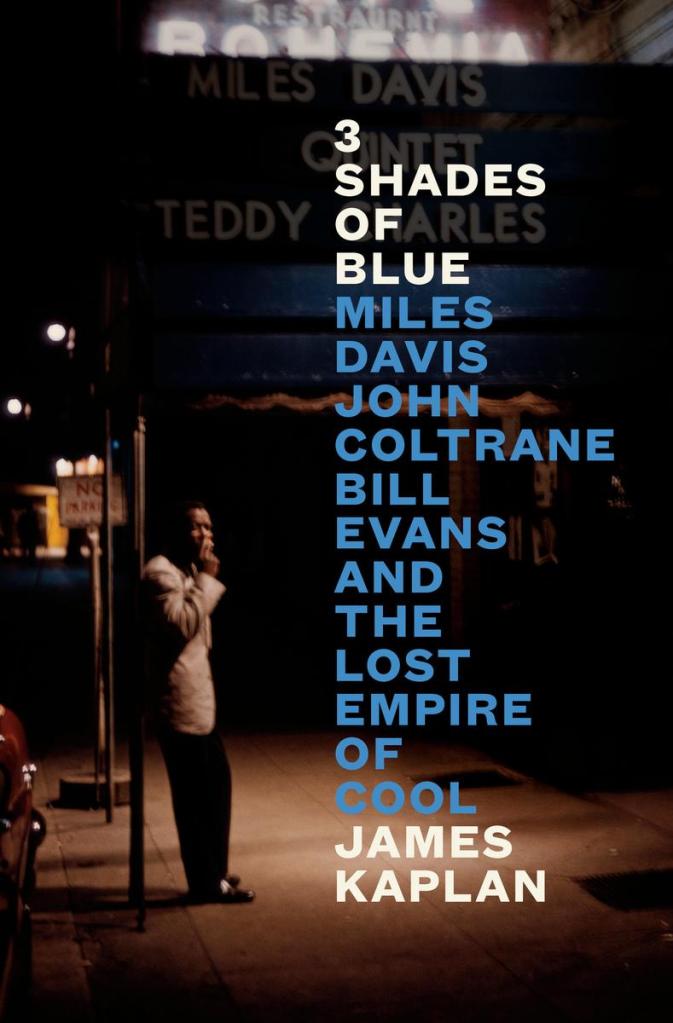
I’ve started reading 3 Shades of Blue: Miles Davis, John Coltrane, Bill Evans, and the Lost Empire of Cool by James Kaplan. As if the title wasn’t captivating enough, biographer/journalist/novelist Kaplan grabbed my attention from the opening pages. Most interested here in the rise of bebop and hard bop through the 1940s, ’50s, and ’60s, Kaplan describes jazz this way:
“As America’s only native art form, one that boiled forth from a gumbo of ethnic musics in late-nineteenth-century New Orleans and coursed up rivers and railroads and blue highways to Oklahoma City and Kansas City and St. Louis and Chicago and New York City, irresistibly, as young men and women, Black then (very quickly) white, became transfixed by its power and seized on it as an unprecedented form of artistic expression.”
Beginning in the 1940s, Kaplan describes the rise of a new style of jazz in the 1940s that appealed to fewer people but promised more depth and complexity: “The seeds are being sown both for bebop’s bright burst and its demise. The modern style is new and dazzlingly fast and thrilling, but you can’t dance to it. You can stand and listen to it, but it demands a lot of the listener: ultimately, in many ways, it is musicians’ music.”
I’m still in the early chapters of 3 Shades of Blue but already finding it fascinating.

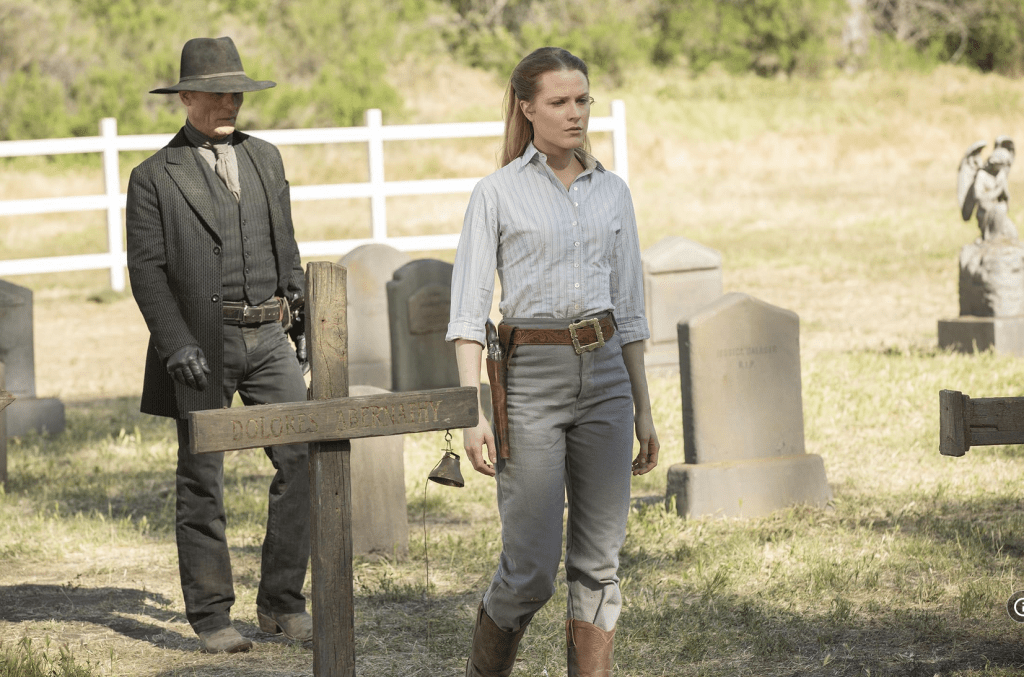
Having recently watched the 1973 movie Westworld, this past week I watched the 2016 first season of HBO’s Westworld series. I would have watched a lot sooner if I had known how good it is. The acting, writing, music, production values, and visual effects are all brilliant. The show’s basic premise is the same as the movie: robots (hosts) that simulate humans are installed in a fictional environment with prescribed narratives, allowing human visitors (guests) to act out their wildest fantasies, mostly involving violence and debauchery. The movie was a parable on how we humans use technology to indulge our own worst traits. The series’ first season offers the same lesson, but in a darker fashion and with time to explore themes of memory, identity, grief, love and friendship, and the inevitable corrupting influence of power over others. In an age of ascendant AI, Westworld asks if it might be time for humans to accept that we have failed and allow a new consciousness to take over. It’s a thought-provoking series and highly recommended; we found it on DVD at our local library.
 The Creative Life Adventure
Leave a comment