Can there be liberty without equality?
The Campaign
by Carlos Fuentes
The Campaign
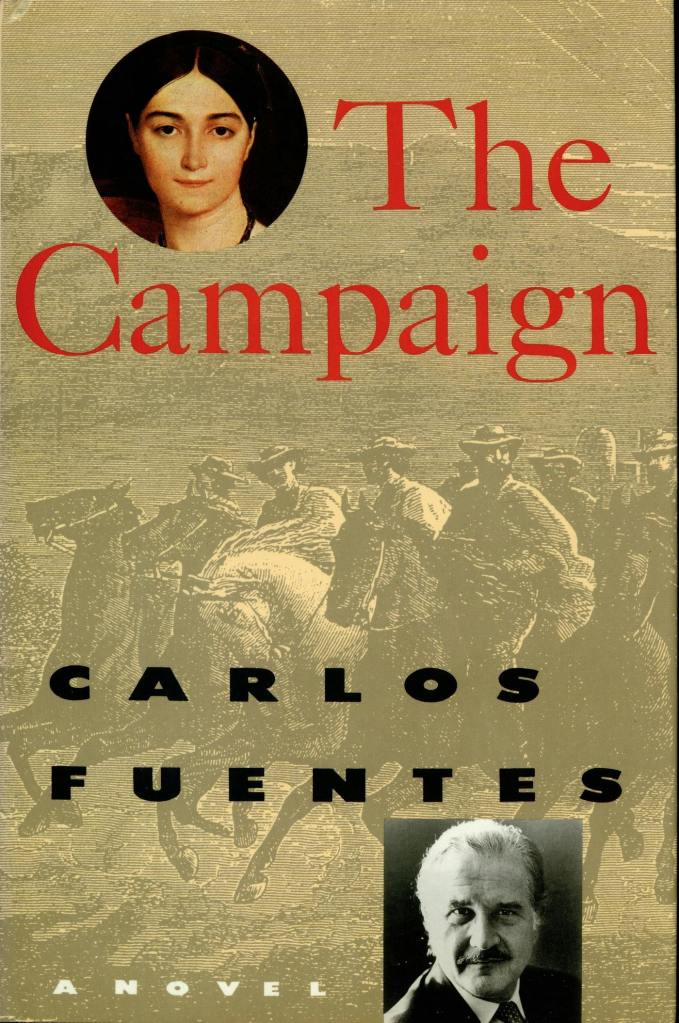
I finished reading The Campaign by Carlos Fuentes, a book I mentioned last week. I confess the book’s resolution left me slightly confused; some of the intended symbolism was over my head. Still, I found The Campaign a fascinating read as the protagonist, Baltasar Bustos, tries to apply the abstractions of European Enlightment thinkers Rousseau and Voltaire to 1800s revolutionary struggles throughout Latin America. Bustos’ campaign forces him to confront a myriad of agendas and ideologies, including his own hypocrisy. I came across this passage, from Fuentes’ essay collection Myself with Others, that I think goes along way toward explaining a basic theme of The Campaign:
“The eighteenth-century offered us a linear conception of time… We were told to forget the circular and mythical time of our origin in favor of a progressive, irreversible time, destined to be an infinitely perfectible future…progressive linearity offered too many exceptions for us to put our whole-hearted faith in it, the critique of linear time became positively a way of recovering other times, including our own Latin American time, the recovery times of Latin American culture: times in which the present contains past and future because the present is the place both of memory and desire…”
The Long Melt
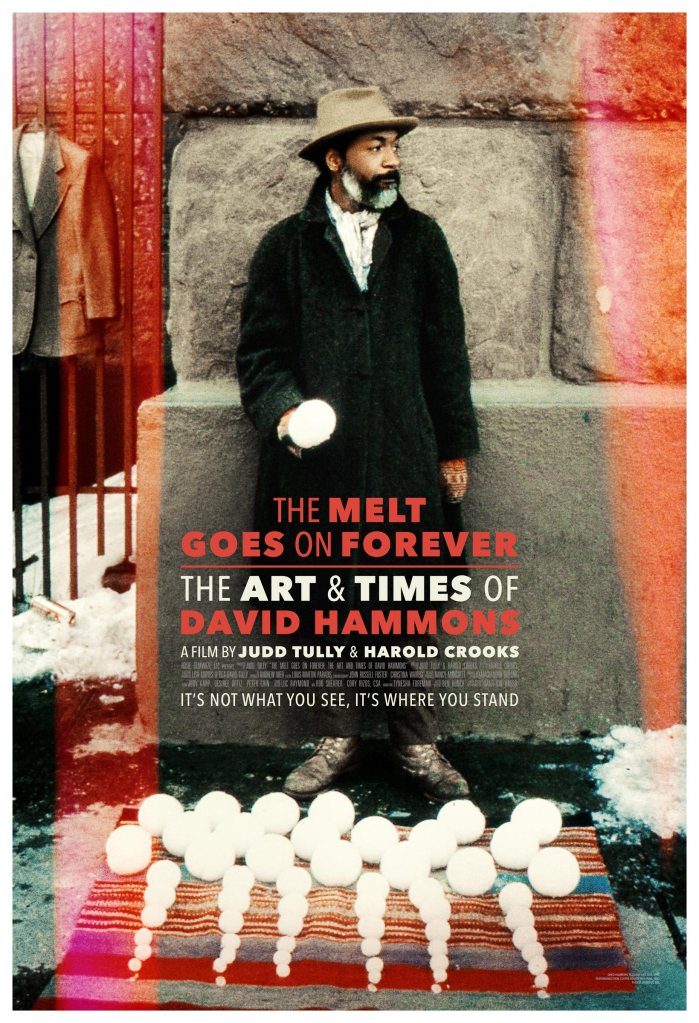
This week I watched the 2022 documentary The Melt Goes On Forever: The Art & Times of David Hammons. For those, like me, who are unfamiliar with David Hammons‘ work, the documentary is fascinating. Starting out professionally in Los Angeles, Hammons moved to New York City in 1974 and is most closely associated with that city. The work that’s probably best known to the general public, the only one of Hammons’ works I was previously familiar with, is Untitled (African American Flag), with the pattern of the U.S. flag printed in the colors of the Pan-African flag. But Hammons consistently defies labeling and creates works in a wide variety of styles and materials. It’s a reminder of the extraordinary freedom available to creative types, but also a humbling experience to watch Hammons create one thought-provoking work after another.
Apparently Hammons himself rarely gives interviews, preferring to speak through his work. The artist is only present in The Melt Goes On Forever in a few archival clips. This is mentioned in the documentary but not adequately addressed, and it’s one of the movie’s biggest weaknesses. The film also fails to explore the appropriation of art as a luxury commodity, something Hammons himself confronts as an artist and an individual: watch until the end for Hammons’ response to an exorbitant offer to buy a Manhattan snowball. Still, as an introduction to Hammons’ work, this is a great start. The Melt Goes On Forever is currently streaming on Kanopy.
The House Always Wins

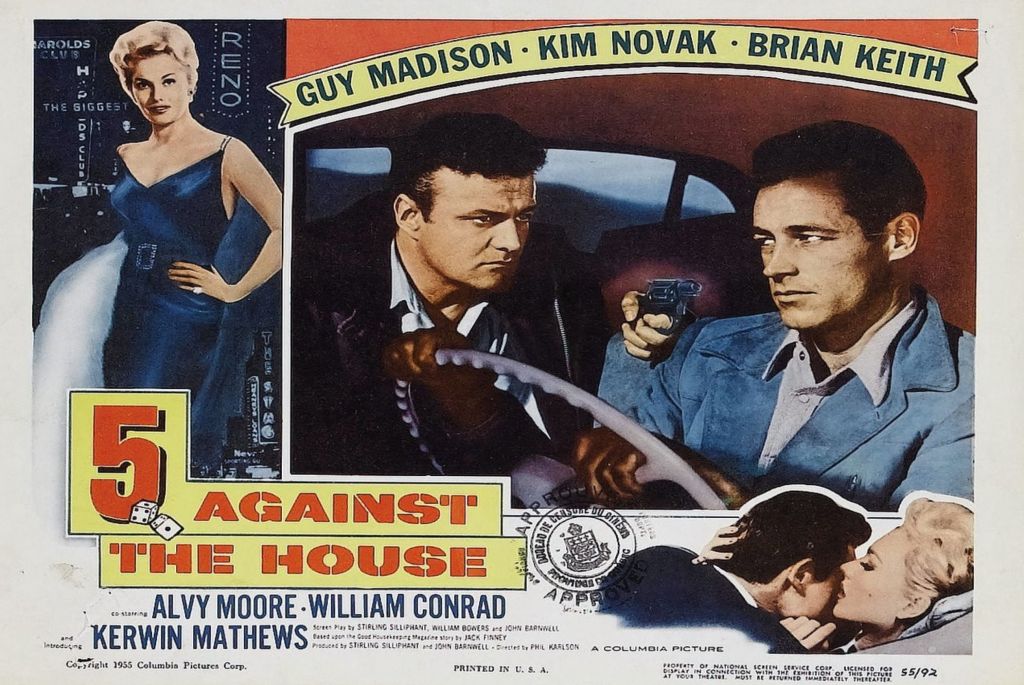
Sometimes the most unexpected movies give me the most to think about. 5 Against the House (1955) is the most recent example. One of four movies released in 1955 directed by Phil Karlson, 5 Against the House is adapted from the 1954 novel of the same title by Jack Finney. The cinematography by Lester White is stunning – even among black-and-white films, 5 Against the House stands out somehow. The cast includes Kim Novak, only one year after her first big screen appearance, a killer performance by Brian Keith, and a supporting role by Willian “Cannon” Conrad.
On the surface, 5 Against the House looks like a heist film, sort of Ocean’s 11 goes to college, five years before Ocean’s 11 was released. But there’s a lot more below the surface, commentary on the first generation to come of age after World War II. Post-traumatic stress (from service in the Korean War), the angst of a nation transitioning from an industrial- to an information-based economy, an education system oriented around building careers and not character; one of the film’s greatest weaknesses is that it takes on too much and doesn’t have time to fully develop its themes. 5 Against the House gets neutral reviews from a lot of contemporary viewers, but I’m so fascinated by it that I might develop an entire separate blog post in the future. I watched 5 Against the House on Tubi right before it was pulled from the streaming service; it doesn’t seem to be on a streaming platform currently, but it looks like the entire film has been uploaded to YouTube if you don’t want to wait for it.
More Than a Paper Moon
Look kid, I don’t know what’s going to happen to you out there. All I can tell you is that you’ve got to play the cards life deals you. Sometimes you win, sometimes you lose, but at least you’re in the game.
James Darren as Vic Fontaine
Star Trek: Deep Space Nine
S7E10 “It’s Only a Paper Moon”
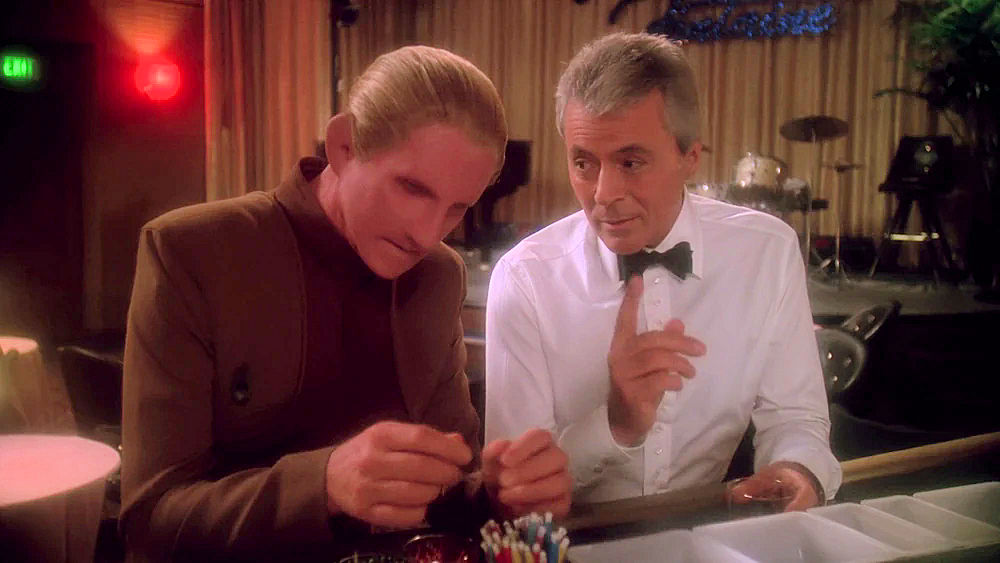
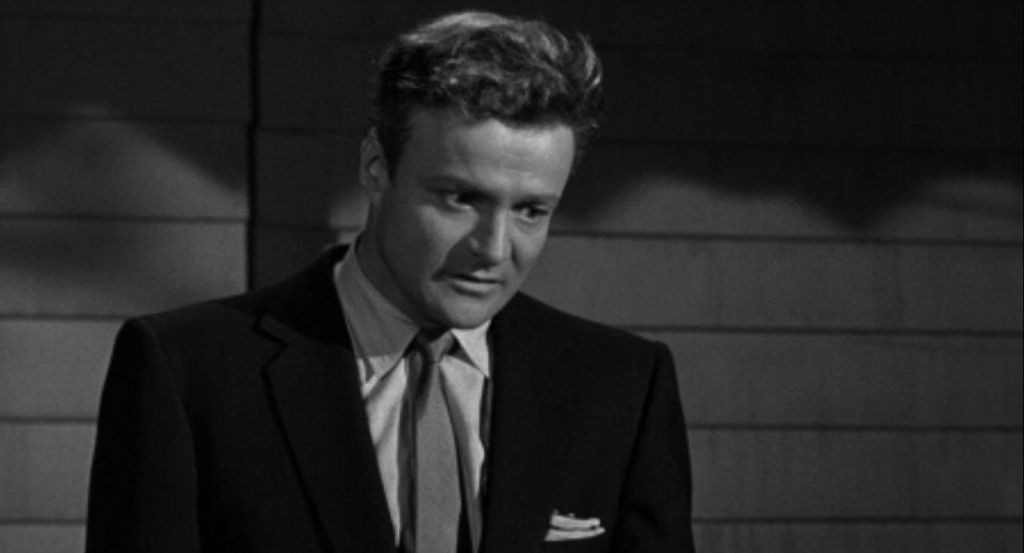
Star Trek fans are heartbroken this week over the death of James Darren. Long before his appearance in Deep Space Nine, serious Trek fans already knew Darren from his role in four seasons of T.J. Hooker with William Shatner in the 1980s. (Darren already had s-f credibility after appearing in The Time Tunnel on ABC in 1966-67.) I admit, I was initially cynical about Darren’s recurring DS9 role as hologram lounge singer Vic Fontaine. At first glance it seemed like a disruption to the show’s 24th century vibe. But somehow it worked, and that was largely due to the warmth Darren brought to the part. Reviewing Deep Space Nine‘s chronology, I was stunned to see that Darren only appeared in eight episodes of DS9 beginning in season 6. He had such a presence that I instinctively think of him as an integral member of that iconic series. And in a sense, he was; Vic Fontaine reminded the characters of DS9 that in a hostile, chaotic galaxy, what they needed most was each other. That’s a lesson we could use here in the 21st century.
The Listening Is and Isn’t Easy
Finally, I came across this Keith Jarrett performance of “Summertime” from 1987, and it blows my mind, like so many of Keith Jarrett’s performances.

 The Creative Life Adventure
Leave a comment