Welcome back to the Creative Life Adventure.
As I’ve done in previous years, I offer a list of my favorites of the many books I enjoyed during 2024. These are strange times and reading helps me stay grounded. I’ve already written about a few of these books in blog posts during the year, but even if you read those, you’ve forgotten them by now, so just forget I mentioned it. As always, these are books I read during 2024, regardless of when they were published. Also as always, I’m including fiction and nonfiction, and the list is alphabetical by author’s last name. And I hope you will check out the menu at the top of the page for links to my own books. In the meantime, enjoy!
(Movie fans take note: my 2024 favorites lists will soon be posted on my Letterboxd account.)
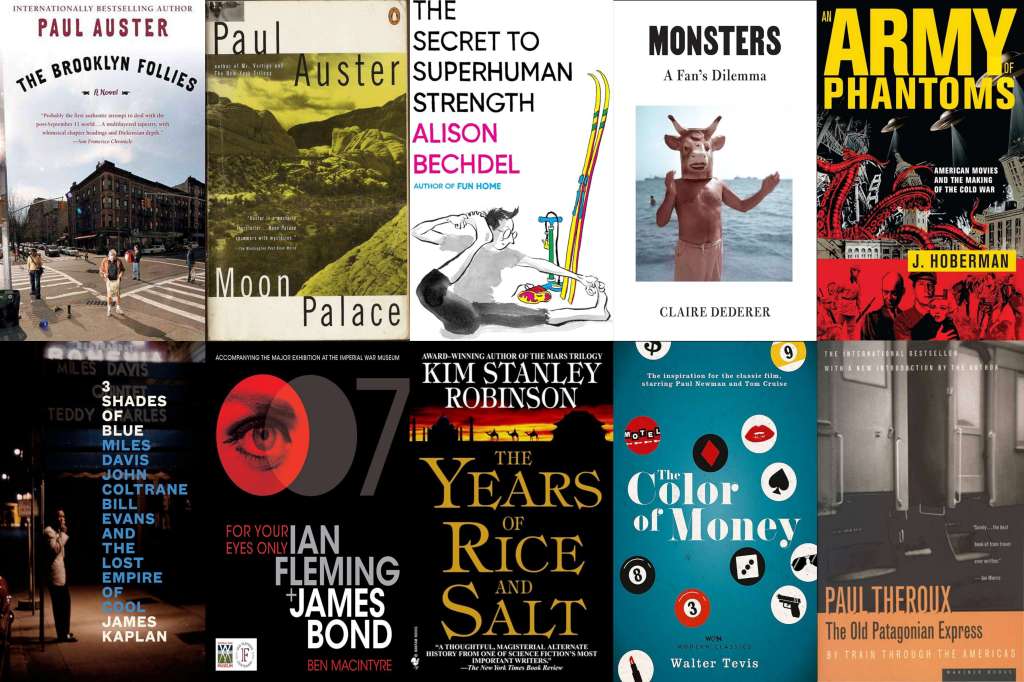
The Brooklyn Follies by Paul Auster
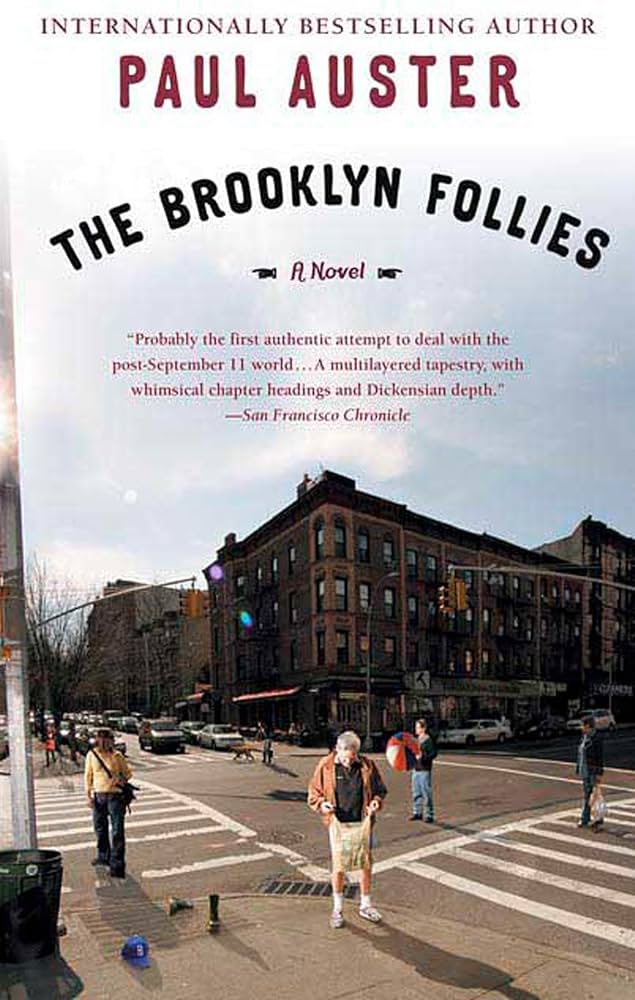
I’m sorry that it took me so many years to appreciate Paul Auster, who just passed away in April, 2024. I read two of Auster’s novels this year, and both are included in this list. The author himself called The Brooklyn Follies “a book about survival.” No mere plot summary can adequately describe the novel, but the story is narrated by newly-divorced lung cancer patient Nathan Glass, who returns to his hometown of Brooklyn to find “a quiet place to die.” Nathan reunites with his long-lost nephew Tom, who himself reunites with his long-lost niece Lucy. Auster’s recurring themes of identity and extreme coincidences are abundantly present. For a story with a protagonist expecting a near-future death, The Brooklyn Follies is a lot more upbeat than I expected. That sense of hope is not entirely done in by the surprise ending, but it does serve as a reminder that life should be lived while we have the chance.
Moon Palace by Paul Auster
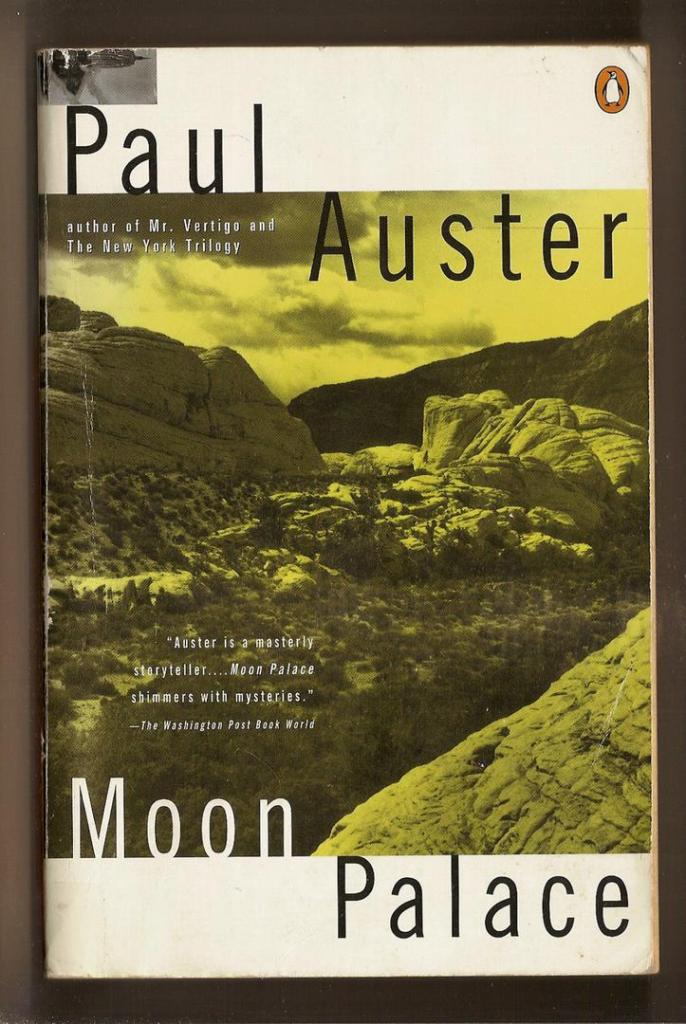
Moon Palace was published in 1989, and, like The Brooklyn Follies, no simple plot description does it justice. It primarily depicts the life of Marco Stanley Fogg – whose name and initials have multiple meanings – as he is orphaned at a young age, raised by his Uncle Victor, and is helped along the way by Kitty Wu and Zimmer. (Zimmer’s primary function can be predicted by his name; zimmer is the German word for room.) Most of the action takes place in New York City, with side trips to Chicago and Utah. The moon is a recurring image throughout the book, which begins in 1969, the year of the Apollo 11 moon landing. Auster apparently based Marco Fogg somewhat on his own life – like Marco’s, Auster’s father was largely absent during his childhood.
The Secret To Superhuman Strength by Alison Bechdel
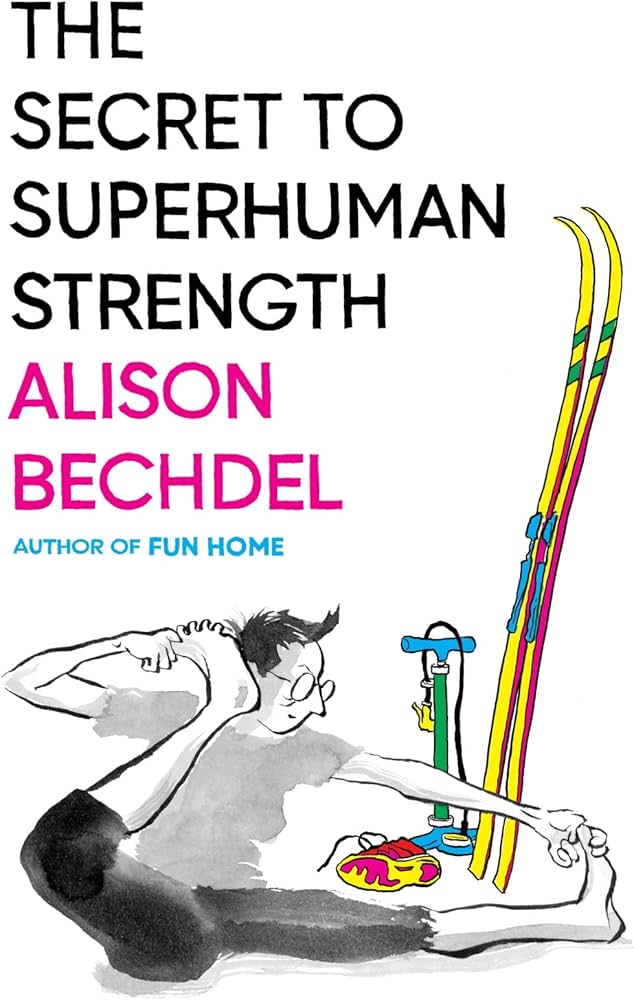
I approached Alison Bechdel’s illustrated memoir as a skeptic. On the surface, the book details Bechdel’s lifelong fascination with physical fitness and the many athletic fads she has pursued. I’m about as un-athletic as they come. But The Secret to Superhuman Strength is so much more than that, bordering on a kitchen-sink tome that includes inspiration from the likes of Ralph Waldo Emerson and Margaret Fuller. Is physical fitness an end of its own, a tool to improve physical appearance, a stress management strategy, or a means of delaying the inevitable decline of age? Somehow, Bechdel synthesizes it all into an inspiring narrative of insight and empathy. And the art is compelling on every page.
Monsters: A Fan’s Dilemma by Claire Dederer
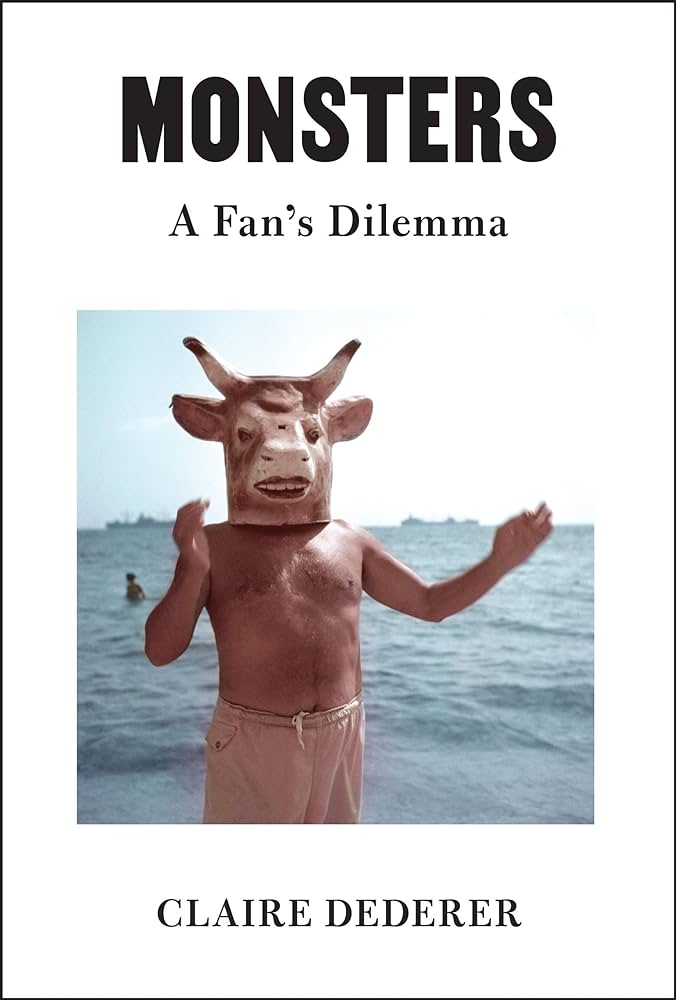
Claire Dederer explores the question that so many of us have struggled with, probably more so in recent years: how to respond to the art of monstrous men? (Dederer does acknowledge monstrous women, but it’s no surprise that they are rarer and generally not as monstrous as the men.) Monsters: A Fan’s Dilemma – that’s Pablo Picasso on the cover – is exactly that; this is not an academic study but a very personal self-exploration, originating in Dederer’s appreciation for the films of Roman Polanski. My first impulse was to reject Dederer’s conclusion as wishy-washy, but on reflection Dederer is no more wishy-washy than I am, and she offers a great deal more insight than I could.
An Army of Phantoms: American Movies and the Making of the Cold War by J. Hoberman
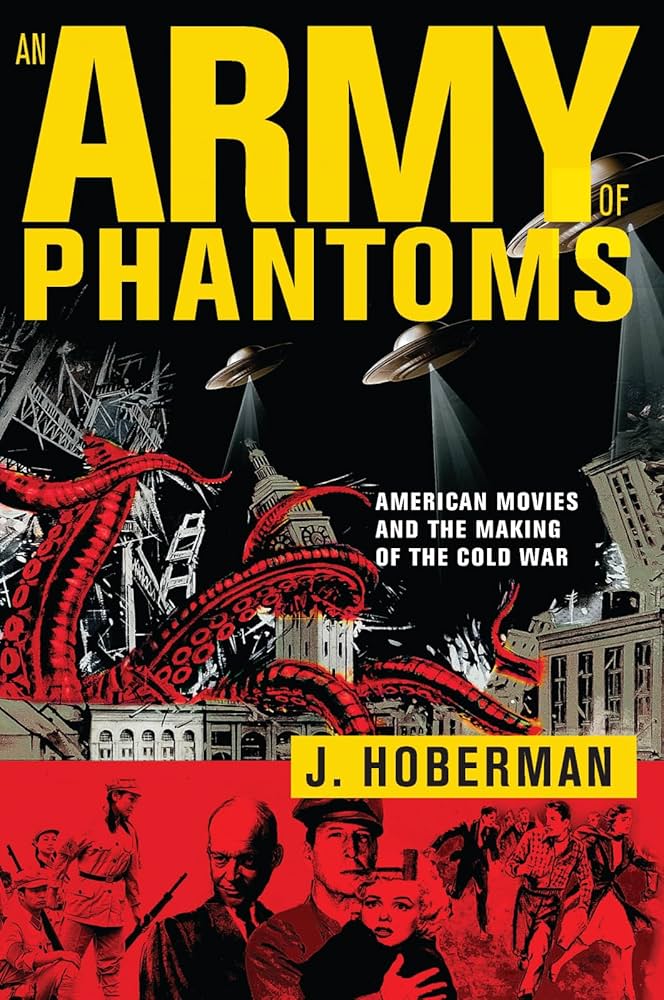
J. Hoberman was a long-time film critic for The Village Voice and he continues to write about movies and film history. An Army of Phantoms: American Movies and the Making of the Cold War, is part of a trilogy on Cold War movies and politics. Hoberman’s goal is not a conventional film history, but to study the ways in which movies and politics influence each other. Covering the years from the end of World War II through 1956, what stands out the most about this time period is how relentlessly, and mindlessly, obsessive so many people were with slapping the term “communist” on everyone or everything they didn’t like. (In other words, not so different from today.) Hoberman explores the motivations behind, the making of, and the impact of, films such as Fort Apache (1948), The Next Voice You Hear… (1950), High Noon (1952), It Came From Outer Space (1953), and a long list of other movies. An Army of Phantoms is a must-read for movie buffs and anyone interested in Cold War history.
3 Shades of Blue by James Kaplan
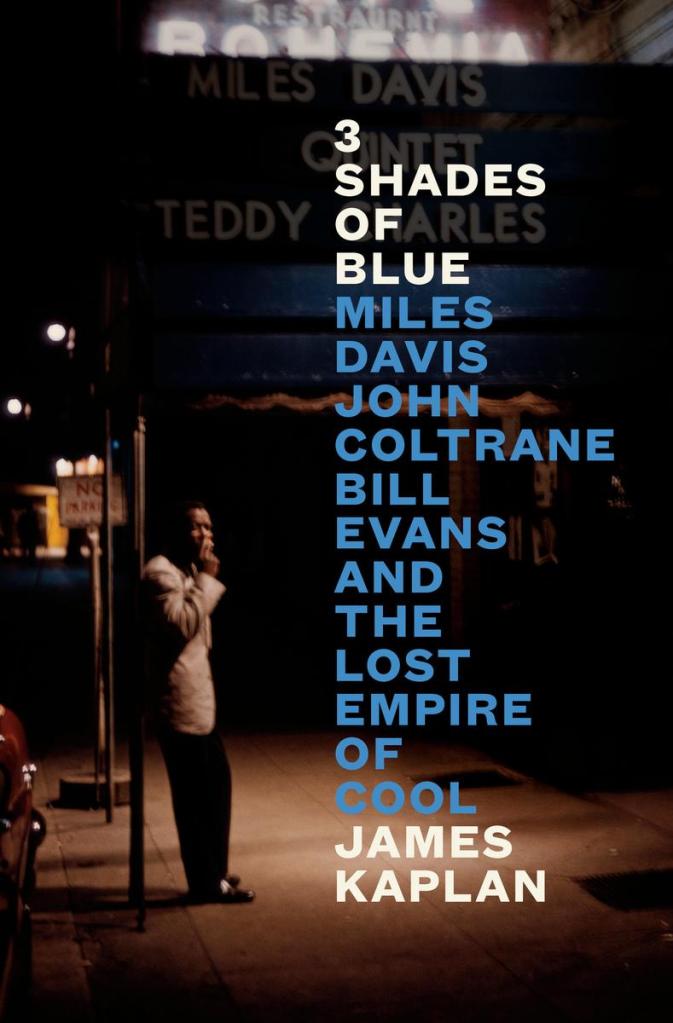
The full title of James Kaplan’s book, one of the few on my list actually published in 2024, is 3 Shades of Blue: Miles Davis, John Coltrane, Bill Evans, and the Lost Empire of Cool. Kaplan’s essays are widely published and he has previously written biographies of Frank Sinatra and Irving Berlin, among others. Kaplan’s book is somewhat a tragedy of personal and cultural proportions – all three musicians named in the subtitle suffered varying degrees of drug and alcohol dependency, and jazz as an art form was never as widely embraced by the mainstream after Davis, Coltrane, and Evans left the scene. But what a show it was when they were at their peak. Jazz during the bop era was relatively unique for 20th century music by requiring the listeners to think instead of dance. 3 Shades of Blue makes a nice literary double-feature with The Origins of Cool in Postwar America by Joel Dinerstein.
For Your Eyes Only: Ian Fleming and James Bond by Ben Macintyre

I don’t know how Ben Macintyre remains so prolific while writing such highly regarded books. Many of his books cover World War II events, but his most recent work is The Siege, about a hostage crisis at the Iranian embassy in London in 1980. Another of his non-WW II tomes is For Your Eyes Only: Ian Fleming and James Bond, an exploration of Ian Fleming’s inspiration for the characters, plots, and settings for his James Bond stories. While Macintyre does delve into Fleming’s life story – a somewhat tragic one – the book’s emphasis is on Fleming’s use of real life in crafting fictional tales of suspense. Fleming drew heavily on his experience in naval intelligence during World War II, but also on his travels as a journalist and his own personal life (for example, his love of Jamaica). Even non-Bond fans might find For Your Eyes Only interesting for the insight into Fleming’s creative process.
The Years of Rice and Salt by Kim Stanley Robinson
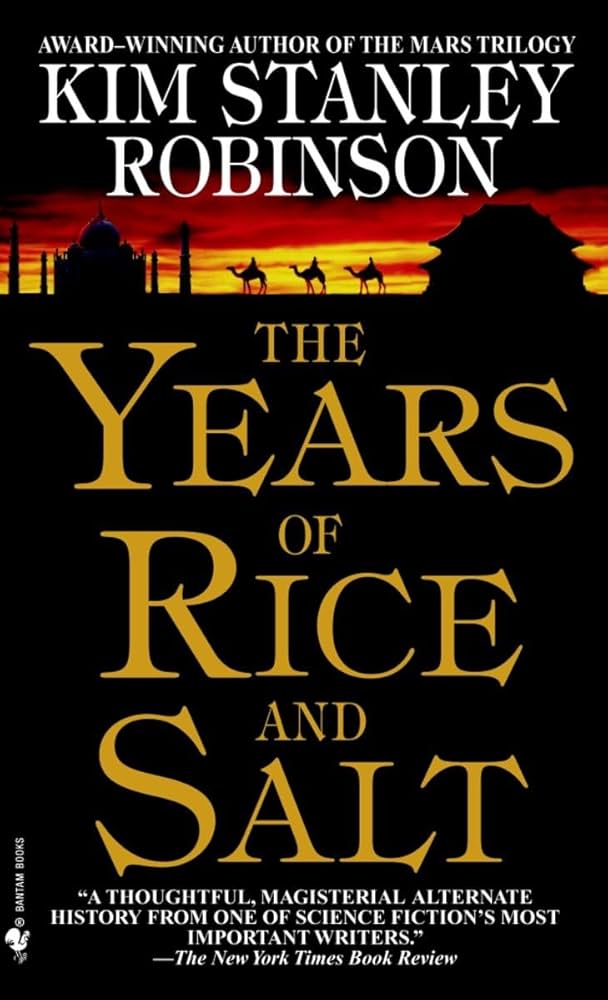
I’m rarely interested in alternate histories, but I loved The Years of Rice and Salt. The premise is this: In the 1300s, bubonic plague killed about one-third of Europe’s population. Robinson’s book speculates what would have happened if, instead, the plague had killed 99% of Europe’s population. Clearly, world history would have unfolded very differently. The plot of The Years of Rice and Salt spans hundreds of years, and the book regularly sent me to the Web for research. For example, the novel includes an epigraph from the 16th century Chinese novel Journey to the West, and the opening pages are a direct reference to that historic work. The novel’s ten chapters each reflect a different narrative style, and reincarnation allows the reader to follow variations of the same characters over the centuries. Human history is a about a lot more than wars, and The Years of Rice and Salt embraces that notion.
The Color of Money by Walter Tevis
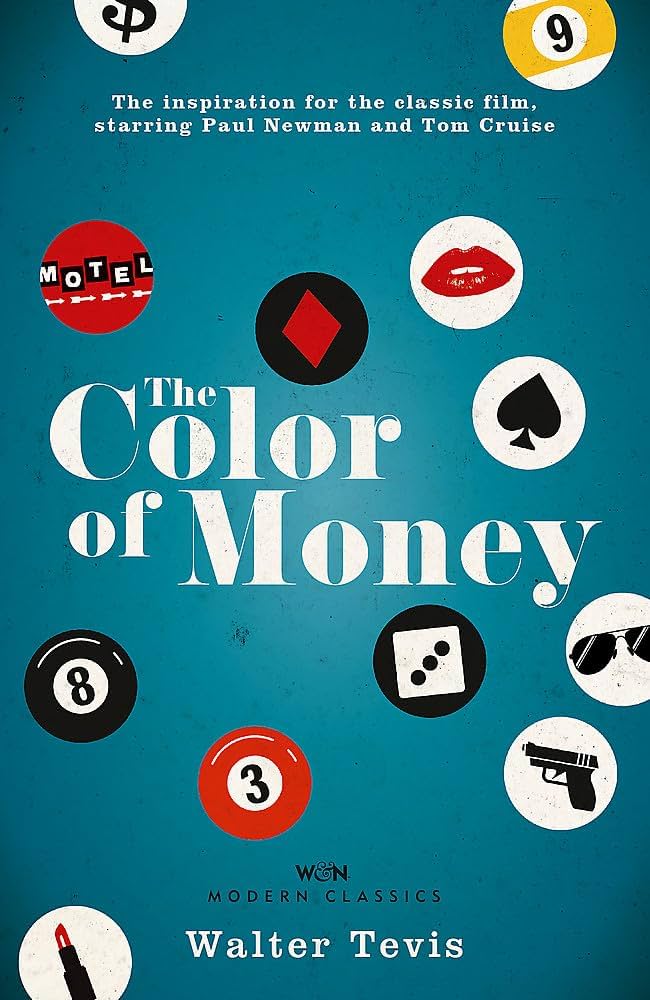
If, like me, you’ve seen Martin Scorsese’s 1986 film adaptation of The Color of Money, you still don’t know the story depicted in the novel. The film is almost entirely different from Walter Tevis’ 1984 book. The Color of Money is a sequel to The Hustler, published in 1959. The protagonist, Fast Eddie Felson, is disoriented by a transformed socioeconomic landscape and years spent away from competitive pool. I’m not particularly a fan of pool, but that’s hardly necessary to appreciate Tevis’ compelling character study of a man struggling to find his way in the world. It’s also not necessary to have read The Hustler, though having some familiarity with the plot wouldn’t hurt. Tevis’ prose is lean; he doesn’t shy away from Fast Eddie’s emotional states, but doesn’t dwell so long that the tale becomes depressing.
The Old Patagonian Express: By Train Through the Americas by Paul Theroux
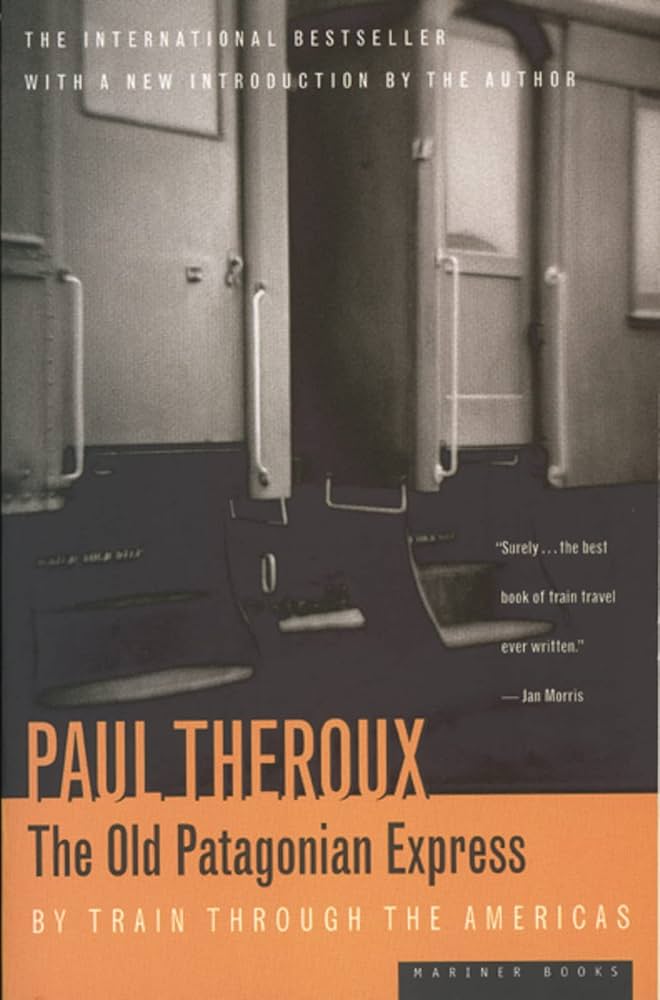
In The Old Patagonian Express, Paul Theroux describes traveling on a series of trains from his home in Boston to the town of Esquel in southern Argentina, beginning in the winter of 1978. I brought Theroux’s book with me on a trip to Mexico and he lifted my spirits while I spent two days bedridden with the worst stomach bug I’ve had since childhood. Theroux’s sense of adventure is admirable, but not as admirable as his appreciation of his fellow travelers; his change of heart toward the overly chatty Mr. Thornberry is an inspiration. And if you think your commute is rough, just read about the brutality of crossing the Andes by rail, with altitude sickness so severe, even the locals are affected by it. Sadly, rail travel in the Americas is not what is used to be, and duplicating Theroux’s journey is not possible today.
Honorable mentions:
The Sheltering Sky by Paul Bowles
Chicago by Brian Doyle
I Am Spock by Leonard Nimoy
Art is Life by Jerry Saltz
The Treasure of the Sierra Madre by B. Traven
Now, have a safe and happy 2025, and keep reading!

 The Creative Life Adventure
Leave a comment