
“Who needs a gun when you’ve got imagination?”
Amanda Simons as Claire in Danger 5
Danger 5 is a low-budget Australian TV series that aired in the early 2010s with only twelve episodes. It’s one of the most delightfully bonkers shows I’ve ever seen and I would love to see more. The Girl From Rio is a low-budget 1969 movie loosely based on a series of books by British novelist Sax Rohmer. At ninety-four minutes, I could have done with about twenty minutes less. Two productions of limited resources: one succeeded, one didn’t. What’s the difference?
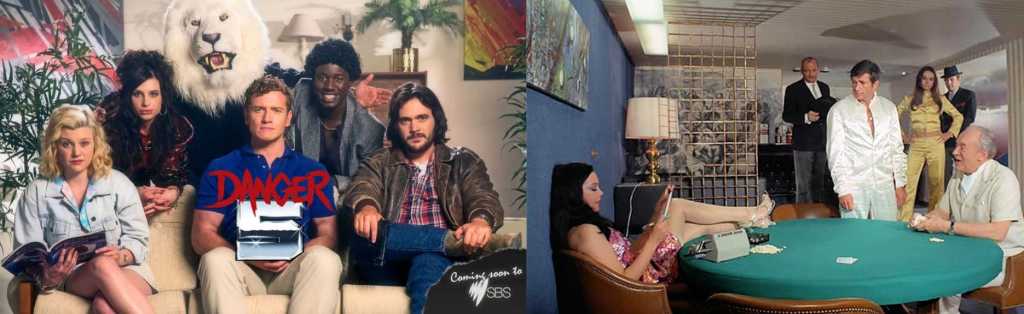
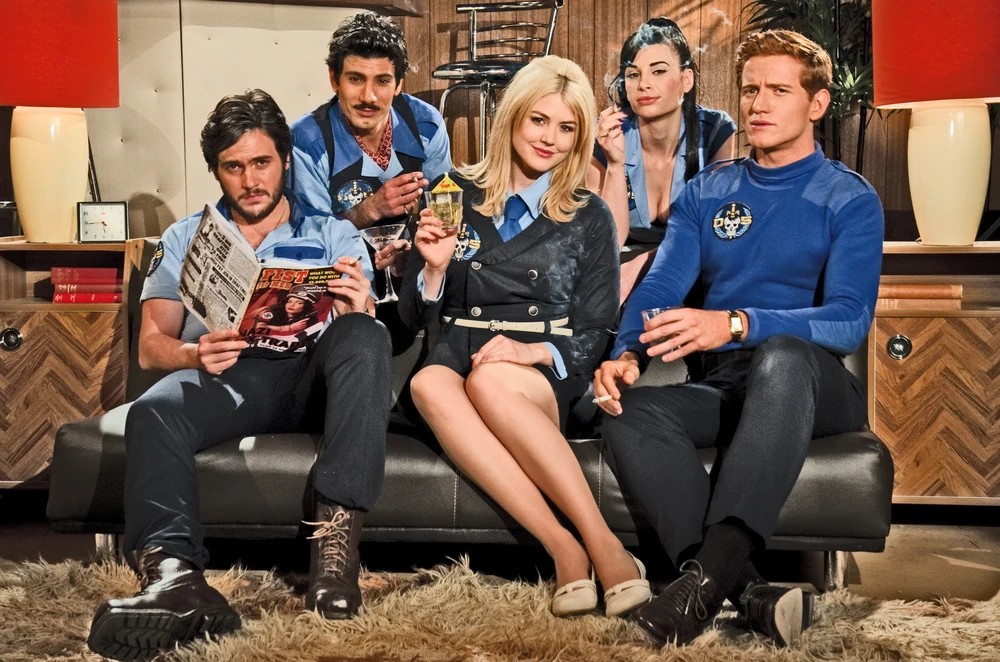
Season 1 of Danger 5 is a sixties-themed ladsploitation parody. (If “ladsploitation” isn’t already a genre, I claim credit for naming it.) The international agents of Danger 5 travel the world to foil Nazi schemes, dispatched on their missions by the eagle-headed Colonel Chestbridge, who repeatedly reminds them that their fundamental objective is always to, “of course, kill Hitler.” Season 2 finds the agents still trying to kill the elusive Hitler via such 1980s/1990s tropes as high school comedies, coke-busting cop dramas, and Power Rangers. Season 2 is a noticeable step down from Season 1, but I still admire their efforts at innovation. The show’s creators were clearly driven to entertain.
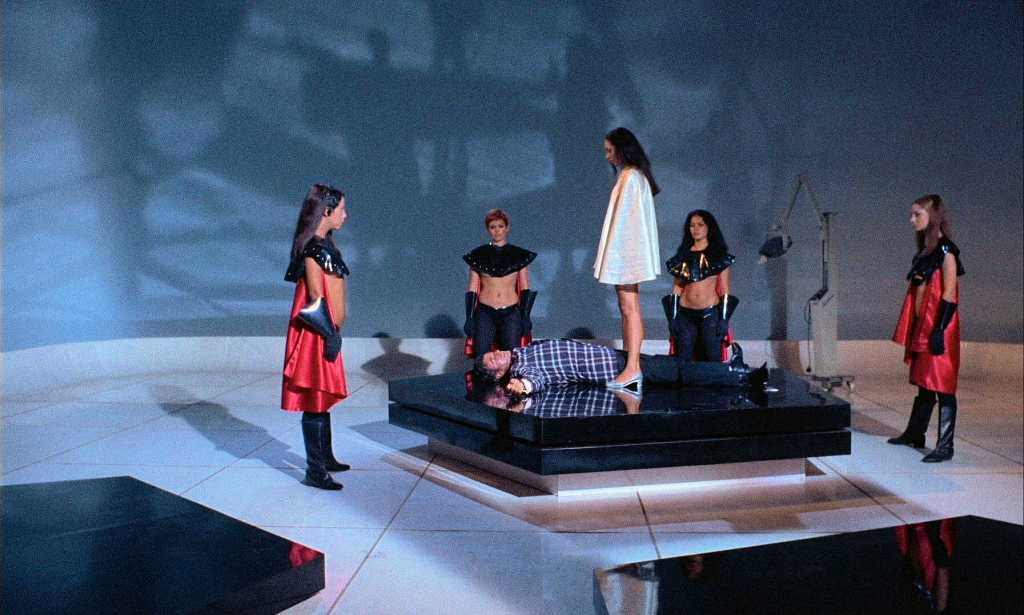
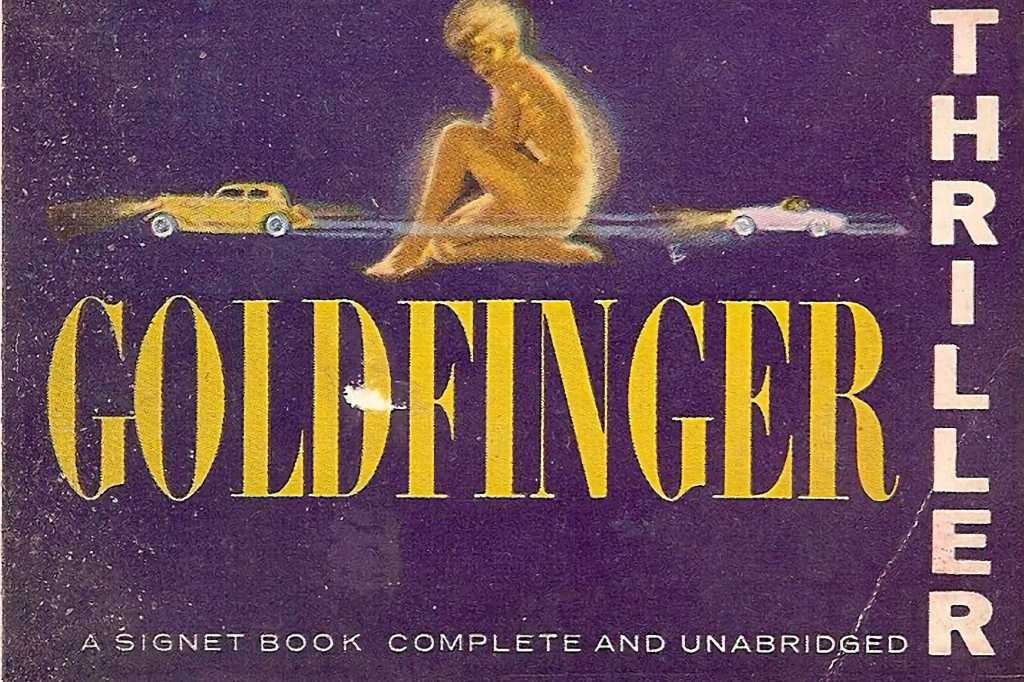
Meanwhile, The Girl From Rio is a sequel (!) to The Million Eyes of Sumuru (1967), both featuring Shirley Eaton, best known to audiences as the original golden girl in Goldfinger (1964). The Girl From Rio involves competing criminal organizations – an uber-feminist gang led by Eaton, and a conventional old-boy effort led by George Sanders – trying to defeat each other with the help of a boastful thief played by Richard Wyler. The movie is a long way from achieving “so bad it’s good” status – a scene involving a laser that produces no visible laser beam is just sad. An obvious invitation to explore gender politics, even comedically, is entirely ignored. Only George Sanders seems to realize there’s nothing very serious going on, and no one seems to be trying very hard to be entertaining.
(I’ve since watched The Million Eyes of Sumuru. It’s definitely superior to The Girl From Rio, but that’s a low standard. And it turns out that casting Frankie Avalon, Wilfrid Hyde-White, and Klaus Kinski in the same movie isn’t as entertaining as one might hope.)
So is it effort that makes the difference? Or does Danger 5 succeed because goofy parodies are easier to accomplish on a low budget?
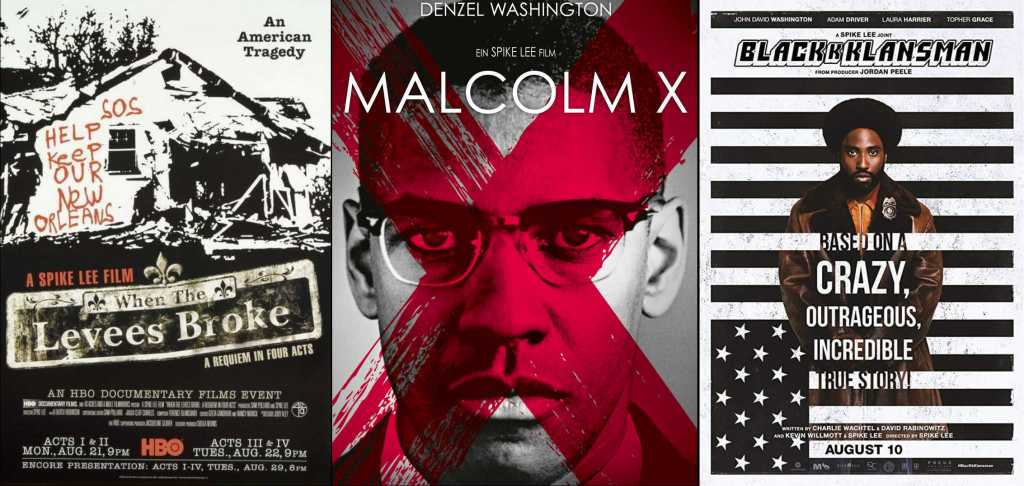
Two of my favorite directors are Spike Lee and Steven Soderbergh. Compare their recent filmography to superstar director Christopher Nolan, whose work I generally admire (with some qualifiers). The most recent (as of spring 2026) ten feature films of Lee, Soderbergh, and Nolan had an average budget of $27.2M, $20.4M, and $145.1M, respectively. What a difference! (There are some huge qualifiers to these numbers, see below.) Nolan’s films, with much greater budgets, are on average correspondingly more profitable, and that’s certainly good news for film studios. But whether Nolan’s films are “better” is entirely subjective. He has directed two of my favorite movies (Inception and The Dark Knight), but so has Lee (25th Hour and BlacKkKlansman). On the other hand, I’ve had little interest in Nolan’s recent projects, whereas I’m always curious about what Lee and Soderbergh are up to; for example, I’m still pondering Soderbergh’s Presence and Black Bag, both released to general audiences in 2025. And to answer the earlier questions, none of these directors are turning out cheap-looking parodies, but serious and thoughtful work. Does this prove that money alone isn’t the answer?
The budget and box office data comes primarily from Wikipedia. This information isn’t available for some of Lee’s and Soderbergh’s most recent features because some of those movies were primarily released via streaming platforms rather than theaters. Are Lee or Soderbergh selling out by working with the very businesses that are trying to lure audiences out of theaters and onto their couches? Or are they sticking to their creative guns by doing whatever it takes to put their movies in front of audiences? Should we accuse Nolan of pandering to audiences by relying on big-ticket spectacles? Again, this is largely subjective, and also gets into the question of quality vs. quantity: Nolan has released twelve features since his debut, Following, in 1998, whereas Lee has released fourteen features and Soderbergh twenty-nine (!) in the same time period. And Lee and Soderbergh have both been more active in various non-directing work, such as producing, documentaries, TV series, etc. Nolan has stretched the envelope outward in the IMAX frontier and he has experimented with non-linear story structures, while Soderbergh has scaled down, sometimes acting as his own cinematographer and camera operator, and even shooting some movies on iPhones. Lee filmed the highly acclaimed Da 5 Bloods in four different aspect ratios to reflect different locations and timeframes. It seems that innovation doesn’t require a big budget, either.
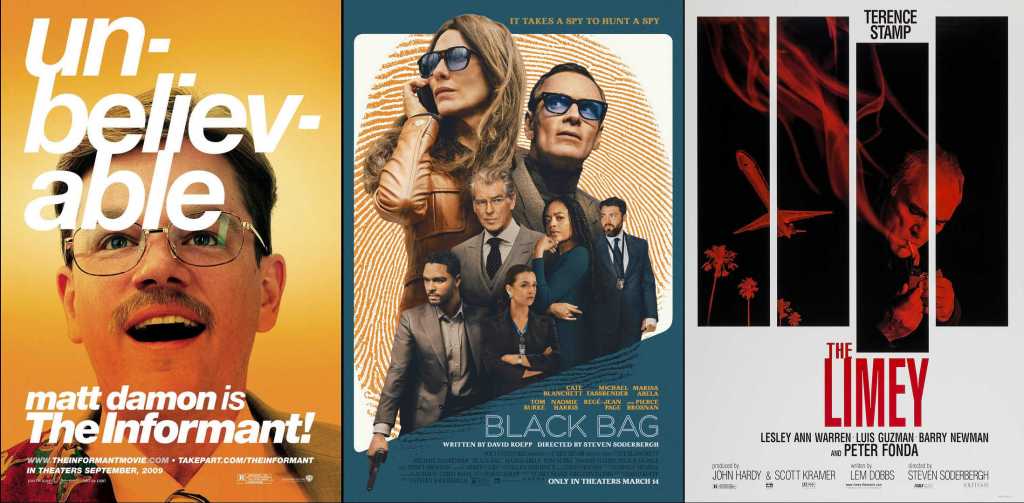
In fact, a low budget – or no budget at all – offers a kind of freedom. Large investments tend to invite great expectations, and expectations can be a heavy burden. Spike Lee and Steven Soderbergh have had mixed box office results compared to Christopher Nolan, but they take a lot of creative risks. Some of Lee’s films have been money losers, yet he persists. But imagine the impact of betrayed expectations if one of Nolan’s movies tanked at the box office. His upcoming The Odyssey reportedly had an astonishing budget of $250 million, driving revenue expectations correspondingly higher. On the other hand, a generous budget can sometimes tempt carelessness or wasteful extravagance. The $44M budget of the legendary Heaven’s Gate may not seem excessive by today’s standards, but in 1981 the movie’s failure was enough to ruin a studio.
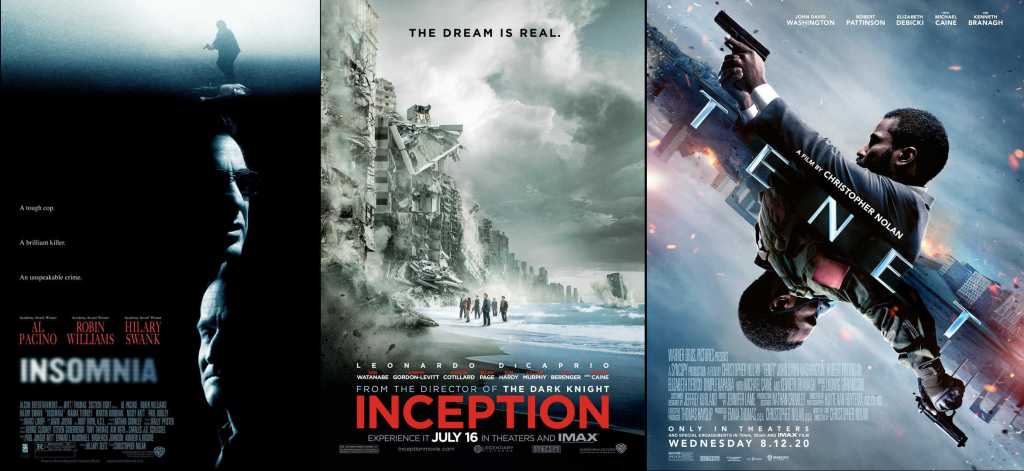
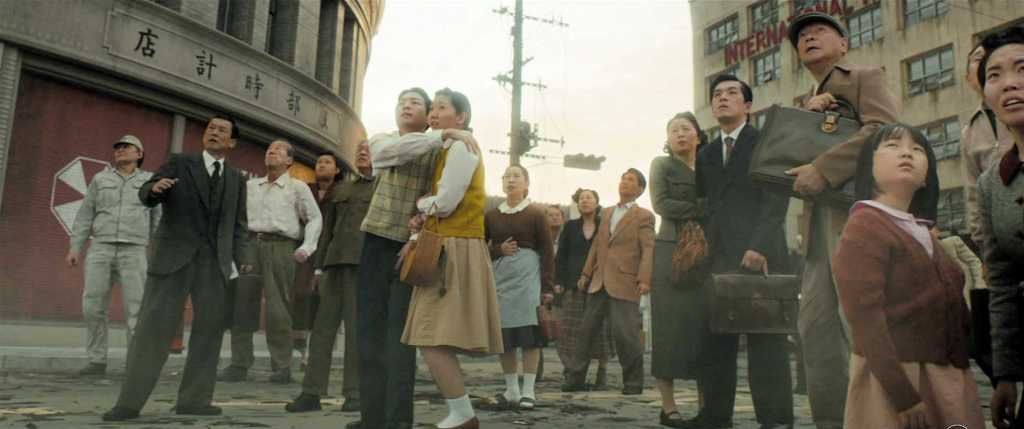
There’s no shortage of other examples that defy a budget/quality correlation. Godzilla Minus One (2023) generated $116M box office on a $10M – $15M budget, whereas 2024’s Monsterverse smash-’em-up Godzilla X Kong: The New Empire produced $572.5M box office with a $135M – $150M budget. Godzilla Minus One blew me away and justifies repeat viewings, while I didn’t even bother with Godzilla X Kong; it’s the kaiju equivalent of the Marvel Crapmatic Universe. Comparing two adventure movies released in 2024 that roughly doubled their budget in global box office: I loved The Count of Monte Cristo (budget €42.9M) and I regretted Deadpool & Wolverine (budget $533M, and that’s not a typo). Clearly, creative expression doesn’t require $100M+ budgets. (Is the big budget/big profit model a function of American “bigness”? Looking at the ten highest grossing films of 2025, only two had budgets less than $100M, and both were distributed or co-distributed by non-U.S. companies. This is a subject for another day.)
My point here is primarily a reminder that, despite living in a capitalist oligarchy that attempts to transactionalize life’s every moment, we can still sometimes accomplish great things without abundant capital. Photographers don’t need all the latest overpriced gear loaded with bells and whistles to create compelling images. Art can be created with paper and a few colored pencils. Collaborators are sometimes agreeable to barter instead of cash. You might even line up a celebrity guest star for your fan film with a well-timed letter or phone call – just watch the documentary Beam Me Up, Sulu if you need inspiration. Ultimately, this is all somewhat a matter of desire: are you driven by an obsession with creative expression? Neil Burger directed the 2025 espionage thriller Inheritance with an iPhone and a guerrilla film crew; reviews were mixed and box office was low, but Neil Burger directed a spy film and how many people get to put that on their resume? When Roger Daltrey was young, his family couldn’t afford the cost of a guitar. Instead of hoping for better days, Daltrey built his own guitar. That’s the guy who wants to be a rock star.

Sometimes you’ll need persistence, such as building up a following on social media to place your work in front of a larger audience. Others might be gifted with sheer luck, getting their work in front of the right person at the right time – really another form of persistence because the more eyeballs viewing your project, the better your odds. But before you anticipate your pending glory, first ask yourself: what are your objectives? What are your criteria for “success” or “quality”? An audience of millions? Material wealth? Kind words from some appreciative viewers/readers? Or the simple satisfaction of bringing something into the world that wouldn’t exist without you? Quality doesn’t always correspond with budget, but honest achievement nearly always correlates with passion.

These questions take us full circle to Danger 5, The Girl From Rio, and the means and methods of Lee, Soderbergh, Nolan, and others. And figuring out your own balance of all those decisions about creative desire, a willingness to compromise your terms without compromising your integrity, availability of resources, and professional and social networks. Get creative in your methods, make your work the best it can be, and never give up.
And, of course, kill Hitler.
 The Creative Life Adventure
Leave a comment