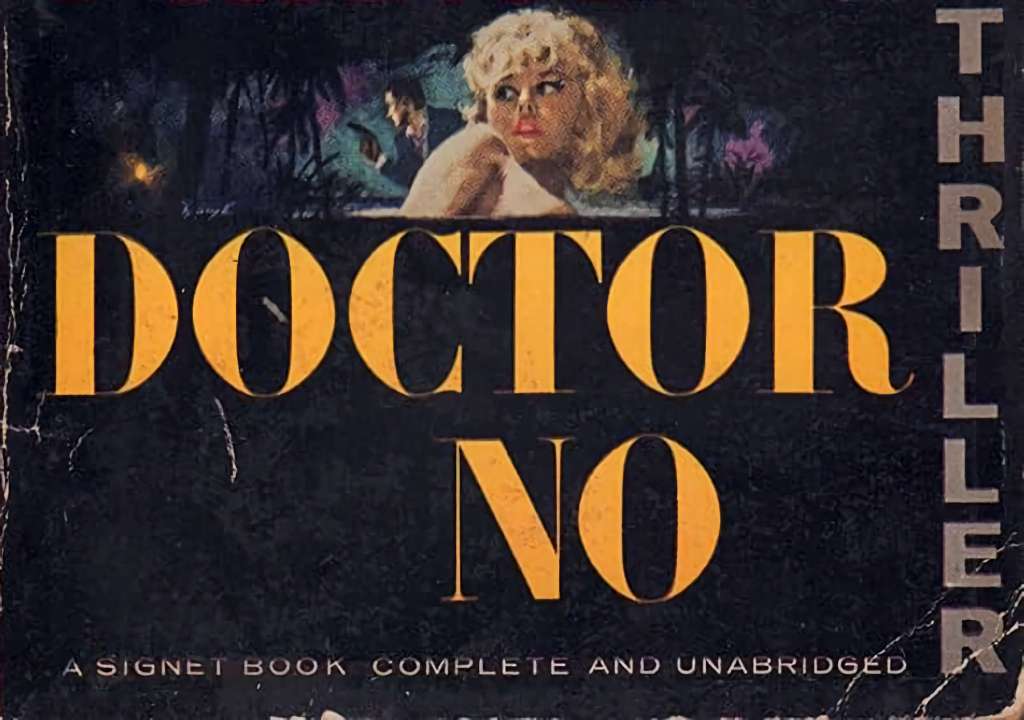
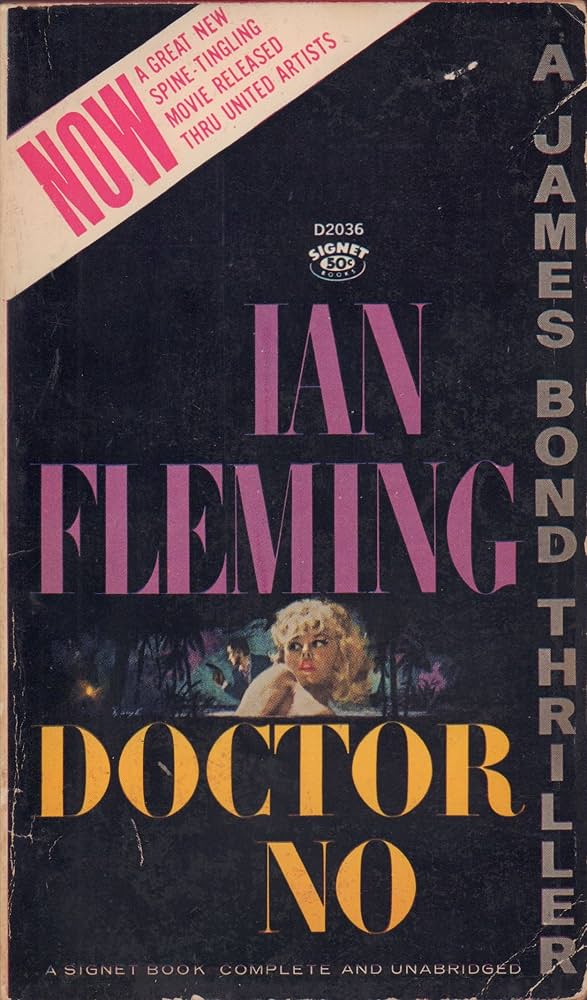
Doctor No (1958) was Ian Fleming‘s sixth James Bond novel. The book’s first order of business, of course, is confirming that Bond did, in fact, survive Rosa Klebb’s assault in the final pages of From Russia with Love. Also, much of the novel is set in Jamaica, where the final chapters of Live and Let Die took place, and home to Fleming’s famed Goldeneye estate where he wrote the Bond books.
Fleming reportedly initiated Doctor No as a screenplay for a television production called Commander Jamaica. For whatever reasons, the show was never produced, and this novel was the end result. The character of Dr. No was said to be based on Fu Manchu, the Chinese villain who appeared in novels written by Sax Rohmer from 1913 to 1959. (Later Fu Manchu books were written by Cay Van Ash and others.)
As with the previous Bond novels, this is my informal Doctor No reader’s guide regarding brand and place names, historic references, themes, and character development. A few references are repeated from previous books, in which case I’ve generally copied those entries. I haven’t included page numbers, as this will vary by edition. I’m reading the Signet Books mass market paperback. Mr. Fleming was kind enough to divide his books into brief chapters, so references should be easy to find in the text. The best approach, if you can manage it, is to keep this handy while you read the book. I’m only human, so if I’ve made any factual errors, please feel free to reach out to me via the Contact Me page.
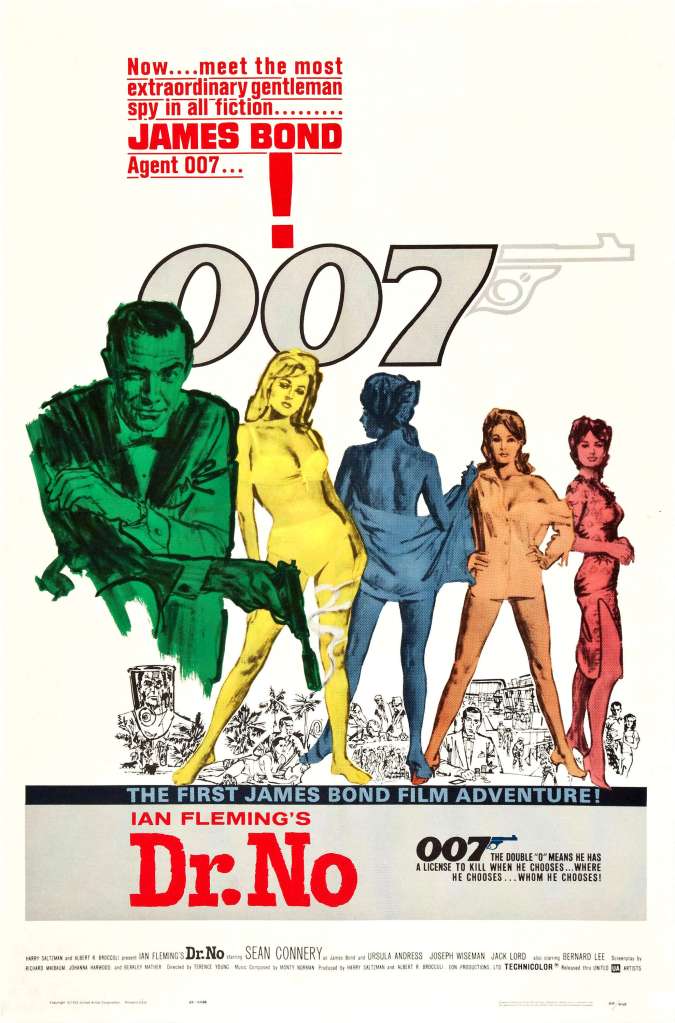
My edition of the book spells out the title as Doctor No, while the cover of the first edition abbreviates it as Dr. No. I’ve followed my edition and used the full spelling to distinguish the book from the 1962 film adaptation. However, while the villain is referred to as “Doctor No” in the text, to save time I’m abbreviating it as “Dr. No.”
Last updated 23 February 2025
1 Hear You Loud and Clear
Blue Mountains:
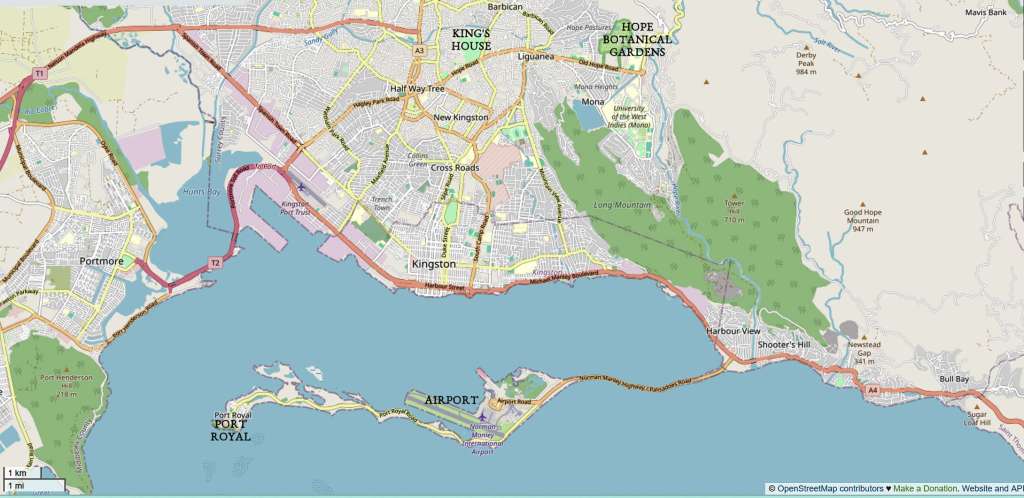
We open with the sun setting on the Blue Mountains and Richmond Road. The Blue Mountains, as we know from Live and Let Die, are the longest mountain range in Jamaica. The mountains run northeast of Kingston and have a cooling effect on the city’s climate. There is a Richmond Park Avenue in Kingston today, but it doesn’t fit Fleming’s description of Richmond Road in the novel.
Kingston:
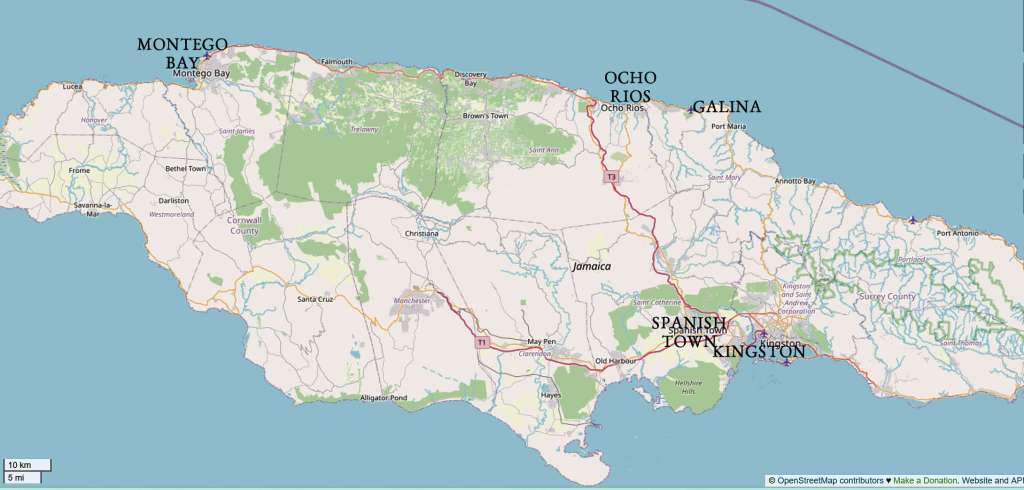
We are in Kingston, Jamaica, a place for which Bond and Fleming had great fondness. Jamaica joined the British Empire in 1655. The year Doctor No was published, Jamaica joined Barbados, Trinidad and Tobago, and other British Caribbean islands in the West Indies Federation with the goal of forming a single nation independent of Britain. The federation collapsed due to internal turmoil, but Jamaica became fully independent in 1962, while remaining in the Commonwealth of Nations. Kingston was founded in 1692 and is the capital and largest city in Jamaica. Iris King (1910 – 2000) was Kingston’s first woman mayor, in 1958 – 1959.
Rich Road:
Kingston’s Richmond Road is described as “Rich Road” and compared to Park Avenue, Kensington Palace Gardens, and Avenue D’Iéna. Park Avenue is the north-south avenue in New York City that passes Union Square and Grand Central Terminal. Kensington Palace Gardens runs west of central London and is sometimes referred to as “Billionaires Row.” Avenue D’Iéna is in the 16th arrondissement of Paris, terminating in the north at the Arc de Triomphe, and is home to several embassies and other upscale residents.
Botanical Gardens:
The lawns of the wealthy residents of Richmond Road are decorated with plants from “the Botanical Gardens at Hope.” The Hope Botanical Gardens was formerly the estate of Major Richard Hope, a British Army officer who was given the estate as thanks for his role in capturing Jamaica from the Spanish. The property was operated as a sugar plantation before the botanic garden was established in 1873.
King’s House:
Fleming mentions King’s House, home to “the Governor and Commander-in-Chief of Jamaica.” Today, King’s House is home to Jamaica’s Governor-General. The current King’s House was constructed in 1907, after the previous house was destroyed by an earthquake. Sir Kenneth Blackburne occupied King’s House as the Governor-General of Jamaica from 1957 – 1962. (See map earlier in the chapter for location.)
Queen’s Club:
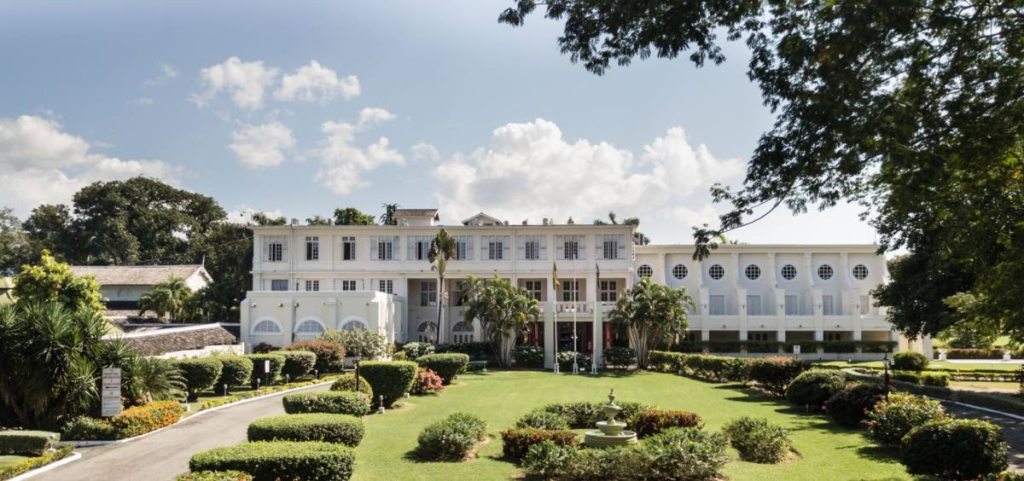
Fleming describes the Queen’s Club as offering “the finest cuisine and cellar in the Caribbean.” The fictional club was loosely based on Kingston’s real-life Liguanea Club, a social / recreational club and hotel that still operates today. The opening scene of the Dr. No screen adaptation was filmed outside the Liguanea Club. Maybe Fleming anticipated a turbulent path to Jamaican independence when he wrote, “One day Queen’s Club will have its windows smashed and perhaps be burned to the ground…”
Kingston University:
One member of the Queen’s Club bridge foursome is a mathematics professor from Kingston University. I can find no such school in Jamaica, but there is a Kingston University in London’s Royal Borough of Kingston upon Thames, and founded in 1899 as Kingston Technical Institute.
Sunbeam Alpine:
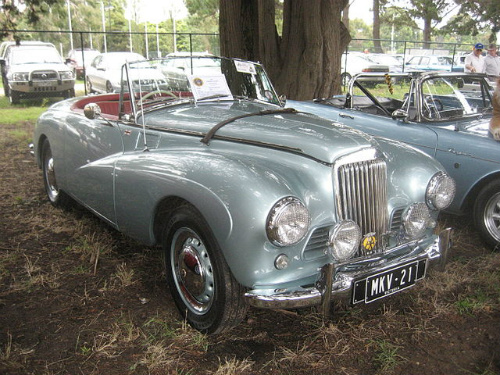
Strangways, who we will meet shortly, drives a Sunbeam-Talbot Alpine. (The car Strangways provided Bond in Live and Let Die was only described as a Sunbeam-Talbot coupé.) Sunbeam-Talbot was originally Clément-Talbot, founded in 1902. Sunbeam manufactured the two-seater Alpine sports car during various years through the 1950s and 1960s depending on the exact model. The Alpine was very successful in road rallies of the time.
Strangways:
We are re-introduced to Commander John Strangways, R.N. (retired), the British Secret Service officer in Jamaica. Strangways was a significant help to 007 in Live and Let Die, where he was identified as wearing an eye patch, which will be mentioned later in this book.
Chigroes:
The three assassins who dispatch Strangways in the first chapter are described as “Chigroes – Chinese negroes,” or individuals of Black and Chinese parentage. Fleming goes so far as to compare the “Chigroes” to “diseased people.” He writes that this ethnic mixture is uncommon, yet the author of a fascinating paper in Anthurian: A Caribbean Studies Journal claims, “In the 1950s when Fleming wrote Doctor No, there was indeed a significant population of Afro-Jamaican Chinese people in Jamaica.” Apparently the term “Chigro” was actually first used by Ian Fleming. After the British Empire abolished slavery in 1833, an attempt was made to bring Chinese laborers to Jamaica as an additional work force. These early Chinese immigrants were primarily males who later had children with Black women. In the context of the novel, this intermingling of ethnicities represents the “Black and Yellow Peril” perceived by Britain as former colonies increasingly sought independence.
Jippa Jappa:
The three “blind” men wear jippa-jappa hats, sometimes spelled jippi-jappa or jipijapa. Jippa-jappa is woven from the fronds of the jipijapa, a variety of palm common in the Caribbean. Some Panama hats – and similarly styled hats – are also made from this material.
Bill Templar:
We briefly meet Bill Templar, Brigadier and one of Strangways’ bridge partners. To my knowledge, he makes no further appearance in the novels.
Regent’s Park:
Strangways is scheduled to communicate with the Secret Service headquarters in Regent’s Park. The London park consists of 410 acres and would be a convenient location for the Secret Service. It’s home to Winfield House, which was occupied by the Royal Air Force during World War II and in 1955 became residence for the U.S. ambassador to the UK. Bedford College was also located there in the 1950s, and five London Underground stations are located in or very near the park. I can find no evidence that the Secret Service was actually headquartered there, though it appears that the Special Operations Executive once occupied a building nearby.
Trueblood:
Strangways’ number two in Jamaica is Mary Trueblood, who is also making her first and only appearance.
WRNS:
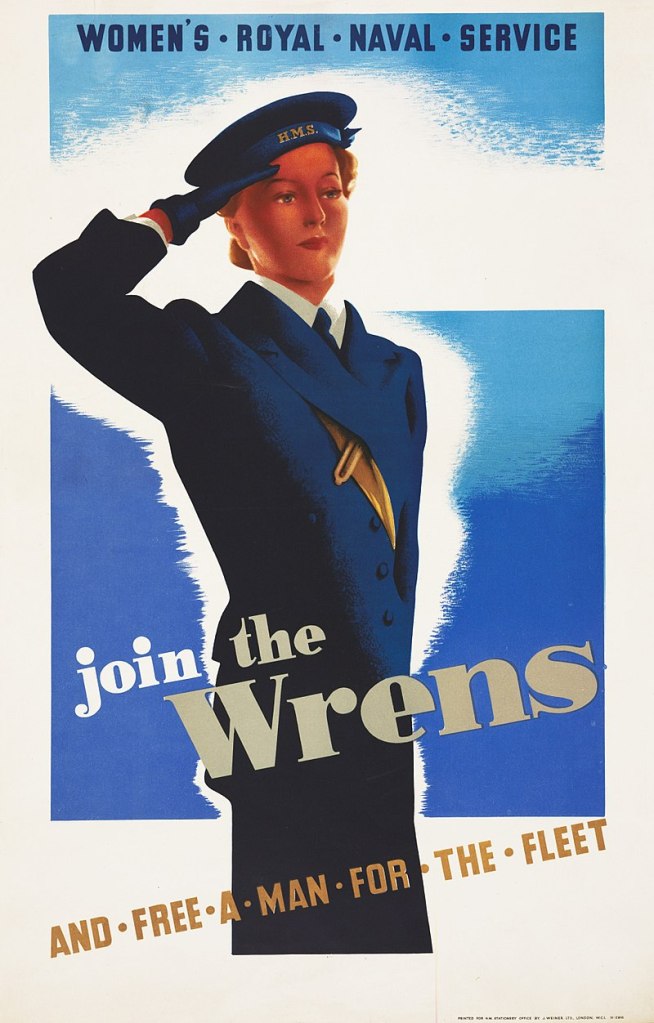
Trueblood is a former officer in WRNS (pronounced “wrens”), the Women’s Royal Naval Service. WRNS was formed temporarily during World War I, then reformed in 1939 and remained active until 1993, when it was absorbed by the Royal Navy. WRNS staff had a significant role in enemy code-breaking during World War II.
Megacycles:
Strangways is broadcasting on 14 megacycles; in this context, cycles and megacycles were largely replaced by hertz and kilohertz in the 1960s and 1970s. A megacycle refers to a sound wave that oscillates 1,000 times per second; 1 cycle = 1 hertz and 1,000 cycles = 1 kilohertz. So 14 megacycles = 14 kilohertz. The range of human hearing is generally considered 20 hertz to 20 kilohertz.
Patterns:
Strangways’ discipline in maintaining an expected schedule is also his undoing. Is this a metaphor for the stereotypically regimented British losing ground to the perceived erratic nature of the colonial subjects?
Hysteria:
Fleming has demonstrated racist attitudes in his previous books, but Doctor No seems to go even further in that direction. Here, Strangways reflects on his current case (which will be spelled out for us later), expecting it will boil down to “the usual hysteria of the Chinese.”
Florin:
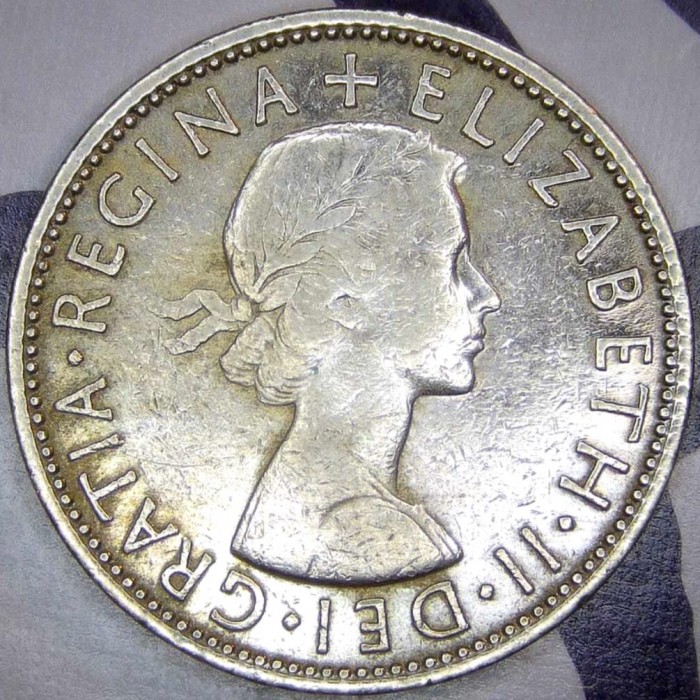
Intending to give the blind men a handout, Strangways confirms that the coin he reaches for is a florin, not a penny. The British florin was issued from 1849 – 1967 and was equivalent to 24 pennies (pence), or 0.1 pound.
Plain Deal Coffin:
Strangways’ body is taken off in a hearse in a “plain deal coffin.” There’s no formal definition for this type of coffin; it would have been basic and made of inexpensive wood, perhaps pine.
Halfway Tree:
Trueblood imagines Strangways might be late because the police stopped him at Halfway Tree. Half Way Tree is a Kingston neighborhood and today is a popular business and shopping district. It was the birthplace of May Farquharson, OJ, (1894 – 1992), a social worker and philanthropist who, among other things, campaigned for women’s suffrage and helped establish a senior citizens’ pension. OJ = Order of Jamaica, roughly the equivalent of a British knighthood. (See map earlier in chapter for location.)
Radio Security:
Trueblood notes that Radio Security monitors all transmissions. MI8 was the signals intelligence section of military intelligence during World War I and included Radio Security Service during part of World War II. In 1941 these functions were absorbed by MI6.
Presto Fire:
The Black-Chinese man who kills Trueblood – Get it? The villain is mixed-race but the British woman has “true blood”? – uses Presto firelighters to burn office documents and furniture. I can’t find information on the Presto brand, but firelighters are objects used to quickly start a fire. They may contain some combination of wax, wood chips, sawdust, kerosene, or other substances.
Tate & Lyle:

Trueblood’s body is taken away in a Tate & Lyle sugar sack. The company was formed in 1921 by the merger of two British sugar refiners. The company divested its sugar business in 2010 and today manufactures food additives derived primarily from corn and tapioca.
Mona Reservoir:
The killers leave Strangways and Trueblood in the Mona Reservoir, in the neighborhood of Mona on the outskirts of Kingston. Right next to the University of the West Indies, the reservoir was formed in the 1950s by the construction of Mona Dam. Today the reservoir is Kingston’s primary water source and a popular recreated area. (See “Mona” on map earlier in chapter for location.)
2 Choice of Weapons
March:
With a change of setting to London, the time of year is established as a blustery March. Lucky for Bond he gets to travel to a warmer climate! Fleming disliked London’s winters, that was one of his motivations for establishing his residence in Jamaica.
Force 8 Gale:
Current London conditions include a force 8 gale. The Beaufort wind force scale was devised by Francis Beaufort (1774 – 1857) in 1805. Beaufort was a hydrogapher and officer in the Royal Navy. His scale was formally adopted by the British in the 1830s and was first used by the HMS Beagle in 1831 – 1836 on its survey mission with Charles Darwin. The scale has been modified slightly over the years to reflect modern needs. A force 8 gale involves wind speeds of 39 – 46 mph but would not typically involve property damage.
M:
We first encounter M arriving at headquarters; I believe this is the first time M’s initial appearance has been outside the office.
Silver Wraith:
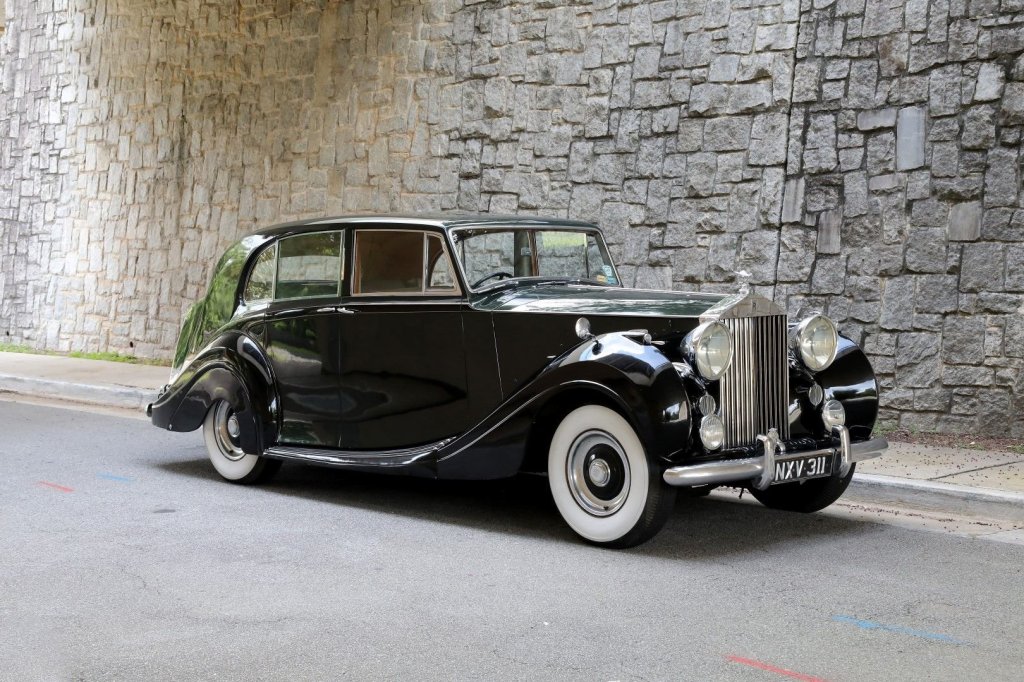
M arrives in a Rolls-Royce Silver Wraith. Rolls-Royce was a luxury car and aircraft engine manufacturer founded in 1904 in Manchester, more than 200 miles northwest of London. Rolls-Royce Motors was separated from the aerospace business in 1973 and eventually BMW acquired the rights to use the Rolls-Royce trademark. The Silver Wraith was Rolls’ first post-war production vehicle, manufactured from 1946 – 1958. Silver Wraiths have made numerous movie appearances, including From Russia with Love (1963) and Spectre (2015).
Smith:
M’s driver is Smith, a former leading stoker. Stoker appears to be a job function rather than a title; a stoker in the navy would have been a mechanic or technician in the boiler room or engine room. Some of them faced strenuous labor under intense working conditions.
PQ Convoys:
Smith claims driving in the current weather is “worse than one of those PQ convoys.” During World War II, western allies sent a series of supply convoys over the Arctic to Russia. They were called PQ convoys, after operations officer Commander Phillip Quellyn Roberts. In 1942, the 17th convoy, PQ 17, was attacked by German forces and suffered heavy losses, with 23 of 35 merchant vessels sunk and 153 merchant seamen killed. The British bungled the operation so severely that the Soviets didn’t believe the claimed losses, and Soviet-Allied relations suffered as a result.
St. Mary’s and Sir James Molony:
M has a phone conversation with a neurologist, Sir James Molony, on rounds at St. Mary’s. St. Mary’s is a central London hospital, established in 1845 and part of the National Health Service. Notable births at St. Mary’s include Elvis Costello (1954), Kiefer Sutherland (1966), and Princes William and Harry (1982 and 1984, respectively), sons of Charles III and Princess Diana. M consults Molony about Bond, who Molony has been treating after the attack by Rosa Klebb at the end of From Russia with Love.
Moneypenny:
We don’t see her in person, but M chats briefly by intercom with Miss Moneypenny.
A Tough Time:
Discussing 007, Molony tells M, “From what you’ve told me he’s been having a rough time for some years now.” It seems odd that M would disclose so much information about Bond, and that he has such a perspective on his agent. What exactly caused M to reach this conclusion? The last mission clearly ended badly, but Bond came through his previous missions about as unscathed as a person could. It seems more likely that M would have felt that 00-agents chose a dangerous life and should accept the consequences.
Renal Colic:
Molony describes the challenge in evaluating pain levels, as in determining the differences between a woman in childbirth and a man experiencing renal colic. Renal colic is intense kidney pain most often caused by kidney stones.
Dr. Peter Steincrohn:

I had to consult Fleming’s Bond to find much of substance on Dr. Peter Steincrohn (1899 – 1986), the physician who M quotes to Sir Molony. Apparently, M’s dialogue about how many organs and bodily fluids a person could lose and remain alive came directly from Steincrohn, who published a number of books and articles. A 1978 article in American Heritage claims that Steincrohn considered strenuous exercise to be dangerous for anyone over a certain age. Pain is a recurring theme in Doctor No and appears to reflect Fleming’s own condition at the time. He suffered from kidney stones (hence the renal colic) and sciatica after writing From Russia with Love and entered the “health farm” Enton Hall, in Surrey, southeast of London.
Moran on Courage:
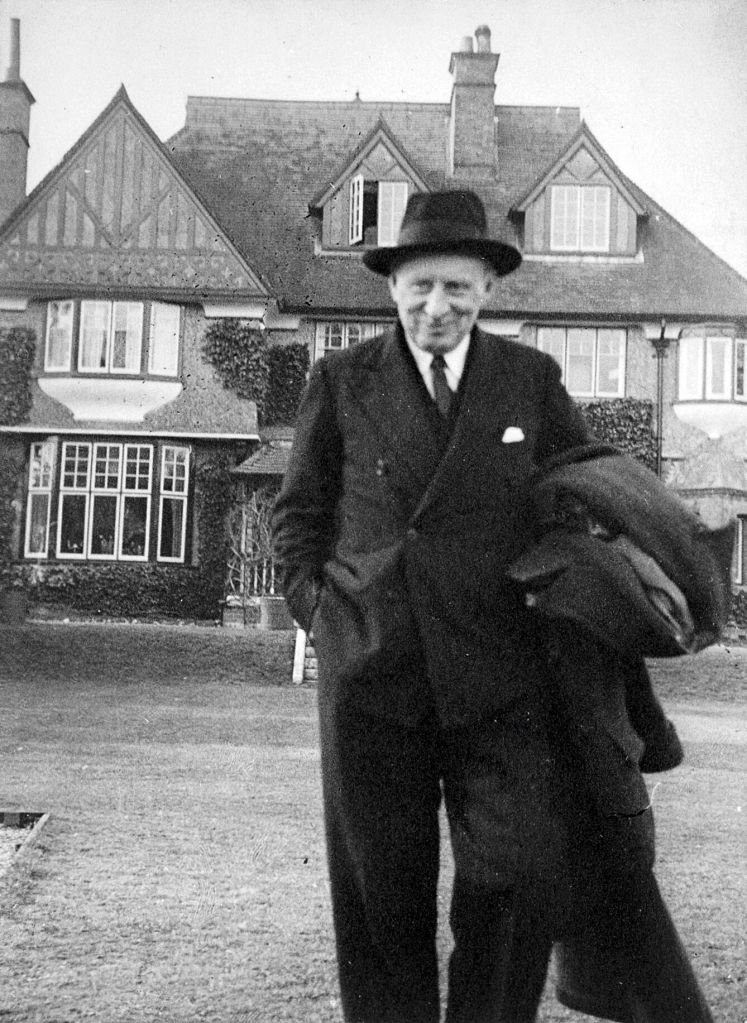
In my edition of Doctor No, Sir Molony cites “Morgan” on the subject of courage: “He says that courage is a capital sum reduced by expenditure.” Evidently that was a typo; Sir Molony was really citing “Moran,” as in Charles McMoran Wilson, 1st Baron Moran (1882 – 1977). Wilson was a medical officer during World War I and became personal physician to Winston Churchill in 1940. Wilson gave a series of lectures in the 1930s on troop resilience and developed them into the 1945 book The Anatomy of Courage.
Softness:
M does not take it kindly when Sir Molony cautions him on pushing 007 too strenuously. “Nowadays, softness was everywhere,” M thinks. Fleming inserted this attitude in several of the Bond books, and I always wonder if he was referring to Britain’s retreat as a global power, or to the economic prosperity and increased immigration of the 1950s, including post-war social reforms that included programs like the National Health Service, established in 1948.
School of Tropical Medicine:
Sir Molony credits someone at the School of Tropical Medicine with identifying the poison that Rosa Klebb used. A number of universities and hospitals have a School of Tropical Medicine (or something similar), but he’s probably referring to the London School of Tropical Medicine, which today is known as the London School of Hygiene & Tropical Medicine. The school was founded in 1899, thanks largely to an initial donation from the Indian businessman Bomanjee Dinshaw Petit (1859 – 1915).
Tetrodotoxin:
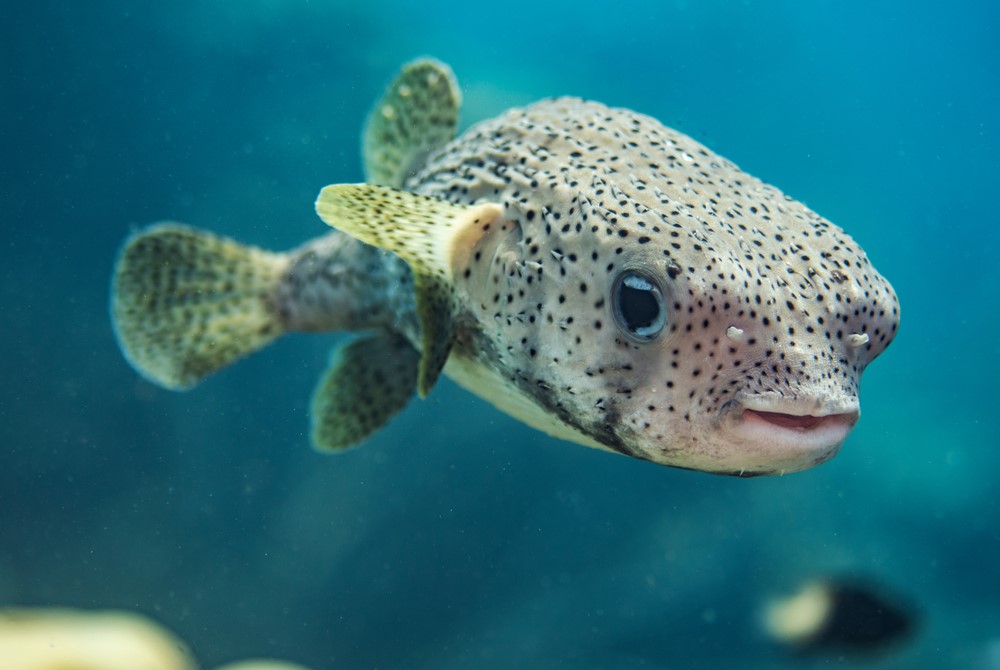
Sir Molony reports that Bond had been inflicted with tetrodotoxin, a deadly neurotoxin derived from several species of fish, including the pufferfish, which Molony refers to as a globe-fish. Tetrodotoxin is also produced by pathogenic bacteria such as Vibrio and Pseudomonas. Molony also refers to it as fugu, which can refer to the fish or a notorious dish prepared from the fish. Molony also claims that the drug is used in Japan to commit suicide, though I can find no evidence that this is (or was) a common practice.
Curare:
Apparently Bond survived because the responding physician treated him for curare poisoning. Curare is derived primarily from the plant species Strychnos toxifera and is a paralyzing agent used for hunting by some indigenous South American cultures. Curare was also used to treat tetanus and strychnine poisoning until more effective treatments were devised.
Rosa Klebb:
When Molony asks what became of Rosa Klebb, M’s ominous response is, “Oh, she died.” Did she take her own life rather than become a prisoner? Or did she meet some other tragic end? No details are specified.
James Bond:
Our hero, James Bond, arrives in M’s office. While Bond seems grateful to be back on the job – “the symbol of normality he had longed for” – this meeting with M is the first time the two have been openly contentious with one another. It’s a further step in Bond’s emotional decline and perhaps reflects Fleming’s frustration at being pigeon-holed into writing Bond books.
Beretta:
M confronts Bond about the failure of his Beretta at the end of From Russia with Love. This was presumably the Beretta 418, which M himself had gifted Bond at the end of Moonraker. The 418 was first manufactured around 1920 and was designed to be easily concealed.
Major Boothroyd:
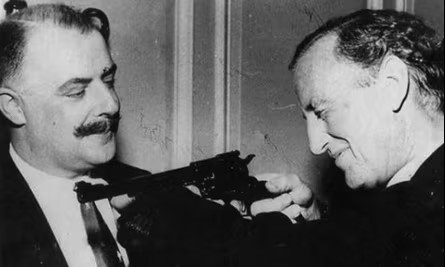
In 1956, after reading Diamonds Are Forever, British firearms expert Geoffrey Boothroyd (1925 – 2001) wrote Ian Fleming with advice regarding Bond’s choice of handguns. Fleming appreciated the advice so much that he named the Secret Service armourer, “the greatest small-arms expert in the world,” Major Boothroyd. In the film version of From Russia with Love (1963), Desmond Llewelyn (1914 – 1999) played the quartermaster Boothroyd, the character known simply as Q in later films.
Colt:
Bond mentions his .45 Colt as his preferred backup weapon when his Beretta is not practical. The Colt .45 was introduced by Colt in 1872 and was the official U.S. military handgun from 1873 until 1892.
Walther PPK:
Boothroyd’s chosen handgun for 007 is a Walther PPK 7.65 mm. There have been several models of the Walther PP, a semi-automatic pistol developed by German firm Carl Walther GmbH Sportwaffen, founded in 1886. The initial PP was introduced in 1929; PP = polizeipistole, or police pistol. The PPK was introduced in 1931, designed for increased concealability with shorter grip, barrel, and frame. PPK = polizeipistole kriminal, or police pistol criminal, though “kriminalamt” refers to a crime investigation unit. Hitler used a PPK when he took his own life in 1945.
M-14, Tokarev, Sauer:
In his vaguely defined weapons testing, Boothroyd says the PPK came in fourth behind the Japanese M-14, the Russian Tokarev, and the Sauer M-38. The M-14 is the Nambu Model 14, manufactured from 1926 – 1945, and the standard sidearm for Japanese military officers. The Russian Tokarev TT-30 and its later variant the TT-33 were manufactured from 1930 – 1955 and widely used in the Soviet military. The Sauer 38H (Model 38) was produced by the German firm J.P. Sauer & Sohn from 1938 – 1945.
Berns-Martin Holster:
Boothroyd equips Bond with a “Berns-Martin Triple-draw holster,” really the Berns-Martin Lightnin’ holster, widely used by U.S. law enforcement during the 1950s – 1970s. The original Berns-Martin holster was developed in the 1930s by two members of the U.S. Navy Rifle Team, J.E. Berns and Jack Martin.
Smith & Wesson:
For a larger weapon, Boothroyd provides Bond with a Smith & Wesson Centennial Airweight. The revolver was introduced in 1952 with a lightweight aluminum alloy frame. It was renamed the Model 42 in 1957, and discontinued in 1974.
Life-Saving Beretta?:
Bond reflects, “How many times had it [the Beretta] saved his life?” I need to confirm this, but I can’t recall Bond getting much actual use out of the Beretta. I don’t remember it saving his life often, if at all.
Routine Investigation:
M believes he is sending 007 to Jamaica for a “routine investigation and report.” He expects the mission to be something of a holiday for Bond to recuperate. This feels reminiscent of the premise of Moonraker, in which a personal situation of cheating at cards turned into a matter of national security.
3 Holiday Task
Chief of Staff:
M’s Chief of Staff joins in the briefing for 007. As in some of the previous books, the chief of staff is not identified by name, but this is clearly Bill Tanner. He was identified as s sapper in Casino Royale, but I don’t recall his rank of colonel being specified before this. A sapper is a combat engineer, performing duties both constructive and destructive – bridge-building, laying or clearing minefields, demolitions, road / airfield construction, etc.
Five Years Ago:
M points out that Bond worked with Strangways “on that treasure business about five years ago.” Wiser souls than me estimate Live and Let Die to have taken place in 1952, but I’m still of the opinion it was 1954, because the book seems to reference the execution of Lavrentiy Beria in 1953. However, the same Bondophiles who put Live and Let Die in 1952, also place Doctor No in 1956. (Chapter 15 will provide support for 1956.)
M’s Suspicions:
It seems odd to me that M is so willing to believe that Strangways and Trueblood had an affair, stole some secret documents, and fled Jamaica on false passports. Certainly Bond’s experience with Strangways would be enough to assure M of Strangways’ loyalty?
Colonial Office:
M is frustrated that the “business about the birds,” as Tanner calls it, “Got wished on us by the Colonial Office.” Great Britain’s Colonial Office was established in 1768, primarily for administration of the Thirteen Colonies and the Canadian territories. The office went through a few name changes and department mergers over the years but was re-formed in 1854. It joined with the Commonwealth Office in 1966, which later became the Foreign, Commonwealth and Developoment Office.
Audubon Society:
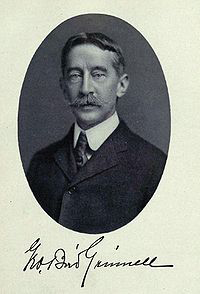
M doesn’t hide his irritation with the Audubon Society, which he later refers to as one of “these old women’s societies.” The National Audubon Society, which has almost 500 independent local chapters, was incorporated in 1905, though the first Audubon Society was founded in 1886 by Forest and Stream editor George Bird Grinnell (1849 – 1938). It was named after John James Audubon (1785 – 1851), best known as the writer and illustrator of The Birds of America, first published in sections from 1827 – 1838. The Audubon Society has lobbied for legislation to protect wildlife and has purchased land to protect bird habitats.
Whooping Crane:
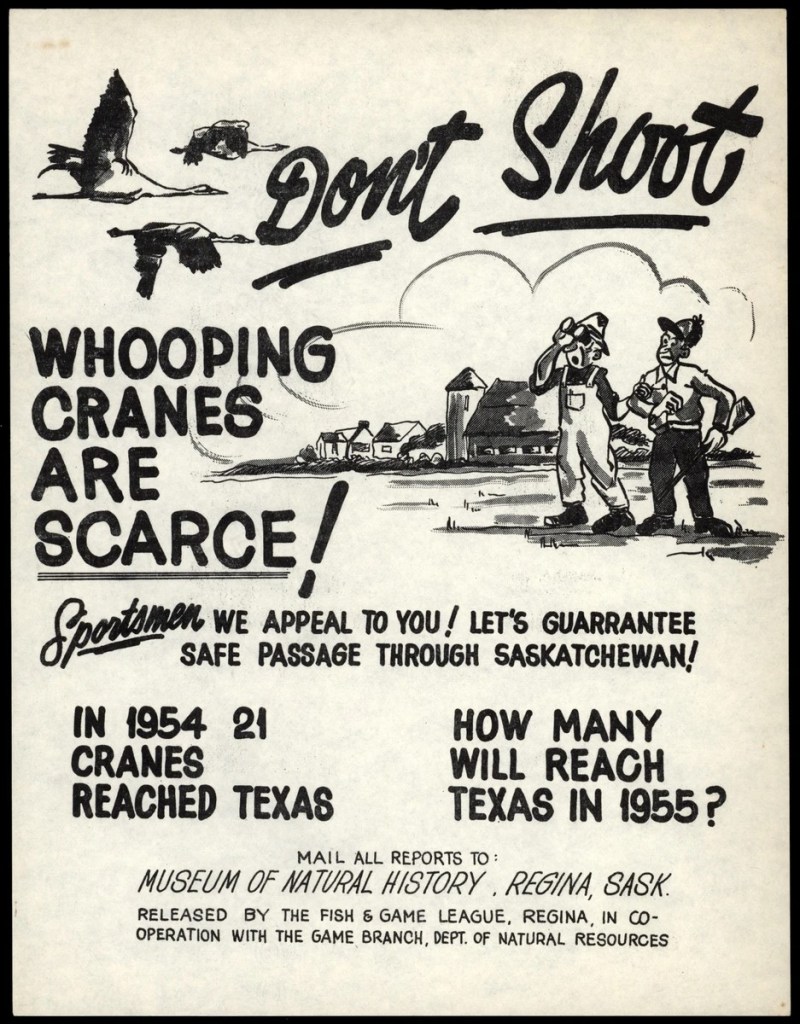
M and the Chief of Staff claim that a U.S. atomic bomb range on the west coast was moved to protect whooping cranes thanks to the influence of the Audubon Society. I’m unable to find historic background on such an event, but there was considerable effort to protect whooping cranes in the 1940s and 1950s. In 1941, the last known whooping crane migratory flock contained only 15 birds. The whooping crane was featured on a U.S. postage stamp in 1957. The species is still endangered, with only about 800 known to be surviving today.
Roseate Spoonbill:
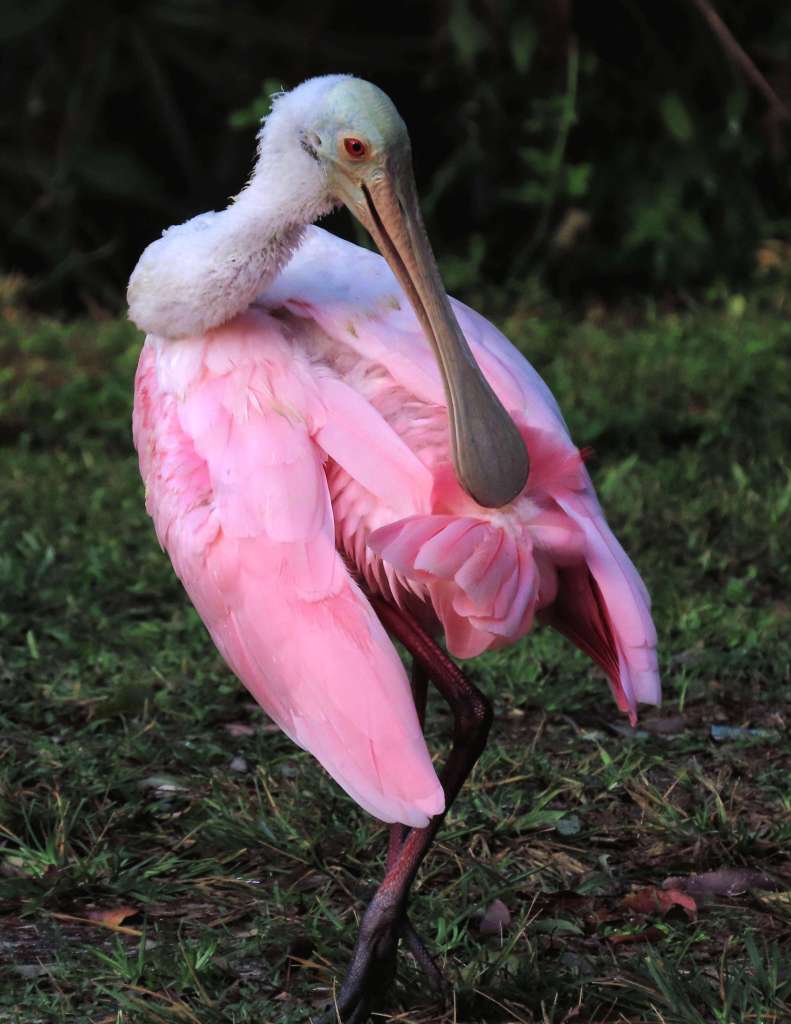
The Audubon Society was attracted to Crab Key by a colony of roseate spoonbills. As a long-time resident of Florida, I’ve seen many roseate spoonbills and they are an enchanting sight. Spoonbills were nearly extinct during the 1800s and 1900s after being hunted for their colorful feathers. Thankfully the species has endured nicely. Spoonbills primarily inhabit coastal areas of tropical or semi-tropical climates, but warming temperatures caused by climate change have expanded the species’ nesting region.
Crab Key:
Fleming and his writer friend Ivar Bryce (1906 – 1985) – whose father became wealthy trading in guano – went on a birding expedition led by ornithologist Robert Cushman Murphy (1887 – 1973) to Great Inagua in the Bahamas. They observed flamingos, egrets, and roseate spoonbills. The Great Inagua bird colony was the inspiration for Crab Key. While there, they traveled in a Land Rover modified with larger tires to aid in traveling through swamps, thereby inspiring the “dragon vehicle” used by Dr. No’s henchmen.
Guano:
Guano – bird poop – is essential to the storyline. The guano of seabirds and bats is most useful as fertilizer – seabirds because they excrete uric acid instead of urea, resulting in a higher nitrogen content than other animal excrement; and bat guano because it contains a high level of organic matter, particularly insect exoskeletons rich in chitin, a necessary substance for the growth of soil fungi. Humans have been using guano as a fertilizer for over 1,500 years, perhaps much longer. Europeans began seriously using guano in the 1800s, driving up demand for the product from Peru, Namibia, Chile, and other locations. Not to be outdone, the U.S. passed the Guano Islands Act in 1856, which led to the annexation of almost 100 islands in the Caribbean and Pacific Oceans. The Germans began synthesizing ammonia on a large scale in 1913, leading to a rapid decline in the demand for guano.
Beechcraft:
After the mishap of the Audubon Society’s agents on Crab Key, the society sent more representatives in a Beechcraft. Beechcraft Aircraft Company was founded by Walter Beech (1891 – 1950) and his wife Olive Ann Beech (1903 – 1993) in Wichita, Kansas. Beechcraft has produced a long series of civilian and military aircraft. Today the Beechcraft brand is owned by Textron Aviation.
Grumman:

Dr. No (who we will not meet until much later in the book) transports supplies in a “Grumman amphibian.” The Grumman HU-16 Albatross was a twin-engine amphibious seaplane, an advanced design of the prior Grumman G-73 Mallard. The Albatross was primarily used by U.S. and Canadian military departments for search and rescue.
Auster:
Talk of the Beechcraft and Grumman aircraft also angers M, who has been trying to obtain “an Auster for the Caribbean station.” Auster Aircraft was a British aircraft manufacturer that operated from 1938 to 1961. M is probably wishing for an Auster J, a family of light aircraft first produced in 1946.
Corvette:
After the loss of the Audubon Society’s people, U.S. military representatives visit Dr. No in a corvette. A corvette is the smallest class of warship, generally not intended for long voyages.
Hatred:
Bond’s emotional state is demonstrated by his overreaction to M’s decision to change his firearms. “For the first time in his life he hated the man.” This is a shocking response, considering Bond’s absolute loyalty to M in the past.
4 Reception Committee
Super Constellation:
Bond flies a Super Constellation to Jamaica. (He flew on a Super G Constellation operated by TWA in Diamonds Are Forever. The airline is not specified here.) The Lockheed L-1049 Super Constellation was a four-engine turboprop aircraft manufactured from 1951 – 1958. Several variants were produced for both military and civilian use.

Cuba:
Bond’s flight takes him over Cuba, which was ruled by Fulgencio Batista (1901 – 1973) at the time. However, the country was in turmoil and anti-Batista sentiment was strong. Even while Fleming wrote Doctor No in 1957, Fidel Castro (1926 – 2016) and his 26 July Movement were already in Cuba and gathering support to overthrow Batista, who fled Cuba on 1 January 1959.
Cuba Deep:
Bond observes the “Cuba Deep” as his flight approaches Jamaica. I believe this refers to the Cayman Trough, or Cayman Trench, an undersea trench that runs between Cuba and Jamaica and contains the deepest area of the Caribbean Sea, at over 25,000 feet.
North Shore:
Bond flies over Jamaica’s North Shore and “its rash of millionaire hotels.” The most developed area of Jamaica’s northern coast at the time was Montego Bay, the largest city in Jamaica outside of the Kingston area. Ocho Rios is a hub of upscale hotels today, but that area was not seriously developed until the 1960s.
Arawak:
The text claims that Jamaica’s name came from the Arawak name for the place, Xaymaca, or “the land of hills and rivers.” There appears to be some debate as to whether the indigenous people Columbus encountered on Jamaica are more appropriately referred to as Arawak or Taíno. The Taíno spoke an Arawak dialect but lived on the islands, whereas Arawak are generally considered to have lived on the mainland. Columbus’ reports and Spanish documents used the word Taíno, meaning “good” or “prudent.” Columbus described the Taíno as being “very gentle and without knowledge of what is evil.” His first response was to kidnap twenty-four of them when he returned to Europe. Behavior of the Europeans didn’t improve from there. According to Wikipedia, the Taíno term “Xaymaca” translates approximately as “land of wood and water” or “land of springs.”
Port Royal:
Approaching Kingston, 007 notes the Port Royal lighthouse. Port Royal was established by the Spanish in 1494 on Kingston Harbour. The destruction of Port Royal by a combination earthquake and tsunami in 1692 led to the development of the city of Kingston. The lighthouse is more formally known as the Plumb Point Lighthouse. It is located about five miles east of Port Royal. The lighthouse was constructed in 1853 and is still in operation today. (See map in Chapter 1 for location.)
Landing:
Fleming describes the Constellation landing in some detail. While passenger air travel increased dramatically in the post-war years, in the 1950s it was still a new and expensive mode of transit for many people. In 1955, more U.S. passengers traveled by air than by rail for the first time. The Boeing 707 was introduced in 1957; it was the first commercially successful jet airliner and the subsequent reduction in travel times had a considerable impact on air travel.
Blue Mountains:
Bond’s flight passes over the Blue Mountains, already referenced in Chapter 1. Jamaica’s highest point, Blue Mountain Peak, is just over 7,400 feet in altitude and offers a view of Cuba when the skies are especially clear.
Universal Export:
Bond tells Jamaican customs that he is an import and export merchant for Universal Export. So far, Casino Royale is the only book in which the Universal Export cover name hasn’t been used.
Quarrel:
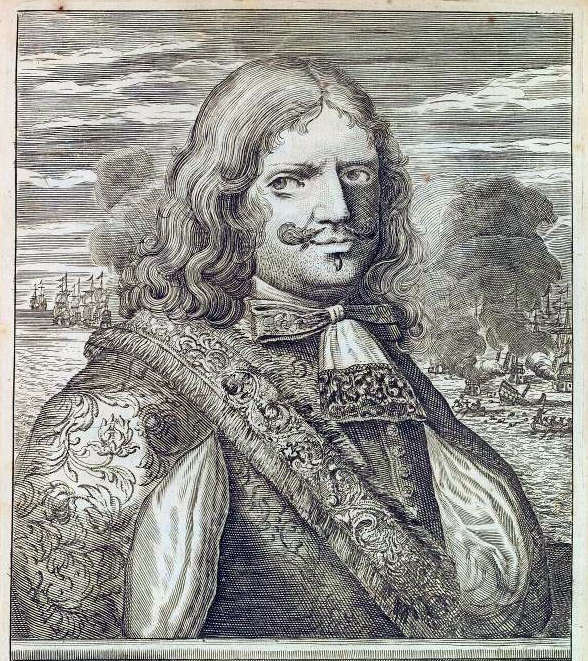
Bond soon meets Quarrel, who was so important to the mission in Live and Let Die. As with that book, I’m disheartened that Bond’s acceptance of Quarrel seems somewhat related to Quarrel having one European parent. While that isn’t spelled out here, Quarrel’s gray eyes “showed descent from a Cromwellian soldier or a pirate of Morgan’s time.” Oliver Cromwell (1599 – 1658) was a Member of Parliament and served in the British military. In 1655 he led the campaign that took Jamaica from Spain. Sir Henry Morgan (1635 – 1688) was a privateer (basically a state-sanctioned pirate) active throughout the Caribbean in the 1600s, raiding Spanish settlements in Cuba, the Yucatán Peninsula, and other areas. Morgan was arrested and taken to London in 1672 to help improve relations between Spain and England, but the English considered Morgan a hero and he returned to Jamaica in 1675. He became a wealthy plantation owner and continued his nefarious ways until his death in 1688.
Pain Lines:
Bond’s encounter with M indicated a poor emotional state, and now we confirm his physical condition is no better. Quarrel assumes Bond has been ill, due to new “pain lines” in his face.
Speed Graphic:
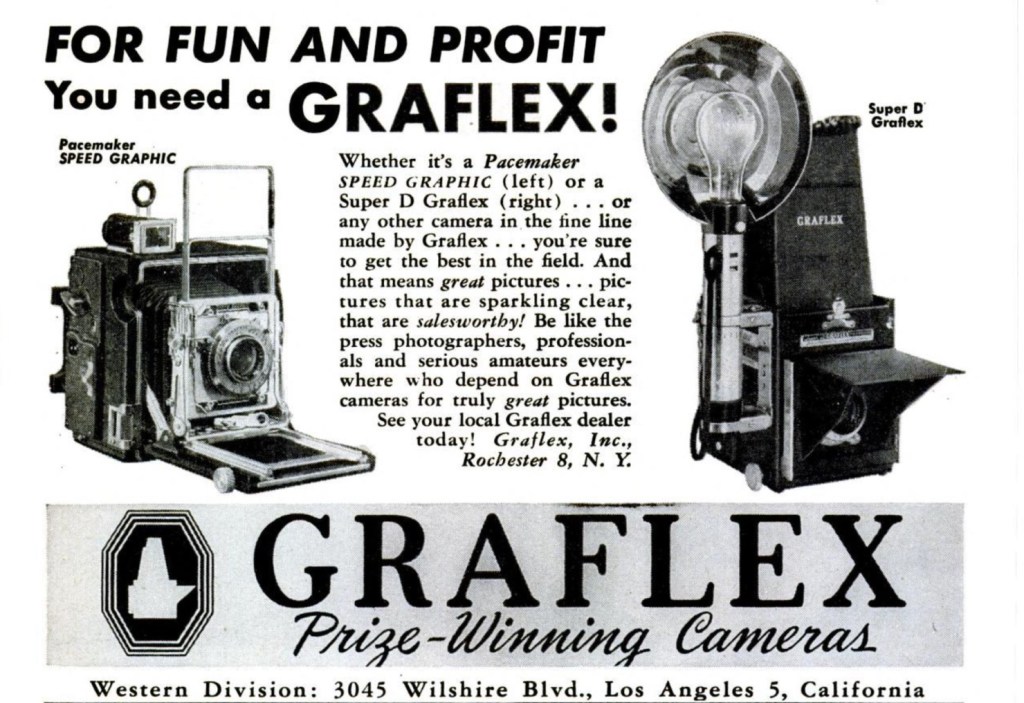
The photographer who tries to ID 007 uses a Speed Graphic camera. The Speed Graphic was produced by Graflex, founded as a metal working company in 1887, expanding to include cameras in 1899. Various models of Speed Graphic were manufactured from 1912 – 1973. The Speed Graphic was somewhat heavy and fairly cumbersome to use, a far cry from today’s camera phones. But consider the results – Pulitzer Prize photographs from 1942 – 1953 were taken with Speed Graphics, the best known being the 1945 shot of Marines raising the U.S. flag on Iwo Jima taken by Joe Rosenthal.
Daily Gleaner:
The photographer claims to work for the Daily Gleaner. The daily newspaper was established in 1834. It was renamed The Gleaner in 1992 and is still published today, making it the oldest continuously published newspaper in the Western Hemisphere.
Myrtle Bank:
Bond gives the photographer false information, telling her he is staying at the Myrtle Bank Hotel in Kingston. The hotel was built in 1870 by the United Fruit Company. The hotel was rebuilt in 1891 and 1907. The Myrtle Bank closed in 1964 and was demolished in 1969.
Cayman Islands:
Quarrel is from the Cayman Islands, a group of three islands south of Cuba and northwest of Jamaica. The islands were a territory of Jamaica from 1958 – 1962 but returned to British rule after Jamaican independence in 1962. Today the Cayman Islands are a self-governing British Overseas Territory.
Blue Hills Hotel:
Bond really plans to stay at the Blue Hills Hotel. I can’t find information on this, so as far as I can tell it’s a fictional hotel.
Palisadoes:
Bond instructs Quarrel to turn right toward Morant “at the end of the Palisadoes.” Bond would have arrived at Palisadoes Airport, today called Norman Manley International Airport. The airport is situated on the far end of a long, thin isthmus called the Palisadoes, that extends from the mainland into Kingston Harbour. (The Plumb Point Lighthouse mentioned earlier is also located on the Palisadoes.) Morant Bay is about 25 miles east of Kingston. (See map in Chapter 1 for Palisadoes location.)
Half Way Tree and Junction Road:
Quarrel and Bond drive through Half Way Tree and on the Junction Road. Half Way Tree was referenced in Chapter 1. I believe Junction Road refers to West Junction Road, a section of the A3 road, which begins in Kingston to the south, proceeds toward Annotto Bay on the north coast, then veers west to St. Ann’s Bay.
Sea Island Cotton:
Bond wears Sea Island cotton shorts, similar to the Sea Island cotton shirts he wore in Moonraker, Diamonds Are Forever, and From Russia with Love. Sea Island cotton is a long-fiber variety of cotton that was grown on barrier islands off the Atlantic coasts of South Carolina, Georgia, and Florida beginning in the 1700s.
The Joy Boat:
Quarrel takes Bond to dinner at a nightclub called The Joy Boat. As far as I can tell, this is a fictional location.
Calypso / Take Her to Jamaica:
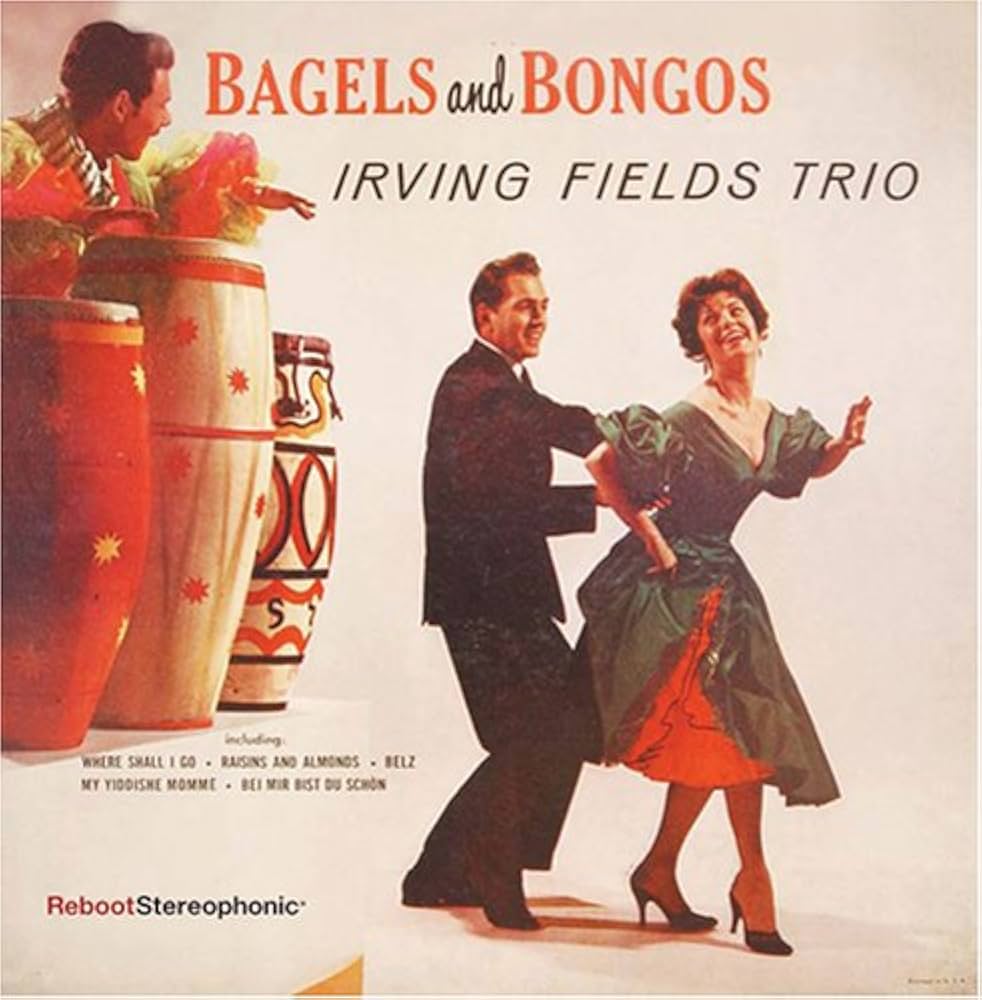
Calypso music is audible from restaurants and nightclubs as Bond and Quarrel head to dinner. Calypso originated in Trinidad and Tobago in the 1800s and quickly spread throughout the Caribbean. The style derived from West African Kaiso music via enslaved people brought by the French from the French Antilles. There was a sociopolitical nature to early calypso, sung in French creole and used to criticize the French plantation owners and the horrific conditions laborers were subjected to. The calypso trio at The Joy Boat is performing “Take Her to Jamaica (Where the Rum Comes From),” composed by Irving Fields (1915 – 2016), the New York-born musician and songwriter who creatively mixed musical genres throughout his long career. Fields’ best known album was probably Bagels and Bongos (1959), featuring such tunes as “Havannah Negila” and “Miami Merengue.” The Irving Fields Trio recorded “Take Her to Jamaica” in 1950 as the B side to “The Scottish Samba,” composed by Johnny Reine and Tommie Conner.
Pus-Feller:
We meet Pus-Feller, owner of The Joy Boat, who earned his nickname by wrestling a hostile octopus. We could easily dismiss the tale as myth-making if not for Quarrel’s testimony. It’s one of many examples of Fleming’s attempt to portray Jamaica as exotic and other-worldly compared to staid and chilly England.
Red Stripe:
Quarrel drinks a Red Stripe beer. Red Stripe is a pale lager that was first brewed in Jamaica in 1928. The label was acquired by Heineken in 2015.
Bond / Quarrel Dinner:
The two men have broiled lobster, rare steak, and unspecified native vegetables.
Kitch:
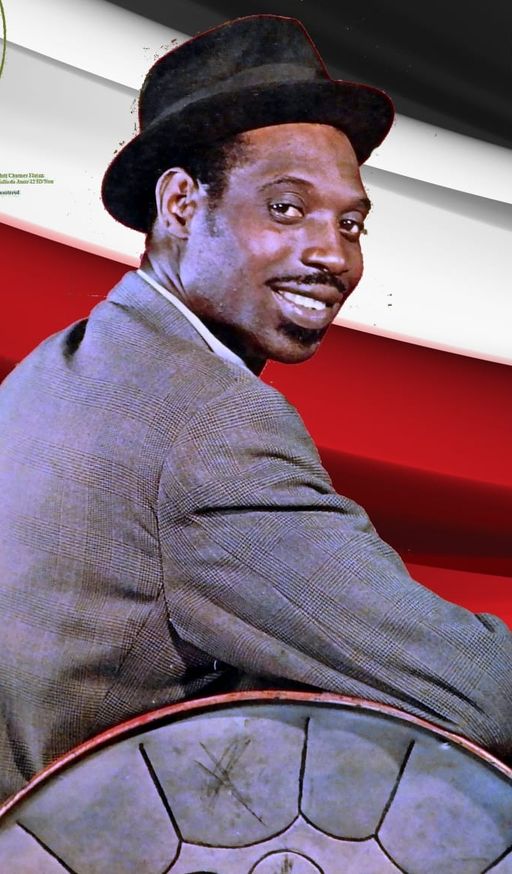
The calypso band plays “Kitch,” recorded in 1950 by Lord Kitchener (1922 – 2000) from Trinidad. Kitchener started his career in Trinidad in the 1940s, but traveled to England in 1948 and developed a UK audience throughout the 1950s.
Leica:
The mysterious photographer, who will introduce herself as Annabel Chung, is back, with a Leica camera this time. Leica was a German camera and optics company originally named Leitz after its founder, Ernst Leitz. The company was founded in 1869, introduced its first 35mm production camera models in the 1920s, and had a reputation for top-quality lenses. Ernst Leitz II (1871 – 1956), who took over the company in 1920, helped Jews escape Germany after Hitler came to power in the 1930s. Thankfully, Leica was positioned in West Germany after World War II, making the cameras more accessible to westerners.
Mount of Venus:
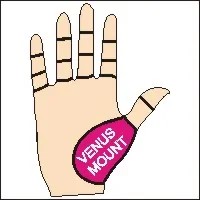
Quarrel applies pressure to Chung’s hand at the mount of Venus, the fleshy part of the palm below the thumb. In palmistry, a pronounced mount of Venus is said to relate to generosity of spirit or high energy levels.
Don’t Touch Me Tomato:
The calypso band plays “Don’t Touch Me Tomato.” The song was written in 1949 by Samuel L. Manning (1898 – 1960) of Trinidad. The song was first recorded as “Tomato” by June Nelson.
Plaster:
Bond tells Quarrel he needs plaster for the facial wound inflicted by Annabel Chung. “Plaster” in this context refers to an adhesive bandage; Elastoplast is a common UK brand and Band-Aid is a common U.S. brand.
5 Facts and Figures
Royal Blend:
Bond smokes “the first Royal Blend he had smoked in five years,” implying that he had this brand during his Live and Let Die adventure. I’m unable to find details on this brand and don’t recall it being mentioned in the previous book.
Motta’s:
Bond sends Quarrel to Motta’s to rent a car. This is another business I’m unable to find specifics on. There was a Stanley Motta who opened the first privately owned recording studio in Jamaica in 1951. Today Stanley Motta Limited operates a five-acre business park in Kingston called 58 HWT (for its address on Half Way Tree Road).
Montego, Spanish Town, Ocho Rios:
Bond wants the rental car driven to Montego Bay via “the Spanish Town, Ocho Rios road.” This road today is the A1 through Spanish town, just west of Kingston, and Ocho Rios on Jamaica’s northern coast. (See map in Chapter 1 for locations.)
Levy’s Garage:
Bond wants the rental car deposited at Levy’s garage in Montego. The only current Levy’s Garage I can find in Jamaica is in Palmers Cross, about 30 miles west of Kingston, so the Levy’s in the book is probably fictional.
Graham Associates:
Bond tells Quarrel to inquire at Graham Associates to see if Beau Desert (more on that later) is available to rent. I’m guessing this is the business that operates in Montego Bay today as Graham & Graham Realty.
Tussore:
Bond meets Jamaica’s Acting Governor (who does not appear to be named in the text), who wears a tussore suit. Tussar (or tussah, tussore, or several other alternative spellings) silk comes from silkworm larvae of the moth genus Antheraea. It primarily comes from Asia and has a naturally-occurring gold color. The silk is often used in saris.
Times Weekly:
The Acting Governor, who is not a fan of Bond, consults stock prices in the Times Weekly. He is consulting a weekly edition of The Times. The paper was founded in 1785 as The Daily Universal Register, then changed its name to The Times in 1788. Since 1981, The Times has been a subsidiary of the sinister News Corp. Kim Philby was a correspondent for The Times in the 1930s. The Times did publish a weekly edition, but I’m unable to confirm the publication dates, though The Times of London Weekly is still published for readers outside the UK or the Republic of Ireland.
Pleydell-Smith:
Bond meets Jamaica’s Colonial Secretary, Pleydell-Smith. He and Bond take a quick liking to one another, making Bond’s job a little easier. He is not, however, a fan of Jamaica’s quest for independence, and a bit of a racist.
King’s College:
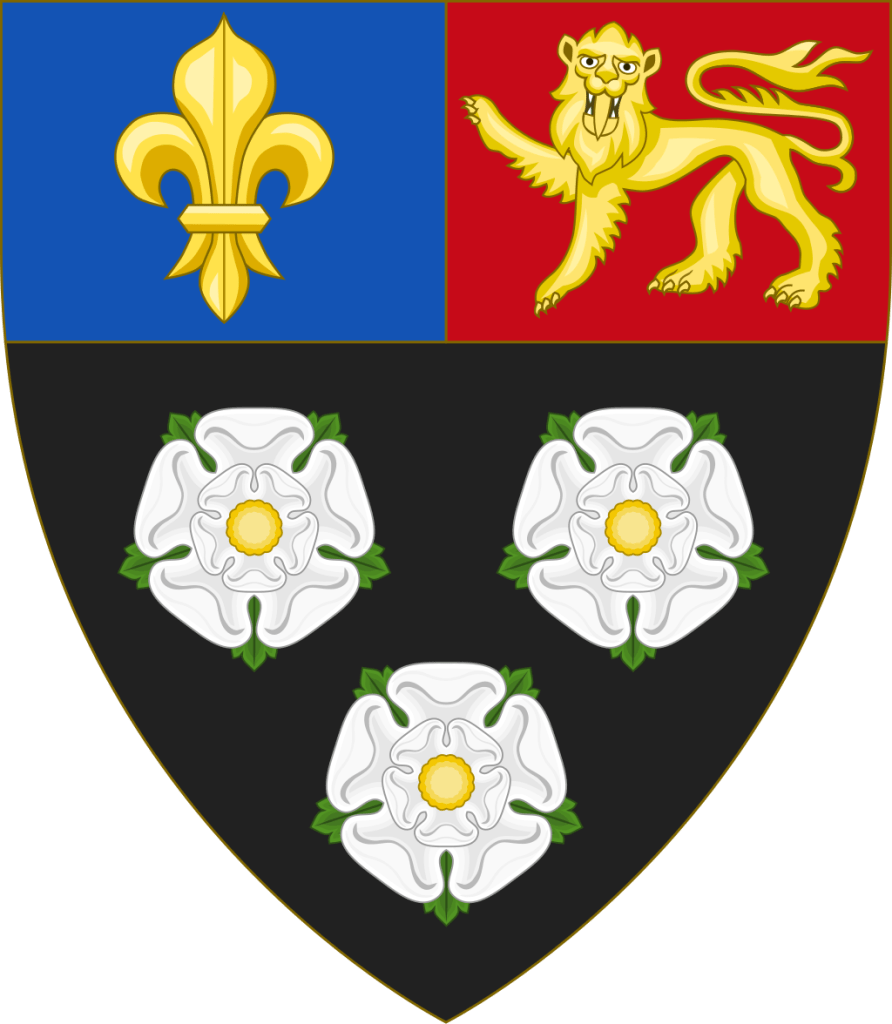
Pleydell-Smith’s tobacco jar displays the arms of King’s College, Cambridge. King’s College is a school within the University of Cambridge and was founded in 1441 by King Henry VI (1421 – 1471). The college did not admit women students until 1972. Such luminaries as E.M. Forster, Alan Turing, Salman Rushdie, and Zadie Smith graduated from King’s College.
Compañia Administradora del Guano:
Pleydell-Smith’s first job was with the British Consular office in Peru in the administration of relations with Compañia Administradora del Guano (CAG). CAG was a state-sponsored business founded in 1909 and responsible for Peru’s entire guano industry. This included protecting the bird colonies that produced the guano, leading to harsh consequences for other coastal birds, including the Peruvian diving petrel and the Humboldt penguin. CAG was renamed Corporación Nacional de Fertilizantes (CONAFER) in 1963 to better administer a synthetic fertilizer industry.
Masked Booby and Guanay Cormorant:
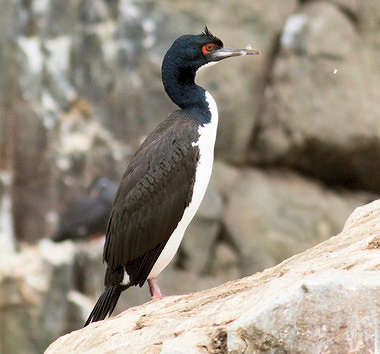
Pleydell-Smith cites two birds as the primary sources of usable guano: the masked booby (Sula dactylatra), found primarily in the south Pacific, south Atlantic, and Caribbean Oceans, and the guanay cormorant (Leucocarbo bougainvilliorum), found primarily along the western coast of South America, making its presence on Crab Key a bit unusual. Pleydell-Smith compares the guanay to the green cormorant (Gulosus aristotelis) found in parts of Europe.
Pescadores:
Pleydell-Smith claims that millions of tons of guano exist in places like the Pescadores. The Grupo de Pescadores Islands are part of the Guano Islands, Islets, and Capes National Reserve System, a protected area on the coast of Peru.
Saturnalia:
Pleydell-Smith talks of eager demand for guano in the late 1800s, a time known informally as the Saturnalia. I can’t find confirmation of this use of the term, but ancient Romans paid tribute to Saturn, the Roman god of time, wealth, and renewal, during the annual Saturnalia. Originally observed on December 17 (according to the Julian calendar), the festival gradually expanded over seven days. The event involved a sacrifice, a banquet, gambling, and generally raucous celebrations. Saturnalia is believed to have influenced western Europe’s observations of Christmas and Epiphany.
Klondyke:
Pleydell-Smith compares the Peruvian Saturnalia to “the Klondyke.” The Klondike Gold Rush occurred in the Yukon territory in northwestern Canada from 1896 – 1899 after gold was discovered by miners in August 1896. About 100,000 hopeful prospectors are estimated to have rushed to the Klondike. Many indigenous people in the region were forcibly resettled to make room for gold-seekers.
Humboldt Current:
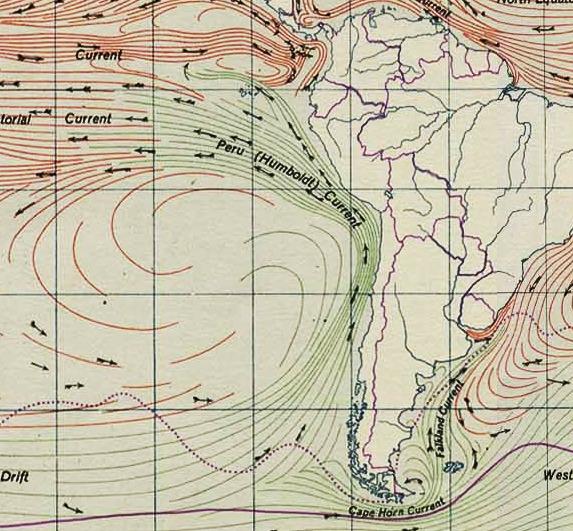
Pleydell-Smith reports that Crab Key guano has a lower nitrate content than that of Peru because of the Humboldt Current, sometimes called the Peru Current. The current was first identified by José de Acosta (1539 – 1600) of Spain but was named after the German naturalist Alexander von Humboldt (1769 – 1859). The current flows north up the Pacific coast of South America, cooling Peru’s coastal waters and bringing nutrients to the surface that support the local ecosystem.
German Manure:
As mentioned previously, demand for guano dropped considerably when Germany developed artificial fertilizer. This was thanks largely to the work of chemist Fritz Haber (1868 – 1934), whose work not only applied to agriculture but to chemical warfare. He helped create poison gases for use in World War I and his work contributed to the creation of Zyklon B that the Nazis used in gas chambers during the Holocaust.
Antwerp:
Pleydell-Smith mentions the drop in guano prices after the war, speculating that Dr. No is “only getting about thirty-eight to forty dollars a ton c.i.f. Antwerp.” c.i.f. = cost, insurance, freight; this means that the seller pays to insure and transport goods to the buyer and applies to goods shipped over water. Antwerp was a hub of global guano trading, which seems to have been especially focused in Burcht, a village within Antwerp province. For example, the Germany company Guano-Werke AG had a factory in Antwerp.
Miss Taro:
We meet one of Pleydell-Smith’s secretaries, Miss Taro, who is Chinese and therefore, in Bond’s mind, automatically a suspect.
6 The Finger On the Trigger
Pleydell-Smith’s Bigotry:
This Pleydell-Smith character seems to hate a lot of people, even his fellow Brits. Jamaicans: “The Jamaican is a kindly lazy man with the virtues and vices of a child.” British: “He doesn’t stay long enough. He takes a fat cut and leaves.” Portuguese Jews: “But they’re snobs and they spend too much of their fortunes on building fine houses and giving dances.” Syrians: “Get overstocked and have to have an occasional fire to get liquid again.” Indians: “They’re not much of a lot.” The Black-Chinese “Chigroes”: “They’ve got some of the intelligence of the Chinese and most of the vices of the Black man.” Yikes! Oddly enough, his only real praise seems to be for Chinese immigrants: “…solid, compact, discreet – the most powerful clique in Jamaica.” Yet his additional observation – “They keep to themselves and keep their strain pure.” – gives further insight into his (and Fleming’s?) attitudes.
Galina Point:
A map Bond consults puts Crab Key thirty miles north of Galina Point and sixty miles south of Cuba. Galina is a town almost due north of Kingston on Jamaica’s northern coast. It’s a reminder of how little distance lies between the island nations of the Caribbean. (See map in Chapter 1 for location.)
Soursop:
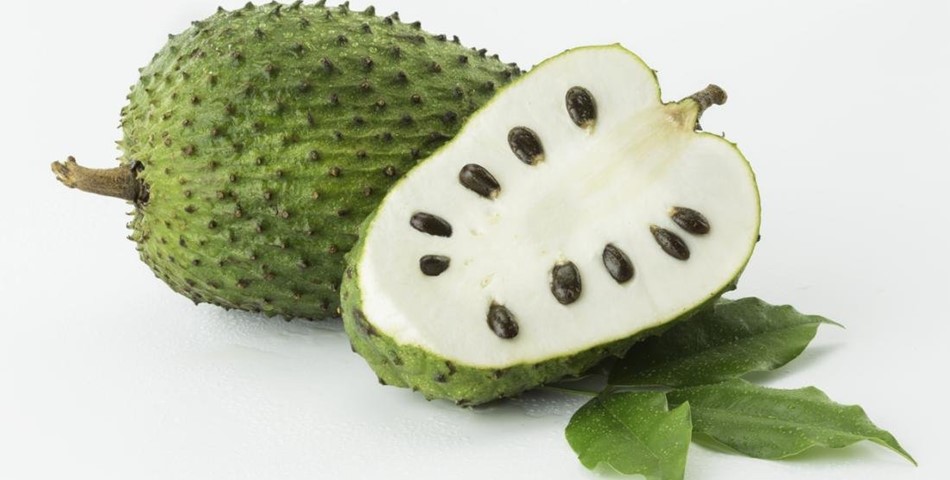
The suspicious fruit basket Bond receives contains specimens familiar to most readers except, perhaps, soursop. Sometimes called guyabano or guanábana, soursop is a tropical fruit with flavor characteristics of strawberries, apples, citrus, and bananas. It is often used in smoothies and fruit juices, and it is delicious.
Tool Kit:
Bond conveniently carries a jeweler’s glass in his tool kit, perhaps something he acquired during Diamonds Are Forever. He also relied on this tool kit in Casino Royale and Moonraker.
Handbook of the West Indies:
Bond pauses to read the Handbook of the West Indies. I can’t find a book with this exact title, but two possibilities are The Handbook of the British West Indies, British Guiana and British Honduras, 1926-27 by Algernon Edward Aspinall, published in 1926, or The Book of the West Indies by A. Hyatt Verrill, published in 1917. The Aspinall book seems more likely, as he was a British author who wrote a series of books about the West Indies.
Tropical Centipede:
Bond encounters a tropical centipede in his bed with a length of 5 – 6 inches. A species is not identified, but I’m voting for Scolopendra subspinipes, a large centipede common throughout tropical areas of Asia, South and Central America, and the Caribbean. It’s maximum length is generally about 8 inches. While it is described as “an aggressive predator,” it primarily targets arachnids or even mice and small reptiles. While it’s bite could be very painful to a human, it is extremely unlikely to be fatal.
7 Night Passage
Brown Bomber:
Bond and Quarrel are passed by a bus with “Brown Bomber” painted above the windshield. The obvious reference is the boxer Joe Louis (1914 – 1981), who was the world heavyweight champion from 1934 – 1951 and was often referred to by the nickname Brown Bomber. According to the DEA, Brown Bomber is also one of the many slang terms for LSD. However, during certain time periods buses in Milford, New Jersey, and Dorset, United Kingdom, (and perhaps other locations?) have been referred to as brown bombers because of their coloring. Maybe the bus in Kingston was purchased second-hand from an overseas municipality?
Austin:
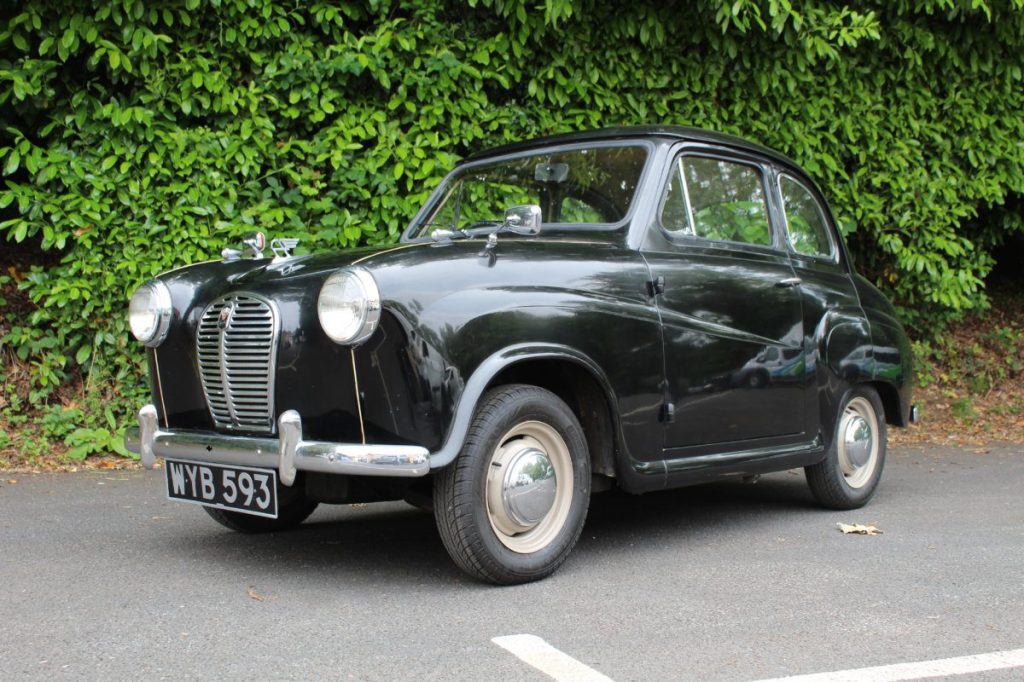
Having ditched the Sunbeam, Bond and Quarrel drive an Austin A.30. British automaker Austin Motor Company was established in 1905. Austin merged with Morris Motors Limited in 1952 to form British Motor Corporation (BMC) but maintained the Austin brand. The Austin trademark is currently owned by China’s SAIC Motor. The A30 was produced from 1951 – 1956, originally as a four-door saloon but a two-door version and even a van came later.
Stony Hill:
Bond notices women carrying baskets of fruits and vegetables for Stony Hill market. Stony Hill is a suburb on the north side of Kingston. Live and Let Die established this as the neighborhood where the late Strangways lived. There is a Stony Hill Market that is home to multiple vendors and seems to be something of a farmer’s market, but I’m unable to find any history on it.
Morgan’s Harbour:
Bond imagines visiting the “garrison in Morgan’s Harbour” from Port Royal. I believe Morgan’s Harbour is a fictional location based on the various inlets of water around Port Maria (more on that shortly) on Jamaica’s north coast.
Castleton Gardens:
Bond drives through “the cool, beautiful glades of Castleton Gardens.” Castleton Botanical Garden is about 19 miles north of Kingston and was established in 1862. It is still accessible to the public today.
Port Maria:
When Quarrel requests life insurance for the pending mission, Bond promises to arrange it at Port Maria. Port Maria is just south of Galina (see Chapter 6) on Jamaica’s northern coast. Bond claimed to be a resident of Port Maria as part of his cover identity in Casino Royale. (See map in Chapter 1 for location.)
Isle of Surprise:
Bond observes the Isle of Surprise, home of Mr. Big’s base in Live and Let Die. The fictional island is said to be based on Cabarita Island in Port Maria Bay.
Beau Desert:
Bond and Quarrel return to Beau Desert, site of a former plantation and where Bond trained in Live and Let Die.
Solitaire:
007 also recalls his lost love from Live and Let Die, Solitaire. “What had happened to her? Where was she?” Given Solitaire’s odd life experience, it’s a fun thought exercise to speculate where she might have gone after that story.
Training:
Bond’s training routine seems like a fairly trivial undertaking with a little swimming, a little running, sunbathing (?), and a daily massage. He does this for approximately a week, so he’s not exactly ready for the Olympics.
Devil’s Racecourse:
The unfortunate drivers of the Sunbeam die in a crash on a section of road between Spanish Town and Ocho Rios called the Devil’s Racecourse. This would be along the road that today is the A1. However, this Jamaica Observer article puts the Devil’s Race Course in Guy’s Hill, east of the A1. I can’t find exact construction dates for A1, but it was not in operation during Bond’s time, so the road in the Guy’s Hill area could be the same road referred to in the novel.
Cyanide:
It’s confirmed that the suspicious fruit basket sent to Bond in Chapter 6 was loaded with cyanide. Cyanide in general is a chemical substance with a carbon-nitrogen functional bond. Forms of cyanide occur in nature, in apple seeds, peach pits, and cassava roots, among other things. Various forms of cyanide have a multitude of uses, including ferrocyanide as an anticaking agent in table salt. Symptoms of cyanide poisoning can occur within minutes of exposure, depending on the type of cyanide and degree of exposure.
Canadian Club:
Bond relaxes with a bottle of Canadian Club Blended Rye. The company was founded in Detroit by Hiram Walker (1816 – 1899), but moved to Ontario, Canada, to avoid the U.S. Prohibition movement. Canadian Club currently offers a straight rye whiskey but I can find no history of a blended rye. In the U.S., rye whiskey is distilled from at least 51% rye grain, but Canadian rye whiskey is more of a historical reference and does not necessarily contain actual rye grain. The Canadian Club brand is currently owned by Suntory Global Spirits. What’s most interesting about this scene is Bond’s own self-doubt, something that may reflect Fleming’s own state at the time: “What was he drinking for? Because of the thirty miles of black sea he had to cross tonight? Because he was going into the unknown? Because of Doctor No?”
Undertaker’s Wind:
Bond is outside when the Undertaker’s Wind begins. Also referred to in Live and Let Die, the “Undertaker’s Wind” blows “bad air” off of the Jamaican island at night. Jan Needle wrote a naval adventure set in Jamaica called Undertaker’s Wind. There is also a “Doctor’s Wind” that blows fresh air onto the island during the day.
Turtle Grass and Sea Grape:
Bond and Quarrel guide their canoe onto Crab Key amid “turtle grass and low sea-grape bushes.” Turtlegrass is a perennial seagrass that grows in shallow sandy or muddy areas, most common in calm, high-salinity shallow waters. It provides food and shelter for such wildlife as turtles and herbivorous fish. Sea grape is a salt-tolerant, flowering tree that often grows in shrub form along tropical coastal areas, though it is commonly used as a landscape plant inland when the conditions are warm enough.
8 The Elegant Venus
Honeychile Rider:
Bond awakens on Crab Key to see Honeychile Rider making an even more shocking entrance than she would later in the film adaptation. Fleming’s friend, U.S. actress Patricia Wilder (1913 – 1995), was often referred to by the nickname “Honeychile.”
Café au Lait:
Honey’s skin is the color of café au lait, which as coffee-drinkers know is coffee with hot (sometimes steamed) milk added.
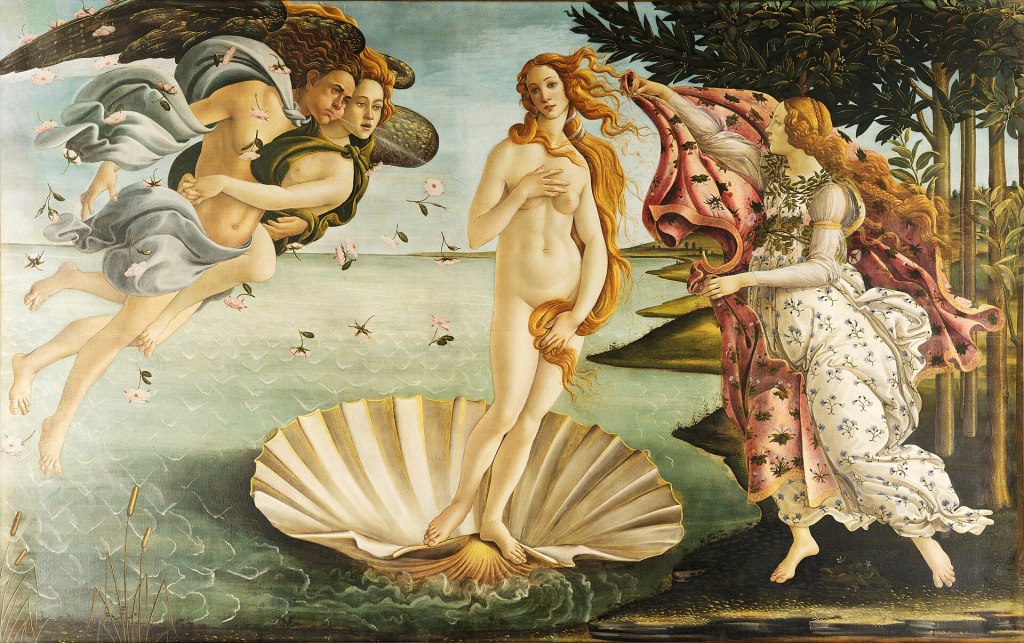
Botticelli’s Venus:
Bond immediately equates Honey’s appearance with that of Venus as painted by Italian Renaissance painter Sandro Botticelli (1445 – 1510). Botticelli’s paintings often included religious subjects; his The Birth of Venus, from the 1480s, portrays the Roman goddess Venus emerging from the sea, fully grown at birth.
Marion:
Bond introduces himself to Honey by joining her in song. (The movie used this approach but with a different tune.) According to Wikipedia, the title is more commonly spelled “Marianne” or “Mary Ann.” This was a traditional calypso song first recorded by Roaring Lion (1908 – 1999), born Rafael de Leon in Trinidad. The song was later recorded by Xavier Cugat and Trini Lopez, among others.
Broken Nose:
Honey’s untreated broken nose adds to her exotic nature and ultimately turns her into an object of sympathy for Bond, which probably explains his exaggerated feelings toward her. Like Jamaica itself, Bond is fascinated by a place and people who are radically different from his life in London. Fleming, and most of his readers, would have felt the same. It’s also significant that Honey is easily convinced of the importance of having her nose “repaired”; her ambition is to be more “normal,” making her more like the very world that Bond finds boring.
Friday:
When Honey dresses, Bond compares her to a “Man Friday.” However, it seems the original Friday – the character from the 1719 novel Robinson Crusoe by Daniel Defoe (1660 – 1731), who Crusoe recruits as a servant and converts to Christianity after saving him from cannibals – would have likely worn less modest clothing than Honey puts on. The underlying comparison is valid, however; the woman, and the indigenous man in Defoe’s novel, are most useful in their willingness to adapt to traditional Western attitudes.
Wildlife:
Honey’s knowledge of local plant and animal life, particularly sea shells, is impressive and reflects an attitude of existing in the world rather than trying to conquer it. It’s hard to imagine how she would survive after being removed from this organic state of existence. This integral world view is also reflected in Honey’s willingness to believe in the Crab Key dragon, which turns out to be very real, despite not conforming to Bond’s view of what a “dragon” is supposed to look like.
Dog:
In another insulting attempt to “animalize” a Black character, Quarrel’s reaction to a troublesome noise is described as: “His head swivelled round and pointed like a dog’s.” It’s hard to imagine Fleming describing a white character in such a way.
9 Close Shaves
MTB:
Dr. No’s henchmen monitor Crab Key in a boat that Bond suspects of being a modified M.T.B., or motor torpedo boat, obtained as British government surplus. MTB’s were used by the Royal Navy and the Royal Canadian Navy during World War II. The U.S. developed a similar class of vessel, the “patrol, torpedo,” or PT boat. After World War II, many MTB’s were modified and sold as houseboats.
Spandau:
The enemy boat is equipped with a Spandau machine gun. The true “Spandau” was the German MG 08 developed by Spandau Arsenal in 1908 and heavily used by the Germans in World War I. German World War II machine guns, the MG 34 and MG 42, were often referred to by the Allies as Spandaus, even though Spandau Arsenal had ceased weapons manufacturing in 1919 by order of the Treaty of Versailles.
Ardennes:
The machine gun produces a “swift rattling roar Bond had last heard coming from the German lines in the Ardennes.” (This implies that the gun is not an actual Spandau, but an MG 34 or MG 42.) This seems to be an important war memory for Bond, as he also recalled it in Moonraker. The Ardennes is a heavily forested area that stretches through Belgium, Luxembourg, Germany, and France. Bond is specifically referring to the Battle of the Bulge, sometimes known as the Ardennes Offensive, which began with a German surprise attack on Allied forces in Belgium in December, 1944, and included a V-2 rocket destroying a movie theater in Antwerp, killing 567 people.
Decauderville Track:
Bond spots a “Decauderville Track” used to transport guano for processing. The correct spelling is Decauville, a railway manufacturer established by French engineer Paul Decauville (1846 – 1922). The company devised light, narrow-gauge rail track that could easily be disassembled, transported, and reassembled. The French military began using the Decauville track in the 1880s, and the French and British military made heavy use of the track in World War I. The company also produced a rail wagon primarily used for transporting bulk cargo such as sand and coal.
Animalness:
Here we see the development of Bond’s infatuation with Honey’s foreign nature. “In the mangroves the broken nose seemed appropriate in its animalness.”
10 Dragon Spoor
Remington:
Quarrel recovers a U.S. Army Remington Carbine .300 from one of Dr. No’s henchmen. Remington was founded by Eliphalet Remington (1793 – 1861) in 1816. Remington helped the U.S. military expand ammunition production early in World War II, administering manufacturing plants owned by the U.S. government. The company also manufactured the M1903A3 Springfield bolt-action rifle, which is probably the weapon that Quarrel has found.
Heinz:
In an abandoned hut, 007 and company find cans of Heinz pork and beans. Heinz was founded in the late 1860s by U.S. entrepreneur Henry J. Heinz (1844 – 1919). The company’s first canned food product was horseradish, and baked beans were introduced in the 1880s. One year after Doctor No was published, Frank Armour Jr. became president and COO; he was the first Heinz president who was not a member of the Heinz family. Heinz merged with Kraft Foods in 2015 to form the Kraft Heinz Company.
Ugly Duckling:
More othering of Honey, referring to her as an “Ugly Duckling” and describing her “warm animal smell.” In Bond’s view, only if her damaged nose is mended will she be “the most beautiful girl in Jamaica.”
11 Amidst the Alien Cane
Obeah:
Honey describes using a black widow spider to kill her attacker, claiming “the obeahmen say there’s nothing like it.” She’s referring to specialists in Obeah, a practice of spell-casting and healing practiced in the British Caribbean colonies and sometimes confused with Voodoo.
The Nautilus:
Honey seeks shells based on advertisements in a magazine called Nautilus. The Nautilus is a peer-reviewed scientific journal on the subject of mollusks. The journal was first published in 1886 and is still published quarterly.
Formalin:
Honey ships shells overseas preserved in formalin. Formalin is an aqueous solution of formaldehyde. Formalin may also contain methanol to prevent or minimize oxidation.
Jelke:
Honey’s plan is to become a New York City prostitute until she can make enough money to buy Beau Desert. She learned about the trade after reading about a “rich playboy” named Jelke. Time magazine referred to Minot F. Jelke as a “23-year-old playboy” after he was convicted in 1953 of operating a prostitution ring. Jelke came from a long line of German butter makers who later sold margarine in the U.S. under the brand name Good Luck.
Jamaica Institute:
As an alternative to prostitution, Bond suggests Honey seek employment with the Jamaican Institute. Bond consulted books from the Jamaica Institute in Live and Let Die. This most likely refers to the Institute of Jamaica, established in 1879, which administers arts and culture programs throughout the country, including the Natural History Museum of Jamaica.
Beautiful Animal:
Bond dwells further on what he perceives as Honey’s savage nature, thinking of her as a “Girl Tarzan” and a “beautiful animal.” The situation becomes even creepier when Bond views Honey as something of a child; she is only 20 years old, and if memory serves Bond should be nearing his late 30s by now.
12 The Thing
The Long Finger:
When Quarrel dies, Bond wonders, “Why hadn’t he been warned by the long finger that had pointed at him in Jamaica?” This refers to Chapter 4, when the mix-up with Strangways’ car “put the finger on him and on what he was doing in Jamaica.”
Quarrel:
While Bond appreciated Quarrel, it was more as a reliable servant rather than an equal. So it’s encouraging to see Bond is truly hurt by Quarrel’s death and even apologizes for getting him involved in the fatal business.
Handcuffs:
Dr. No’s men restrain Bond and Honey with “American police model” handcuffs. I’m unable to find anything specific about how handcuffs used by U.S. law enforcement in the 1950s might have differed from those in Britain.
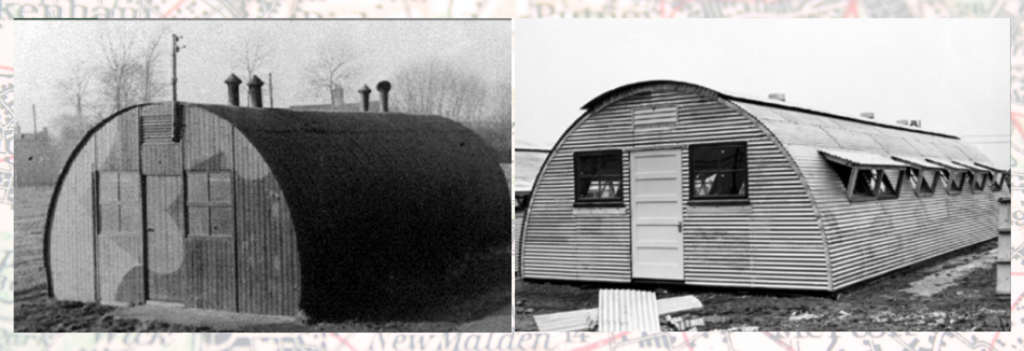
Quonset Huts:
Bond and Honey are taken to a set of Quonset huts. Quonsets are semi-circular, prefabricated structures made of corrugated steel. Quonset huts were developed by the U.S. based on the British Nissen huts used in World War I (and cited by Hugo Drax in Moonraker). Nissen or Quonset huts are a common sight in movies and TV shows depicting military life.
Yellow Eyes:
Dr. No’s henchmen are further dehumanized, described as having “yellow eyes” and “purple lips,” and looking like “children in front of a Christmas tree.”
13 Mink-Lined Prison
Wilton:
The reception area of Dr. No’s sanctuary has Wilton carpet. Named after the town of Wilton in southwestern England, a hub of carpet manufacturing since the 1700s, Wilton is a pile carpet created on a wire loom and is generally of very good quality.
Degas:
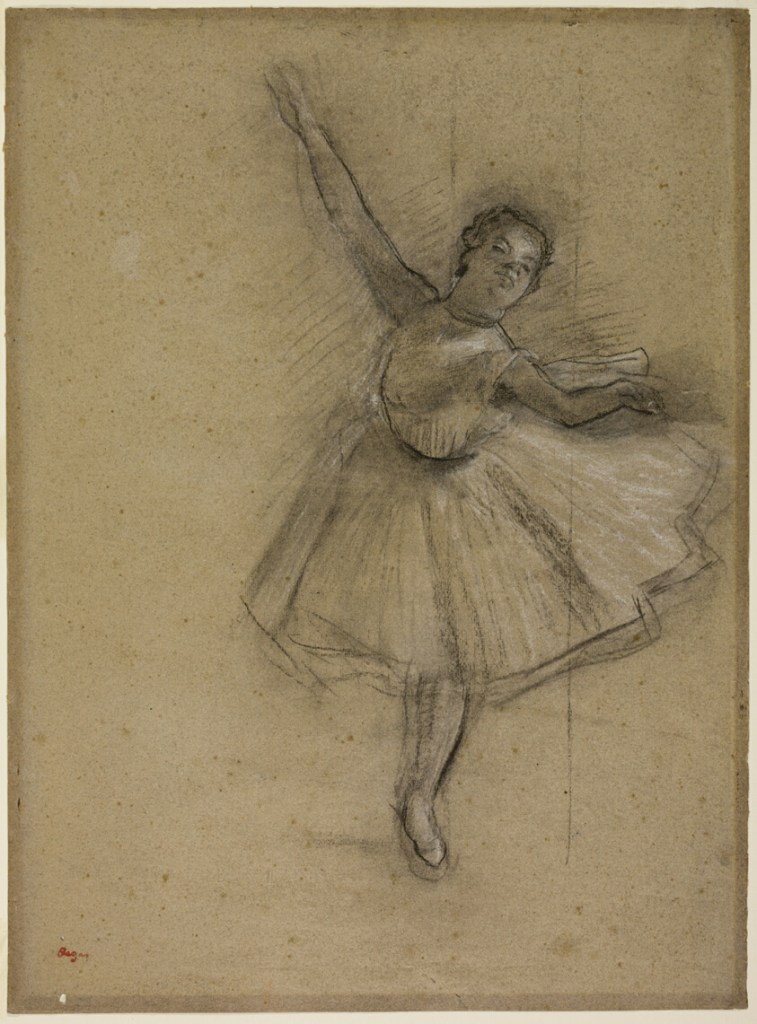
The reception area is decorated with ballet sketches by Degas. Edgar Degas (1834 – 1917) was a French impressionist painter and sculptor who became strongly anti-Semitic in his later years. In the 1860s, he began sketching and painting dancers, and this would be a common theme in his work.
Mahogany:
Finally, the reception desk is made of mahogany. Wood from mahogany trees is easy to work with, highly durable, and resistant to rot, making it a good choice for furniture, boat construction, decks, and musical instruments. European colonizers found mahogany growing naturally in the Americas, and removal of an import tax on timber imported to Britain from British colonies led to a rise in mahogany consumption.
Brogues:
The women who greet Bond and Honey wear brogues, low-heeled shoes made of leather uppers with decorative perforations (“broguing”). The original purpose of the broguing was to help the shoes dry faster in wet climates, and brogues were typically an outdoor shoe for many years. Tastes changed over time and today they are considered appropriate for nearly any occasion.
Rose and Lily:
The women who greet the unhappy couple are both named after flowers, Sister Rose and Sister Lily.
Players:
Sister Lily offers Bond a choice of three cigarettes: American tobacco, Turkish tobacco, and Players. Players cigarettes were produced by John Player & Sons and were carried by Red Grant in From Russia with Love. Established in Scotland in 1820, John Player bought the business in 1877 and set up shop in Nottingham in northern England. At one point, two-thirds of cigarettes sold in Britain were Players. The cigarettes were sold in decorative tins like the one in a Special Branch office in Moonraker. We know from past books of Bond’s fondness for Turkish tobacco, which is what he chooses here.
Bryce:
Bond gives his cover name of John Bryce, which he also used in Live and Let Die. This name appears to have come from Fleming’s friend Ivar Bryce (see Chapter 3).
Zoological Society:
Bond, as Bryce, claims to represent the Royal Zoological Society in Regent’s Park, London. The Zoological Society of London was founded in 1826 and was granted a royal charter by King George IV (1762 – 1830) in 1829. The Society opened the London Zoo in Regent’s Park in 1828 and it is still in operation. The really clever part is that Bond / Bryce claims to be an ornithologist, an obvious reference to Birds of the West Indies, the field guide written by real-life ornithologist James Bond (1900 – 1989), and the inspiration for 007’s name.
Uncle M:
It seems a bit shocking that Bond offers M’s real name as a next of kin, calling him an uncle. Shouldn’t M have a cover name, also?
May:
Bond and Honey are guided to their room by May, who appears to be a member of the housekeeping staff. It’s an astonishing coincidence that she has the same name as Bond’s Scottish housekeeper in London.
Miami Modern:
Bond views décor in the guest rooms in Dr. No’s sanctuary as “modern Miami style.” I don’t think this is a formal design style, but seems to include a blend of art deco and mid-century modern. This room, specifically, has “dark green walls, dark polished mahogany floor with occasional thick white rugs, and well-designed bamboo furniture…”
Measurements:
The staff received measurements for Bond’s and Honey’s wardrobe the previous day. How they obtained this information, or planned the timing of Bond’s capture so well, is never explained.
Floris:
Bond enjoys Lime Bath Essence from Floris of London, founded in the 1730s by Juan Famenias Floris. The company was granted its first royal warrant (a contract to serve the royal family) in 1820. Floris was perfumer to Queen Elizabeth II (1926 – 2022) and is still owned by the Floris family. Floris products were also used in Moonraker and Diamonds Are Forever. After Doctor No was published, Floris sent Fleming a letter of thanks along with a bottle of Limes Bath Essence.
Guerlain:
Honey receives bathcubes and sapoceti Fleur des Alpes soap from Guerlain, a French cosmetics and skincare company established in 1828 by Pierre-François Pascal Guerlain. The Guerlain family operated the business until selling it to LVMH in 1994. Sapoceti was a soap made with whale blubber.
Steradent:
The guest bathroom contains Steradent toothpicks. Today, Steradent is a British company that sells denture cleaning products. I’m unable to find any history on the company or its products.
Rose:
The bathroom also has Rose mouthwash. No further details are provided, but it’s probably the Rose rosewater mouthwash sold by Floris.
Milk of Magnesia:
Hopefully Bond and Honey won’t suffer constipation, but if they do, Milk of Magnesia is on hand. Magnesium hydroxide is the active ingredient in Phillips’ Milk of Magnesia, named after British pharmacist Charles Henry Phillips (1822 – 1888). Today, Phillips’ Milk of Magnesia is owned by Bayer.
Lentheric:
Finally, Bond has Lentheric aftershave. Lentheric is a perfume, cosmetics, and personal care company established by Guillaume Lentheric in France in 1875. Today, after multiple acquisitions and name changes, what used to be Lentheric is part of Indigo Brands, a subsidiary of AVL.
Breakfast:
While Honey bathes, Bond enjoys breakfast of pineapple juice, scrambled eggs, toast, bacon, a grilled kidney, pork sausage, rolls, marmalade, honey, and strawberry jam. (Bond has “four rashers of bacon,” and a rasher is just a thin slice of bacon.)
Dr. No:
After Bond and Honey are drugged, Dr. No makes a very creepy entrance.
14 Come into My Parlour
Nembutal:
Bond wakes with a “nembutal headache,” indicating what they were drugged with. Pentobarbital is a barbiturate used in multiple medical applications. Sold under the brand name Nembutal, it was once used as a sleep aid but has largely been replaced by other drugs because users could quickly become dependent and it was heavily abused. It is such a risky substance that one of the first U.S. web search results for Nembutal is a suicide hotline. Vesper carried Nembutal in Casino Royale.
Savoy, 21, Tour d’Argent:
Bond and Honey are provided menus that, to Bond, could have come from the Savoy Grill, 21, or the Tour d’Argent. The Savoy Grill is a restaurant in the Savoy Hotel in London. The Savoy is a luxury hotel in central London that opened in 1889. It was home to Rufus B. Saye in Diamonds Are Forever. Charles de Gaulle was a regular diner at the Grill during World War II. The 21 Club opened in 1930 at 21 West 52nd Street in New York City, hence the name. 21 operated as a speakeasy during the early years, as Prohibition was in effect, and the staff managed to outwit authorities during multiple raids. The restaurant had a “secret” wine cellar, which came in handy during the Prohibition years, and at various times was used to store the wine collections of John F. Kennedy, Elizabeth Taylor, Joan Crawford, and Ernest Hemingway, among others. La Tour d’Argent is in the 5th arrondissement in Paris. The restaurant claims to have opened in 1582 but that is unconfirmed. President Franklin D. Roosevelt, Marlene Dietrich, and Charlie Chaplin were among the restaurant’s distinguished customers over the years.
Bond / Honey Dinner:
Bond chooses that evening’s dinner for both himself and Honey: caviar, grilled lamb cutlets, salad, angels on horseback (oysters wrapped in bacon) for Bond, and melon, roast chicken á l’Anglaise (chicken cooked “in the English way,” which could mean a lot of things but typically involves a sausage-based stuffing), vanilla ice cream with chocolate sauce for Honey.
Waygood Otis:
The unlucky couple rides a Waygood Otis elevator to see Dr. No. Waygood was a British elevator manufacturer established by Richard Waygood in 1833. U.S.-based Otis Elevator Company was founded by Elisha Otis (1811 – 1861) in 1853. The two companies merged to form Waygood Otis in 1914. The Waygood name was removed in 1957. Otis is still the best known name in the production of elevators, having installed their products in such historic buildings as the Eiffel Tower, the Empire State Building, and the Burj Khalifa.
Demoiselles:
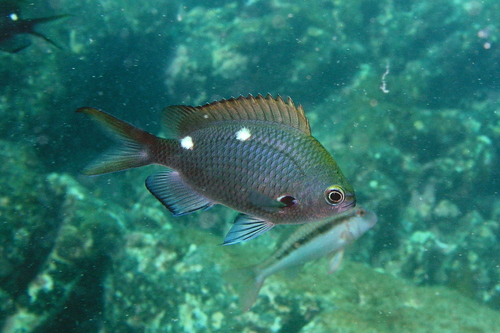
Entering Dr. No’s undersea lair, Bond observes a variety of sea life, including demoiselles. These are a variety of damselfish, the most common being the New Zealand demoiselle. The New Zealand demoiselles are an aggressive variety of fish about 6 – 8 inches long and commonly found, as the name suggests, in waters around New Zealand.
Dalí:
Bond thinks Dr. No’s “sharply upswept” eyebrows are Dali-esque (as if the rest of Dr. No’s appearance isn’t). Salvador Dalí (1904 – 1989) painted, among other things, surrealist landscapes populated by distorted and unexpected objects.
Coca-Cola:
When Dr. No offers beverages, Honey asks for a Coca-Cola. Coca-Cola is a carbonated beverage produced by the Coca-Cola Company. The original soft drink was devised by Confederate morphine addict John Pemberton (1831 – 1888) in 1885. It was based on French coca wine, a beverage that combined wine and cocaine, with the addition of a kola nut for caffeine. Pemberton removed the alcohol in 1886 and named the drink Coca-Cola. Fresh coca leaves were removed in 1903, but the beverage still contained trace amounts of cocaine from the use of spent coca leaves. Eventually the company switched to a cocaine-free coca leaf extract. The Coca-Cola Company only manufactures a syrup concentrate, which it distributes internationally through franchise bottlers.
The Large Things:
Dr. No says, “If you fail at the large things it means you have not large ambitions.” He equates success with desire and ambition, traits Bond possesses in no small measure. Considering Dr. No’s outcome, clearly his wisdom has limitations.
15 Pandora’s Box
Maniacs:
Dr. No tells his prisoners, “All the greatest men are maniacs. They are possessed by a mania which drives them forward towards their goal.” There is some truth to this, but what we as a society accept as “great” often gives power to bad people. (Meanwhile, Bond rightfully declares that Dr. No belongs in an asylum.)
Clausewitz:
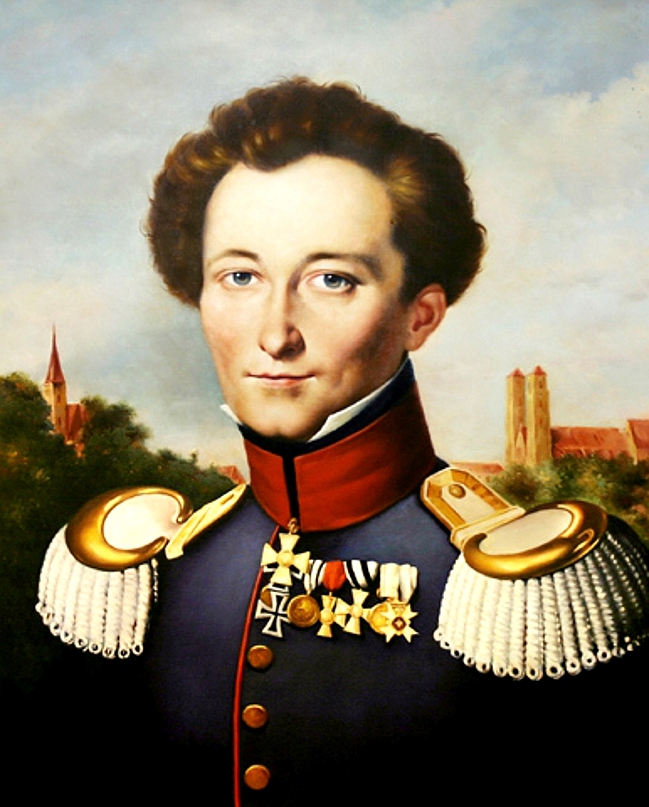
Dr. No: “Clausewitz’s first principle was to have a secure base.” Bond is already familiar with this maxim, as we learned in Moonraker. Carl von Claausewitz (1780 – 1831) was a Prussian general and military theorist, best remembered for his work On War, which was uncompleted when he died. Clausewitz introduced the theory of the “fog of war,” the difficulty of assessing military capabilities and intentions during the heat of conflict. However, the “first principle” refers to an earlier Clausewitz work, Principles of War, the first of which, according to Clausewitz, “To keep our troops covered as long as possible. Since we are always open to attack…we must at every instant be on the defensive and thus should place our forces as much under cover as possible.”
Stalin:
Dr. No claims to be the most powerful man in the world “now that Stalin has died.” Joseph Stalin (1878 – 1953) was dictator of the Soviet Union from 1924 until his death. Power was certainly important to Stalin, who killed a great many people in his consolidation and retention of power. Despite his immense power, Stalin spent the final years of his life in poor health and died of a cerebral hemorrhage brought on by atherosclerosis.
Methodists:
Dr. No is the son of a German Methodist missionary and a Chinese woman. The Methodist movement is a denomination of Protestant Christianity and based on the beliefs of John Wesley (1703 – 1791). Principles of Methodism include rebirth, imparted righteousness, and the performance of acts of piety. Missionary work had a lot to do with the spread of the Methodist church throughout the world, including Germany in the 1830s and 1840s. The first Methodist missionaries in China came from the U.S., but presumably a German father would have seemed more sinister to readers in the 1950s.
Pekin:
Dr. No was born in “Pekin,” which is really Beijing. When Portuguese explorers reached China in the 1500s, they referred to the city as Pequim, which was translated as Pekin in English. English-speakers began calling it Peking in the 1600s. (This gave the name “Peking Man” to the Homo erectus fossils found in the region in the 1920s.) Beijing is in northern China and is China’s capital city.
Tongs:
Dr. No began his criminal career with the tongs in Shanghai. A Chinese tong is a group or social gathering, more common among Chinese immigrants in the U.S. and other English-speaking countries than in China. They were formed partly to offer community to Chinese Americans who were victims of anti-Chinese discrimination. The tongs were not purely criminal undertakings, but some of them were involved with organized crime. The first tongs in China were formed in the 1640s, and some criminal organizations in China still operate as tongs.
Hip Sing:
Dr. No came to the U.S. to work for the Hip Sing tong in New York City. The Hip Sing Association (HSA) was originally known as the Hip Sing Tong and operated in NYC’s Chinatown in the early 1900s. HSA opened chapters in other U.S. cities and in recent years some of those chapters have evolved to become true community organizations free of criminal activity.
Tong Wars:
Dr. No took part in the Tong Wars in New York City in the 1920s. This is a highly simplified account, as Tong Wars in the U.S. took pace in stages over a period of decades, depending on the location. The New York Tong War is known as the Fourth Tong War and was between multiple groups, though the primary combatants were the Hip Sing Tong and the On Leong Tong (what Dr. No calls the “On Lee Ongs”). The Asian American History 101 Web site has an interesting podcast series on the Tong Wars.
Harlem:
Dr. No exploited the chaos of the Tong Wars to make off with one million dollars of illicit funds and fleeing to Harlem. Bond and Felix Leiter encountered Mr. Big’s organization in NYC’s Harlem in Live and Let Die. Black Americans moved to Harlem in large numbers during the Great Migration beginning in the early 20th century. The Harlem Renaissance represented a thriving arts and music culture in the 1920s and 1930s, until the Depression and post-War suburban dislocation caused social and economic hardship in Harlem and throughout New York City. Even during its peak, Harlem still experienced considerable socioeconomic diversity. Harlem is Nowhere: A Journey to the Mecca of Black America by Sharifa Rhodes-Pitts is a fascinating book on Harlem’s history.
Right-Side Heart:
Dr. No says he is the “one man in a million who has his heart on the right side of his body.” (What about women?) Dextrocardia is a congenital heart defect where the heart is positioned on, or near, the right side of the chest instead of the left. Sometimes other vital organs are also shifted. Patients are sometimes subject to breathing difficulties, below-average weight, fatigue, and recurring sinus or lung infections. The condition is estimated to occur in roughly 1 in 12,000 live births, which is considerably more than the one in a million claimed by Dr. No.
Silberstein:
Dr. No invested his stolen gangster money in rare stamps, beginning with a New York dealer named Silberstein. I can’t find any reference to a real-life Silberstein in the field of stamp dealing or collecting, but Dr. No seems to have invested wisely. The British Guiana 1c magenta, one of the most famous of rare stamps, was purchased for $40,000 by a collector in 1940. The same stamp was sold for $280,000 in 1970, and over $8.3 million in 2021.
Julius:
Like Le Chiffre and Hugo Drax before him, Dr. No chose his own name, Julius No. In this case, Julius acknowledges his father, and No rejects him.
Milwaukee:
Dr. No left New York for Milwaukee, in Wisconsin on the shore of Lake Michigan, “where there are no Chinamen,” and became a student at the “faculty of medicine.” I suspect he refers to the Medical College of Wisconsin, a private medical school founded in 1893 and affiliated with Marquette University from 1906 to 1967. According to a site sponsored by Urban Anthropology, Dr. No wasn’t alone in Milwaukee, where nearly every neighborhood had a family-operated Chinese laundry by World War II.
1942:
Dr. No bought Crab Key in 1942, “And here I have remained for fourteen years.” That would place the novel in 1956. (See Chapter 3)
Old Women:
Dr. No complains about his privacy on Crab Key being disrupted by “a lot of old women and their birds.” This is nearly identical to M’s thinking, if for different reasons, making Dr. No something of an M doppelganger.
16 Horizons of Agony
Turks Island and Windward Passage:
Dr. No describes a U.S. missile tracking facility on Turks Island in the Windward Passage. Turks and Caicos is a group of islands north of Hispaniola (Haiti and the Dominican Republic) and today is a British Overseas Territory. Like Jamaica, the islands were once inhabited by the Taíno, but the area became a British colony in the late 1700s. Legally part of Jamaica for many years, Turks and Caicos became a separate colony in 1959. Grand Turk is one of the eastern-most islands in Turks and Caicos and home to the territory’s capital, Cockburn Town. Grand Turk was also the site of a U.S. Air Force Missile Impact Location System. John Glenn (1921 – 2016) splashed down near Grand Turk at the end of his Friendship 7 Mercury mission in 1962. The Windward Passage is the Caribbean strait between the islands of Cuba and Hispaniola.
Snark:

Dr. No takes credit for sending a U.S. Snark missile off its intended course to crash in Brazil. The Northrop SM-62 Snark, named after the snark species imagined in a poem by Lewis Carroll, was an intercontinental cruise missile with a range of 6,300 miles. The Snark was produced from 1958 – 1961 and by 1961 was considered obsolete thanks to development of ICBMs. The Snark was something of a failure before it became operational, subject to numerous delays resulting from technical challenges and administrative bungles. While it doesn’t fit perfectly with Dr. No’s description, a 1956 Snark missile intended to fly from Cape Canaveral, Florida, to Puerto Rico and back, instead disappeared from radar off the coast of Venezuela. In 1983, wreckage from the missile was found in northeastern Brazil.
All the Missiles:
Dr. No name-checks a series of missiles and rockets and tells Bond that he disrupted all of them.
Zuni: 77″-long unguided rocket developed by Hunter Douglas. Named after the Zuni indigenous people of New Mexico. First produced in 1957 and heavily used in the Vietnam War. The final, so far, U.S. supply of Zuni rockets was transferred to Ukraine in 2024.
Matador: MGM-1 Matador, 39.5′-long surface-to-surface cruise missile produced by The Martin Company. In service from 1952 – 1962.
Petrel: AUM-N-2 Petrel air-to-surface or air-to-underwater missile, 24′ long, manufactured by the Fairchild Engine and Airplane Corporation. Operational 1956 – 1959. (The British also had a Petrel missile, but it didn’t become operational until the late 1960s.)
Regulus: SSM-N-8A Regulus I, 32′ long, manufactured by Charles Vought, operational from 1955 – 1964. Intended to be launched from ships or surfaced submarines and requiring active radar guidance, both the missile and the launch platform were exposed to enemy discovery during the missile’s entire flight time. A Regulus II was tested and began initial production before being canceled in 1958. It wasn’t a total waste, because the Regulus II’s were converted to target drones for testing of other missiles. Thanks, military-industrial complex!
Bomarc: CIM-10 Bomarc supersonic long-range surface-to-air missile, 47′ long, produced by Boeing. Operational 1959 – 1972. In 1960, the helium fuel tank on a Bomarc explored at New Jersey’s McGuire Air Force Base; the missile was loaded with a nuclear warhead, which melted and released plutonium over the site. The missile site was closed in 1972 and in the early 2000s contaminated debris and soil was shipped to Utah. Who’s the real villain of this story?
Mastodon: This appears to be fictional, I can find no record of such a missile program.
Russians:
We should not be surprised that Dr. No is involved with the Russians, just like Le Chiffre, Mr. Big, and Hugo Drax. There is no mention of SMERSH, I believe Fleming largely abandoned the defunct organization after From Russia with Love.
Heaviside Layer:
Dr. No describes disrupting radio signals in the Heaviside Layer. This is the Kennelly-Heaviside Layer, a layer of ionized gases approximately 90 – 150 kilometers in the atmosphere. Radio waves can be transmitted beyond the horizon by reflecting them off the layer. It was named after electrical engineer Arthur Kennelly (1861 – 1939) and physicist Oliver Heaviside (1850 – 1925).
Pandora’s Box:
What Bond expected to be a vacation has opened a Pandora’s Box of trouble. In Greek mythology, Prometheus defied the gods of Olympus and gave humanity fire, endowing us with technology (which turns out to not be such a godsend after all). This offended Zeus, who instructed Hephaestus, the god of blacksmiths, carpenters, and a number of other skilled trades, to create Pandora with the intent of unleashing evil on the world. According to Works and Days, a poem by Hesiod (active sometime between 750 – 650 BCE), Pandora carried a jar (later mistranslated as “box”) which, when she opened it, released “countless plagues.” This made women at fault for all the world’s evils, an idea Christians would hijack when they placed the same burden on Eve. (Yes, the Adam and Eve story comes from the Jewish Torah, but Judaism generally interprets the story as more of a shared blame situation.)
Onyx:
Bond imagines Dr. No’s eyes as being as hard as onyx. Onyx is a naturally-occurring gemstone of two varieties: calcareous onyx, based on calcium carbonate, white or beige in color, and siliceous onyx, based on silicon dioxide, colored black, red, brown and white. It is hard enough to be used in jewelry and some building applications, but is porous enough to experience corrosion.
Peine Forte de Dure:
With dinner and Dr. No’s story finished, they have reached the hour of “the peine forte et dure,” which is French for “strong and harsh punishment.”
German Experiments:
Dr. No says, “The German experiments on live humans during the war were a great benefit to science.” German doctors and scientists committed unspeakable acts against concentration camp prisoners during World War II. Reading the descriptions of these diverse “experiments” makes it hard to believe that they weren’t highly motivated by sadism rather than actual science. We should not forget that the U.S. and other countries conducted their own torture under cover of “research,” often on prison inmates.
Black and White:
Dr. No intends to place Honey outside where she will be devoured by crabs. He has already killed a “negress” in this fashion and believes that white and Black subjects might have different survival rates. It’s very possible that Fleming would have believed this himself.
Land Crabs:
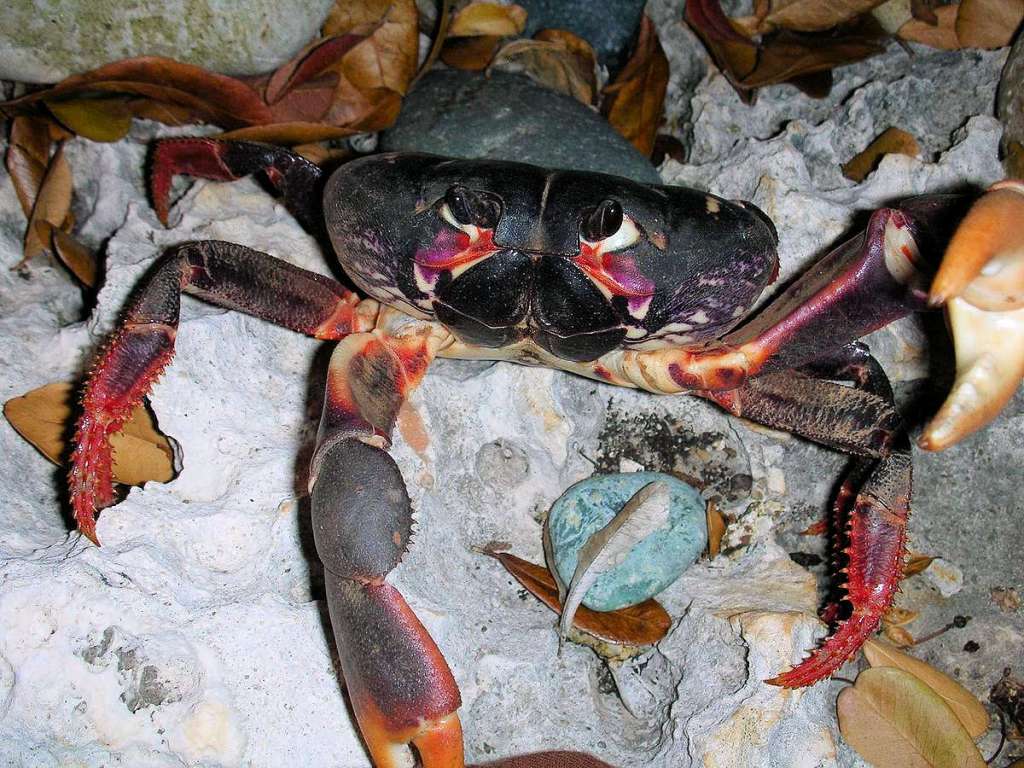
Dr. No will subject Honey to “land crabs” or “black crabs.” Gecarcinus ruricola is an omnivorous species of terrestrial crab common to Jamaica and often referred to as “black land crabs.” They are a little smaller than Dr. No’s description of “big as saucers,” reaching maturity at about five inches in diameter. I can’t find any evidence that these crabs are a potential threat to humans. Gecarcinus ruricola does migrate, primarily for mating purposes, similar to Dr. No’s explanation.
Lemmings:

Dr. No compares the black crab’s migration pattern to the lemmings of Norway. Norway lemmings are rodents, about six inches in length, with black-yellow-brown coloring. If not constrained by weather of predators, they can reproduce to self-destructive levels. According to Wikipedia, “Lemmings do migrate, and in vast numbers sometimes, but notion of a deliberate march into the sea is false.”
Dr. No’s Intentions:
Dr. No claims that torturing Bond and Honey is to serve his own research, but he offers no actual purpose to his research. The Nazis were sadists, but at least they created cover stories relating to disease treatment or improving military capabilities. Dr. No, on the other hand, has gone to great length to create bizarre scenarios strictly for his own entertainment. This makes Dr. No the most fantasy-oriented of the Bond villains so far.
17 The Long Scream
Tarantulas:
Bond encounters a cage full of tarantulas in Dr. No’s obstacle course. Fleming wisely remains vague on the degree of threat this represents. In fact, tarantulas are venomous, but the venom is not strong enough to be fatal to humans. Some varieties of tarantula can cause spasms or hallucinations in extreme cases. Other varieties of spiders, such as the Brazilian wandering spider and the Australian funnel-web spider, can be fatal to humans and bear some resemblance to tarantulas.
18 Killing Ground
Kraken:
Bond’s final test is the giant squid, which Fleming refers to as a kraken. The text implies that the creature could be anywhere from 20 to 50 feet in diameter. The scene feels like an extreme variation of the centipede scene in Chapter 6. The giant squid is a deep-sea variety of squid that grows to approximately 40 feet. Their habitat is believed to be at ocean depths of 1,000 feet or more, so it seems unlikely that one could survive for long periods of time in shallow water. Giant squid feed on deep-sea fish and their natural predators include several species of whales and sharks, so it also seems unlikely that a giant squid would confront a human. The kraken, on the other hand, is a mythical and violent creature inhabiting waters around Norway and Iceland. Jules Verne depicted a kraken attack in Twenty Thousand Leagues Under the Seas. The kraken legend may have been inspired by sightings of giant squid.
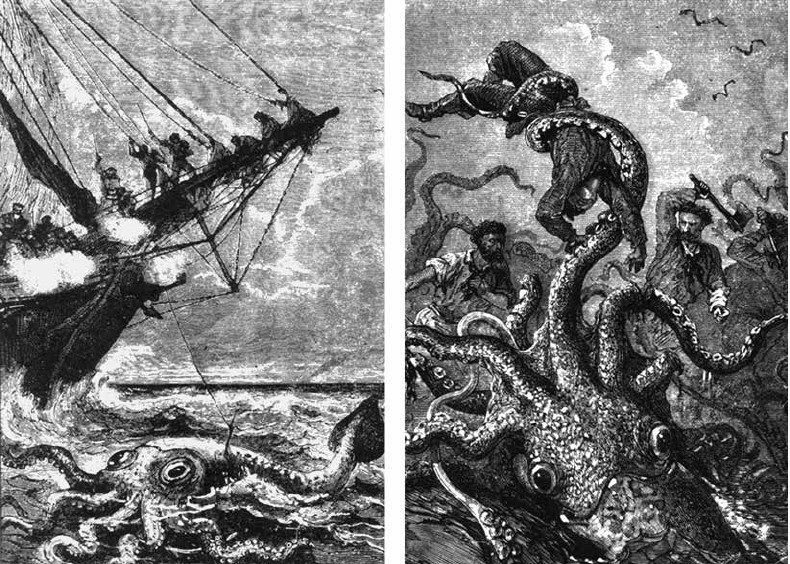
19 A Shower of Death
Blanche:
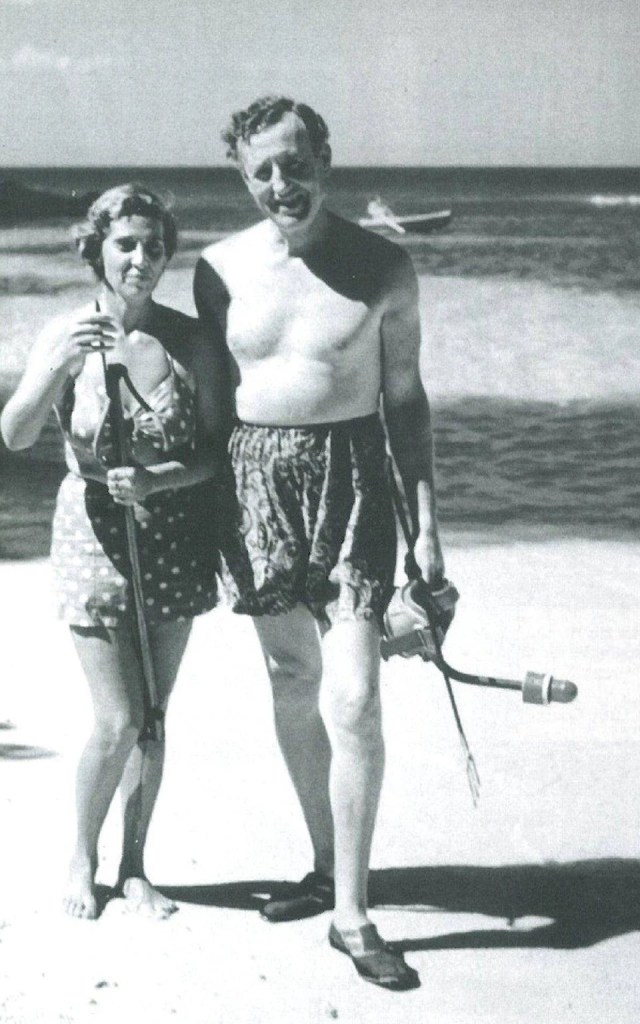
Emerging from Dr. No’s killing ground, Bond sees a Belgian tanker named Blanche. Oops! Blanche Blackwell (1912 – 2017) lived near Fleming’s estate in Jamaica, and the two later had an affair.
Panther:
Unlike the unfavorable ways in which villains and minorities are compared to animals in Doctor No, and in the Bond novels in general, 007 possesses more noble wildlife qualities. He climbs into the crane cabin with “the stealth and speed of a panther.”
Guano Death:
The multiple meanings of Dr. No meeting a painful death – briefly tortured, as he had tortured Bond – buried in his own product are obvious enough. This is perhaps the most symbolic death of a Bond villain in the series so far.
Lord Mayor’s Show:
The “dragon,” stationary in the garage, looks like “a float waiting for the Lord Mayor’s Show.” The Lord Mayor’s Show is an annual event celebrating the swearing in of the Lord Mayor of London, the historic center of the City of London. The office of Lord Mayor was created in the 1180s with the provision that the individual would present himself to the monarchy at Westminster. Over time, the procession evolved into a celebratory event with a parade of floats, livery companies, and other participants. Today the route goes from the Guildhall municipal building to the Royal Courts of Justice at the edge of the City of Westminster.
Dogs:
Not long after killing some of Dr. No’s henchmen, Bond dispatches the Dobermann (Doberman in the U.S.) pinschers by injuring one and starting a feeding frenzy. The implication seems to be that Dr. No’s surviving henchmen might turn on each other in a similar fashion.
Honey and the Crabs:
Honey again demonstrates her superior knowledge of the local flora and fauna, explaining that she knew all along that the land crabs were not a serious threat to humans. She also clarifies that the “negress” who died previously probably had an open wound, and that her death was not race-related.
20 Slave Time
Caribbean Defence Force:
Having survived Crab Key and returned safely to mainland Jamaica, Bond meets the brigadier in charge of the Caribbean Defence Force. (Clearly not Bill Templar, the brigadier with whom Strangways played bridge in Chapter 1.) While this could conceivably refer to the U.S. Caribbean Defense Command, established during World War II but renamed the U.S. Southern Command in 1963 because its focus had shifted to Central and South America, it’s more likely that the brigadier is part of some branch within the British military. West India Regiments were British Army units stationed in the Caribbean from 1795 – 1927 and 1958 – 1962. The Jamaican Defense Force, the combined Jamaican military units, was not formed until 1962, when Jamaica became independent.
Edwardian:
The brigadier is “unimpressed by relics from the Edwardian era…” The Edwardian era refers to the reign of King Edward VII, from 1901 – 1910, though the “era” is sometimes considered to include the early years of King George V up till 1914 and the start of World War I.
Narvik:
The brigadier describes a British ship, HMS Narvik, having arrived in Jamaica the previous day. HMS Narvik was a real ship that provided support in British testing of nuclear weapons in the Pacific Ocean during 1952 – 1958. During the last of these test series, Operation Grapple, conducted 1957 – 1958, HMS Narvik docked in Jamaica for repairs at the time Fleming was writing Doctor No.
Chinese in Havana:
The police superintendent speculates that the “negro gangsters” will have probably escaped to Cuba. If these are Dr. No’s Black-Chinese henchmen, it’s hard to say how they will be regarded in Cuba. As in Jamaica, Chinese men were forcibly brought to Cuba in the 1800s to work in sugar cane fields. Other Chinese immigrants came via the U.S. because of rampant discrimination against Chinese in that country. Over time, may of the Chinese immigrants mingled with native-born Cubans. The Chinese-Cuban population peaked in the 1950s, with many of them leaving after the 1959 Cuban Revolution. Afro-Cubans, many descended from enslaved people brought to Cuba as far back as the 1600s, made up about 12% of the Cuban population in 1953.
King and Queen:
The meeting room at King’s House has paintings of both King George VI and the Queen. George VI was king of England from 1936 – 1952. He became king after his older brother, Edward VIII, abdicated the throne to marry the twice-divorced Wallis Simpson. When George VI died in 1952, his daughter became Queen Elizabeth II, and she remained queen until her death in 2022.
Trafalgar Square:
During the wrap-up meeting, 007’s attention drifts to, among other things, Trafalgar Square. The square was established in the early 1800s in the Westminster area of Central London. Many political and public gatherings have taken place there over the years, including the Bloody Sunday riot of 1887. The name comes from the Battle of Trafalgar, a British naval victory over France and Spain during the Napoleonic Wars, near the coast of Cape Trafalgar in southwest Spain.
Chesterfield:
Bond has grown nostalgic for England, recalling a sentiment – “The only country where you can take a walk every day of the year” – which he believes to be from Chesterfield’s Letters. Philip Stanhope, 4th Earl of Chesterfield, (1694 – 1773), had a son out of wedlock, Philip Stanhope (1732 – 1768), with whom he corresponded for thirty years on such topics as history, literature, and etiquette. After Chesterfield’s death, the younger Philip’s widow published the letters as Letters to His Son On the Art of Becoming a Man of the World and a Gentleman. The letters can be read in their entirety at Project Gutenberg, but I can’t find the line that Fleming cites.
Whitehall:
The local governor isn’t wild about dealing with the Secret Service, not least because “…their damned Chief carried a lot of guns in Whitehall.” Whitehall is an area in the City of Westminster in Central London and home to a number of British government departments, including the Ministry of Defence and the Foreign Office. The “Chief” presumably refers to M and his influence within this establishment.
Hillman Minx:
Bond departs the meeting in a Hillman Minx. Hillman-Coatalen, later the Hillman Motor Car Company, was founded in Britain in 1907 by William Hillman (1848 – 1921) and Louis Coatalen (1879 – 1962). The Hillman name was acquired by Chrysler in the 1960s and later by Peugot in the 1970s. The Minx was manufactured from 1931 – 1970. We’re given no details beyond the name, so this might be the Minx Series I, introduced in 1956, or the Minx Series II, introduced in 1957.
N—-r-Head:
Flashing back to their return from Crab Key, Bond was awakened by the boat hitting a rock outcropping, referred to by a slang term that I won’t spell out here.
Milton:
Honey applies a bottle of Milton to Bond’s wounds, not the first time that 007 is reduced to tears by pain. The sterilizing solution of sodium hypochlorite and sodium chloride was first produced in Britain in 1916 and today is manufactured by Procter & Gamble. The solution was named after English poet John Milton (1608 – 1674) because it was thought that Brits would find the name comforting. A dilution of Milton with cold water is often used to sterilize glass baby bottles after a 1947 gastroenteritis outbreak was caused by boiling the bottles when they still had a trace of milk, creating a breeding ground for bacteria.
Merthiolate:
The doctor applies merthiolate to Bond’s wounds. Thiomersal was a mercury-based antiseptic marketed under the trade name merthiolate.
Tannic Ointment:
Finally, the doctor applies tannic ointment to 007’s burns, a treatment he also received in Moonraker. Tannic acid was first used to treat severe burns in the 1920s but was eventually replaced by more effective treatments. In excess amounts, tannic acid can cause severe side effects.
Brownskin Gal:
Bond dodges a bus with “Brownskin Gal” on the destination plate. I believe this refers to a traditional Caribbean folk song, “Brown Skin Gal.” The song was recorded by Lord Flea and the Jamaican Calypsonians in 1952, but could have been recorded earlier by other artists.
Hawkmoth:
In the final scene, a hawkmoth flies into Honey’s room. Sphingidae moths are sometimes known as hawk moths or sphinx moths. They are sometimes mistaken for hummingbirds because they have a similar flying style. Different varieties of hawk moths have wingspans from 1.5 inches to over 4 inches. Does the moth represent a classic “moth-to-a-flame” risk of the love between Bond and Honey? Or is it a blessing from nature? Since the final action is for Honey to distinguish the candles, causing the moth to fly away, perhaps it means that this love can only exist in isolation, and will not hold up to the demands of the outside world.
Final Thoughts:
Doctor No is probably known better to the public as the first entry in the Bond film franchise, rather than the sixth Bond novel. The plot of the movie generally follows the book and that wouldn’t last long.
Doctor No is the most violent of the novels so far, and also the most outlandish, with Dr. No’s mechanical hands and obstacle course of torture. The previous books, while fantastic in nature, were at least grounded in the realm of possibility. Doctor No, however, edges into complete fantasy. The violence, in particular, drew a harsher critical response than the previous books.
Doctor No also has the greatest “jungle fever” quality of the series so far. While Bond was clearly taken with Jamaica on his previous visit, in Live and Let Die, here he is especially drawn to people and a place that seem exotic to him when compared to genteel British life. The exotic danger (another interpretation of the moth in the final scene) of the remote colonies is a major theme of the book, demonstrated with the centipede and the giant squid. Honey and Quarrel, on the other hand, could represent Fleming’s view of the colonial inhabitants as child-like and simplistic, in need of guidance from Britain as represented by Bond. At the same time, the story also symbolizes the entire Cold War: Britain and the USSR, represented by Dr. No, playing out their conflict in a tiny, powerless land.
I doubt Fleming intended this, but the novel also illustrates the economic outcome of colonialism: guano in a British colony becomes nourishing fertilizr for use in mother England. The colonies bear the brunt of the conflict while being drained of resources.
True to form, Fleming had already begun writing the next Bond novel before Doctor No was even published.
 The Creative Life Adventure