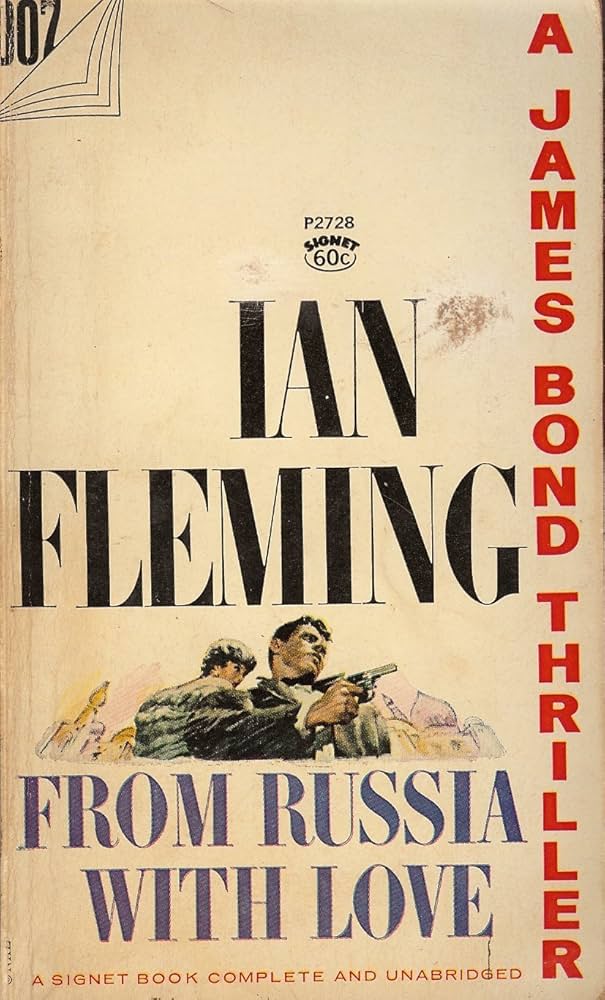
From Russia with Love (1957) was Ian Fleming‘s fifth James Bond novel. Like Diamonds are Forever, From Russia with Love was largely inspired by Fleming’s own travel experiences. In this case, as a reporter for Reuters, Fleming went to Moscow in 1933 to cover the trial of British engineers accused of spying. Then The Times sent him to Moscow in 1939 to observe a British trade mission. Later, reporting for the Sunday Times, Fleming went to Istanbul in 1955 to observe an Interpol conference. Many elements of the novel are based on actual people or events, such as the U.S. intelligence agent Eugene Karp, who was allegedly killed by Soviet assassins on the Orient Express while transporting documents disclosing the USSR’s knowledge of U.S. spy networks.
As with the previous Bond novels, this is my informal From Russia with Love reader’s guide regarding brand and place names, historic references, themes, and character development. A few references are repeated from previous books, in which case I’ve generally copied those entries. I haven’t include page numbers as this will vary by edition. I’m reading the Signet Books mass market paperback. Mr. Fleming was kind enough to divide his books into brief chapters, so references should be easy to find in the text. The best approach, if you can manage it, is to print this and keep it handy while you read the book. I’m only human, so if I’ve made any factual errors, please feel free to reach out to me via the Contact Me page.
Last updated 23 July 2025
Author’s Note:
For the first time, Fleming opens a Bond novel with his own message to the reader. In this case, he assures us that his descriptions of SMERSH, its headquarters, and General Grubozaboyschikov are all accurate as of the time of writing. The note is dated March 1956. We’ll elaborate on SMERSH and General G at the appropriate places in the text.
Part One: The Plan
1 Roseland
Dunhill:
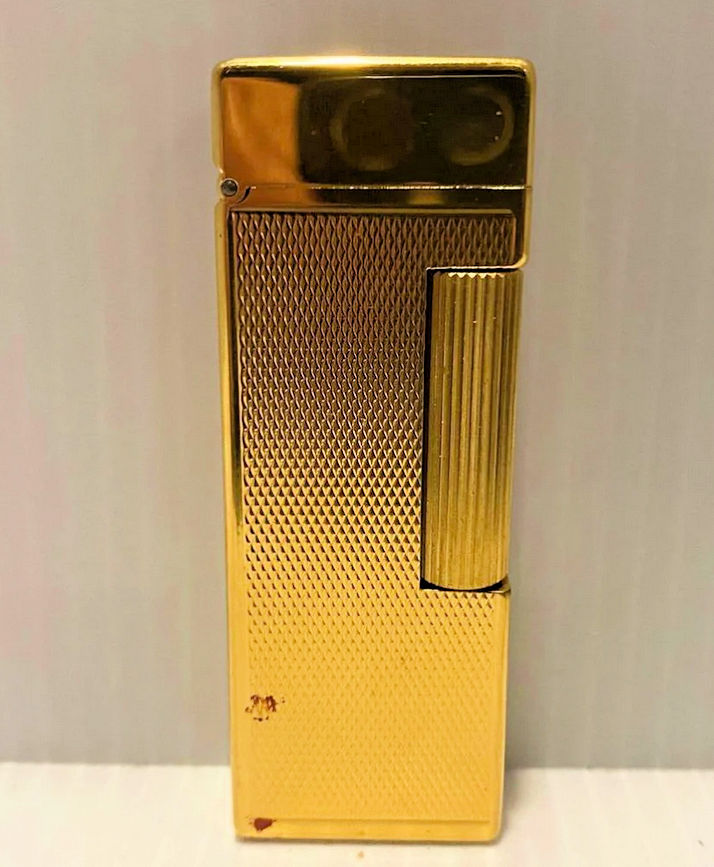
“The naked man” we see on page 1 has quite a trinket collection, a testament to his own vanity and the kinds of perks that might be within reach of a loyal Soviet agent. First, he has a Dunhill lighter. Alfred Dunhill (1872 – 1959) sold auto accessories in England in the late 1800s and early 1900s. After developing a pipe specifically designed for motorists in 1904, he opened a tobacco and pipe shop in London’s St. James‘s district in 1907. In 1921 Dunhill received a Royal Warrant to serve Edward, Prince of Wales. In 1924, Dunhill introduced the first lighter that could be operated with one hand. In the 1950s the company launched an early butane gas lighter. Alfred Dunhill Ltd. still operates today with menswear and leather goods among its product offerings.
Fabergé:

Our antagonist also owns a Fabergé cigarette case. The House of Fabergé was founded in Russia by Gustav Fabergé (1814 – 1894) in 1842 but it was Gustav’s son Carl Fabergé (1846 – 1920) who really brought the firm to prominence with the design of elaborate Fabergé eggs for the Russian Tsars. They made many other types of products, however, including the cigarette case pictured here from the early 1900s. After the October Revolution of 1917, the Fabergés attempted to recreate their business in Paris, but I’m guessing our Russian character is using a cigarette case from the company’s original success in Russia.
Wodehouse:
The naked man also has a copy of The Little Nugget by British author P.G. Wodehouse (1881 – 1975), published in 1913. I don’t fully grasp the significance behind Fleming choosing Wodehouse or this book in particular. Given the farcical nature of much of Wodehouse’s work, maybe this indicates how misguided the Russians are about English society. Wodehouse was interned by the Germans when they invaded northern France during World War II, where Wodehouse lived at the time. Upon his release in 1941, Wodehouse was “trapped” into participating in German radio broadcasts aimed at the U.S. and making light of the internment experience. Many in the U.S. and England considered Wodehouse a traitor after this, though he was cleared by both MI5 and MI6 at the end of the war. A number of British authors, including Sax Rohmer and George Orwell, defended Wodehouse, and perhaps this was Fleming’s attempt to do the same.
Girard-Perregaux:
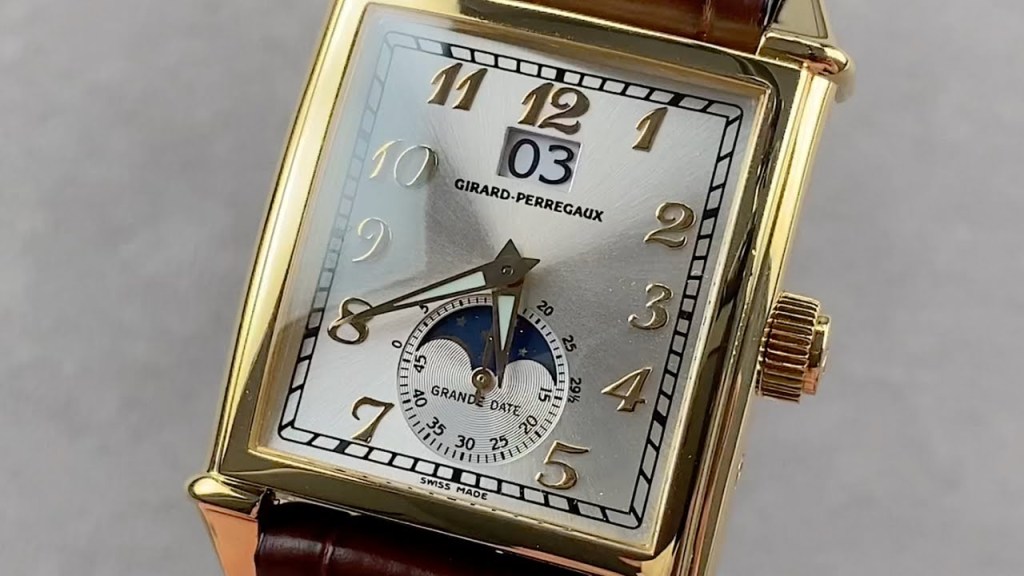
Our man is quite the worldly figure. He wears a watch by Girard-Perregaux, the Swiss watch maker established in 1952 by Constant Girard (1825 – 1903). Based on the description, with windows displaying the date of the month and phase of the moon, the watch in question may have looked similar to the Vintage 1945 model shown in the photo. Girard-Perregaux manufactures watches today and is owned by the Sowind Group SA.
Summer in the USSR:
We’re told it’s June, specifically June 10. This is the fourth of the five Bond books published so far to take place in the summer months. Is summer the best time for secret agent work? Fleming wrote all of the Bond books at Goldeneye in Jamaica, where he went every year to escape the cold London winters. “The sun is always shining in my books,” Fleming once said.
Uncomfortable Villa:
The location is a villa with no bathroom and bars on the front windows along with an oak door. Are the bars to keep people out or in?
Masseuse:
She is not named and we will not see her again, but the masseuse is a useful character to give us a relative outsider’s perspective of the antagonist.
Roses:
The masseuse uses oil scented with roses, “as was everything in that part of the world…” We’ll learn shortly that the location is Crimea, a significant producer of roses and rose oil for scents and lotions.
Red Grant:
We finally learn the naked man’s name is Donovan “Red” Grant, known in the Soviet Union as Krassno Granitsky, code-named Granit. (Grant’s name is said to have come from a Jamaican river guide of Fleming’s acquaintance.) Fleming has employed two of his favorite tactics to define this villain:
- Grant has red hair; he has such “red-gold curly hair” that it’s in his name. Le Chiffre, Hugo Drax, and Shady Tree all had red hair.
- Fleming dehumanizes the character throughout the chapter: Grant is mistaken for food by a dragonfly, his eyes perk up like “animal’s ears,” he is described with such terms as “bestial,” “reptilian,” “a lump of inanimate meat,” “roast meat,” “pigginess,” and “morgue-like.” Perhaps most important of all, Grant is asexual, making him a distinct anti-Bond.
SMERSH:
Red Grant is the “chief executioner of SMERSH.” SMERSH, Smert’ shpiónam (“Death to Spies”), was a real Soviet agency. The name was created by Joseph Stalin (1878 – 1953), who became the dictator of the Soviet Union from 1924 until his death. SMERSH was only active from 1943 to 1946, when its activities were absorbed by MGB. Officially, SMERSH was charged with operations in the Red Army: counter-intelligence, counter-terrorism, and investigation of suspected traitors or deserters. The agency’s primary objective was to identify and eliminate alleged German spies operating within the Red Army during World War II. At one time, SMERSH was estimated to have recruited anywhere from 1.5 to 3.4 million informants within the Red Army (giving a sense of how large the army was). About 30,000 German “spies,” some actual spies but others perhaps not, are believed to have been killed as a result of SMERSH operations. It seems that Fleming’s portrayal of SMERSH was generally discredited in later years, particularly as it didn’t even exist after 1946. In the late 1960s, famous wingnut L. Ron Hubbard claimed that SMERSH had taken over governments throughout the world, and you can bet he had a complicated plan to defeat them.
MGB:
SMERSH is described as “the murder apparat” of the MGB. Ministry of State Security (MGB) was the Soviet Union’s secret police force from 1946 to 1953. The MGB was primarily an espionage and counter-espionage unit. They had a lot to do with keeping the post-war Eastern Bloc nations in line, but also infiltrated many aspects of Soviet life, including censorship and monitoring of public opinion. Between the end of World War II and Stalin’s death in 1953, the MGB arrested around 750,000 citizens, many of them for entirely political reasons.
2 The Slaughterer
Kharkov:
Ordered to Moscow, a guard speculates whether Grant’s flight will stop in Kharkov, also known as Kharkiv. Kharkiv is a city in eastern Ukraine that, in the late 1950s, had a population around 930,000. About one-third the distance from Crimea to Moscow, the city is an important regional transit hub. Tank construction was a significant element of the local economy before and after World War II. Civilians deaths and destruction of historic buildings occurred in Kharkiv during the 2022 Russian invasion but the city was later retaken by Ukrainian forces.
ZIS:
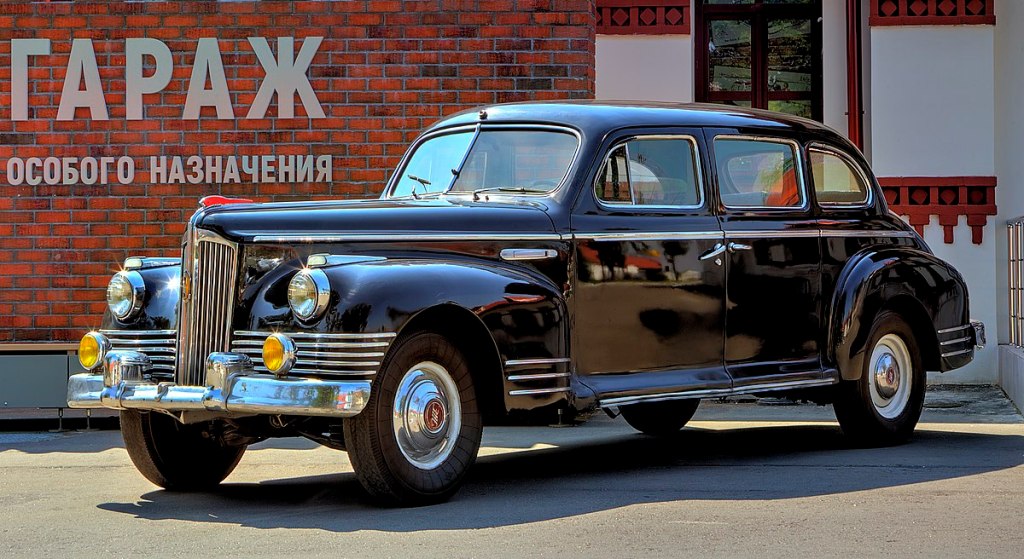
Grant is collected by a ZIS saloon. A “saloon” is simply a car with a closed body and a closed trunk separate from the passenger compartment. ZIS was established as AMO (Moscow Automotive Society) in 1916 and renamed First National Automobile Factory in 1925. It became Automotive Factory No. 2 Zavod Imeni Stalina (ZIS) around 1930. (Zavod Imeni = Plant Name) ZIS cars were typically used to transport Soviet heads of state and other VIPS, so much so that some roads had separate lanes specifically for those vehicles. In 1956, one year before From Russia with Love was published, Nikita Khrushchev changed the factory’s name to Zavod Imeni Likhachyova (ZIL), in honor of the facility’s former director and Central Committee member Ivan Likhachev (1896 – 1956). The specific car that picks up Grant may be the ZIS-110, produced from 1946 to 1958 and supposedly reverse engineered from a 1940s Packard.
Crimea:
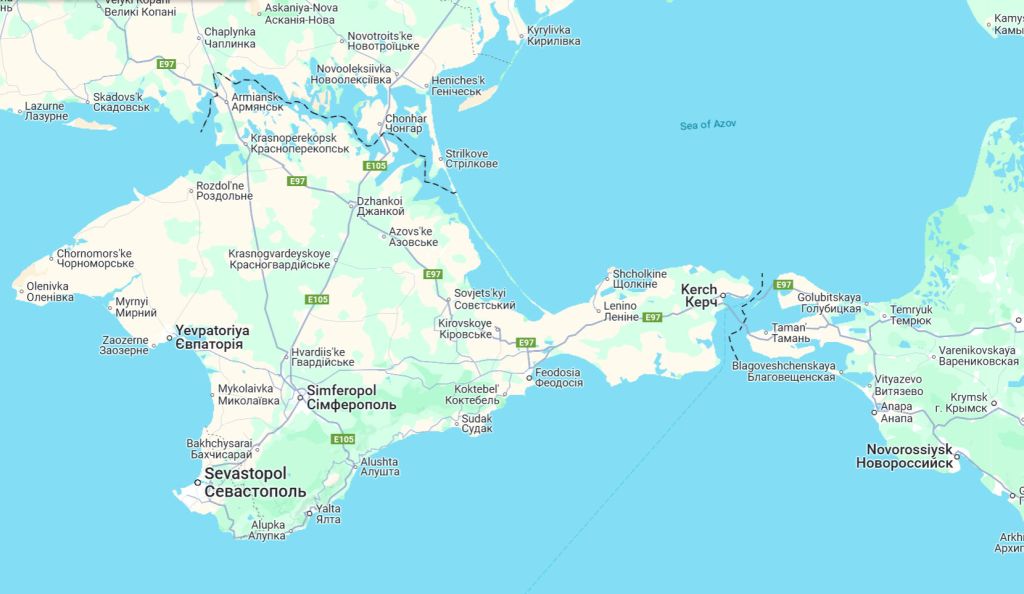
We finally confirm that Grant’s villa is in Crimea, the large peninsula south of Ukraine and surrounded by the Black Sea and the Sea of Azov. Except for the German occupation of 1942 – 1944, Crimea was a part of the USSR from 1921 until 1992, when it became Republic of Crimea, before being absorbed by Ukraine in 1995. We’re specifically in the “Russian Riviera,” known more commonly today as the “Crimean Riviera,” the region in southern Crimea of about 110 miles between Cape Aya in the west and Kara Dag Mountain in the east. The area is popular with tourists because of its scenic landscape, beaches, and moderate temperatures which must seem fairly warm relative to much of mother Russia. Fleming locates the villa specifically between Yalta – site of the 1945 Yalta Conference between the USSR, USA, and UK, and a popular Soviet vacation spot during the Cold War – and Feodosia, former site of Theodosia, founded by the Greeks in the 6th century BC.
Simferopol:
Grant is taken to the airport at Simferopol, the capital city of Crimea. An international civilian airport was located there in 1936 to begin regular flights to and from Moscow, though an actual concrete runway wasn’t completed until 1960. However, Grant flies out of the “military side” of the airport, and I think this refers to Gvardeyskoye airbase, actually located in the city of Hvardiiske, about 14 miles north of Simferopol. Russian air forces began flying there in the 1930s.
MiG-17:
Upon arrival at the airport, Grant observes a group of MiG-17 fighters landing, a reminder of the caliber of forces Grant is backed by. The Soviets began manufacturing the Mikoyan-Gurevich MiG-17 subsonic fighter jet in 1952. The MiG-17 first saw combat in the Second Taiwan Strait Crisis in 1958 and was used with great success by the North Vietnamese during the Vietnam War. The competing American F-4 Phantom and F-105 Thunderchief were faster, but the MiG-17 had greater maneuverability. Later models with an afterburner could achieve speeds greater than 700 MPH. MiG-17’s are still in use by North Korea.

Ilyushin 12:
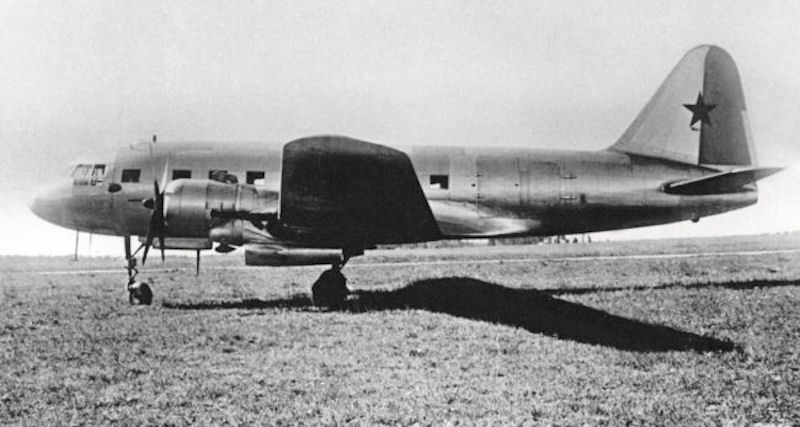
Grant flies to Moscow in an Ilyushin 12, which is likely the Ilyushin II-12. Ilyushin was a Soviet aircraft design and manufacturing bureau established in 1933 and still in operation in Russia. The II-12 was a twin-engine cargo and transport aircraft first flown in 1945. The military version of the II-12 carried three crew and up to 32 soldiers, but a civilian version used by the Russian airline Aeroflot carried up to 21 passengers.
Troika:
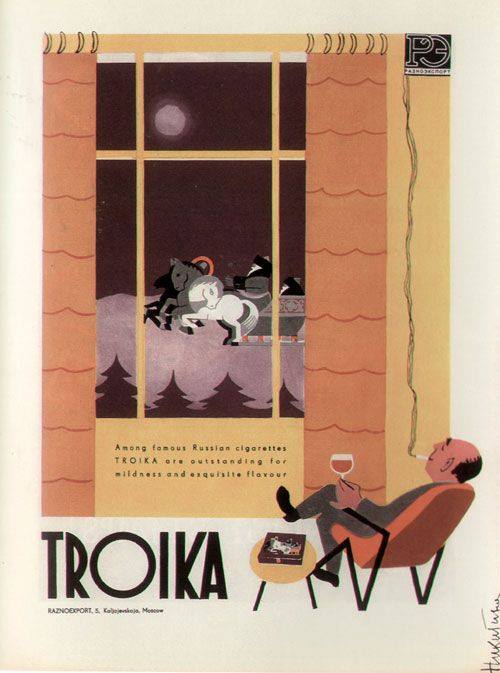
Grant smokes a Troika cigarette. About all I can find on Troika is a post on the Russian social media site VK, reporting that Troikas were first produced in 1926 in Leningrad (now Saint Petersburg). Apparently Troika cigarettes were aimed at the lower economic classes but were also intended for export. Grant’s cigarettes contrast with the high-end cigarettes that are custom-made for Bond. However, considering Grant’s expensive lighter and cigarette case, why does he smoke cheap cigarettes? Should we assume that he doesn’t know the difference? Or is he trying to appear humble when meeting his superiors?
Aughmacloy:
We learn of Red Grant’s background, including his mother’s southern Irish heritage. Grant was born “in the small village of Aughmacloy that straddles the border…” I think Fleming is referring to Aughnacloy in County Tyrone in Northern Ireland, less than a quarter-mile from the border with the Republic of Ireland.
Puerperal Fever:
Grant’s mother died of puerperal fever shortly after his birth. Puerperal fever, or postpartum infection, is a generic term for a variety of bacterial infections that can occur in a mother’s reproductive tract within one to ten days of childbirth. If not contained, the infection can ultimately lead to septicemia and death. The term “puerperal fever” was used as far back as the 1700s and it caused the death of Mary Wollstonecraft, mother of Mary Shelley, in 1797. Some physicians recommended hygienic measures in hospital birth wards as a preventative as early as the 1840s, but these suggestions were ignored for decades.
Fists of Fury:
Even as a child, Grant is described as violent, and he took up boxing and wrestling while still in school. Does this imply that Grant takes after his German father, the professional weight-lifter? I can imagine Fleming, like many in England in the post-war years, had no love of Germans.
Sinn Féin:
Fighting at fairs brought Grant to the attention of Sinn Féin, which is Gaelic for “Ourselves” or “We Ourselves.” The political group was established in 1905 with the intent of forming a dual Irish-English monarchy, but by 1917 advocated an independent Irish republic. Like many political parties, Sinn Féin’s leadership and objectives changed over the years. In the late 1940s, the Irish Republican Army (IRA) essentially took control of Sinn Féin. In late 1956, soon after From Russia with Love was written, the government of Northern Ireland banned Sinn Féin in response to the IRA’s border campaign “Operation Harvest,” intended to unite northern and southern Ireland independently of Britain.
Full Moon:
After joining Sinn Féin, Grant began experiencing homicidal tendencies during the full moon. There is little credible research to indicate that a full moon affects mental health among the general population, though some research indicates that those with bipolar disorder can cycle more rapidly between depressive and manic states during the full moon. Historically, a full moon did appear to impact sleep cycles before the availability of exterior night-time lighting. Does Fleming intend to connect Grant to European mythology of werewolves? This would correlate with the animal qualities associated with Grant in Chapter 1.
Incomprehensible:
When killing women, Grant (thankfully?) sees nothing erotic in the act. He finds sexuality “incomprehensible,” further defining Grant’s character as the polar opposite of Bond.
Northern Ireland:
A serial killer by the age of 17, Grant found that “ghastly rumours were spreading round the whole of Fermanagh, Tyrone and Armagh.” All three are counties in northern Ireland, all on the border with the Republic of Ireland, and presumably the area where Grant was enacting most of his violence.
1945:
Fleming specifies that Grant turned 18 in 1945, making his birth year 1927.
Royal Corps of Signals:
At 18, Grant is drafted by England and serves in the Royal Corps of Signals, sometimes known simply as Royal Signals. Despite the benign sounding name, Royal Signals performs a combat function within the British Army and is often among the first to go into battle. During the post-war period, Royal Signals served in Palestine, Korean, the Malay Peninsula, and other locations.
Aldershot:
Grant was stationed in Aldershot, a town about 30 miles southwest of London. Partly as a result of the Crimean War, Aldershot Garrison was established in 1854, the British Army’s first permanent training camp. This led to a dramatic increase in the town’s population from military personnel and formal and informal institutions to support them. A considerable military presence remains today and the town is sometimes described as the Home of the British Army.
Berlin:
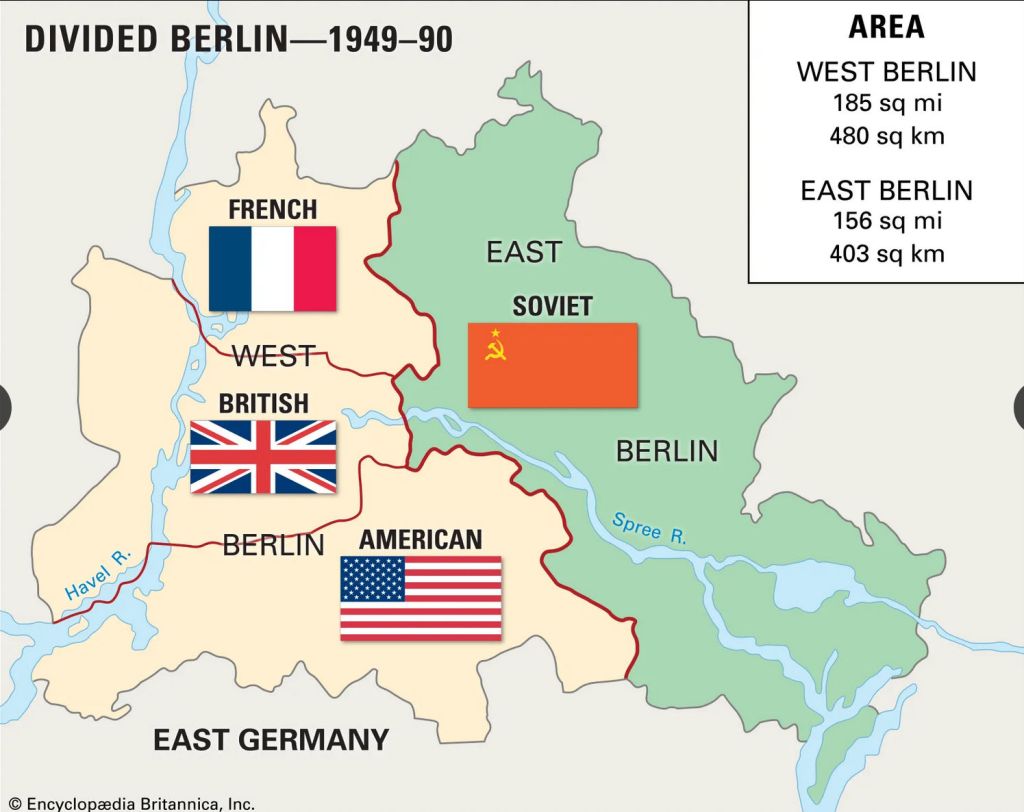
Grant was sent to Berlin, that iconic Cold War city, “about the time of the Corridor trouble with the Russians…” The division of Germany into Eastern and Western nations after World War II left Berlin deep in Soviet-controlled East Germany. The 1945 Potsdam Agreement divided the city into four sectors, three controlled by Western allies (U.S., UK, France) and the fourth controlled by the Soviets. The treaty did not, however, guarantee road or rail access to Berlin. With the long-term goal of uniting Germany under Soviet control, Joseph Stalin blockaded Berlin from Western access in 1948. The U.S. / British response was the Berlin Airlift from June 1948 through September 1949, delivering over 2.3 tons of supplies to East Berlin.
Russians:
His time in Berlin introduced Grant to “the Russians, their brutality, their carelessness of human life, and their guile…” This is in line with Grant’s own attitudes and incites him to defect. No mention of British cruelty in its own colonies.
B.A.O.R.:
Grant’s final incentive to defect is being disqualified for “foul fighting” during a B.A.O.R. championship. B.A.O.R. was the British Army of the Rhine, established in 1945 to administer the British zone of western Germany. Later it contributed to NATO in defense of West Germany from a feared Soviet invasion. B.A.O.R. had a troop strength of 80,000 in 1957. With the collapse of the Soviet Union, B.A.O.R. became British Forces Germany in 1994, which was itself largely disbanded in 2020.
Coventry:
After his boxing disqualification, Grant’s “fellow drivers sent him to Coventry…” This does not refer to the British city of Coventry near Birmingham. Instead, it is an English expression, “send to Coventry,” which basically means that Grant’s colleagues ghosted him.
Reichskanzlerplatz:
Grant defects after collecting outgoing mail from “Military Intelligence Headquarters on the Reichskanzlerplatz…” in what would have been West Berlin at the time. The square was laid out in the early 1900s with an U-Bahn rail station opened there in 1908. The name was intended to refer to Germany’s imperial chancellor (Reichskanzler) but was temporarily renamed Adolf-Hitler-Platz from 1933 to 1947. In 1963, the square was renamed Theodor-Heuss-Platz, in honor of Theodor Heuss (1884 – 1963), who was president of West Germany from 1949 to 1959.
What Year is This?:
Grant is said to be reflecting on these events ten years later. If this is ten years after the “Corridor trouble,” then the novel would have to take place around 1958. However, people much smarter than me estimate that the story would actually take place in 1954 or 1955 based on references to other historic events.
Perspex:
Grant notices his reflection in the plane’s Perspex window. Perspex was sold by the UK’s Imperial Chemical Industries. Polymethyl methacrylate, also known as acrylic glass, was sold by other companies as Plexiglass, Lucite, and various other trade names. It’s a relatively lightweight material with a higher impact strength than regular glass.
3 Post-Graduate Studies
Colonel Boris:
We won’t learn his name until later, but when Grant defects his initial questioning is conducted by the surly Colonel Boris.
Vorkuta:
Taking a dislike to Grant, Boris wonders “if it was worth while wasting food on him at Vorkuta.” Vorkuta is a Russian town located north of the Arctic Circle that primarily existed due to the discovery of vast coal reserves in 1930. This was followed in 1932 by Vorkutlag, a gulag (forced labor) camp. Coal mined by Vorkutlag inmates was vital to the survival of Leningrad during the 125-week siege of that city during World War II. The camp had a maximum of 73,000 prisoners in 1951, both Soviets and foreigners. A two-week inmate uprising at Vorkutlag in 1953 was ended with gunfire and the death of 66 inmates. The camp was closed in 1962. Vorkuta’s population plummeted after the collapse of the Soviet Union and privatization of the coal mines.
Dr. Baumgarten:
As a test of his conviction and ability, Grant is assigned to assassinate a Dr. Baumgarten in Berlin’s British sector. I can find no evidence that this is based on a specific actual event, though assassinations and attempted assassinations certainly occurred during the Cold War.
Kurfürstendamm:
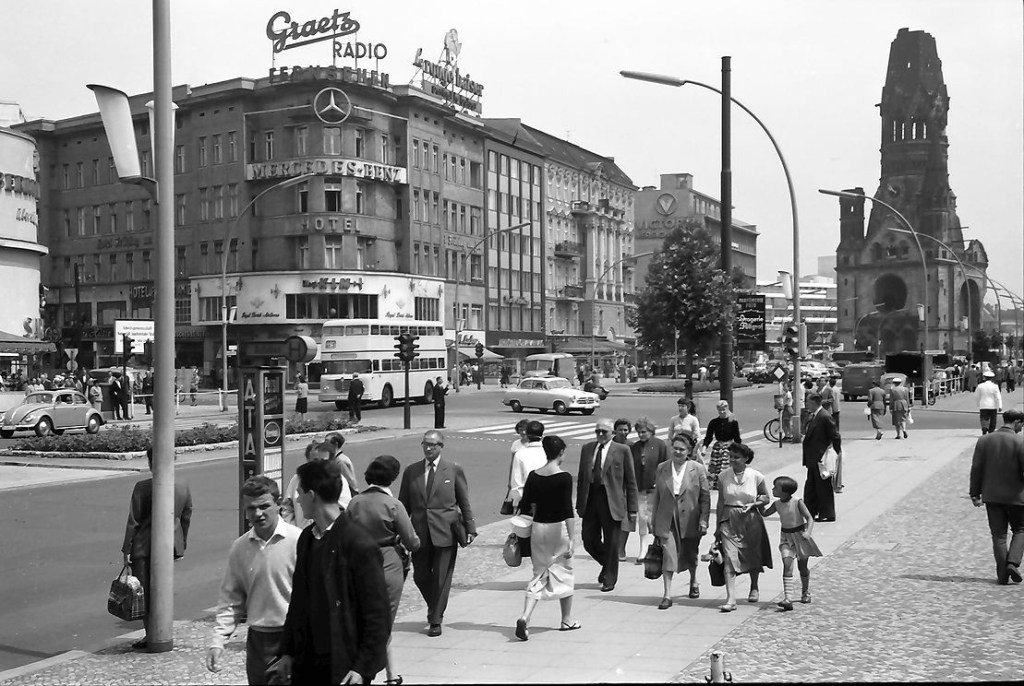
Dr. Baumgarten is no slouch. He lives on Kurfürstendamm, sometimes described as Berlin’s equivalent to the Champs-Élysées. The boulevard was constructed over a log road built in the 1540s. During the 1920s, Kurfürstendamm became a popular nightlife area. After damage caused by air raids during World War II was repaired, Kurfürstendamm became one of the main commercial roads in West Berlin during the Cold War years. The boulevard has four lanes and runs a little over two miles.
Stalino, Etc.:
Grant observes a series of landmarks on his air journey to Moscow:
- Stalino, today known as Donetsk and located in Russian-occupied Ukraine (as of August 2024)
- Dnieper River, the longest river in Ukraine and the fourth longest in Europe, with several hydroelectric stations along the Ukraine segment
- Dnipropetrovsk Oblast, which the Dnieper runs through, a Ukrainian province with substantial agriculture, industry, and mining
- Kursk, site of the 1943 Battle of Kursk, the largest battle of World War II based on the quantity of troops and weapons involved
- Central Steppe, which I think is technically the East European forest steppe ecoregion, part of the Eurasian Great Steppe, the 5,000-mile region that has historically been a primary overland route between Europe and Asia
Manic Depressive Narcissist:
Grant is diagnosed by the Soviets as “an advanced manic depressive,” the condition of manic depression that is today referred to as bipolar disorder. This is consistent with his reaction to the full moon described in Chapter 2. The condition involves depressed periods alternating with elevated periods of mania. Self-harm, anxiety, and substance abuse have a higher than average correlation with bipolar disorder. To what extent this is a genetic or environmental condition is not fully known. It’s currently estimated that about 2% of the world’s population experiences bipolar disorder. Grant is also found to be a narcissist, defined as “an excessive preoccupation with oneself,” hardly a surprise based on our knowledge of him. (In case we’ve forgotten, we’re also reminded that Grant is “asexual.”) Finally, he has a high tolerance for pain. This is significant because Bond also has a high tolerance for pain and, to be honest, probably qualifies as a narcissist. But Bond is hardly asexual and, while a man of great passion, has too great a control over his mood and emotions to qualify as bipolar. Grant is Bond’s equal on paper, but lacks Bond’s connection to the substance of the human condition.
Two Biggest Purges:
Fleming writes about the use of violence to retain political power in the USSR, citing “the two biggest purges” in which “a million people have to be killed in one year…” Joseph Stalin conducted several purges of the Communist Party; one of them, the Great Purge conducted from 1936 to 1938, became violent. Guilt of the victims was predetermined – if the accused confessed to offenses, that proved they were guilty, and if they claimed innocence, that was exactly what a guilty person would do. About one-third of the members of the Communist Party were either executed or sent to gulags. Official figures cited nearly 700,000 executions and 116,000 dead in labor camps. I believe the other purge Fleming refers to might be the so-called Red Terror of 1918 – 1922. The Bolsheviks, led by Vladimir Lenin (1870 – 1924), took control of Russia in 1917 and undertook a program of political repression and executions to consolidate power after an assassination attempt on Lenin and assassinations of two senior members of the Bolshevik secret police. Estimates of casualties in the Red Terror vary widely, anywhere from 50,000 to 200,000 executions, with hundreds of thousands more deaths occurring in prisons.
Otdyel II:
Grant is referred to SMERSH Otdyel II, or Department 2, “in charge of Operations and Executions.” According to Wikipedia, this was the real function of Otdyel II: “Counterintelligence Operations within foreign POWs, and also filtering of Soviet armed forces officers and servicemen who had been POWs. … Also collection of intelligence information from areas immediately behind enemy lines…” Former POWs were not exactly welcome, as Stalin had declared surrender to be a traitorous act.
Leningrad:
Grant is sent to the Intelligence School for Foreigners outside Leningrad. Established as St. Petersburg by Tsar Peter the Great (1672 – 1725) in 1703, the city was renamed Leningrad in 1924 and reverted to Saint Petersburg in 1991. Based on the timing, perhaps Grant was in Leningrad during the 1949 – 1952 Leningrad Affair, orchestrated by Stalin to consolidate power and remove those who he might have considered disloyal. Six city officials were executed and 200 were sent to prison; their families were banished from living in any major city, essentially forcing them into Siberia. Two thousand more individuals were exiled from the city with their homes and property confiscated. I can find no information on an Intelligence School for Foreigners in the Leningrad area.
Kuchino:
Grant is sent to Kuchino, a small town south of Moscow, to attend the School for Terror and Diversion. According to this article at the Fleming’s Bond site, such a school actually existed, and apparently they really did produce the “explosive cigarette case” Grant mentions late in the book. According to the same article, Colonel Arkady Fotoyev was the school’s supervisor, as described in the novel. This passage also mentions Lt. Colonel Nikolai Godlovsky, “the Soviet Rifle Champion.” According to this article at the web site of British author Jeremy Duns, Godlovsky existed as described and Fleming probably learned about him from the 1950 book SMERSH by a former British agent named Edward Spiro.
Rubles:
In 1953, Grant receives “a handsome 5000 rubles per month.” According to Wikipedia, the Soviet ruble in 1953 was equivalent to about $0.25 USD, so Grant was receiving approximately $1,250 USD / month. $1 USD in 1953 is equivalent to about $11.78 as of August 2024, making Grant’s salary a whopping $14,725 / month in 2024. That seems hard to believe; someone please correct me if they find an error with this.
Tushino Airport:
Grant’s plane approaches Tushino Airport outside Moscow. Tushino was a small town just to the north-northwest of Moscow which was incorporated into the city of Moscow in 1960. Tushino Airfield was a general aviation airport where military exercises showcasing the USSR’s technological superiority were held in the Cold War years. The airfield has since been replaced with Lukoil Arena, a sports and entertainment facility.
4 The Moguls of Death
Sretenka Ulitsa:
SMERSH headquarters is located at 13 Sretenka Ulitsa (ulitsa = street in Russian). Sretenka Ulitsa runs roughly north-south inside the Garden Ring, the circular road around central Moscow that follows the course of the protective ramparts that surrounded the city in the 1600s. Supposedly a reader sent Fleming a photograph of this address after From Russia with Love was published, demonstrating that the site was not at all the way Fleming described. If I’ve interpreted the maps correctly, at the time of this writing (2024) the supposed location of SMERSH headquarters is a construction site in progress but was a parking lot in recent years.
Caucasian Carpet:
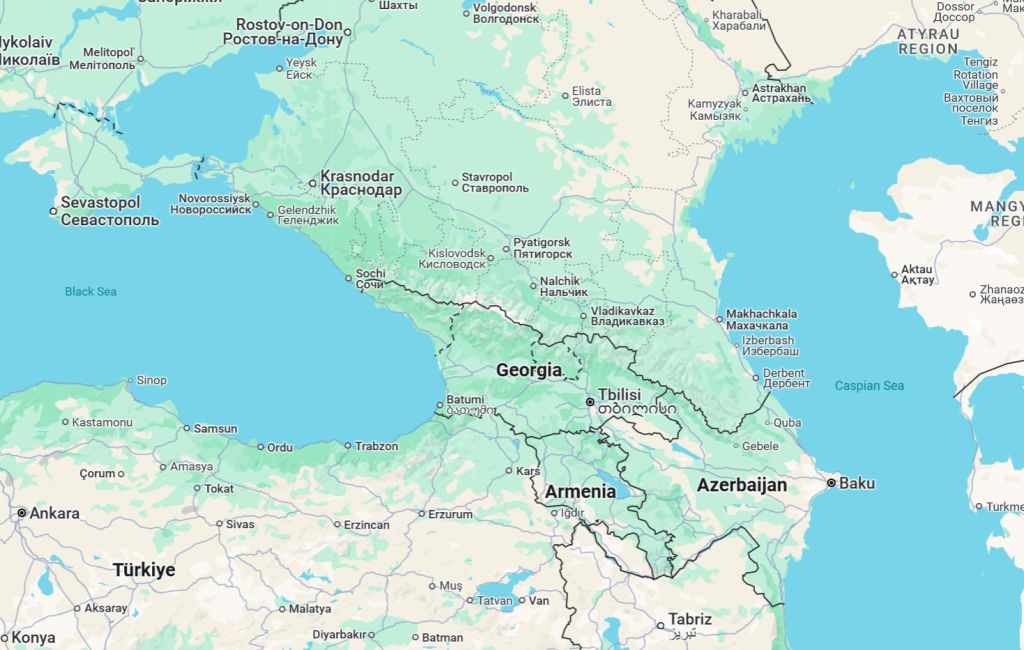
The important second floor office where SMERSH planning is conducted has a Caucasian carpet. This would be an area rug from the Caucasus region between the Black Sea to the west and the Caspian Sea to the east. It appears that such textiles have been created in that region since the Bronze Age, prior to 2500 BC. The Caucasus Mountains form something of a geographic barrier between western Asia and eastern Europe. Numerous cultures with different languages have historically existed throughout the region.
Stalin, Lenin, et al:
Four framed photographs hang on the walls in the SMERSH conference room:
- Joseph Stalin (1878 – 1953), leader of the Soviet Union from 1924 until 1953
- Vladimir Lenin (1870 – 1924), a leader of the Bolshevik revolution and the leader of post-revolution Russia from 1917 to 1924
- Nikolai Bulganin (1895 – 1975), Soviet Minister of Defense 1953 – 1955 and Soviet Premier 1955 – 1958
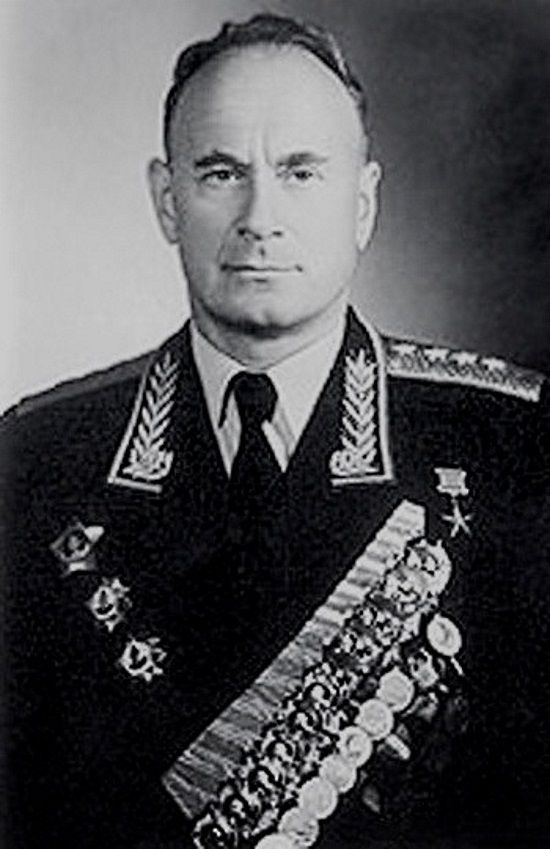
- Ivan Alexandrovich Serov (1905 – 1990), NKVD (intelligence and state security ministry) Deputy Commissar 1941 – 1954, KGB Chairman 1954 – 1958, and later head of the GRU, the foreign military intelligence agency. We’re told that Serov’s photo was added on January 13, 1954, to replace that of Lavrentiy Beria (1899 – 1953), head of the NKVD 1938 – 1946 and, briefly in 1953, head of the MVD (Ministry of Internal Affairs) and first deputy premiere of the Soviet Union until being replaced in a coup led by Nikita Khrushchev. Beria was also one of the lead perpetrators of the Great Purge (Chapter 3) and was later suspected of having poisoned Stalin; Beria was executed in December 1953. I can find so special significance of the date January 13, 1954, as Serov took over the KGB in March of that year.
Marx, Engels, et al:
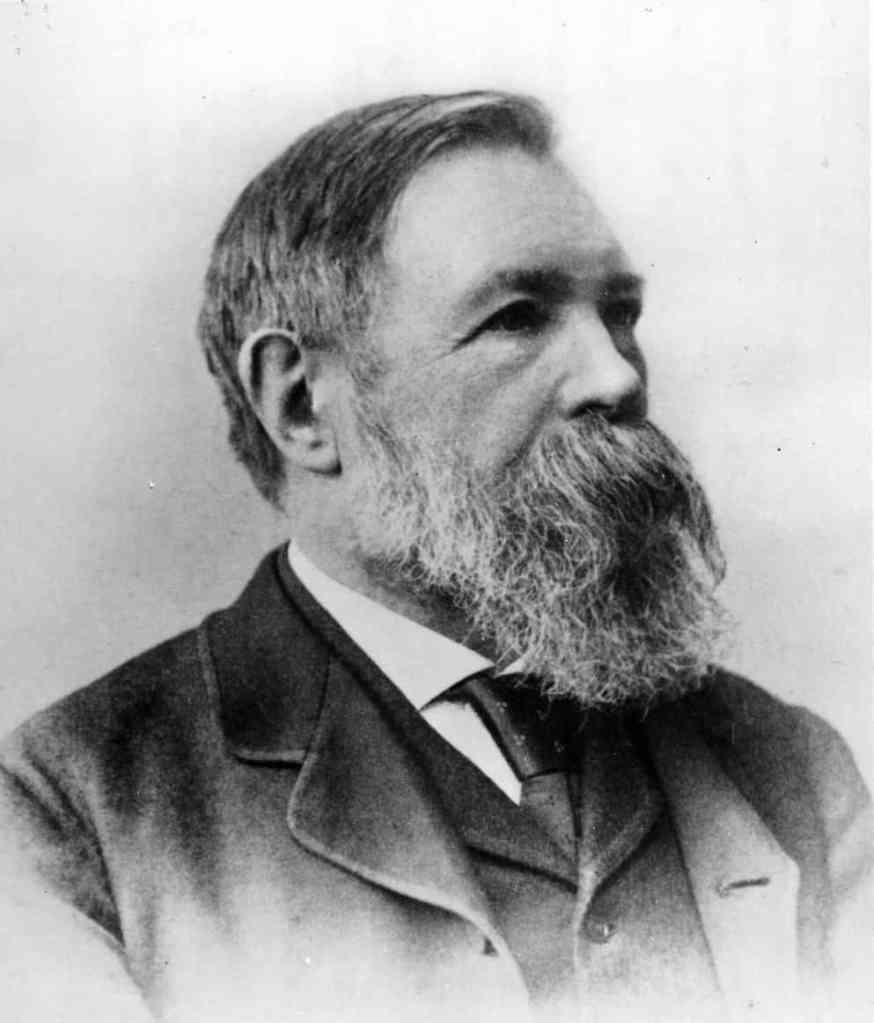
A bookcase in the SMERSH meeting room contains books by Marx, Engels, Lenin, and Stalin. Karl Marx (1818 – 1883) was a German jack-of-all-trades (philosopher, economist, historian, sociologist, and more) who published the pamphlet The Communist Manifesto in 1848 and Das Kapital, published in three volumes between 1867 and 1894. Marx predicted that class conflict created by capitalism would lead to socialism, and all these years later we’re still waiting. Friedrich Engels (1820 – 1895), like Marx, was a German-born multi-disciplinary thinker. He was a friend and collaborator with Marx, co-wrote The Communist Manifesto, and published numerous other works both alone and with Marx. Lenin and Stalin published their own works on political and economic theory, including Imperalism, the Highest Stage of Capitalism (Lenin in 1917) and On Questions of Leninism (Stalin in 1926).
General Grubozaboyschikov:
The head of SMERSH, in the novel, is General Grubozaboyschikov. Despite Fleming’s Author’s Note, I can find no evidence that “G” was a real person. The fact that the head of MI6 is M and the head of SMERSH is G is further evidence that this isn’t just a story of Bond confronting his own doppelgänger, but of the conflict between two equivalent but diametrically opposed cultures. G is later described as being an opponent of the late Lavrentiy Beria.
Medals and Ribbons:
Fleming cites a long list of medal ribbons worn by G. There is no need to repeat the list here, but it’s significant that G’s honors are not just from within Russia or the Soviet Union. He also wears the American Medal for Merit and a British CBE. The Medal for Merit was specifically created to honor civilians, including select foreign citizens, for distinguished service during World War II; it was last awarded in 1952. The Commander of the Most Excellent Order of the British Empire (CBE) was established, along with other rankings of the Most Excellent Order of the British Empire, by King George V in 1917 to recognize those who “render important services to Our Empire.” CBE falls between KBE (Knight / Dame Commander) and OBE (Officer). It’s a reminder of Russia’s role in World War II and the fact that Russia was an ally with the U.S. and England during the war.
Praesidium:
G inquires about a meeting of the Praesidium (Presidium) that morning. The Presidium of the Supreme Soviet was the collective head of state of the USSR, its members chosen by both houses of the Supreme Soviet, the USSR’s primary legislative body and its only collective branch of government. The Presidium had 39 members and the chairman was sometimes described outside the USSR as President of the Soviet Union. It was headquartered in the Kremlin in Moscow.
RUMID:
G is about to meet with RUMID, GRU, and MGB. GRU and MGB have been mentioned previously. I can’t find any real substance on RUMID, but later we’re told that it is the intelligence department of the Ministry of Foreign Affairs.
Khokhlov:

G says, “We do not want another Khoklov affair.” I’m not sure of the significance of Fleming’s spelling, as contemporary sources spell it Khokhlov. Nikolai Khokhlov (1922 – 2007) was a KGB officer whose father was assigned to a penal unit during World War II because of remarks about Stalin that were considered inappropriate. The father died during that service, and Khokhlov’s stepfather died in combat in 1941. As an NKVD agent during World War II, Khokhlov parachuted into Belarus, then occupied by the Nazis, and took part in the 1943 assassination of the violent and severely anti-Semitic German officer Wilhelm Kube. Khokhlov was so beloved at the time that he was the subject of the 1947 Soviet film Secret Agent. Khokhlov was sent to Frankfurt, in West Germany at the time, to assassinate Georgiy Okolovich, chairman of the anticommunist group National Alliance of Russian Solidarists. Khokhlov’s wife talked him out of carrying out the order, and while in Frankfurt Khokhlov defected to the West. Part of the “loot” Khokhlov brought to make his defection appealing were cigarette cases containing concealed handguns, which perhaps inspired Grant’s gun-toting book in the final chapters. The KGB attempted to poison Khokhlov in 1957 but he survived. It’s a fascinating story and one that many readers in 1957 would have at least heard of. Within the context of the novel, the “Khokhlov affair” is important enough to be repeated several times as a major embarrassment to the USSR.
Slavin, et al:
The heads of the various agencies arrive for their meeting with G: Lt. General Slavin (GRU), Lt. General Vozdvishensky (RUMID), and Colonel Nikitin (MGB). As far as I can tell, these are all fictional characters, though Fleming did have a tendency to base his characters on real people.
Moskwa-Volga:
G smokes a Moskwa-Volga cigarette. I can find nothing on this brand, however it is mentioned in Olen Steinhauer‘s novel Liberation Movements.
Zippo:
Despite smoking Russian cigarettes, G uses a Zippo lighter. Perhaps acquired during war-time service? Or, worse, confiscated from a captured U.S. spy? Most Zippo lighters have been manufactured in the U.S. since 1933. They were especially popular with the U.S. military during World War II.
Hard-Soft:
G describes a complicated, but admittedly compelling, change of Soviet policy toward its foreign adversaries. The previous hard policy “built up tensions” to the point of nearly provoking a nuclear exchange. The USSR has now, according to G, moved to a hard-soft policy, a nearly passive-aggressive approach of alternating between “the stick and the carrot.” This has the effect of confusing and destabilizing the Western powers in terms of foreign policy. From what little I’ve read of Khrushchev, I can easily imagine this being his brain-child.
Those Crazy Americans:
While discussing the transition from hard to hard-soft policy, G describes Americans as “unpredictable” and “hysterical,” which is hard to dispute. This hysterical nature was part of the Soviets’ motive for transitioning to the hard-soft policy.
Radford:

G claims that one of the U.S. hardliners who benefited from the hard policy was “the Pentagon Group led by Admiral Radford.” Arthur Radford (1896 – 1973) was a naval officer who, during World War II, supported recruiting women into the armed services, though in strictly low-level support positions. The Naval Reserve’s WAVES (Women Accepted for Volunteer Emergency Service) program was a result. Radford served in a number of high-profile positions, always advocating for aggressive military policies, including increased reliance on “strategic” nuclear weapons in President Eisenhower’s “New Look” policy. Radford was Chairman of the Joint Chiefs of Staff from 1953 to 1957.
Quemoy and Matsu:
G specifically mentions a hard policy when “China threatens Quemoy and Matsu.” Quemoy (also known as Kinmen) and Matsu are islands situated on the Taiwan Strait and the East China Sea, respectively. The Taiwan Strait separates Taiwan from mainland China and was the site of several conflicts between the People’s Republic of China and the Republic of China. Saying China “threatened” the islands seems like a tame description. PRC forces bombed Kinmen in 1954 – 1955. PRC forces also took control of parts of Matsu in 1953. Bombing of both areas in 1958 helped instigate the Second Taiwan Strait Crisis.
“India and the East”:
G mentions “Comrades” Bulganin and Khrushchev and Serov visiting India and the East so they could “blackguard the English.” Bulganin and Serov were both mentioned earlier in the chapter. Nikita Khrushchev (1894 – 1971) succeeded Bulganin as Premiere of the Soviet Union. Bulganin and Khrushchev traveled to India, Burma, and Afghanistan in late 1955. I can find no indication that Serov traveled with them. India and Burma (now Myanmar) had just become independent from Britain in 1947 and 1948, respectively. The British had tried to conquer Afghanistan more than once as a buffer between Europe and Russia. So a friendly visit from Khrushchev and Bulganin – where they “were warmly welcomed by officials and by the population of these countries” – might not have been viewed favorably by the British.
Global Playing Field:
G cites a series of countries subject to Soviet intervention, both overt and covert: Morocco, Egypt, Yugoslavia, Cyprus, Turkey, England, France. It’s an indication of how much the Cold War affected every part of the globe.
Gouzenko:

Confessing Soviet intelligence failures as motivation for the current SMERSH conspiracy, G mentions “Gouzenko and the whole of the Canadian apparat and the scientist Fuchs…” Canada was considered important in terms of Soviet espionage even before World War II because of the country’s close ties with the U.S. and Britain. The Soviets developed an entire spy ring overseen from the Soviet Embassy in Ottawa. Igor Gouzenko (1919 – 1982) was a GRU cipher clerk sent to Ottawa in 1943. Gouzenko enjoyed living in Canada so much that, when he was about to be recalled to the USSR in 1945, he made off with a collection of secret documents and defected. (The Canadian government’s bungling of his defection reads like a bad comedy.) Information provided by Gouzenko helped the Canadians dismantle the entire spy network, including Klaus Fuchs (1911 – 1988), a German physicist who provided the Soviets with information on the Manhattan Project. Fuchs was actually in Britain, though he had been in an internment camp in Canada in 1940. For his spy work he was imprisoned in Britain for nine years.
The American Apparat:

Continuing his recitation of intelligence failures, G says, “then the American apparat is cleaned up…” I’m not certain, but I believe this refers to the Golos and Silvermaster spy networks, both exposed in 1945 by Elizabeth Bentley (1908 – 1963), a U.S. citizen recruited by the NKVD who later turned herself in to the FBI out of fear of KGB assassination. Ukrainian Jacob Golos (1889 – 1943) was a founding member of the Communist Party of the U.S.A. and was involved in falsifying documents to assist Soviet intelligence agents in taking up residence in the U.S. Nathan Silvermaster (1898 – 1964) served on the U.S. War Production Board during World War II and operated a network of Soviet agents within the U.S government.
Tokaev:
Before again mentioning the Khokhlov affair, G says, “then we lose men like Tokaev.” Grigory Tokaev (also known as Grigory Tokaty) (1909 – 2003) was a Soviet rocket scientist. Tokaev was a loyal communist but became disillusioned with Stalin’s government and, after being stationed in Berlin at the end of the war, defected to England. He later taught at The City University in London and helped circulate anti-communist propaganda.
Petrov:
Finally, G talks of “Petrov and his wife in Australia.” Vladimir Petrov (1907 – 1991) was a KGB officer stationed at the Soviet embassy in Canberra. His wife, Evdokia Petrova (1914 – 2002) was an NKVD officer also stationed at the embassy in Canberra. Petrov had been appointed by Beria; after Beria’s execution, he feared that he might be next. He defected to the Australian government in 1954. Oops, he didn’t bother to tell his wife and planned to leave her behind. Petrova was on a plane, being taken aback to the USSR by the KGB. When the plane stopped for refueling at Darwin in northern Australia, Australian officials offered her asylum and rescued her. The USSR recalled its embassy staff in Canberra and sent Australia’s embassy staff in Moscow back home.
5 Konspiratsia
Moujiks, Knout:
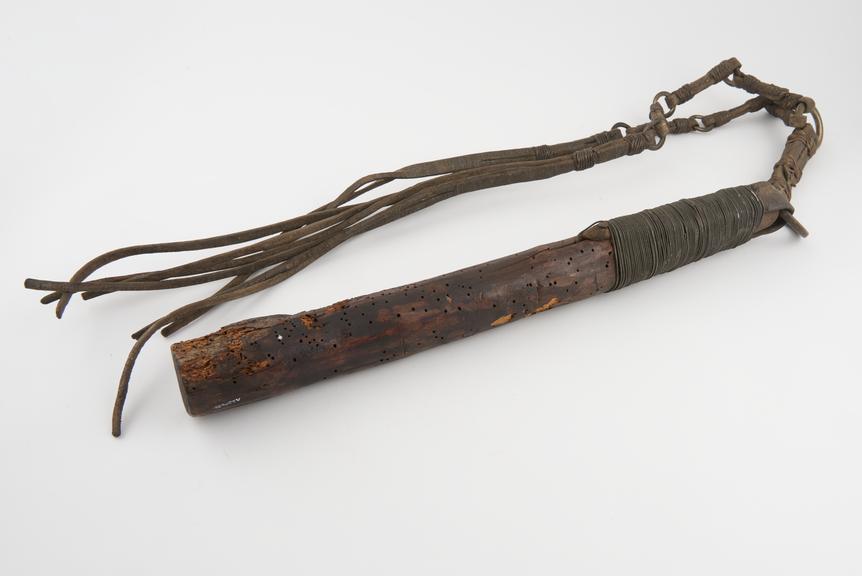
After G’s tongue-lashing, he thinks, “The moujiks had got the knout.” A “moujik” refers to a Russian peasant, primarily born before 1917, as everyone in the room certainly was. A “knout” was a type of whip made of leather thongs. While it could be used on cattle, its primary use was corporal punishment.
Kazbek:
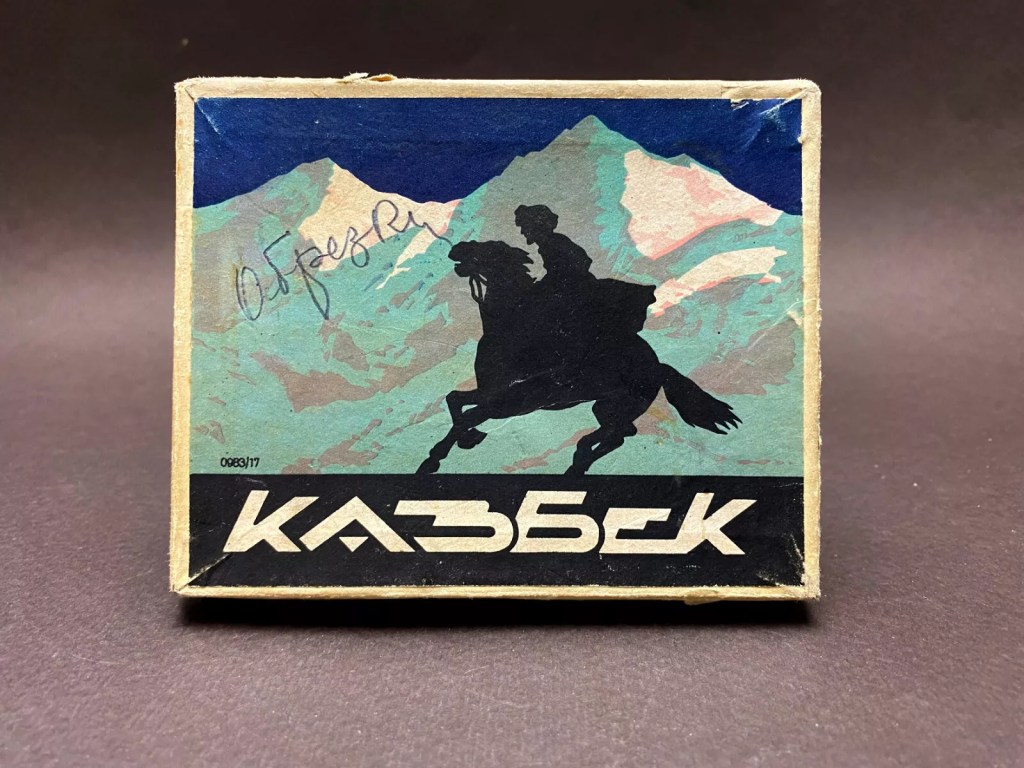
Lt. General Vozdvishensky of RUMID smokes a Kazbek cigarette. All I’ve really found on Kazbek is that the cigarettes were relatively expensive and so were considered a sign of wealth or luxury.
Molotov:
Vozdvishenky “remembered how Molotov had privately told him, when Beria was dead, that General G would go far.” Vyacheslav Molotov (1890 – 1986) was head of the Soviet government from 1930 – 1941, and Minister of Foreign Affairs from 1939 – 1949 and 1953 – 1956. He was a close ally of Stalin for years. He took part in a failed coup against Khrushchev in 1957, after From Russia with Love was written. During the 1939 – 1940 Winter War between Russia and Finland, Molotov claimed the Soviets were delivering food when they were really dropping cluster bombs. Finns referred to the bombs as Molotov bread baskets, and their own homemade explosives as Molotov cocktails.
MGB Predecessors:
Fleming lists some of “the famous predecessors of the MGB – the Cheka, the Ogpu [OGPU], the NKVD and the MVD…” Like corporations seeking to confuse the public about past deeds, Soviet government agencies went through frequent name changes and redistribution of duties. According to Wikipedia, the chronology of the USSR’s primary state security ministry was: Cheka (1917 – 1922), GPU (1922 – 1923), OGPU (1923 – 1934), NKVD (1934 – 1941), GUGB of the NKVD (1941 – 1943), NKGB (1941, 1943 – 1946), MGB (1946 – 1953), MVD (1953 – 1954), and KGB (1954 – 1991).
Metteur en scène:
Serov is described as “metteur en scène of most of the great Moscow show trials…” Metteur en scène loosely translates from French as director, meaning that Serov was pulling the strings either formally or informally.
Central Caucasus:
Serov is also linked to “the bloody genocide in the central Caucasus in February 1944…” Conflict with Chechens in the Caucasus goes back to Chechen resistance to Russian expansion in the 1700s and 1800s. The Soviets conducted mass deportations of people of multiple ethnicities from the Caucasus in the 1940s. Hundreds of thousands were sent to Central Asia and Siberia and about one out of four are believed to have died. However, here Fleming specifically refers to Operation Lentil. In 1936, Stalin forced autonomous Chechen and Ingush territories together into the Chechen-Ingush Autonomous Soviet Socialist Republic. After more conflict, fearing that the presence of millions of Muslims in the USSR might inspire rebellion throughout Central Asia, and in search of forced labor, Beria ordered the entire Chechen-Ingush ASSR population to be deported. Operation Lentil began on February 23, 1944, and nearly half a million people were forcibly moved. A quarter or more of those are estimated to have died during transport or in labor camps, and many were shot because they were too old or otherwise unable to survive the journey.
Baltic States:
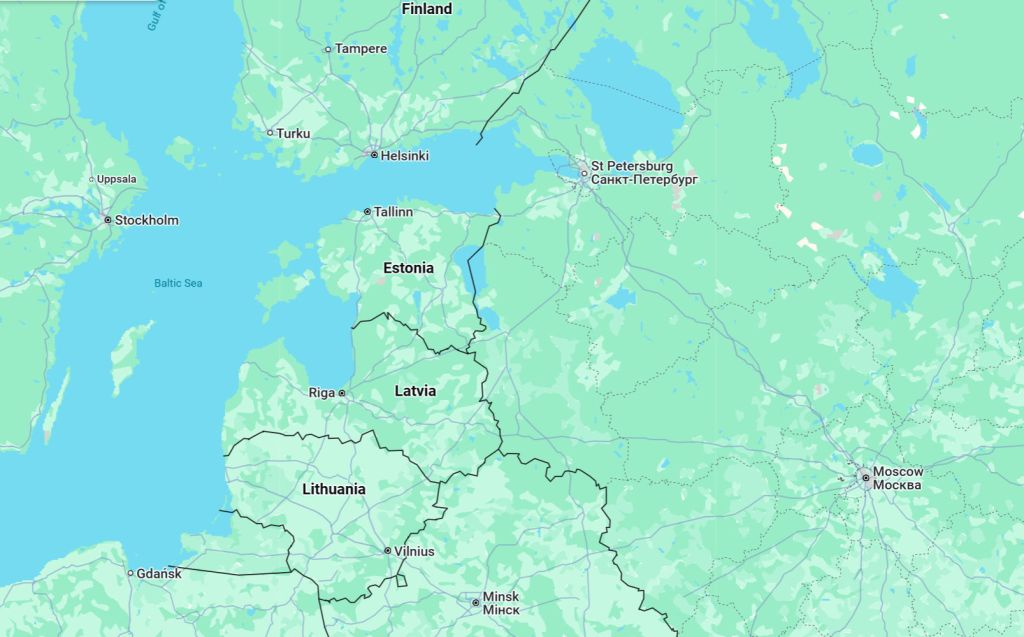
Serov had also “inspired the mass deportations from the Baltic states…” Estonia, Latvia, and Lithuania constitute the Baltic states. The Soviets occupied the region in 1940 and conducted staged elections which resulted in all three countries “voluntarily” joining the USSR. As a result, from 1940 – 1953, the Soviets deported over 200,000 people (about 10% of the adult population) to labor camps or other areas. The deportations were paused when Germany invaded the region in 1941, but it turned out the Nazis were just as cruel as the USSR, killing over 250,000 Jews in Latvia and Lithuania.
German Scientists:
Serov is also credited with “the kidnapping of the German atom and other scientists who had given Russia her great technical leap forward after the war.” At the end of World War II, the U.S., USSR, Britain, and France all claimed repatriations from Germany, and that included people of important technical skills, such as nuclear physicists and engineers from missile and rocket programs. We established in Moonraker that a few of these scientists and engineers went to Britain. Many went to the U.S. But the USSR conducted the most brazen transfer. In the immediate aftermath of the war, the Soviets tried to simply take over technical facilities in the region of Germany they controlled. That left them exposed very close to Western territory, and the 1945 Potsdam Conference prohibited weapons development in Germany. So on October 21-22, 1946, the Soviets undertook Operation Osoaviakhim to transport without notice approximately 6,500 scientists, engineers, technicians, and some of their families, along with entire research facilities, into the USSR. They included people and materials related to photographic R&D, liquid- and solid-fuel rocket engines, telemetry, petroleum, and other disciplines.
Litvinov:

Vozdvishensky seems the most capable among the assembled group of standing up to G, partly because of his extensive international service, including time “as a ‘doorman’ at the Soviet embassy in London under Litvinoff.” Maxim Litvinov (1876 – 1951) served as the Soviet Union’s unofficial ambassador to Britain in 1917 – 1918. He was also the People’s Commissar for Foreign Affairs (roughly equivalent to the U.S. Secretary of State) from 1930 – 1939. That’s most likely when Vozdvishensky would have served under Litvinov. Litvinov also served as ambassador to the U.S. from 1941 – 1943.
TASS:
Vozdvishensky was also stationed in New York City with TASS, the Soviet (and now Russian) state-owned news agency. The agency was established in 1902 but not known as TASS until 1925, and during the Soviet period it was the central news agency for newspapers, radio, and TV. The NKVD and KGB commonly placed agents as TASS employees as a cover for international espionage. TASS still operates today and made numerous false claims during Russia’s 2022 invasion of Ukraine.
Amtorg:
Vozdvishensky also served in London with Amtorg. The Amtorg Trading Corporation was the USSR’s trade representative in the U.S., established in 1924 with its primary office in New York City. Amtorg negotiated contracts with U.S. companies and handled the majority of exports from the Soviet Union. Amtorg also dealt with delivery of Lend-Lease supplies to the USSR during World War II. Despite frequent accusations that Amtorg was an espionage front, it seems that most espionage activity was conducted by the Soviet embassy in Washington, DC, established in 1933.
Kollontai:
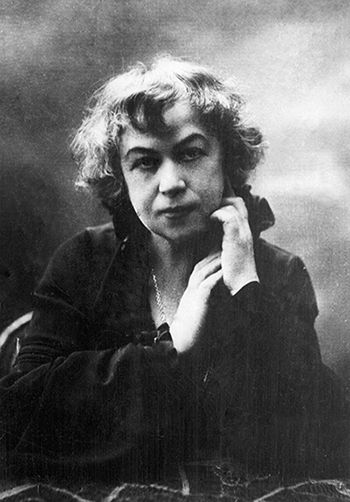
Vozdvishensky was also a military attaché at the Soviet embassy in Stockholm “under the brilliant Madame Kollontai.” Alexandra Kollontai (1872 – 1952), after a period of exile, joined the Bolsheviks in 1915 and was a voting member of the Central Committee that chose to implement the October Revolution in 1917. She defended women’s rights as a Marxist feminist. Kollontai was a Soviet diplomat stationed in Mexico, Norway, and Sweden, and was the Ambassador to Sweden from 1943 – 1945. Apparently Kollontai stepped back from her feminist views over the years, which may explain why someone like Vozdvishensky would consider her brilliant.
Sorge:
Vozdvishensky “had helped train Sorge, the Soviet master spy, before Sorge went to Tokyo.” Richard Sorge (1895 – 1944) was a Soviet intelligence officer who worked undercover as a journalist in China, Germany, and Japan. While Sorge was born in what is now Azerbaijan, his father was German, so Sorge grew up in Germany and served in the German army during World War I. While in Japan, Sorge’s German ancestry made him welcome at the German Embassy, allowing him to conduct surveillance on both Japan and Germany. Sorge was able to alert his government about Germany’s planned invasions of Poland in 1939 and the Soviet Union in 1941. He was also able to provide assurance that Japan had no plans to invade the USSR. The Japanese arrested Sorge for espionage in 1941 and he was hanged in 1944.
Lucy:
During a stint in Switzerland, Vozdvishensky “had helped sow the seeds of the sensationally successful but tragically misused ‘Lucy’ network.” The Lucy spy ring in Switzerland was overseen by Rudolf Roessler (1897 – 1958), a Bavarian who left for Switzerland when Hitler came to power. Roessler facilitated the transfer of classified information from German officers who opposed Hitler to the Swiss, British, and USSR. Like Sorge, Roessler alerted the Soviets to Germany’s planned invasion in 1941. The GRU officer who received Roessler’s information was Alexander Radó (1899 – 1981), who only knew that his source was based in Lucerne, so created the code name “Lucy.” I’m intrigued by what Fleming might have known about Lucy, as the full story didn’t become public until 1966, and some of Roessler’s sources are unknown to this day.
Rote Kapelle:
Continuing Vozdvishensky’s lengthy international experience, he was a part-time courier to the “Rote Kapelle.” The Red Orchestra, or Rote Kapelle, was an informal network of German opponents to Hitler and the Nazis. They circulated propaganda, helped Jews escape Germany, and provided intelligence to allied governments. The name was applied by the Abwehr, the German intelligence agency. The term Red Network was loosely applied to groups and individuals working independent of each other. About 400 individuals are known to have been a part of it.
Burgess and Maclean:
Finally, Vozdvishensky was “on the inside of the Burgess and Maclean operation…” Guy Burgess (1911 – 1963) and Donald Maclean (1913 – 1983) were part of the Cambridge Five spy ring that operated in the UK after being recruited by the NKVD while they were students at the University of Cambridge. (One of the five claimed they were not recruited until after graduation.) All five worked in the British government and provided so much intelligence to the USSR that the Soviets began to doubt the reliability of the information. Once the U.S. and British became aware of moles within the British government, two of the five, Burgess and Maclean, defected to the Soviet Union in 1951. MI5 and MI6 attempted to keep the fiasco confidential, but once it became public it did a lot to discredit British intelligence and damage relations between the U.S. and British intelligence establishments. Numerous novels and movies have taken inspiration from the Cambridge Five and subsequent cover-up, including Tinker Tailor Soldier Spy and A Perfect Spy by John le Carré, The Fourth Protocal by Frederick Forsyth, The Jigsaw Man (1983), and A Different Loyalty (2004). Burgess became bitter in the Soviet Union as he had intended to return to Britain. Maclean integrated more successfully and did some teaching and writing, and he outlived Burgess by nearly twenty years.

Mathis:
In choosing a target for their konspiratsia, the Soviet officers consider our friend René Mathis, now head of the French Duexième, whose help was so important to Bond in Casino Royale. Vozdvishensky identifies Mathis as a Mendès France appointment. Pierre Mendès France (1907 – 1982) was the French prime minister for a brief period from 1954 – 1955, presumably the time when he would have appointed Mathis. Mendès France played a significant role in ending French military involvement in Indochina in 1954.
England is Important!:
Fleming allows the Soviet officers to praise England, which seems improbable, particularly given their knowledge of the Cambridge Five, among other things. (In fairness, Fleming probably didn’t know there were five, but he clearly knew of Burgess and Maclean by the time he wrote the novel.) England’s “Security Service is excellent,” Vozdvishensky says. Then, “MI5 employs men with good education and good brains. Their Secret Service is still better.” He praises Britain’s agents for their hard work despite receiving low pay and no special privileges, in contrast to Red Grant’s significant salary and his material luxuries alluded to in Chapter 1. It seems like a bit of wishful thinking regarding Britain’s role in world politics. Nobody does it better!
Scotland Yard and Sherlock Holmes:
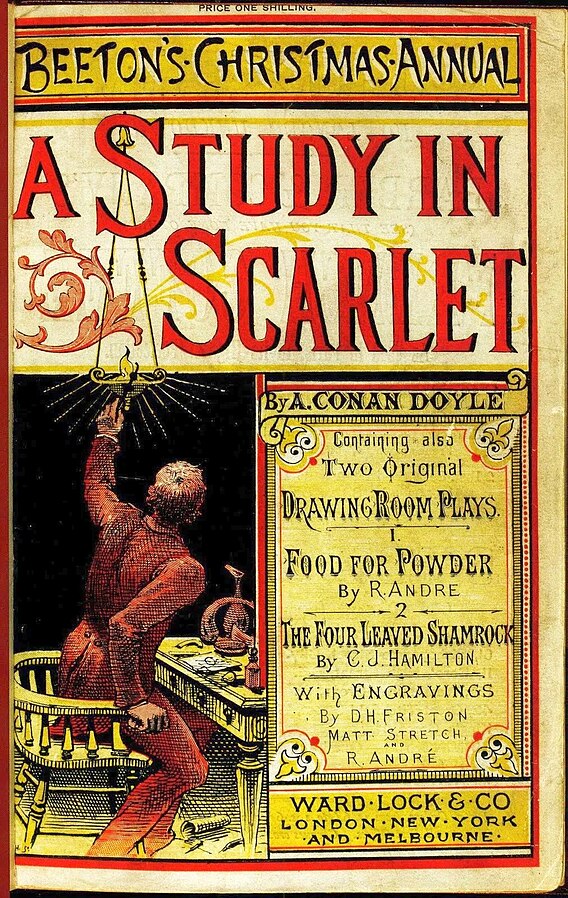
Vozdvishensky qualifies his praise of England, which again sounds like Fleming’s own opinions, that maybe his post-war country is regarded more for the memory of past deeds than present or future status. “Of course, most of their strength lies in the myth – in the myth of Scotland Yard, of Sherlock Holmes, of the Secret Service.” Scotland Yard is the headquarters for London’s Metropolitan Police, given its name from the street (Great Scotland Yard) on which the original headquarters was located. Sherlock Holmes, of course, was the fictional detective created by Arthur Conan Doyle (1859 – 1930) beginning with A Study in Scarlet in 1887. It’s odd that Fleming chooses two real agencies and one fictional character. This may also be an opportunity for Fleming to poke fun at himself, as by this time his own novels were part of the “myth” of the British Secret Service.
Dumb Americans:
The group is quick to dismiss the U.S. intelligence community as a worthy target. “Americans try to do everything with money,” Vozdvishensky says. And, “Personally I do not think the Americans need engage the attention of this conference.”
M:
Returning to the subject of England, the Soviets have some knowledge of M but conclude that he would not only be a difficult target but would not generate the desired scandal. “He does not drink very much. He is too old for women.”
6 Death Warrant
Y*b*nna mat:
G shares the phrase “Y*b*nna mat!” when Bond’s name is brought up. It’s clearly profanity in the Russian language, but I’m unable to determine the specific meaning.
Dynamos:
Vozdvishensky (again, the only one who seems willing to stand up to G) says, “I am interested in football [soccer], but I cannot remember the names of every foreigner who has scored a goal against the Dynamos.” The Dynamo Sports Club was established in 1923 to conduct sports and fitness activities throughout the USSR. Under that was FC Dynamo Moscow, the soccer club originally named Club Sokolniki Moscow but renamed to Dynamo after being taken over by the Cheka (forerunner of the MGB and KGB) in the wake of the Revolution. The Dynamos were the first Soviet soccer club to tour the West when they completed an undefeated tour of the UK in 1945. During the Cold War the club was sometimes referred to as “the cops” because of their ties to the MVD and, later, the KGB. Beria was one of the club’s important supporters. The Dynamos still compete in Russia today.
Past Adventures:
G and Nikitin demonstrate an impressive level of knowledge of Bond’s past exploits, referring to Le Chiffre (Casino Royale), Mr. Big (Live and Let Die), and Drax (Moonraker). Only Diamonds Are Forever (so far) exists somewhat independently of Cold War politics.
Unhappy Family:
The infighting between these senior Soviet officers, reflecting both personal ambitions and inter-agency control struggles, is quite enlightening. For example, Slavin and Nikitin dispute where to place responsibility for the Moonraker rocket failure. While similar maneuvering may very well be going on within the British government, and certainly between Britain and other Western allies, we readers have seen a fairly unified front – as symbolized by the cooperation between Bond and Felix Leiter or René Mathis, and by Bond’s unquestioning loyalty to M. This is probably not deliberate foreshadowing on the author’s part, but it certainly helps explain who will be victorious in the end.
Same Time Last Year:
Trying to place an exact chronology on the timing of the Bond novels is perhaps a futile exercise, and unnecessary because we’re primarily here for entertainment. But speculation can also be fun, and here the conference of officers describes “the rocket affair” as taking place three years ago and the “diamond smuggling affair” was last year. Moonraker would appear to take place in 1954, though Bond experts place it in 1953. That would put Diamonds Are Forever in 1955 and From Russia with Love in 1956, not far from my estimate in Chapter 2.
Heroes:
Vozdvishensky again seems to speak to Fleming’s personal concerns about Britain’s status in the world and the direction of British society and culture: “The English are not interested in heroes unless they are footballers or cricketers or jockeys.” Soon after, he adds, “In England, neither open war or secret war is a heroic matter. They do not like to think about war, and after a war the names of their war heroes are forgotten as quickly as possible.” Is Fleming suggesting that Britain is already losing sight of the lessons of World War II, and of the dangers of expansionist policies in unfriendly nations?
Lone Wolf:
Nikitin says about Bond, “He is said to be a lone wolf, but a good looking one.” We readers may be inclined to agree, but is Bond really a lone wolf? He thinks often of how to interpret M’s instructions and how much leeway he has in carrying out his orders. He might stretch the envelope occasionally, but from a professional standpoint I’m not sure “lone wolf” is really an accurate description of Bond.
Bond vs. Grant:
We again have an opportunity to compare and contrast Red Grant with James Bond (who has yet to appear in his own book!). Bond and Grant seem to be somewhat closely matched in terms of physical prowess and combat skills. Both are drawn to tokens of luxury – Grant carries a Fabergé cigarette case and Bond smokes custom cigarettes with “three gold bands.” Both are loyal to their respective causes for different reasons. Bond however, is identified with the vices of drink and women, giving Bond more of an appreciation of life than Grant but also, potentially, providing the very weaknesses that could lead to Bond’s demise.
Highsmith:
We’re told that Bond joined the Secret Service in 1938 “and now (see Highsmith file of December 1950) holds the secret number ‘007’ in that Service.” Who is Highsmith? Some have speculated that Highsmith might be the name of the second person Bond killed to obtain his 00 status, but Casino Royale identifies his targets as Japanese and Norweigan, neither of which sounds like a potential “Highsmith.” Perhaps Highsmith is a code name. While unlikely, I like to think of it as a veiled reference to Patricia Highsmith (1921 – 1995), whose first novel, Strangers On a Train, was published in 1950 and adapted for the screen by Alfred Hitchcock in 1951. The Talented Mr. Ripley was published in 1955, only one year before Fleming wrote From Russia with Love.
CMG:
The Soviet file on Bond claims he received a CMG in 1953. Companion of the Most Distinguished Order of St. Michael and St. George (CMG) does not come with a Sir or Dame honorific. The appointment (it is not technically an award) was introduced by George, Prince of Wales (1762 – 1830), later to become King George IV, and is based on important non-military service to the UK. Bond’s CMG was disclosed in Moonraker, though we have no details on how he earned it.
Colonel Klebb:
We are introduced to Rosa Klebb, head of SMERSH Otdyel II, who will be responsible for implementing the scheme to assassinate Bond. At this stage we only learn two things about Klebb, but they are perhaps all we need to know. One is that she wears the Order of Lenin, created by the Soviet Central Committee in 1930 for outstanding service and awarded to both individuals and organizations. The first Order of Lenin was presented to Komsomolskaya Pravda, a daily newspaper aimed at readers aged 14 to 28. At the time of From Russia with Love, the order also acknowledged 25 years of “conspicuous” military service, which gives us a clue to Klebb’s dedication and longevity. Second, Klebb is as inhuman as Bond’s other villains; in Klebb’s case, she is “toad-like.”
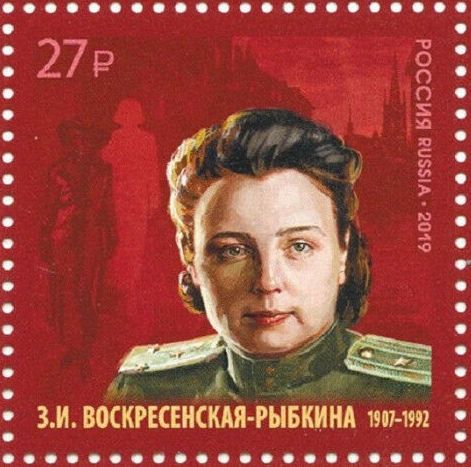
It’s widely believed that Rosa Klebb is loosely based on Zoya Voskresenskaya (1907 – 1992), who was a real NKVD officer. One of Voskresenskaya’s functions was coordination of the Rote Kapelle mentioned in Chapter 5. Fleming had written an article about Voskresenskaya while reporting for The Sunday Times. She fell out of favor with the Soviet government when she spoke out against an NKVD housecleaning conducted after Stalin’s death. Once retired from government service, she became a highly successful author of children’s books.
7 The Wizard of Ice
Chess Clocks:
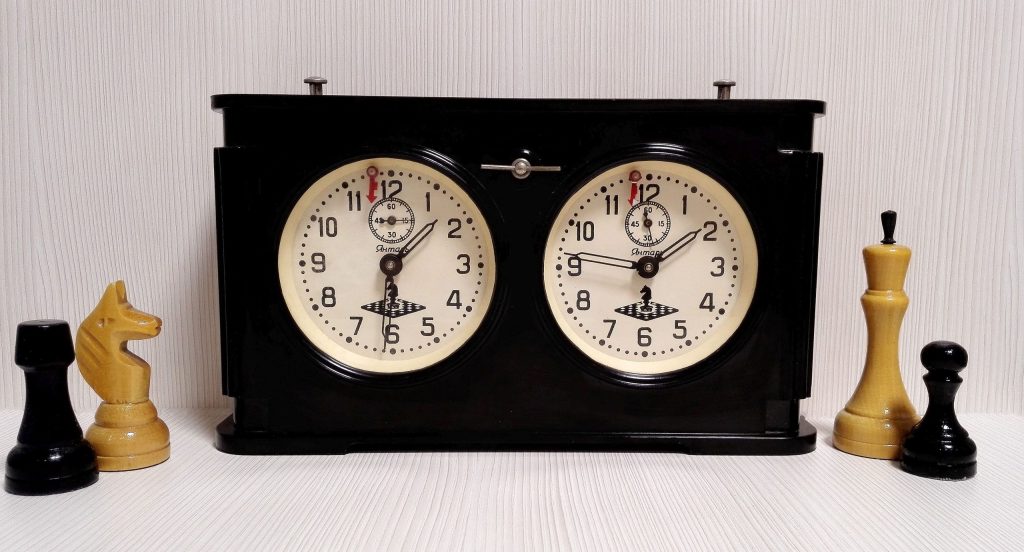
The chapter opens with a chess clock, a reminder that our two opponents – both individuals and societies – are on different schedules but still approaching a common destiny. Chess players will be familiar with the pressures of a timed match; Fleming must have understood, as he describes the device as a “huge sea monster.” A chess clock is really two clocks in one unit, each typically set to the same amount of time. As each player is eligible to move, their respective clock ticks down while their opponent’s clock is stopped. A player loses if their clock runs out of time before a checkmate occurs. The clocks can also be set for different amounts of time, as a way of handicapping one player who is considered to have the advantage over another.
Kronsteen:
We meet Kronsteen – I don’t believe we ever learn his full name – champion chess player and the “wizard if ice” referred to in the chapter title. We later learn that he is an honorary colonel in the SMERSH planning department, meaning that he reports to Colonel Klebb.
Makharov:
Kronsteen’s opponent, Makharov, appears briefly but we will not see him after he loses this match. Shortly we learn that Makharov is from Georgia, the eastern European nation that at the time was one of the Soviet Republics. Makharov (or Makarov) seems to be a faily common name in the region; as far as I can tell this does not refer to any historic figure.
Grand Master:
Kronsteen believes that he will be eligible for “Grand Mastership” after defeating Makharov. Because of the timing of the novel, this may have one of two meanings. In 1950, the International Chess Federation (FIDE) created the title Grandmaster and initially awarded it based on committee decisions. Starting in 1953, the title was assigned based on more formal criteria. Prior to 1950, Soviet chess players did not compete outside the USSR, and the Soviet Chess Federation awarded the title Grandmaster of the USSR to select players. Since Kronsteen is competing inside the Soviet Union against another Soviet player, I suspect the pre-1950 title is what Fleming refers to.
Queen’s Gambit Declined:
In the game against Makharov, Kronsteen “had introduced a brilliant twist into the Meran Variation of the Queen’s Gambit Declined.” This gets into details of chess that are largely over my head, but the Queen’s Gambit involves white (always first to move in chess) offering the sacrifice of the queen bishop’s pawn early in the match. The Queen’s Gambit Declined simply means that black makes another move rather than taking the offered pawn. A common response to the Queen’s Gambit is the Semi-Slav Defense, where black advances its pieces to attack the white queen’s pawn in the center of the board. The Meran Variation of the Semi-Slav Defense involves black temporarily sacrificing control of the center to develop the game in another direction. My own chess-playing is too simplistic to fully understand the implications of some of these maneuvers.
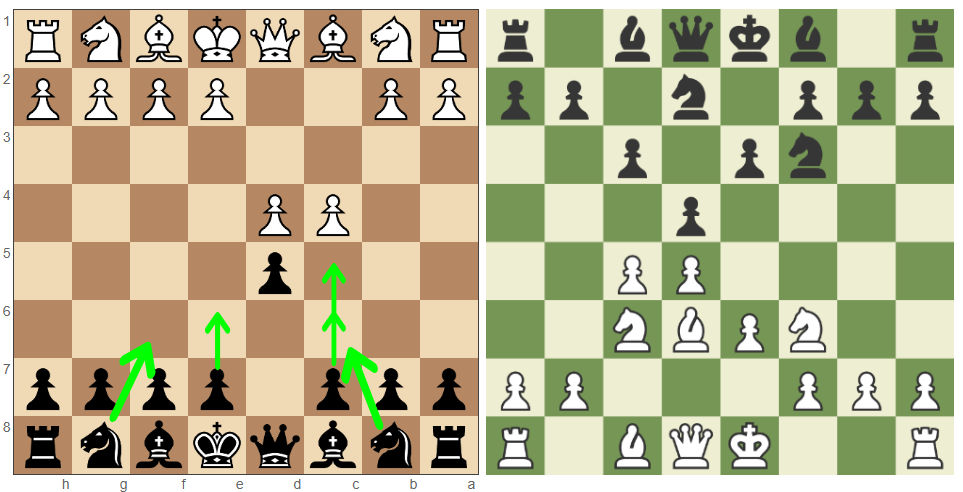
Pushkin Ulitza:
The official car picks up Kronsteen on Pushkin Ulitza. (I’m uncertain why “Ulitsa” is spelled differently here in my edition.) As far as I can tell, there is no street named Pushkin in Moscow. There is, however, Pushkin Square, a busy public space in central Moscow. Originally Strastnaya Square, the space was renamed in 1937 in honor of Russian writer Alexander Pushkin (1799 – 1837). I’m guessing this is where Kronsteen is collected.
ZIK?:
Kronsteen is picked up in “the usual anonymous black ZIK saloon.” This is almost certainly a misspelling of ZIS as described in Chapter 2.
Stolzenberg:
In their meeting with G, Klebb speaks of a previous case in which the life and reputation of a spy was destroyed, saying, “The spy was also a pervert.” I can find no information on an actual such case, though the term “pervert” was loosely applied on both sides of the Iron Curtain.
Chess Pieces:
We get some fascinating insight into Kronsteen’s personality. “To him all people were chess pieces. He was only interested in their reactions to the movements of other pieces.” He also thinks all people can be reduced to simple motives and labels, their behavior as rigid as the moves of chess pieces, thinking, “Their basic instincts were immutable. Self-preservation, sex and the instinct of the herd – in that order.” The fact that Kronsteen doesn’t fully understand the true motives of some chess pieces – Bond, as we know, will place service above self-preservation – and his inability to consider the adaptability of human behavior, are perhaps the primary reasons the SMERSH plan will ultimately fail. Still, the chess piece analogy is an interesting perspective on the entire story, with the British Prime Minister (Anthony Eden) and the Soviet Premier (Nikita Khrushchev) as the “kings” maneuvering higher level pieces like M and G, who in turn manipulate pawns like Bond and Grant. Or perhaps in this analogy Elizabeth II (1926 – 2022), Queen of England at the time, was the senior British chess piece?
Pavlov:
Kronsteen considers one’s parents an important determinant of behavior, “whatever Pavlov and the Behavourists might say…” Ivan Pavlov (1849 – 1936) was a Russian physiologist who was awarded a Nobel Prize in 1904 for his research in digestion, and you do not want to know what kind of torture he inflicted on people and animals in order to achieve that. It was during this research, however, that Pavlov observed dogs salivating prior to receiving food, leading to an understanding of conditioned reflexes and behavior therapy.
Spanish Civil War:
Klebb’s rise in the Soviet defense establishment began with the Spanish Civil War as a double agent within POUM, the Worker’s Party of Marxist Unification, formed in Spain in 1935 as a communist party in opposition to Stalinism. Klebb was with OGPU, the Soviet intelligence service that was succeeded by the NKVD. As for the Spanish Civil War, it was fought in 1936 to 1939 between Nationalists, monarchists, and others led primarily by General Francisco Franco (1892 – 1975), and Republicans, a coalition of socialists, separatists, and others. Estimates put the war’s combined death toll of cilivians and combatants at over 400,000. The violent and ideological nature of the war led some to see it as a prelude to World War II.
Andreu Nin:
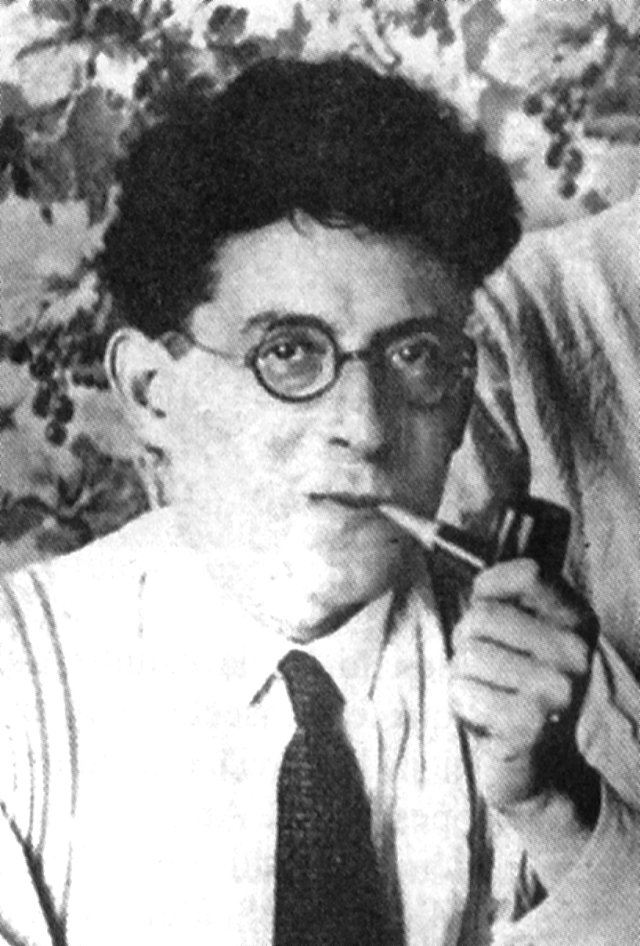
While in Spain, Klebb was a right hand, and perhaps mistress, of Andreas (Andreu) Nin (1892 – 1937). Nin was a prominent translator of works from Russian to Catalan, including Anna Karenina, Crime and Punishment, and others. He was also a political activist who became leader of POUM (see above) in 1936. In 1937, Nin was captured by the NKVD, perhaps tortured, and executed. (In the context of the novel it is speculated that Klebb herself may have executed Nin.)
Neuter Phlegmatic:
Kronsteen puts Klebb in a similar category as Grant, and Bond, a lone wolf. He describes her as “neuter” vs. Grant’s asexuality. The two terms are often used interchangeably, but here Kronsteen seems to see Klebb as open to sexual acts with any partners of any gender, whereas Grant clearly has no interest in sex whatsoever. (Either way, they are both distinct from Bond, which is the primary point of these characterizations.) Klebb is also considered “phlegmatic.” Kronsteen has a fairly archaic belief system going back to Hippocrates (460 – 370 BC) that all people can be described with some combination of four categories: melancholic, phlegmatic, sanguine, choleric. A phlegmatic, per Kronsteen, would be “imperturbable, tolerant of pain, sluggish.”
Tricoteuses:
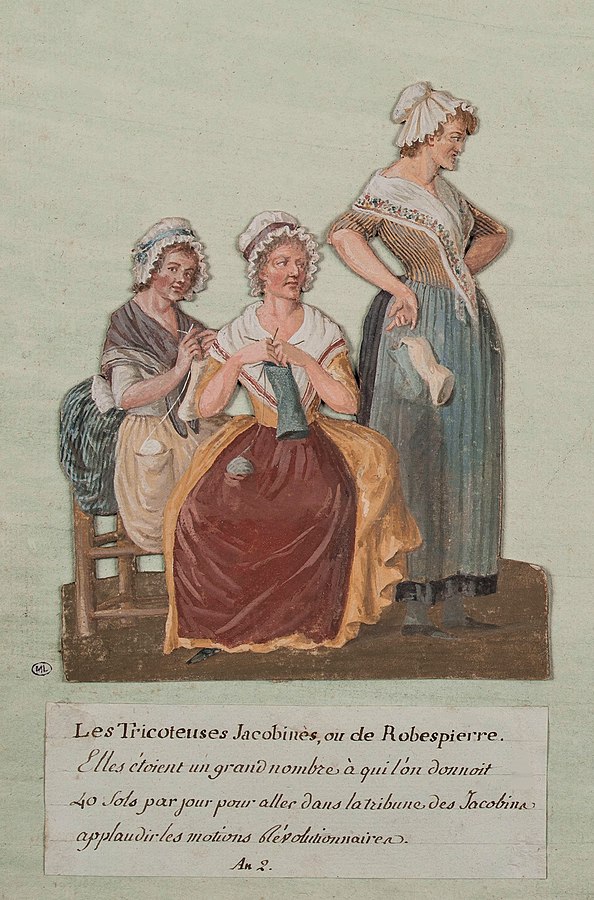
Kronsteen compares Klebb to the tricoteuses of the French Revolution, who “sat and knitted and chatted while the guillotine clanged down…” Tricoter is the French verb “to knit.” Working class market-women in Paris were active participants in the French Revolution, including conducting the Women’s March on Versailles in 1789 in protest of shortages and high prices of bread. When the Reign of Terror – the public execution of thousands who opposed the Revolution – began, the women brought their knitting to the Place de la Révolution, known today as Place de la Concorde, and patiently watched. In fact, we will see Klebb knitting in the book’s final scene.
Orange Hair:
Klebb has orange hair, just another shade of red, like Grant. She is further dehumanized with such descriptions as “squat,” “dumpy,” “a badly packed sandbag,” a “wet trap of a mouth,” “big peasant’s ears,” and so on.
Knobkerries:
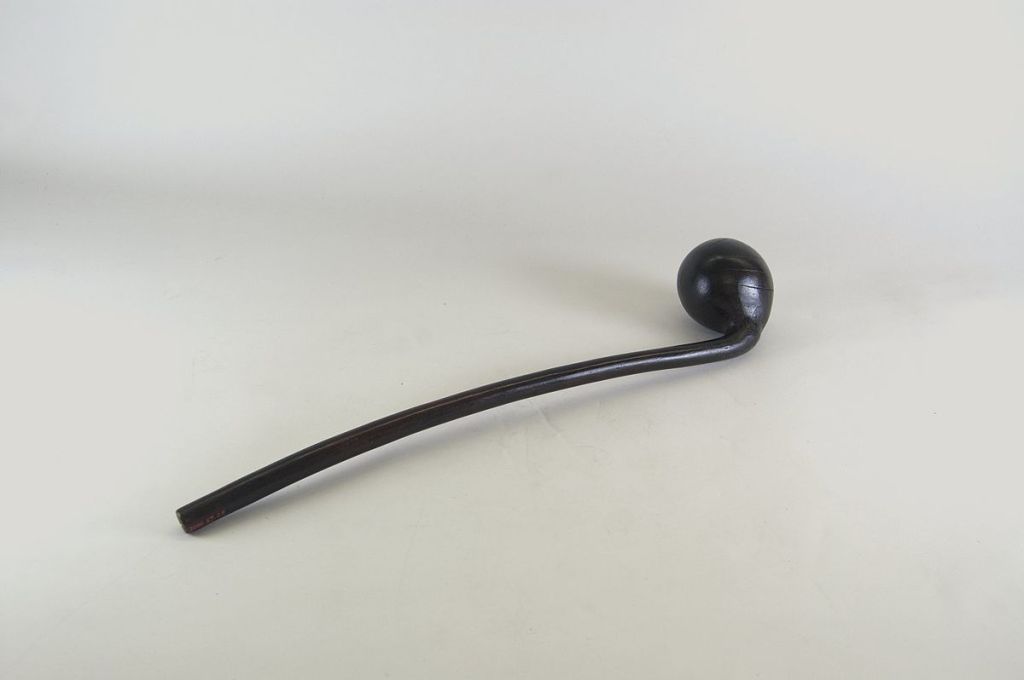
Kronsteen compares Klebb’s fists with knobkerries. A knobkerrie (or knobkerry) is a wooden club used primarily in Southern and Eastern Africa. They have a large knob on the receiving end to better damage one’s victim. It was used as both a club and a thrown weapon like a spear, but could also be used as a walking stick.
Fouché:
Kronsteen cites “a Frenchman, in some respects a predecessor of yours, Fouché, who observed that it is no good killing a man unless you also destroy his reputation.” Joseph Fouché (1759 – 1820) was a participant in the French Revolution and was, among other things, the French Minister of Police. Fouché was known by some as the Executioner of Lyon because he was sent to Lyon in 1793 to execute nearly 2,000 who had opposed the Revolution.
Bulgarian Assassins:
Kronsteen claims that “any paid Bulgarian assassin” could handle the job if a straightforward execution was the goal. Bulgarians were blamed for the attempted bombing in Casino Royale. Bulgaria was a member state of the USSR from 1946 to 1991, but I’m still not sure why Bulgarians in particular are linked with assassinations.
Eccentricity:
Kronsteen advises Klebb, “The English pride themselves on their eccentricity. They treat the eccentric proposition as a challenge.” The English certainly have a reputation as eccentrics, but whether that is a stereotype or an accurate cultural trait is a gray area. Books like English Eccentrics and Eccentricities by John Timbs and The English Eccentrics by Edith Sitwell both reflect and contribute to the image. Historic exmples are easy to find. John Bentinck (1800 – 1879), 5th Duke of Portland, was so reclusive that he banned visitors from his estate and built an estimated 15 miles of tunnels underground to avoid going outside. English philosopher John Stuart Mill (1806 – 1873) wrote, “That so few now dare to be eccentric, marks the chief danger of the time… They are the visionaries who make great imaginative leaps.” This same atittude can be contrived for effect, however, as when famous rich guy Richard Branson said, “anything, however outlandish, that generates media coverage, reinforces my image as a risk-taker who challenges the establishment.” A lot of this “eccentric” behavior seems more a result of obscene wealth and privilege rather than culture. Despite Kronsteen’s goal of an eccentric plan, I don’t believe it’s the eccentricity of the scheme that ultimately draws in M or Bond. Based on their own conversation later in the book, the real hook is the opportunity to use Bond as bait to draw out the Soviets and defeat them at their own game.
8 The Beautiful Lure
Tatiana Romanova:
Despite Bond’s strong presence in the previous two chapters, he still hasn’t made a physical appearance in the book. Now, however, we do meet the woman who will tempt him, Tatiana Romanova, a Corporal of State Security.
Boris Goudonov:
Tatiana listens to a radio broadcast of Borid Godunov (Goudonov) performed by the Moscow State Orchestra. The opera was composed by Modest Mussorgsky (1839 – 1881) and was based on Alexander Pushkin’s play of the same name written in 1825. The opera was first performed in Saint Petersburg in 1873. The story dramatizes the reign of Tsar Boris Godunov (1552 – 1605) and his successors Feodor II (1589 – 1605) and False Dmitry I (1582 – 1606). The Moscow State Symphony Orchestra was established in 1943 and often performs in the Moscow Conservatory, opened in 1866.
Sadovaya – Chernogryazskaya Ulitsa:
Fleming spells it a bit differently, but Tatiana lives in a 1939 apartment building, “the women’s barracks of the State Security Department,” on Sadovaya-Chernogryazskaya Ulitsa. The street is on the northeastern section of the Garden Ring (see Chapter 4) around central Moscow. No specific address is given so I’m unable to determine if the building Fleming describes actually existed, or if it still stands.
1200 Rubles:
Tatiana reflects on the relative privileges of her life in Moscow, where she receives a salary of 1200 rubles / month. That’s considerably less than Red Grant (Chapter 3) but still apparently a good income for 1950s Moscow.
Greta Garbo:

This is a Bond novel, so of course Tatiana does us the favor of scrutinizing her appearance in great detail. If she is to seduce Bond, she must be his equal, and if Bond resembles Hoagy Carmichael (as described in Casino Royale and Moonraker), then Tatiana must resemble Swedish actress Greta Garbo (1905 – 1990). Garbo began acting in silent films in1924 and made her first talkie in 1930. Her 1941 film Two-Faced Woman was a bit of a critical flop and she never appeared in another movie. By the time From Russia with Love was published, Garbo had become a naturalized U.S. citizen and lived in New York City.
Hotel Moskva:
Tatiana recalls in vague terms an evening at Hotel Moskwa, or Hotel Moskva. The hotel was constructed between 1932 and 1938, and opened while still under construction in 1935. The hotel included an entrance to a Moscow Metro station. An illustration of Hotel Moskva can be found on some Stolichnaya vodka labels. The original building was demolished in 2004 and replaced with a visually similar building that is now home to a Four Seasons Hotel.
Turkmenistan:
Tatiana’s elitism comes through when the radio broadcasts “the whimpering discords of an orchestra from Turkmenistan.” Turkmenistan is a central Asian country bordered by Afghanistan, Iran, and other countries. Turkmen territory was seized by the Russian Empire in 1881 and became the Turkmen Soviet Socialist Republic in 1924. The Turkmen Republic declared itself independent in 1990. The region is home to significant natural gas reserves and is considered highly corrupt and an extreme violator of human rights. Tatiana finds the Turkmenistan orchestra not “kulturny,” or cultured, but instead something from “barbaric outlying states.”
Denekin:
We never meet him in person, but Tatiana receives a call from Professor Denekin with orders to go to Klebb’s apartment. He clearly has some influence on Tatiana, as earlier in the chapter she recalled “a word of praise” she had received from him that afternoon.
Queen of Spades:

Debating calling Denekin back for more information, Tatiana imagines the professor’s feeling after hanging up the phone: “You had got the dreadful card out of your hand. You had passed the Queen of Spades to someone else.” The significance of the Queen of Spades seems to vary considerably by game or use and also by who is making the interpretation. Fleming may be referring to Alexander Pushkin’s story The Queen of Spades, published in 1834. The story involves a German officer who causes the death of an elderly woman who he believes knows a secret about three lucky cards for gambling. The woman appears in a dream and tells the officer to gamble at faro, a French card game, on the three, the seven, and the ace. The officer does this with success, until he accidentally wagers instead on the Queen of Spades and loses all his money, later becoming insane and ending up in an asylum. Russian composer Pyotr Ilyich Tchaikovsky (1840 – 1893) was inspired by Pushkin’s story to write the 1890 opera The Queen of Spades. Between Pushkin and Tchaikovsky, that seems kulturny enough that Tatiana would be aware of the story.
9 A Labour of Love
Scents:
Tatiana observes Klebb’s apartment as “cheap scent concealing animal odours. People in Russia soak themselves in scent, whether they have had a bath or not, but mostly when they have not…” This not only makes the Russians appear distasteful, but creates another contrast with Bond, who (so far) has not been described as wearing scents or colognes. However, he took an ice-cold shower in Casino Royale and his 4th shower of the day in Diamonds Are Forever, so he appears to be squeaky clean.
Batman:
Klebb’s batman has laid out chocolates and champagne for the “celebration” of Tatiana’s promotion. A batman is clearly not a superhero but an orderly or soldier assigned to function as a personal servant to a commissioned officer. “Batman” is a British term derived from the outdated English term “bat” for pack saddle. Pre-Revolutionary Russia used the term “denshchik.” The role was generally eliminated after the Revolution, but drivers attached to senior officers sometimes acted as unofficial assistants.
Za Vashe Zdarovie:
Klebb toasts Tatiana with “za vashe zdarovie,” which translates from Russian as “to your health.”
Mid-Victorian:
As Klebb questions Tatiana about her sexual history, Fleming writes, “In Russia the sexual climate is mid-Victorian.” The British Victorian era corresponds approximately to the reign of Queen Victoria (1819 – 1901), from 1837 to 1901. It was a time of relative prosperity for many but also great inequality, when Britain was the world’s dominant country. An evangelical movement led to more attention on moral and cultural behavior. While the Victorian era was probably not as prudish as Fleming would have us believe, male sexuality was granted much more permissiveness than female sexuality. During the 1860s to 1880s, women even suspected of prostitution might be forced to undergo exams for sexually transmitted diseases, more for the protection of men than women. I’ve read that Fleming wasn’t shy about sleeping around, so he might not have been the best judge of character on the topic.
Bogou Moiou:
Learning that Bond is an English spy, Tatiana exclaims, “Bogou moiou!” This translates approximately as “My God,” as demonstrated by Tatiana’s reaction.
Canada:
Klebb tells Tatiana that she can expect to eventually go to Canada, because, “That is where the English send a certain category of foreign prisoner.” Canada did not achieve complete sovereignty from England until 1982. Maybe Klebb is talking about Camp X, or Special Training School No. 103, a British camp set up near Toronto in 1941 to train secret agents. The U.S. at that time was prohibited from direct involvement in World War II by the Neutrality Act, so Camp X was intended partly as a cover for the U.S. to collaborate with Britain. However, Camp X opened December 6, 1941, and the attack on Pearl Harbor the following day put a quick end to the Neutrality Act. OSS and FBI agents were among the individuals who trained there. Camp X technically closed in 1945, but Igor Gouzenko (Chapter 4) spent two years there while he was interrogated by the Canadians.
Crêpe de Chine:
Klebb clumsily tries to seduce Tatiana while wearing a crêpe de chine nightgown. Crêpe has a characteristic crinkled look. Crêpe de chine is crêpe made specifically from silk, which originated in China but was available in central Asia by the 7th century.
Recamier:
Klebb presents herself on a couch “in the caricature of a Recamier pose.” Juliette Récamier (1777 – 1849) was a socialite who hosted a popular literary and political salon in Paris in the early 1800s and posed for multiple portrait artists. The best known portrait, probably depicting Klebb’s pose, was Portrait of Madame Récamier, undertaken in 1800 by Jacques-Louis David (1748 – 1825). David left his portrait incomplete when he learned that Récamier commissioned one of his students, François Gérard (1770 – 1837) to conduct another portrait. Portrait of Madame Récamier was acquired by the Louvre in 1826.
Lalique:

Klebb has a lamp with a stem of Lalique glass. The glassmaker was established in Paris in 1888 by René Lalique (1860 – 1945). Lalique specialized in glass art as both stand-alone works and to be used in automobile hood ornaments, clocks, vases, and other products. Lalique still operates today and has added perfumes, furniture, and hotels to its offerings.
10 The Fuse Burns
Telekrypton:
Klebb’s office is in a basement of SMERSH headquarters, where she monitors the output of a Telekrypton. Also known as a Rockex, the cipher machine was developed by Gilbert Vernam (1890 – 1960) and used a pre-prepared key to code and decode messages. Officially the Telekrypton was used by Britain and Canada starting in 1943 and was manufactured outside London under the close supervision of MI6. The fact that SMERSH possesses one might mean it was captured from British forces in Germany at the end of the war. Or perhaps it was smuggled out of Britain by a spy or double-agent? This could be a whole adventure in itself.
En Clair:
The Telekrypton’s output for Klebb is “en clair,” French for “in plain language.”
Granite:
Klebb tests Grant by assaulting him with a knuckle-duster, or brass knuckles. Now we understand the significance of Grant’s codename from Chapter 1, “Granit,” which of course is Russian for granite. While he is not literally as hard as a rock, he is close enough. At this point in the story, first-time readers are probably expecting 007 to have the prowess he demonstrated in previous books, so Grant’s physical powers will contrast nicely with the Bond we actually meet in Part Two.
Buivshi:
Kronsteen questions Tatiana’s last name, Romanova, as being among the buivshi, or “former people.” The full Russian term for “former people” is “byvshiye lyudi.” This specifically refers to individuals of prominent social status who are no longer prominent and are to be either forgotten – former – or persecuted. The term came to use after publication of the short story “Creatures That Once Were Men” by Maxim Gorky (1868 – 1936) in 1897. The term took on great significance after the Revolution and during the Great Purge of the 1930s. Kronsteen is associating Tatiana’s name with the House of Romanov, the imperial family that led Russia from 1613, when Michael I (1596 – 1645) became tsar, until the Revolution in 1917. Russia’s last tsar, Nicholas II (1868 – 1918) was executed along with many of his relatives and servants. A few, including Nicholas II’s mother, became exiles. While Tatiana might have some kinship to the Romanov line, evidence indicates that none of Nicholas II’s immediate family survived. Either way, this causes Kronsteen and others to question whether Tatiana is entirely trustworthy, and might help explain her divided loyalties later in the book.
Chelsea:
The Soviets not only know of Bond’s existence, they know that he lives in London’s Chelsea neighborhood. Chelsea was, and is, an upscale neighborhood on the north bank of the Thames. Much of the real estate in Chelsea is still controlled by long-time property owner and management company Cadogan Estates, as it has been since the 1700s. Bond might be disappointed to learn that nearly 7% of Chelsea’s residents today are from the U.S., though he might also not have appreciated the neighborhood’s later prominence in Swinging London of the 1960s. We can only hope Bond might have bumped into George Smiley, who also resided in Chelsea.
Istanbul:
Kronsteen decides to send Tatiana to Istanbul to meet Bond. He chooses Istanbul because of its distance from London, the small MI6 presence there, and “short lines of communication with Bulgaria and the Black Sea.” Istanbul is the largest city in Turkey, though not the nation’s capital. The area was settled by humans as far back as the 6th millenium BC, but contemporary Istanbul, or Byzantium originally, was established by Greeks in the 7th century BC. Roman emporer Constantine the Great (272 – 337) declared the city to be New Rome and than Constantinople. It did not commonly come to be referred to internationally as Istanbul until the 1900s. During the time period of From Russia with Love, yet not mentioned in the novel, was the Istanbul pogrom of 1955, beginning a period of assaults and murders of Greeks, Armenians, Jews, and other religious or ethnic minorities in Istanbul, which continued through much of the 1960s.
French Press:
Kronsteen wants Bond assassinated in France or close to it. “We have excellent leverage on the French press. They will make the most of this kind of story, with its sensational disclosures of sex and espionage.” Did the Soviets have this kind of influence on the French media? After Germany invaded France in World War II, France was officially led by the Vichy government that was loyal to Germany. After the war and establishment of the Fourth Republic in 1946, the French government was largely anti-communist, allowing the country to become a founding member of NATO in 1949. France was also a leader in improving post-war relations with West Germany, something the Soviets couldn’t have been happy about. The two primary newspapers in France at the time would have been Le Figaro and Le Monde, and neither appears to have been particularly communist-leaning. Perhaps this is more a reflection of Fleming’s opinion of the French at the time.
Part Two: The Execution
11 The Soft Life
James Bond:
Finally, more than one-third of the way through the book, we meet James Bond. Compared to Grant’s peak physical conditioning, Bond has grown weak. “The blubbery arms of the soft life had Bond round the neck and they were slowly strangling him.” A common theme throughout the Bond novels is to remind us of Bond’s mortality, and here he is being figuratively strangled. Also, I’ve read that Fleming was already growing weary of writing Bond novels by this time, so the imagery could reflect the writer’s sense of feeling trapped by his own success.
August:
We have the date of August 10, making this about two months after we met Red Grant in Chapter 1.
King’s Road:
Bond’s flat is still located off King’s Road. This really was the King’s Road, a private road for the use of King Charles II (1630 – 1685) in the 1600s, and didn’t enter public use until the 1800s. King’s Road was a hub of mod culture in the swinging 1960s. For the first time, I believe, we’re told Bond lives on a square off King’s Road. While the square isn’t named, there appear to be four possibilities: Sloane Square, Carlyle Square, Wellington Square, and Markham Square. Sloane Square is mentioned in Moonraker and Bond drives on Sloane Street in Live and Let Die. However, the landscaping in Sloane Square doesn’t seem to match the description in From Russia with Love of a “plane-tree’d square.” Plane trees are tall deciduous trees, related to sycamores. My vote goes to Markham Square, which is where Bond was located for the 1965 promotional TV broadcast The Incredible World of James Bond. However, Fleming biographer John Pearson (1930 – 2021) and Bond continuation novelist William Boyd both believe it to be Wellington Square, and they are both much smarter than me.
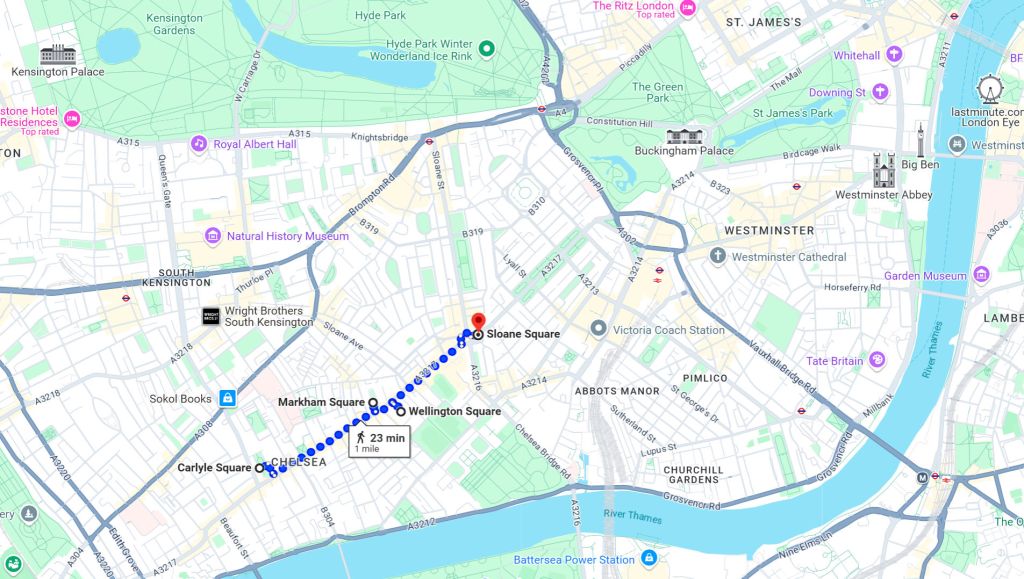
Accidie:
Disgusted with his own boredom, Bond compares his mental state to accidie: “…in at least one religion, accidie is the first of the cardinal sins…” Mr. Big claimed to suffer accidie in Live and Let Die. Sometimes acedia, the word is derived from a Greek term for negligence or listlessness. In ancient Greece accidie had more to do with interness, an emotionally neutral state. Early Christians, as they did so often, hijacked the term into moral persecution, and applied it as a term of evil thoughts or spiritual sloth.
Sea Island Cotton:
Bond wears a Sea Island cotton shirt, as he did in Moonraker and Diamonds Are Forever. Sea Island is not a clothing brand but a variety of long-fiber cotton that was grown on barrier islands off the Atlantic coasts of South Carolina, Georgia, and Florida, beginning in the 1700s.
May:
Bond’s Scottish housekeeper May was mentioned in Diamonds Are Forever, but this is our first time meeting her in person. Her loyalties to Bond and her duties are clear. I sometimes wonder if the delightful Mrs. Bale in the British series As Time Goes By was inspired by May.
The Times:
May brings Bond breakfast and that day’s edition of “the only paper Bond ever read,” The Times. The paper was founded in 1785 as The Daily Universal Register, then changed its name to The Times in 1788. Since 1981 The Times has been a subsidiary of the sinister News Corp. Kim Philby (1912 – 1988), one of the Cambridge Five (Chapter 5), was a correspondent for The Times in the 1930s. Perhaps more relevant to our story, Fleming himself did some writing for the sister paper, The Sunday Times, after World War II.
Churchill:
May will only address “English kings and Churchill” as “Sir.” Winston Churchill (1874 – 1965) was British Prime Minister from 1940 – 1945 and 1951 – 1955. In Moonraker, Gala Brand recalled being comforted by Churchill’s voice over the radio during World War II, and it’s easy to imagine May feeling the same. Churchill believed a strong British empire was essential to maintain Britain’s presence as a major global power and preserve the post-war peace.
Communnist Unions:
May questions the Electricians Union as being communists. Fleming has disparaged unions before, notably in Casino Royale, as have many others over the years. In this case, there may be some truth to May’s statement. Members of the Communist Party of Great Britain became General Secretary and General President of the UK Electrical Trades Union in the 1950s.
Bond’s Breakfast:
May serves Bond a delicious breakfast that possibly achieves a maximum level of product placement:

- Black coffee brewed in an American Chemex coffeemaker, invented in 1941 by German-born Peter Schlumbohm (1896 – 1962). The pour-over Chemex uses thicker filters than drip coffeemakers, which supposedly results in a “cleaner” coffee. Bond is in good company: Mary Richards in The Mary Tyler Moore Show also used a Chemex.
- The coffee is from De Bry on New Oxford Street. De Bry de Paris was a Paris-based confectioners that also sold coffee and really did have a location on New Oxford Street in London.
- Boiled speckled brown egg from a French Marans hen. As the name implies, the Marans chicken was bred near Marans, on the west coast of France. The chickens are bred for both poultry production and egg-laying. There is a British Marans which is thought to be a mix of French Marans with other breeds.
- Whole wheat toast
- Jersey butter, made from the milk of Jersey dairy cattle. Jerseys were bred on the island of Jersey in the British Channel, but they are adaptable to a variety of climates. Their milk has a relatively high concentration of butterfat and has a distinctive yellowish color.
- Tiptree strawberry jam, produced by Wilkin & Sons, established in 1885 in Tiptree, in eastern England about 50 miles northeast of London. Tiptree jam is still produced today and an employee trust has a substantial ownership in Wilkin & Sons.
- Cooper’s Vintage Oxford marmalade; Frank Cooper’s Oxford marmalade was developed by Sarah Jane Cooper (1848 – 1932) in Oxford, England, but her husband’s name went on the business because he owned the grocery store where the marmalade was first sold. Cooper’s Oxford marmalade is still sold today but it is a brand of the Hain Celestial Group, which also owns Celestial Seasonings and other brand names.
- Norwegian Heather honey from Fortnum’s; the honey is derived from heather plants native to Europe (including Norway), either Ling or Erica heather, which bloom in different seasons. It is said to have a slight woody or bitter flavor compared to other types of honey. Fortnum’s, or Fortnum & Mason, is a grocery and department store founded in London’s St. James’s area in 1707 by William Fortnum and Hugh Mason. Fortnum’s has been granted several royal warrants over the years to serve members of the royal family.
- Queen Anne coffee pot and silverware; Queen Anne style typically refers to architecture or furniture styles, but the simple and comfortable cutlery Bond is using was developed during the Queen Anne period, approximately 1702 to 1714. The coffee pot might be of sterling silver and of a design to match the cutlery.
- Minton china, from the ceramic pottery company founded in 1793 by Thomas Minton (1765 – 1836). Minton was acquired by larger companies in later years and apparently is no longer manufactured.
Tiffany Case:
Bond blames some of his lethargy on being abandoned by Tiffany Case, who he shacked up with at the end of Diamonds Are Forever. Tiffany, who Bond thinks of as “his love for so many happy months,” has returned to the U.S. It’s not surprising that Tiffany left, she struck me as an unreliable character – Bond himself describes her as “a little neurotic” later in the book – but I’m stunned that Bond has been so negatively impacted by her departure. That’s definitely not lone wolf material.
Captain Troop:
As a penalty for his cranky behavior at work, M has assigned Bond to a Committee of Inquiry led by Paymaster Captain Troop. After seeing the Soviet perspective on Burgess and Maclean (Chapter 5), here we see some of the long-term implications for MI6. In Committee deliberations, Bond and Troop debate the hiring of “intellectuals,” who Troop reduces to “long-haired perverts,” but who Bond sees as possessing essential knowledge in an age of rocketry and nuclear weapons. His experience in Moonraker certainly gives Bond useful perspective on the matter. Troop is identified as “the office tyrant…who is cordially disliked by all the staff.”
Bristol Fashion:
Troop describes his mission as “to keep the place shipshape and Bristol fashion.” Bristol is a city in southwest England, on the River Avon leading into the Bristol Channel. The area was inhabited by humans for perhaps hundreds of thousands of years. By the 11th century it was a popular trading area and a port was developed. Shipbuilding and other manufacturing also developed there. The first English-led voyage to North America was launched from Bristol in 1499. Participation in the North American slave trade also expanded Bristol’s economic prominence. The city was heavily bombed by the Germans in World War II and the active ports have largely moved downstream from the city center. However, Bristol’s importance in shipping and shipbuilding led to the rise of the expression “shipshape and Bristol fashion,” meaning in good working order.
March 1956:
Referring again to double-agents Burgess and Maclean, and considering the possibility of turning them against the Russians, Bond says, “And one of them, probably Burgess, would have been driven to make contact by his loneliness and by his ache to tell his story to someone.” A footnote says that this passage was written in March, 1956. Burgess and Maclean defected in May, 1951, but the public didn’t know if Burgess and Maclean were even alive until they gave a press conference in February, 1956. Did MI6 have inside information prior to this? They must have, because they searched Burgess’ flat soon after he disappeared. An earlier passage says that M conceived of the Committee of Inquiry “five hears after he had closed his own particular file on that case…”, which implies to me that the novel takes place in 1956 and also indicates that M knew, or strongly suspected, the real whereabouts of Burgess and Maclean all along.
Bentley:
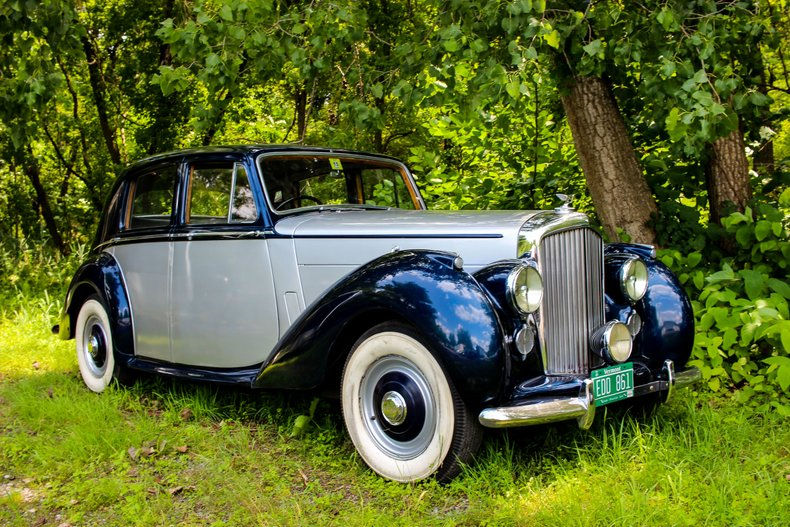
Bond drives his Bentley to the office. This is presumably the 1953 Bentley Mark VI he purchased at the end of Moonraker. The Mark VI was the first steel-bodied Bentley, first produced in 1946. Production of the Mark VI ended in 1952, but the Continental, produced in 1952 – 1953, used a Mark VI chassis with a larger engine and a lighter body. At the time they were the world’s most expensive production cars.
Whom the Gods Would Destroy:
Reflecting on his boredom, Bond recalls the line, “Those whom the gods wish to destroy, they first make bored.” Bond is being deliberately ironic, because the actual saying is, “Whom the gods would destroy, they first make mad.” The saying’s first known use in English was in the 1854 book Daniel, a Model for Young Men by Reverend William Anderson Scott (1813 – 1885). However, variations of the phrase go back to ancient Greece. Sophocles (497/496 BC – 406/405 BC) wrote, “Evil appears as good in the minds of those whom god leads to destruction,” in his play Antigone. Plato (427 BC – 348 BC) credited Aeschylus (525/524 BC – 456/455 BC) in The Republic when he wrote, “A god implants the guilty cause in men / When he would utterly destroy a house.”
12 A Piece of Cake
Chief of Staff:
Bond has a brief phone conversation with M’s Chief of Staff, who is presumably still Bill Tanner but is not identified by name.
Moneypenny:
On his way into M’s office, Bond sees Moneypenny, whose eyes have “that old look of excitement and secret knowledge…”
Regent’s Park:
We are reminded that M’s office overlooks Regent’s Park, 410 acres and a convenient location for the Secret Service, home to Winfield House, which was occupied by the Royal Air Force during World War II and in 1955 became residence for the U.S. ambassador to the UK. Bedford College was also located there in the 1950s, and five London Underground stations are located in or very near the park. I can find no evidence that the Secret Service was actually headquartered there, though it appears that the Special Operations Executive once occupied a building nearby.
M:
As Bond’s meeting with M commences, we’re also reminded of Bond’s loyalty to his superior. M is the man Bond “loved, honoured, and obeyed.” M’s feelings toward Bond are somewhat harder to judge. As they discuss the wayward Tiffany Case, M is a bit of an opportunist, thinking that “the last thing he wanted was for Bond to be permanently tied to one woman’s skirts.” He tells Bond, “They hang on your gun-arm, if you know what I mean.”
Galata Bridge:
M describes the meeting Darko Kerim (who we will meet later) had with Tatiana, which involved Kerim taking a ferry from Istanbul’s Galata Bridge to the Bosporus. The Galata Bridge crosses the Golden Horn, the estuary where the Alibey and Kağithane Rivers enter the Bosporus Strait. (The Bosporus roughly bisects Istanbul and connects the Black Sea and the Sea of Marmara.) The first known bridge over the Golden Horn was built in the 6th century. The bridge present during Bond’s time was a floating bridge built in 1912 by a German firm. A fire in 1992 caused severe damage and the current bridge was completed in 1994.
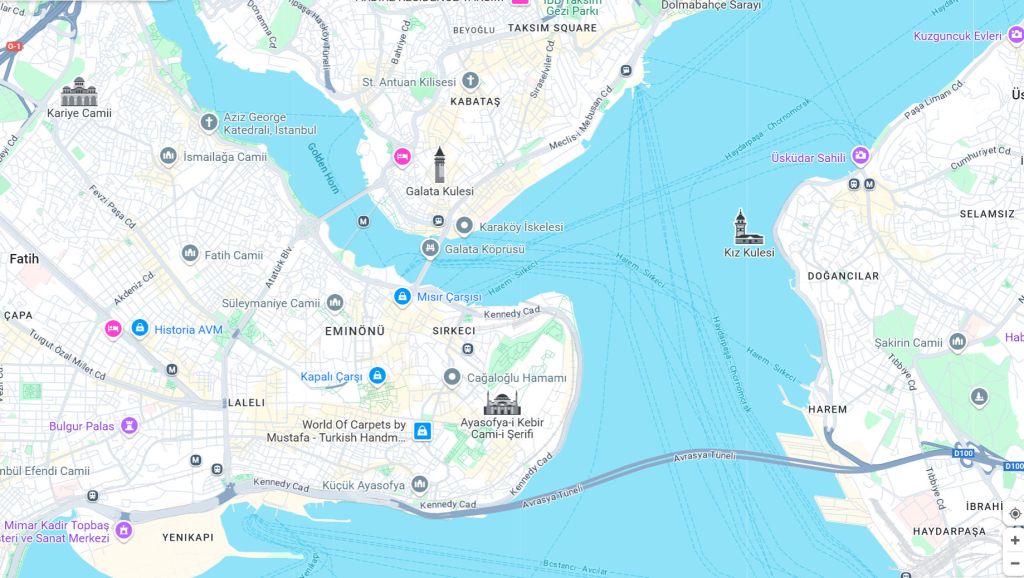
Lermontov:
Tatiana reported to Kerim that Bond’s photo reminded her of the hero from her favorite book, by writer and painter Mikhail Lermontov (1814 – 1841). Lermontov was twice exiled to the Caucasus due to his controversial writing and behavior. The writer provoked an old school “friend” and military officer so severely that the officer challenged Lermontov to a duel. The officer shot first and killed Lermontov. The book in question is A Hero of Our Time, published in 1840. The book’s “protagonist,” Grigory Alexandrovich Pechorin, is a “manipulator” plagued by “narcissism” and “malice.” Sounds just like Bond!
Spektor:
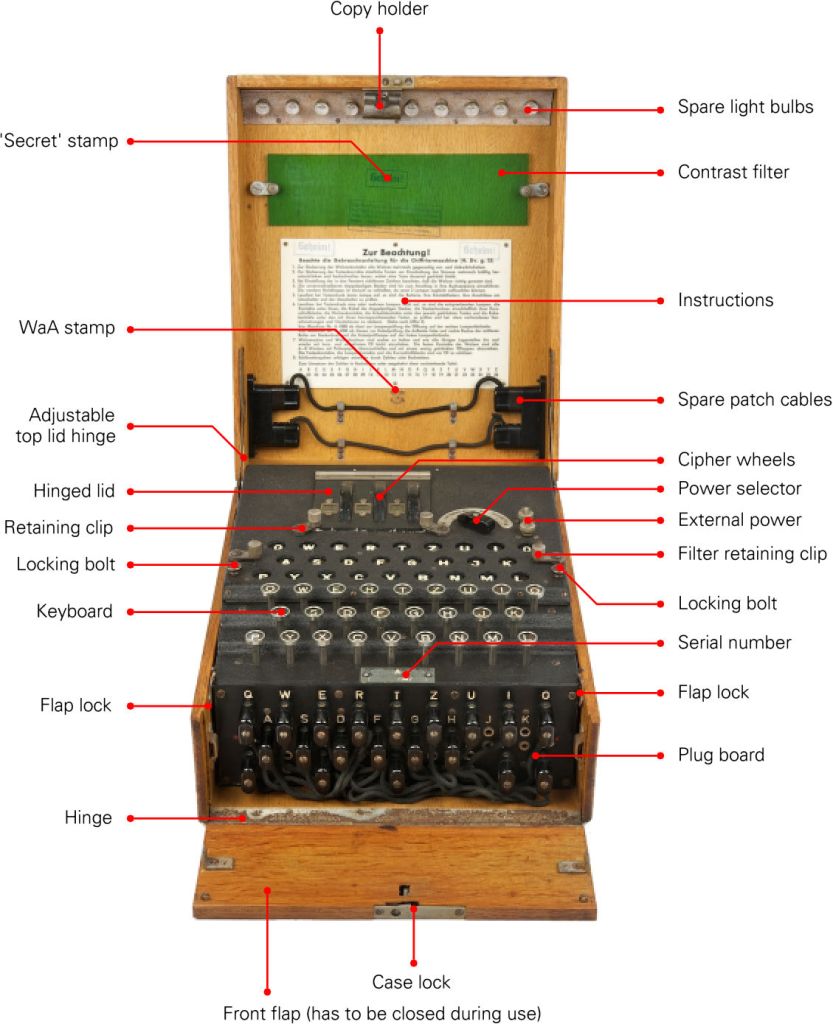
If Bond agrees to rescue Tatiana to the west, she offers a Soviet Spektor (sure sounds like SPECTRE, doesn’t it?) cipher machine in return. The Spektor was inspired by the Enigma cipher machine used by the German military before and during World War II. Poland cracked the Enigma code by 1932 and shared that information with the Western allies, probably shortening the duration of World War II. In the case of the Spektor, M says it’s something Britain would “give our eyes to have.”
Ortakoy:
In the meeting with Kerim, Tatiana left the ferry at Ortaköy (just Ortakoy in the novel), an Istanbul neighborhood situated on the Bosporus. In the Ottoman era, Ortaköy was a highly diverse area, with a Jewish synagogue and a Greek Orthodox church, and inhabited by Greeks, Armenians, and Jews, in addition to Turkish citizens. Discimination against religious minorities (see Chapter 10) through the 1940s and 1950s resulted in modern-day Ortaköy being inhabited primarily by Turkish muslims, though the area is popular among tourists.
M / Bond vs. Klebb / Tatiana:
The scene with M first questioning Bond about his personal life and then proceeding with business perfectly mirrors Klebb’s interrogation of Tatiana in Chapter 9. We can easily contrast M’s reluctance to get involved in his agents’ personal lives with Klebb happily mixing personal with professional in order to get what she wants, going so far as to try to seduce Tatiana. We can also contrast our two pawns, the experienced Bond, who understands that he is probably walking into a trap, and the naive Tatiana, who actually believes her superiors will allow her to escape unharmed.
13 ‘B.E.A. Takes You There…’
Viscount:
Bond flies to Istanbul on a Viscount turboprop. Viscount was manufactured by the British engineering firm Vickers Armstrongs from 1948 – 1963. Early versions could carry up to 53 passengers depending on the configuration.
BEA:
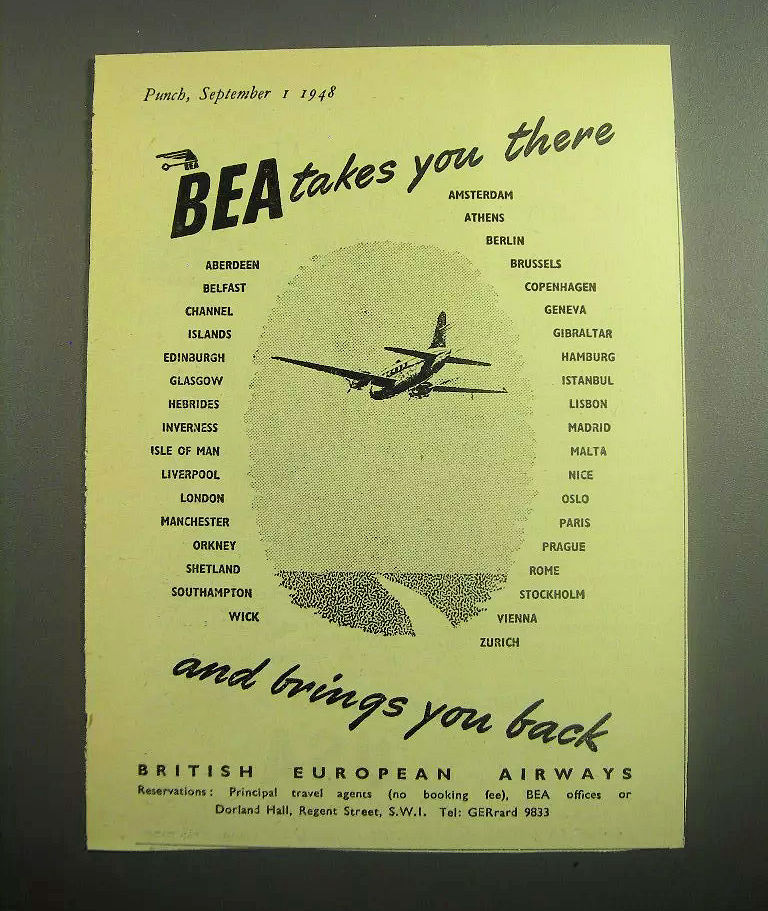
Bond travels on British European Airways (BEA) out of London Airport, and BEA was the first airline to use the Viscount, beginning in 1953. BEA operated from 1946 until 1974, when it merged with BOAC to form British Airways. As the 1948 ad pictured here indicates, the chapter title comes from the airline’s slogan: “BEA takes you there and brings you back.” London Airport opened in 1946 and is the main international airport serving the London area. In 1966 it was renamed London Heathrow, after the hamlet of Heathrow in which the airport was built.
The Mask of Dimitrios:
Bond brings along a copy of The Mask of Dimitrios by Eric Ambler (1909 – 1998). Ambler wrote novels and screenplays, many of them spy thrillers. Ambler’s protagonists often were not professional spies but civilians caught up in unexpected situations. Fleming was a friend and also one of many authors who named Ambler as an influence. The Mask of Dimitrios was published in 1939 and takes place primarily in Istanbul. The plot involves an English mystery writer (!) traveling in Istanbul who learns of the death of criminal mastermind Dimitrios. The writer finds himself caught up in Dimitrios’ world of espionage and danger. The book was published in the U.S. as A Coffin for Dimitrios and was adapted for the screen in 1944.
Inspectoscope:
Bond is grateful his high-tech attache case did not go under the Inspectoscope at the airport. This device was mentioned in Moonraker and Diamonds Are Forever. The Inspectoscope was used in the 1950s to aid in the detection of contraband at international ports of entry.
Swaine and Adeney:
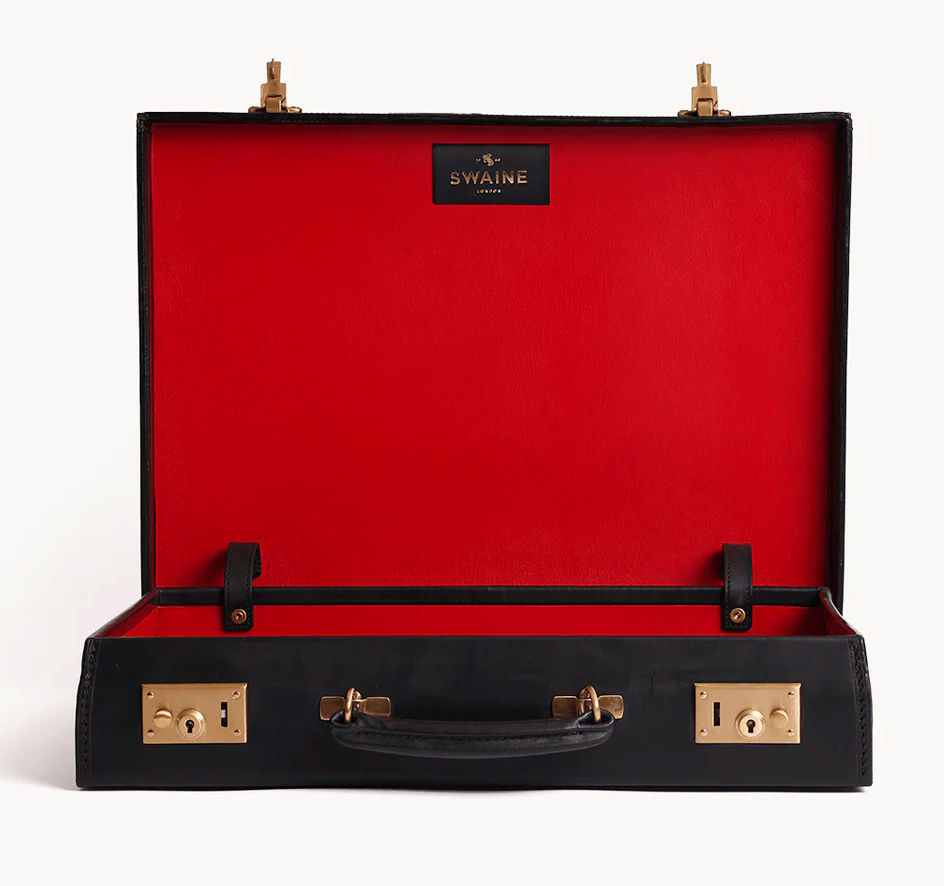
Q Branch (we still haven’t met Q) has given Bond a highly modified Swaine and Adeney travel bag. The company has been known by various names over the years but was established as a whip manufacturer in London by a saddler named John Ross in the mid-1700s. They began manufacturing luggage and motoring accessories with the rise of the automobile in the late 1800s and early 1900s. The company was known as Swaine Adeney Brigg when they provided the leather briefcase used in the 1963 film adaptation of From Russia with Love. They also manufactured an umbrella used in The Avengers TV series. Today they are known as Swaine London and sell a weapon-less reproduction of the Bond movie briefcase.
Wilkinson:
Bond’s attache is equipped with “a flat throwing knife, built by Wilkinson’s, the sword makers…” Perhaps this is the same type of knife 007 used in Live and Let Die. Henry Nock founded a weapons manufacturer in 1772, which became James Wilkinson & Son when it was taken over by Henry Wilkinson in 1824. The company took up shaving razor manufacturing, gave up weapons, and still does business today. The commando throwing knife, initially produced by Wilkinson but today manufactured in the UK by Fairbairn-Sykes, is a flat, double-edged blade about twelve inches long and is still in use by the British military.

Cyanide Pill:
It’s not surprising that Bond’s supplies include a cyanide pill; this is a common tool in spy stories. The surprising part is that Bond throws it out. He has no intention of ever using it. I take this to mean one of two things: either 007 intends to be killed in action before allowing himself to be captured and interrogated, or he is supremely confident in his ability to escape any dangerous situation. Cyanide in general is a chemical substance with a carbon-nitrogen functional bond. Forms of cyanide occur in nature, in apple seeds, peach pits, and cassava roots, among other things. Various forms of cyanide have a multitude of uses, including ferrocyanide as an anticaking agent in table salt. Symptoms of cyanide poisoning can occur within minutes of exposure, depending on the type of cyanide and degree of exposure.
Palmolive:
The briefcase also contains a tricked-out can of Palmolive shaving cream. Palmolive was founded as B.G. Johnson Co. in 1864 by Burdette Jay Johnson (1826 – 1902). Based in Milwaukee, Wisconsin, the company started out selling cheese, but introduced Palmolive soap in 1898, made of a blend of coconut, palm, and olive oils. The company changed its name to Palmolive in 1917 and introduced shaving cream in 1920. After various mergers over the years, the company today is Colgate-Palmolive.
Beretta:
Bond has carried a Beretta in every novel so far, and this one is no exception. I assume he has the Beretta 418, first manufactured around 1920 and designed to be easily concealed. This was a gift from M at the end of Moonraker.
Loelia Ponsonby:
Bond has a brief exchange with Loelia Ponsonby, secretary to the 00 branch, who worries that Bond is flying on Friday the 13th. Loelia’s single status was firmly established in Moonraker, but this is the first we learn of Bond’s true appreciation of her: “…for the hundredth time Bond had wondered why he bothered with other women when the most darling of them all was his secretary.”
Dijon and Juras:
During his flight Bond takes note of the changing landscape as he flies over Dijon and “the Juras.” Dijon is a city in east-central France and really is the place where Dijon mustard was developed in 1856. The Jura Mountains are a sub-alpine range that roughly follows part of the border between France and Switzerland, and also extends partly into Germany.
Bond’s Youth:
A series of place-names are mentioned as Bond recollects a mountain-climbing experience from his teenage years:
- Flying over Lake Geneva and Mont Blanc triggers the memory. Lake Geneva is one of Western Europe’s largest lakes and is shared by France and Switzerland. The lake is on the Rhône River and the Rhône Glacier is its primary source.
- Mont Blanc, visible from Lake Geneva, is the tallest mountain in Western Europe. The summit is on the border between France and Italy and both countries disagree on which one “owns” the peak.
- Bond’s memory is specifically of climbing in the Aiguilles Rouges, or “Red Needles,” a massif in the French Prealps, sub-alpine mountains in southeastern France. Areas of the Aiguilles Rouges have a slight reddish color because of the presence of gneiss rock with a high iron content.
- Young Bond’s climbing companions are from the University of Geneva, a public Swiss university established in 1559. The text does not specify that Bond attended the university, but Ian Fleming was briefly a student there in approximately 1929 or 1930. While in Geneva, he became engaged to Monique Panchaud de Bottens, but the engagement was sabotaged by Fleming’s mother. Fleming apparently never forgot Monique and would pay her tribute in one of the later Bond novels.
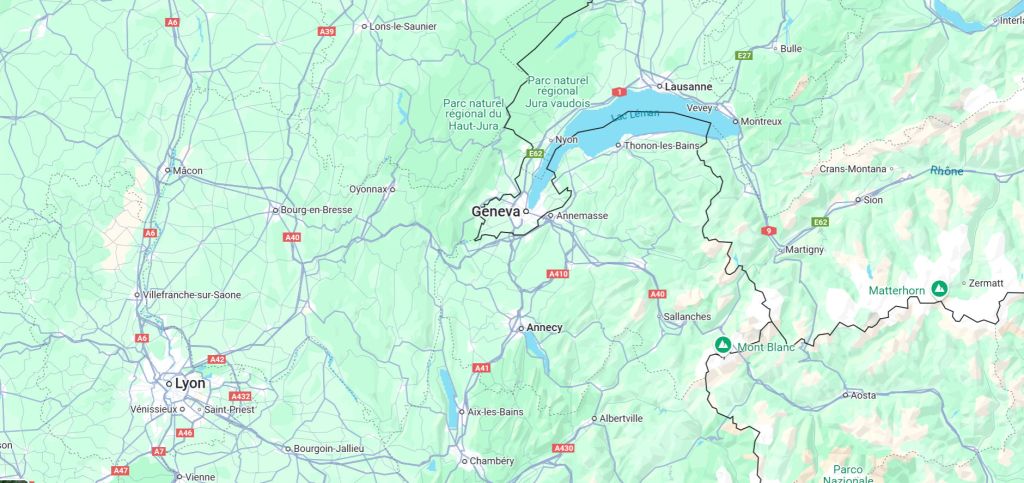
Lombardy / Elba:
Bond’s flight passes over Lombardy, a region in northern Italy that includes the city of Milan, and Elba, a Mediterranean island and part of the Tuscany region.
Ciampino Airport:
Bond’s flight makes a brief stop at Rome’s Ciampino Airport, opened in 1916. The first aircraft to reach the North Pole departed from Ciampino in 1926. It was Rome’s primary international airport until the 1960 opening of Leonardo da Vinci – Fiumicino Airport.
Americano:
Bond takes time for two Americanos in Rome. A caffè americano is an espresso diluated with hot water, so it has a similar strength as regular coffee but a different flavor. The beverage is often attributed to American soldiers diluting Italian espressos during World War II, but the term appears at least as early as W. Somerset Maugham‘s 1927 story collection Ashenden.
Bond’s Hurricane-Room:
We’ve seen evidence in past novels of Bond’s superstitious nature. After Bond’s flight departs Rome it is assaulted by a storm causing severe turbulence. This time 007 is tempting fate by flying on Friday the 13th, just as Loelia warned him. Bond retreats to an internal “hurricane-room,” blocking out the noise and movement until the storm passes. This passage calls to mind a similarly turbulent flight in Live and Let Die. It also reminds us of Bond’s attempt in the same book to compartmentalize (in Chapter12) his personalize feelings for Solitaire separate from his professional needs from her.
Morland:
After the storm passes, Bond smokes one of his Morland cigarettes with three gold rings. (Compare this to the generic Troika cigarettes Grant smokes.) Morlands was a real tobacconist where Fleming bought his own custom-made cigarettes, located on Grosvenor Street in London, but it has long since gone out of business.
Athens:
Bond’s flight makes a brief stop in Athens, the Greek capital, before completing the journey to Istanbul. 007 takes note of the Gulf of Corinth, the body of water separating mainland Greece from the Peloponnese peninsula. The Isthmus of Corinth lies between the Gulf and Athens. Bond also observes Mount Hymetus, located to the southeast of Athens, with a maximum elevation of nearly 3,400 feet, and a popular area for beekeeping going back to ancient times.
Ouzo:
Since he’s in Greece, Bond has an ouzo at the airport bar. Ouzo is a popular Greek beverage believed to have been made as far back as the 14th century. Ouzo is flavored with anise and contains highly concentrated ethyl alcohol as a result of multiple distillations.
Bond’s Dinner?:
The brief final leg of the flight to Istanbul includes “an excellent” dinner and it seems odd that Fleming doesn’t specify what food is served. Bond does, however, have two dry martinis and a half bottle of Calvet claret. A claret is the British term for red wine from the Bordeaux region of France. Maison Calvet was started in 1818 in the Rhône Valley of southern France by Jean-Marie Calvet. The company is still in operation today.
Yesilkoy:
Bond’s flight lands at the airport in Yesilkoy (really Yeşilköy), which was a separate village in Bond’s time but today is a neighborhood of Istanbul. The airport began as a small facility for the Ottoman Armed Forces in 1911 but was expanded by Turkish Airlines in the 1930s. The facility was renamed Atatürk Airport in the 1980s, after Mustafa Kemal Atatürk (1881 – 1938), founder of the modern-day Republic of Turkey. The airport was closed to commercial traffic in 2022 after being replaced by Istanbul Airport.
Down From the Mountains:
Bond observes the Turkish people after his arrival in Istanbul, people with “bright, angry, cruel eyes that had only lately come down from the mountains.” It’s not an open-minded attitude, but the present-day Republic of Turkey was only established in 1923, less than 35 years before Bond’s visit. Prior to that, the region was controlled by the centuries-long Ottoman Empire and saw terrible violence during the 1800s and early 1900s, including the Hamidian massacres that caused the deaths of up to 300,000 Armenians in the 1890s. The Ottomans sided with the Central Powers in World War I and remained neutral through most of World War II before finally joining the Allies in February, 1945.
Rolls-Royce:
Bond is collected at the airport by a driver in a Rolls-Royce coupé-de-ville. A coupé-de-ville describes a car body with an enclosed passenger compartment but an open-topped driver compartment. The terms coupé-de-ville, town car, and sedanca de ville are sometimes used interchangeably. Rolls-Royce was a luxury car and aircraft engine manufacturer founded in 1904 in Manchester, more than 200 miles nothwest of London. Rolls-Royce Motors was separated from the aerospace business in 1973 and eventually BMW acquired the rights to use the Rolls-Royce trademark. Bond guesses this specific car was built in the 1920s and is “an old black basketwork,” which refers to an exterior paint style resembling a basket weave. The car may be a Rolls Royce 40/50 Phantom I, manufactured from 1925 – 1931.
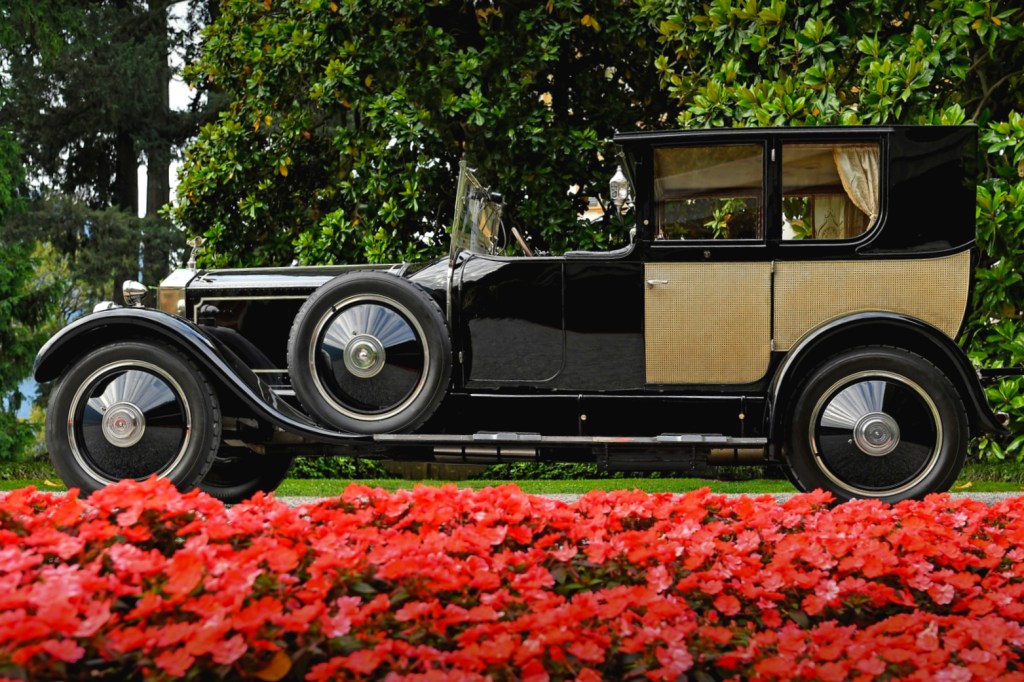
14 Darko Kerim
Kristsal Palas:
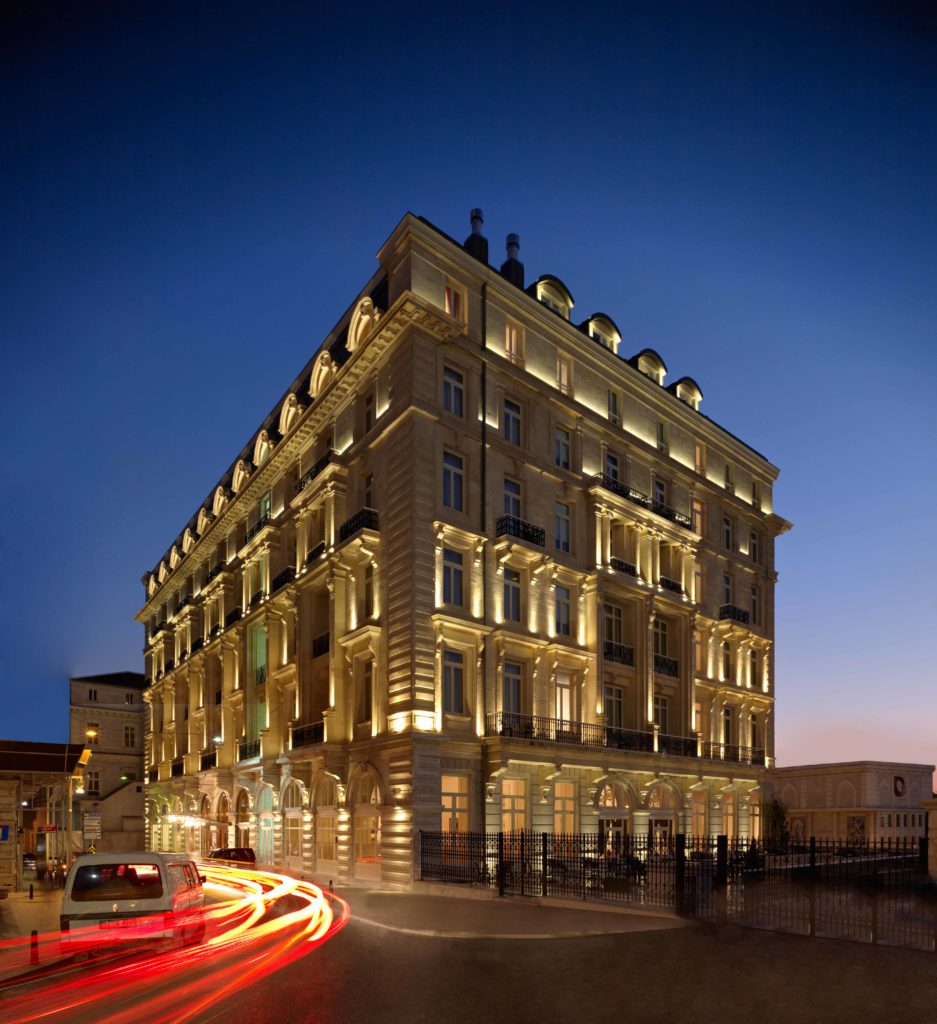
Bond stays at the Kristal Palas hotel in Pera, a neighborhood today known as Beyoğlu. The neighborhood is in the “European” side of Istanbul, separate from the historic area of the city known in the past as Constantinople. The area is connected to the old city by the previously mentioned Galata Bridge and was in the early stages of a slow decline which would not be reversed until the 21st century. The Kristal Palas is a stand-in for the Pera Palace Hotel, opened in 1895 and designed by French-Ottoman architect Alexandre Vallaury (1850 – 1921). Except for imperial palaces, the Pera Palace was the first Ottoman Empire building powered with electricity. The hotel is also mentioned in Ernest Hemingway‘s short story “The Snows of Kilimanjaro” and Graham Greene‘s novel Travels with My Aunt. Supposedly Agatha Christie wrote Murder On the Orient Express while staying at the Pera Palace. The building underwent significant restoration during 2008 – 2010.
French:
When Bond orders breakfast at the Kristal Palas, we’re reminded that he is fluent in French, as indicated in Casino Royale.
Bond’s Breakfast:
Bond has a delicious-sounding breakfast of yogurt, fresh figs, and freshly ground Turkish coffee.
Caïques:
Bond watches “the steamers and the caïques criss-crossing the two seas spread out beforoe him…” A caïque is a long, narrow rowboat commonly used for transportation on the Bosporus, designed to be rowed forward or backward. Today they are more likely used for fishing. They typically measure about 16 – 20 feet long and about 3 feet wide. The “two seas” confuses me a little: Istanbul is on the Sea of Marmara; the second “sea” might be the Bosporus Strait, since I’m not sure what other large body of water would be visible from Bond’s hotel.
Taksim Square:
Bond is again transported in the Rolls, past Taksim Square and “down the crowded Istiklal…” Taksim Square is next to an Ottoman-era water reservoir, where water lines from north of Istanbul divided off into the rest of the city. The square is also a hub for bus and Metro traffic and a popular hangout spot for locals and tourists. İstiklal Avenue is a little less than one mile long, the Grand Avenue of the Ottoman era where Ottomans and Europeans socialized. Looting and vandalism was directed against businesses on İstiklal in 1955 as part of the pogroms against Greeks living in Turkey. The street was pedestrianized and closed to motor vehicle traffic in the 1980s.
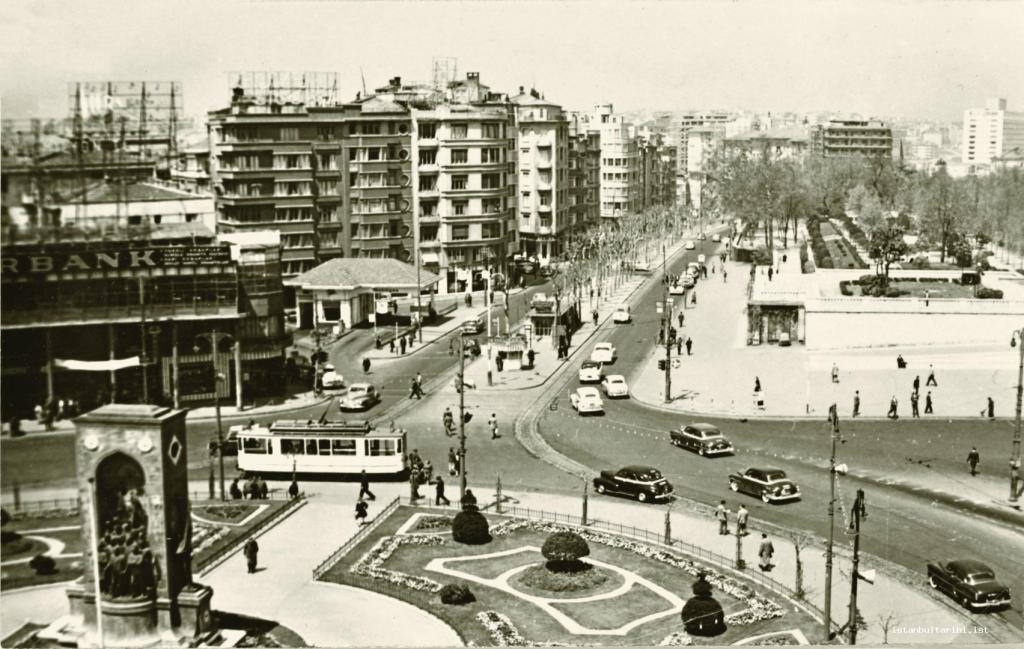
Hilton Istanbul:
On his way to meet Kerim, Bond is not impressed by “the steel and concrete flat-iron of the Istanbul-Hilton Hotel…” The Hilton Istanbul Bosphorus had just opeend in 1955 with 300 rooms, built under the financing of the Economic Cooperation Administration (i.e., the Marshall Plan) but to the primary profit of Conrad Hilton (1887 – 1979). It was built on a former Armenian cemetery. The hotel still operates today but with over 600 rooms.
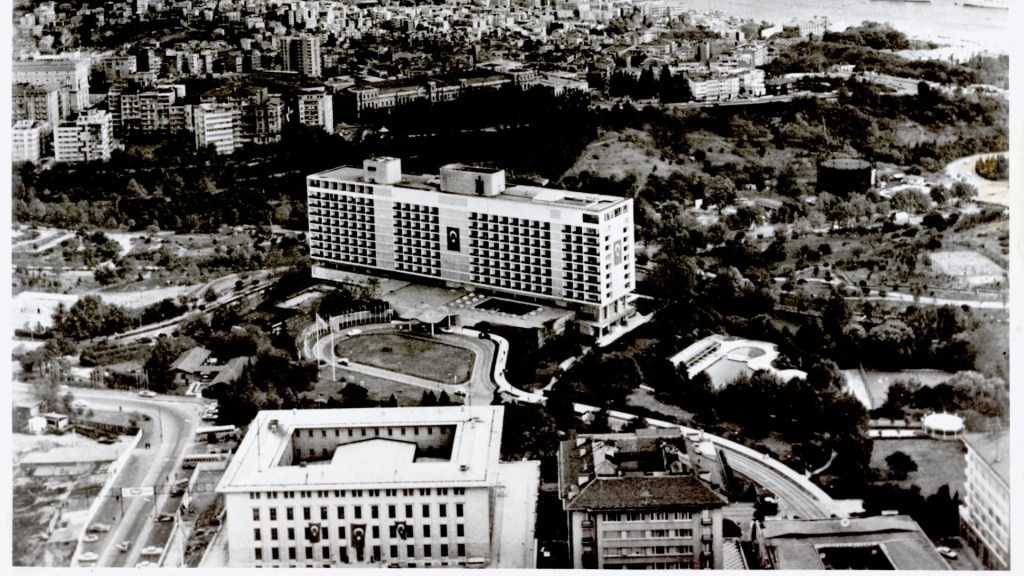
Port-cochère:
Bond is driven to a building with “a high wooden port-cochère…” A port-cochère is a covered entry to a building or courtyard, usually large enough for a vehicle to pass through.
Parterre:
Bond is guided through “a small courtyard with a neatly raked gravel parterre.” A parterre is typically a level part of a formal garden closest to the house. It may contain gravel, low shrubs, or plant beds. From here, Bond enters a “godown,” which is just a warehouse.
Yale:
Kerim’s office door is equipped with a Yale lock. Both Linus Yale Sr. (1797 – 1858) and Linus Yale Jr. (1821 – 1868) held patents for pin tumbler locks, but the concept was based on lock designs dating back to the 8th century BC. A pin tumbler locking mechanism uses pins of varying length to secure a bolt; only the correctly designed key will lift the pins the correct distance to release the bolt. The Yale company was founded in 1868 by Yale Jr. and Henry R. Towne (1844 – 1924), and the company had additional patents relating to safe locks, padlocks, and others. Yale was founded in Connecticut and sold primarily in the U.S. until the 1920s, when they became the dominant lock company in Britain by acquiring British firm H&T Vaughan. Today Yale is a subsidiary of Swedish conglomerate Assa Abloy.
Darko Kerim:
We finally meet Head of Station T Darko Kerim, who Bond takes to as quickly as he took to Felix Leiter in earlier books. Sadly, this is partly because Kerim has a “Western” handshake. In typical Bond fashion, he also appreciates Kerim’s “vital, cruel and debauched” face that “radiated life.” Unlike the blank slate of Red Grant, Bond can work with someone who is cruel and debauched. The character of Darko Kerim is said to be largely based on Nazim Kalkavan, a ship owner Fleming met while in Istanbul in 1955.
Vespa / Lambretta:
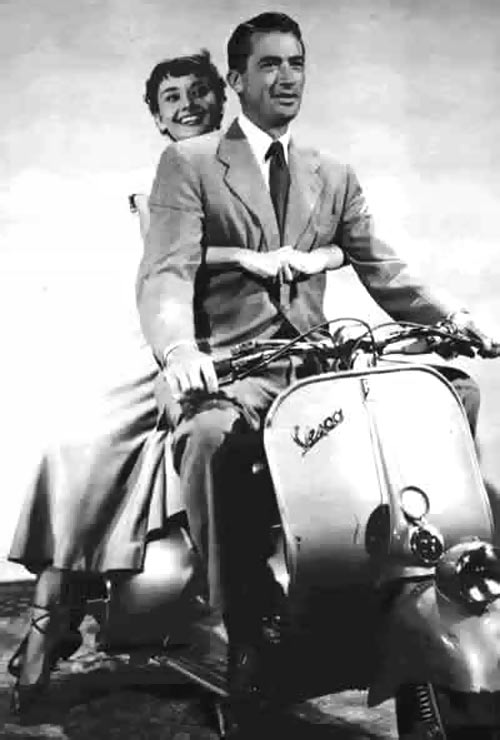
Bond asks if he was followed from the airport the previous night by a Vespa or a Lambretta. (Lambretta is the answer.) Both are Italian scooter brands. Vespa was developed by Enrico Piaggio (1905 – 1965) to both revive his father’s devastated aerospace company after World War II and to provide a widely affordable method of transportation in Italy. Audrey Hepburn and Gregory Peck rode a Vespa in Roman Holiday (1953). Vespa had sold one million scooters by 1956. Lambretta was founded in Milan in 1947, selling a scooter designed by Corradino D’Ascanio (1891 – 1981). Phil Daniels‘ character Jimmy rides a Lambretta in the 1979 film adaptation of Quadrophenia.
Annigoni:

Kerim’s office is decorated with a reproduction of “Annigoni’s portrait of the Queen.” Pietro Annigoni (1910 – 1988) was an Italian artist whose work had a Renaissance style in opposition to abstract and other modern art styles of the mid-century. Annigoni actually painted several portraits of Queen Elizabeth II, but the reproduction in Kerim’s office is probably a 1955 portrait commissioned by London’s Worshipful Company of Fishmongers. As of 2024, the original portrait is displayed in Fishmongers’ Hall near London Bridge. The British Empire may have been in retreat in 1957, but it still had a long reach.
Beaton:
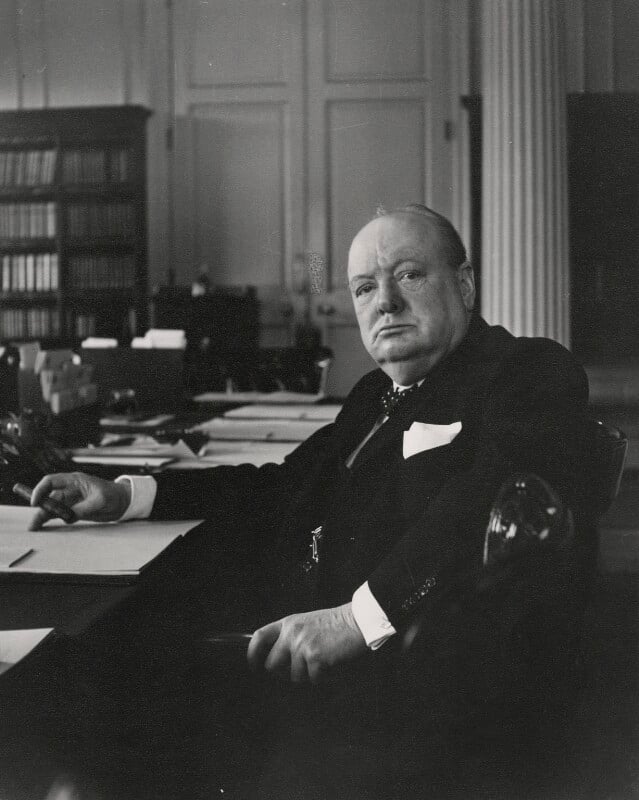
Kerim’s office also has “Cecil Beaton’s war-time photograph of Winston Churchill…” Cecil Beaton (1904 – 1980) was a fashion and portrait photographer who also did stage and film design, including costume design for the 1956 musical My Fair Lady (and the 1964 film adaptation). The Churchill photo in question was taken in 1940, during Churchill’s first tenure as Prime Minister.
Mentions in Dispatches:
Observing Kerim’s office, 007 notices two “Mentions in Dispathes” and a Military Division OBE. The OBE is the Officer of the Most Excellent Order of the British Empire, similar to the CBE mentioned in Chapter 4, but, in Kerim’s case, as the name implies, awarded to military personnel. Mentions in Dispatches (MID) refers to military personnel identified in an official report, sent by a superior officer to the high command, describing “gallant or meritorious action in the face of the enemy.” All of this boils down to Kerim being a loyal and courageous individual.
Limpet Bomb:
The Soviets, “our friends,” attempted to kill Kerim in his office with a limpet bomb shortly before Bond’s arrival. Bond used a similar device in Live and Let Die. This is an explosive attached to its target with magnets, first used by the British in World War II.
Baisodrome:
Kerim describes the Kristal Palas as “what the French call a baisodrome.” I’m not confident in a precise translation, but it appears to be a house of ill repute.
Croesus:
Kerim complains of a constant devaluation of money “ever since Croesus, the first millionaire, invented gold coins…” Croesus was king of Lydia, in what is now Turkey, in the 6th century BC. Croesus really is credited with the first standardized gold coins for general circulation and his name became associated with wealth.
Diplomates:
Kerim gives Bond Diplomates cigarettes, which he claims are “not easy to get.” I’m unable to find any details on this brand.
Raki:
Kerim offers Bond coffee because “it is too early for raki.” Raki is a Turkish beverage flavored with aniseed and made from twice-distilled grape pomace, or the leftover parts of grapes after they have been pressed for juice.
15 Background to a Spy
Airlines:
To prepare for Bond’s and Tatiana’s hopeful departure, Kerim purchases tickets on four major airlines: BEA, Air France, SAS, and Turkair. See Chapter 13 for BEA. Air France was formed in 1933 from a merger of five different airlines and is partly owned by the French government. Scandinavian Airlines System (SAS) was formed in 1946 with a merger of airlines from Sweden, Denmark, and Norway. Turkair, or Turkish Airlines, was founded as Turkish State Airlines in 1933.
Somerset:
Tatiana and Bond will be traveling under the names of Caroline and David Somerset. I can’t find confirmation of this, but the name may have been in honor of Fleming’s friend W. Somerset Maugham (1874 – 1965). Fleming admired Maugham and later wrote the Bond short story “Quantum of Solace” partly in tribute to Maugham.
Turkish Delight:

Kerim says Bond and Tatiana will have an easier time getting through customs if they declare some “Turkish Delight” purchased as a gift for friends. Turkish delight, sometimes called lokum, is a variety of candies based on a starch / sugar gel and often containing dates, pistachios, hazelnuts, or walnuts. It is a popular gift throughout the region.
Spice Bazaar:
Kerim plans lunch with 007 in the Spice Bazaar. The Spice Bazaar is a large covered market in Istanbul constructed in 1660, part of a larger rebuilding from a two-day fire that destroyed multiple neighborhoods in the city.
Jouons Mal:
Kerim says to Bond, “jouons mal, mais louons vite!” This translates roughly from French as “let’s play badly, but let’s play fast!” He seems to be acknowledging that they are in a rigged game so they should proceed quickly to get to the end.
French Empire:
Bond is moved to the honeymoon suite at the Kristal Palas where the furniture is “mock French Empire…” Empire style was a design and architecture movement taking place primarily between 1800 and 1815 and was partly a tribute to the reign of Napoleon Bonaparte (1769 – 1821). It was far more ornamental than the previous French Directoire style. The Arc de Triomphe is an architectural example of the Empire style.
Bukhara Rugs:
The Kristal Palas honeymoon suite has Bokhara, or Buhkara rugs. Bukhara is a variety of Turkmen rug, elaborately patterned floor coverings originally handmade by Turkmen tribes of central Asia.
Furtive and Stunted:
Fleming again reveals his bigotry when Bond reflects on the importance of Kerim’s height (estimated at 6’2″) “in this country of furtive, stunted little men…” Yikes!
Bond and Kerim Lunch:
Kerim claims that most Turkish food is only “offal [the internal organs of a butchered animal] cooked in rancid olive oil.” At this point he mentions the Misir Carsarsi, which is another name for the Spice Bazaar. Then Bond has lunch of doner kebob, a rotisserie-cooked Turkish dish which Kerim describes as “very young lamb broiled over charcoal with savoury rice.” He also has stuffed peppers and sardines in papillotte, which means the sardines were baked in a folded pouch or paper. Kerim chooses raw fish, raw meat, lettuce, and yogurt.
Trebizond:
Kerim says he comes from Trebizond, known today as Trabzon. It’s in northeastern Turkey on the Black Sea. The city was on the historic Silk Road trading route through Europe and Asia, making it an area of diverse langugaes, religions, and cultures.
Bessarabian:
Kerim describes a youthful (and fairly disturbing) relationship with a Bessarabian woman. Bessarabia was a region in Eastern Europe located approximately in modern-day Republic of Moldava and Ukraine. The area was part of the Soviet Union during the Cold War.
Batoum:
Kerim became involved with the English when he was recruited to spy on Russian activities in Batoum, known today as Batumi. Batumi is an important seaport in Georgia and located near the Turkish border. The city was an important part of the route for delivering oil to Russia, and Stalin spent time there in the early 1900s.
Kavaklidere:
Bond and Kerim also have Kavaklidere burgundy. Kavaklidere is a winery founded in 1929 in Ankara, the capital of Turkey. The winery is still in business today.
Steak Tartare:
Kerim’s raw dinner includes steak tartare, described in the book as “a large flat hamburger of finely minced raw meat laced with peppers and chives and bound together with yolk of egg.”
Iron Crab:
Kerim believes that, “One day the Iron Crab will get me…” due to his life of stress, drinking, and smoking. “Iron Crab” is a euphemism for heart disease that apparently came directly from Nazim Kalkavan (Chapter 14), along with the rest of Kerim’s dialogue about living too much. Ian Fleming was thinking about his own health at the time and incorporated that into his novel. Soon after completing From Russia with Love, Fleming went to a “health farm,” an experience that would influence both Dr. No and Thunderball.
16 The Tunnel of Rats
Just Below God:
Kerim’s employees are primarily his own children, and he has taught them that M “is just below God.” We can imagine that Bond might even reverse things and give priority to M.
“When the blood is on the boil…”:
As Bond and Kerim spy on the Soviet conference room, Kerim explains that if worst comes to worst, a bomb will be detonated to destroy the office, but innocent civilians will be killed in the process. “When the blood is on the boil, man is as unselective as nature.” I assumed this was a reference to previous literature, but it appears to be Fleming’s original sentiment.
En Brosse:
The Resident Director of the Soviet consulate in Istanbul wears his hair en brosse, which is “in brush” in French, meaning his hair is cut short and bristly, like a crew cut.
Hall of Pillars:
To monitor the Soviet consulate, Kerim makes use of the “Hall of Pillars,” near St Sophia, something he says a man named Gullius re-discovered “about four hundred years ago…” The Basilica Cistern was built for water storage during the 6th century (replacing an earlier structure built during the 4th century) under a public square. The cistern’s 336 columns are what Kerim refers to as pillars. The cistern was generally forgotten by those outside the immediate area, but the French scientist Petrus Gyllius (1490 – 1555) traveled the area in the 1540s and wrote an account of going through the cistern in a rowboat. The cistern can hold up to 2,800,000 cubic feet of water and has 336 marble columns. It was used as a filming location for the film adaptation of From Russia with Love. The Basilica Cistern is about 490 feet southwest of “St. Sophia,” the Hagia Sophia Grand Mosque. Hagia Sophia was a Greek Orthodox church for centuries, then briefly a Catholic church, and became a mosque in 1453. It was converted to a museum from 1935 – 2020, when it began to be used as a mosque once again.
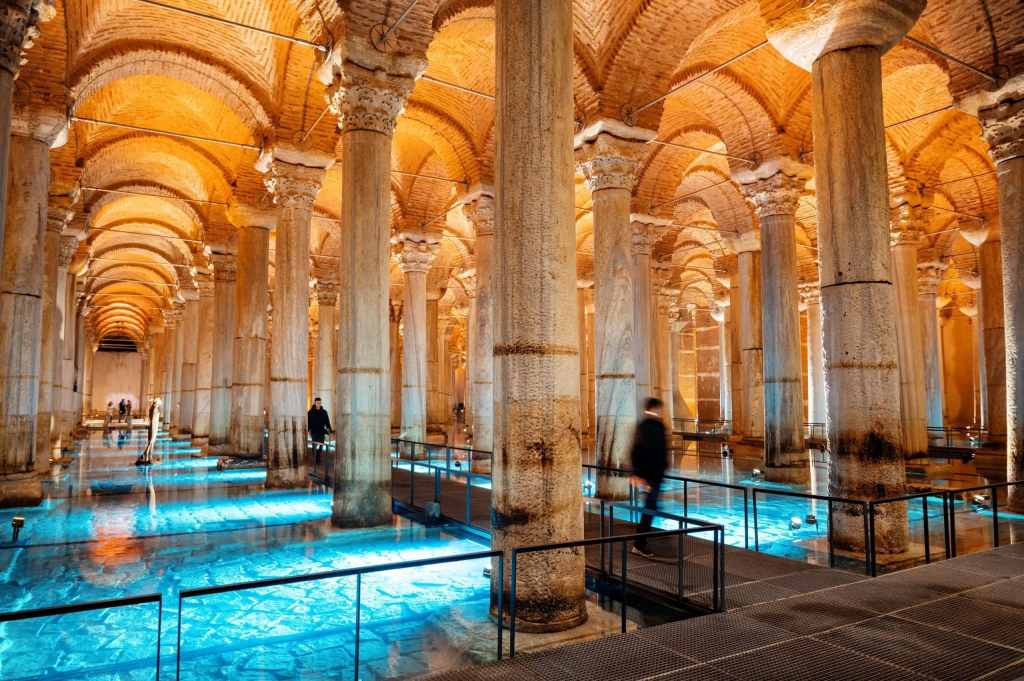
Street of Books:
The tunnel Kerim uses for surveillance passes under the “Street of Books.” The Istanbul Book Bazaar, or Sahaflar Çarşisi, is a section of the Grand Bazaar (not to be confused with the Spice Bazaar of Chapter 15). The site has been a gathering place for booksellers and book enthusiasts since the 1400s. A massive fire in 1954 (it seems odd that Fleming doesn’t mention this?) damaged thousands of shops in and around the Grand Bazaar, including the Book Bazaar. But the area was rebuilt and is still a popular location for buying rare and secondhand books in Istanbul.
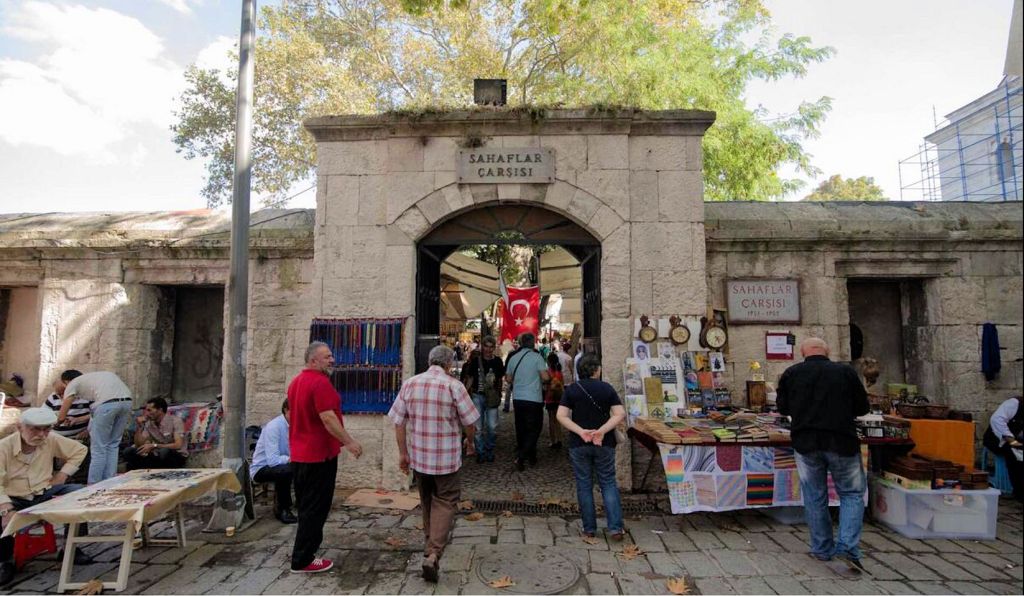
17 Killing Time
Vavra:
We meet Kerim’s friend Vavra, head of “a gypsy tribe.” People often called “gypsies” in English are the Romani, or Roma, a largely nomadic ethnic group of Indi-Aryan people descended from inhabitants of central Asia and northern India. Romani today are more concentrated in Bulgaria, Hungary, Romania, Serbia, and Slovakia. However, they exist throughout the world, including up to one million in the U.S. They have been widely persecuted due to their ethnicity and their sometimes itinerant lifestyle. Vavra is described as having a “syphilitic nose,” which sounds like a judgmental description on Fleming’s part. Saddle nose, a collapse of the nasal bridge causing a loss of height of the nose, can be caused by syphilis, but also by nasal trauma, Hansen’s disease, or other conditions.
J’aime les sensations fortes:
Insisting that he will not interfere with the (entirely gratuitous) fight between two Romani women, Bond cites René Mathis: “J’aime les sensations fortes.” This translates from French approximately as “I like thrills.” Hopefully this is sarcasm?
Bulgarians Again:
The prior bombing of Kerim’s office is blamed on a Bulgarian named Krilencu, who will soon appear in the Romani camp. Again, I don’t understand the association of Bulgarians with assassinations.
Ragout:
The Romani serve a variety of ragout for dinner. Ragout comes from ragoût, the French word for stew.
18 Strong Sensations
Zora and Vida:
We meet Zora and Vida, the Romani women who will provide Bond’s “thrills,” with their planned duel to the death.
Coup de savate:
Vida delivers “a furious coup de savate” on Zora, which is basically French for “kick.” However, savate is is also a martial art/kickboxing hybrid that relies entirely on striking with the feet. The combat style originated in France in the 1800s. In savate, a “coup de pied bas” is a low kick to the shin.
Carbolic Soap:
During the assault on the Romani camp, Bond notices the smell of carbolic soap on one or more of the attackers. Carbolic soap contains carbolic acid and / or cresylic acid derived from coal tar or petroleum. It has slight antiseptic properties. British scientist Joseph Lister (1827 – 1912) discovered the antimicrobial properties of carbolic acid in 1865. Lifebuoy was originally a carbolic soap. Carbolic soap is generally characterized by a pink or red color.
Boris:
We briefly meet Kerim’s tenth son, Boris.
Hippodrome:
Kerim says they will find Krilencu on “a small street off the Hippodrome Square.” Istanbul’s original Hippodrome was built by Roman emporer Septimius Severus (145 – 211) in 203 AD, when the city was still called Byzantium. Today the busy public space is called Sultanahmet Square.
Appointment in Samarra:
Kerim says they have an appointment in Samarra with Krilencu. W. Somerset Maugham wrote a short story in the 1930s called “The Appointment in Samarra,” supposedly transcribed from a myth in the Babylonian Talmud. The story describes the servant of a Baghdad merchant going to a market. The servant meets Death at the market; convinced that Death is after him, the servant flees to Samarra, where he believes he will be safe. The merchant goes to the market and meets Death, who says he has an appointment with the servant that very night in Samarra. The story inspired John O’Hara‘s (1905 – 1970) 1934 novel Appointment in Samarra. By making this statement, Kerim is declaring himself Death in pursuit of Krilencu.
19 The Mouth of Marilyn Monroe
Sites of Istanbul:
As 007 and Kerim travel to their assassination of Krilencu, we get an ironic citation of some of the historic sites of Istanbul:
- Aqueduct of Valens: An aqueduct system built by the Romans in the 4th century, when the city was Constantinople. It was expanded in later years but the initial system was 167 miles long.
- Atatürk Boulevard: The Aqueduct crosses Atatürk Boulevard, a wide but relatively short boulevard running southwest – northeast and crossing the Golden Horn at Atatürk Bridge.
- Grand Bazaar: They drive north of the Grand Bazaar, a covered market, even larger than the Spice Bazaar, that dates back to the 1450s. Built originally for the trading of jewels and textiles, the Bazaar has been rebuilt repeatedly afer damage from fires. It still operates today and receives hundreds of thousands of visitors every day.
- Column of Constantine: The column was built in 328 AD and dedicated in 330 AD by Constantine the Great to establish the city of Constantinople. The column was originally topped with a statue of Constantine that was destroyed by strong winds in 1106 AD. There was also a sanctuary at the column’s base containing artifacts supposedly from the crucifixion of Jesus. The column still stands today and is about 114 feet in height.
- Seraglio Palace: The two men see a lighthouse near “Seraglio Palace.” Seraglio is a generic term for palaces or administrative buildings in parts of the Ottoman Empire. In Istanbul they would have seen the Topkapi Palace, constructed in 1459, and the administrative hub of the Ottoman Empire and the residence of Ottoman sultans. It was originally New Palace, but was renamed Topkapi (Cannon Gate) in the 1800s. In 1924, the building was converted to a museum and can be visited today. Eric Ambler’s 1962 novel The Light of Day (and the film adaptation Topkapi (1964)) involves an attempt to rob the museum in Topkapi Palace.
- Mosque of Sultan Ahmet: The Blue Mosque, or Sultan Ahmed Mosque, was constructed near the Hippodrome from 1609 – 1617 by order of Sultan Ahmed I (1590 – 1617). It is still a functioning mosque.
Marilyn Monroe:

Krilencu emerges from a trap door conveniently positioned in the lips of Marilyn Monroe (1926 – 1962) in a poster for the 1953 film-noir Niagara, also starring Joseph Cotten (1905 – 1994). A promotional still from Niagara was the basis for Andy Warhol‘s Marilyn Diptych. Fleming’s later Bond short story, “The Living Daylights,” will also involve a night-time shooting of a man emerging from an apartment.
Sniperscope:
Kerim sites Krilencu with a German-made sniperscope, which converts infrared light to visible light to allow significantly improved night vision. Infrared cameras for anti-aircraft defense were developed in 1929 by Hungarian physicist Kálmán Tihanyi (1897 – 1947), and the German army used night-vision devices by 1939, using them in World War II on tanks and assault rifles.
Winchester:
Kerim takes aim at his opponent with a Winchester 88. The Winchester Repeating Arms Company produced a series of repeating rifles beginning in 1866. The company was formed by U.S businessman Oliver Winchester (1810 – 1880), whose daughter-in-law, Sarah Lockwood Winchester (1839 – 1922) built the California mansion known today as the Winchester Mystery House. The Winchester Model 88 was introduced in 1955. It was able to use modern high-powered cartridges with spitzer bullets, which were pointed ammunition with better aerodynamic properties than their rounded predecessors.
Cold Blood:
Witnessing Krilencu’s death at Kerim’s hands, we are told that “Bond had never killed in cold blood…” This is a notable contradiction from the previous books. In Casino Royale, Bond recalls his first kill associated with becoming a 00 agent as the execution of a Japanese cipher expert in New York, and specifically states that 00 status “means you’ve had to kill a chap in cold blood…” In Live and Let Die, Bond allows Mr. Big’s flunky Robber to die as revenge for an attack on Felix Leiter – while not a direct assassination, it certainly came across as a cold-blooded act.
Instrument of Death:
Kerim tells 007, “Life is full of death, my friend. And sometimes one is made the instrument of death.” This feels like a more blunt phrasing of Mathis’ philosophy expressed near the end of Casino Royale, that people like Bond have a mission to stop the evil people in the world.
Carrots and Sticks:
Bond calls the Russians masochists who “don’t understand the carrot. Only the stick has any effect.” General G proved that this is not true with his discussion of hard-soft policy in Chapter 4. Fleming can’t resist getting in another criticism of post-war England, however, when Bond says, “As for England, the trouble ltoday is that carrots are all the fashion.” Does this refer to domestic or international policy? Did Fleming feel that more Brits needed to pull themselves up by their bootstraps? (Some post-war UK food rationing had continued as late as 1954.) Or is he still bemoaning the ongoing loss of the colonies? It’s easy to recall how Drax described the English in Moonraker: “Useless, idle, decadent fools…”
20 Black on Pink
Pyjama Coat:
Finding Tatiana hiding in his bed after his shower, Bond puts on a silk pyjama coat, his preferred sleeping attire as established in Casino Royale. What I find most interesting about this scene is that it is the first meeting between Tatiana and 007, and we’re a good two-thirds of the way through the book. It’s an unconventional choice but works brilliantly.
Sirkeci Station:
Tatiana insists on departing Istanbul on the Orient Express departing from the Sirkeci rail station. The station is near where the Golden Horn mixes with the Bosporus Strait. It was built in 1890 as the eastern terminal for the Orient Express (more on that later). The main station was closed in 2013 but the facility is still used for local commuter rail and the Istanbul Railway Museum is located there.
21 Orient Express
Orient Express:
Bond waits for Tatiana to board the Orient Express. The historic rail began service from Paris to Vienna in 1883 and in later years extended the line to Istanbul. Fleming observes that “the great trains are going out all over Europe…” and this was true in the post-war years as air travel became increasingly common. The Orient Express began shortening its route in 1977, stopping eastward service at Bucharest. The route continued to shorten until the train’s final voyage in 2009. France-based Accor S.A. plans to launch a luxury Orient Express service between Paris and Istanbul in 2025. In addition to the famous 1934 Agatha Christia novel, the Orient Express has appeared in numerous books (fiction and non-fiction) and movies, including Bram Stoker‘s Dracula and Sleeping Car to Trieste (1948).
Compagnie Internationale:
The side of the rail car is printed with “Compagnie Internationale des Wagon-lits et des Grands Express Européens,” which translates from French as approximately, “International Company of Sleeping Cars and Large European Express Trains.”
En Voiture:
The station-master tells Bond, “En voiture, s’il vous plaît,” which translates approximately as, “In the car, please.”
Guichet:
Bond watches the guichet, or ticket office, in search of Tatiana.
Shantung:
Tatiana wears a shantung dress, as Tiffany Case wore in Diamonds Are Forever. Shantung is a type of silk from the eastern Chinese province of Shandong. Shantung has a ribbed surface and is sometimes used for bridal gowns, which seems appropriate as this is something of a honeymoon for our two travelers.
22 Out of Turkey
Duschka:
Tatiana addresses 007 as “duschka,” which is the Russian equivalent of “darling.”
Tito:
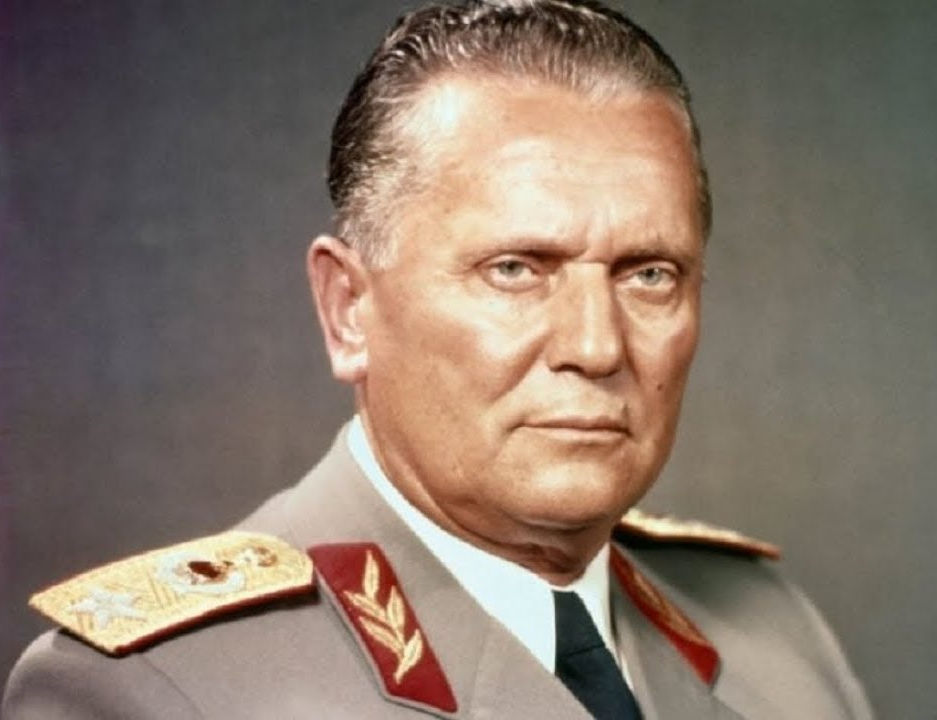
Bond speculates on how safe they will be after exiting Turkey and passing through Greece and Yugoslavia. He specifically wonders, “Whose side was Tito on? Probably both.” Josip Broz Tito (1892 – 1980) was prime minister of Yugoslavia from 1944 – 1963, and president from 1953 – 1980. Tito is a harder figure to pin down than overblown dictators like Hitler or Stalin. While he certainly condoned significant human rights violations, he split with Stalin in the late 1940s. From The Cultural Cold War by Francis Stonor Saunders: Tito’s “refusal to sacrifice national interests in favor of propping up Soviet hegemony in the Balkans had opened a vicious polemic between Moscow and Belgrade. Stalin had withdrawn economic and military advisors from Yugoslavia as part of a war of attrition designed to weaken this independent stance. Tito, in turn, had opened negotiations with the West to receive Marshall Plan credits to revive his crippled economy.” Tito also made Yugoslavia a founding member of the Non-Aligned Movement in 1961, refusing formal alignment with any major power bloc. Tito’s policies were largely oriented around preservation of power and the stability of Yugoslavia, giving credibility to Bond’s doubts about how he and Tatiana might be treated traveling through the country. Yugoslavia split up into a collection of separate republics in 1992.
Uzunkopru, Belgrade, Dragoman:
Bond also anticipates what kind of welcome he might expect at a series of upcoming stations: Uzunköprü, in Turkey very near the Greek border; Belgrade, capital of what was then Yugoslavia, where an agent of Kerim’s is expected to board the train; Dragoman, in western Bulgaria, very close to the border with Serbia, which at the time was also part of Yugoslavia.
Douanes:
A customs agent comes through the train checking passports, identifying himself as “Douanes,” or “Customs.”
23 Out of Greece
Orient Express:
Much of this chapter is a recitation of place names along the Orient Express route. We see Bond become more complacent as the train moves across Greece, even though the closing of the obvious Soviet trap is inevitable. (Note: The sequence of these destinations doesn’t entirely work on a map, especially when compared to Wikipedia maps of the Orient Express routes.)
- Pithion: More commonly spelled Pythio or Pythion, a town in Greece very near the Evros river that follows the border between Greece and Turkey.
- Gulf of Enez: As far as I can tell, this is really the Gulf of Saros. Enez is a small town in Turkey near the Greek border and one of many towns around the Gulf, which connects to the Aegean Sea.
- Alexandropolis: Alexandroupolis is in eastern Greece and a significant commercial port for the region. Only a few miles away is the cave attributed to the Cyclops Polyphemus from Homer‘s Odyssey.
- Rhodope Mountains: The Rhodope Mountains are situated primarily in Bulgaria but also extend into northeastern Greece.
- Xanthi: Xanthi is a city in northeastern Greece known for the diverse architecture of Byzantine Greek churches, neoclassical Greek structures, and mosques from the Ottoman Empire.
- Drama: Drama is a city in the Macedonia region of northeastern Greece. Paper / Textile manufacturing and tobacco were important to the economy in the modern era.
- Serrai: Really Serres, in the Central Macedonia region of northeastern Greece. Konstantinos Karamanlis (1907 – 1998), who served multiple terms as Prime Minister of Greece, including 1955 – 1958, was from Serres.
- Salonica / Thessaloniki: Also known as Thessalonica, also in the Macedonian region of northeastern Greece on the Thermaic Gulf, and today the second largest city in Greece. In 1917, a kitchen fire got out of control and left more than one-fourth of the city’s population homeless. Salonica is where Kerim urges Bond and Tatiana to exit the Orient Express.
- Vardar River: The Vardar or Axios River is the longest river in North Macedonia and flows through Greece, entering the Aegean Sea at the city of Thessaloniki.
- Idomeni: Idomeni is a village in Greece near the North Macedonian border. North Macedonia at the time was part of Yugoslavia, so Idomeni would have been the last rail stop before entering Yugoslavia.
Guildford:
Thinking ahead to Tatiana’s likely future after the train journey, Bond reflects, “Probably at Dover she would be taken away to ‘The Cage,’ that well-sentried private house near Guildford, where she would be put in a comfortable, but oh-so-well wired room.” Guildford is about 27 miles southwest of London and largely surrounded by the protected Surrey Hills National Landscape. I can’t find anything on “The Cage,” but Special Operations Executive (SOE), a British espionage and reconnaissance agency that operated from 1940 – 1946, had a training facility at Wanborough Manor just outside of Guildford. About 130 agents sent to France during World War II were trained at Wanborough. The manor did eventually return to private use, but some of SOE’s staff joined MI6 after the war, so perhaps intelligence activities were still being conducted there in the 1950s.
Pawns:
We return to the book’s chess game metaphor when Kerim again advises 007 of the importance of proceeding cautiously: “I have a feeling that you and I and this girl are pawns on a very big board – that we are being allowed our moves because they do not interfere with the Russian game.” Later, Kerim uses the laws of physics on a billiard table to remind Bond of the bigger picture; the principles might be different but the movements of the billiard balls are as controlled as those of chess pieces: “But the laws of the billiard table are not the only laws, and the laws governing the progress of this train, and of you to your destination, are also not the only laws in this particular game.”
24 Out of Danger?
Iron Curtain:

The Orient Express arrives at Belgrade and waits to be joined by another section of train to arrive “through the Iron Curtain from Bulgaria.” Bulgaria was considered one of the western-most countries behind the Iron Curtain. Winston Churchill gave the term its classic Cold War application in a 1946 speech at Westminster College in Fulton, Missouri, but the term was first applied to the Soviet Union in 1918 by Russian writer Vasily Rozanov (1856 – 1919) in The Apocalypse of Our Time, which was published in English in 1920. The term referred to Soviet westward expansion to maintain a protective buffer of republics around Russia, and isolationism concerning its own citizens.
Stefan Trempo:
One of Kerim’s sons, Stefan Trempo, boards the train only to learn of Kerim’s death. Even in his loss, he cares for Bond and Tatiana, and the mission, as diligently as Kerim would have. (The name is also spelled “Tempo” in my edition, so I’m not certain which spelling is considered correct.)
Morris Oxford:
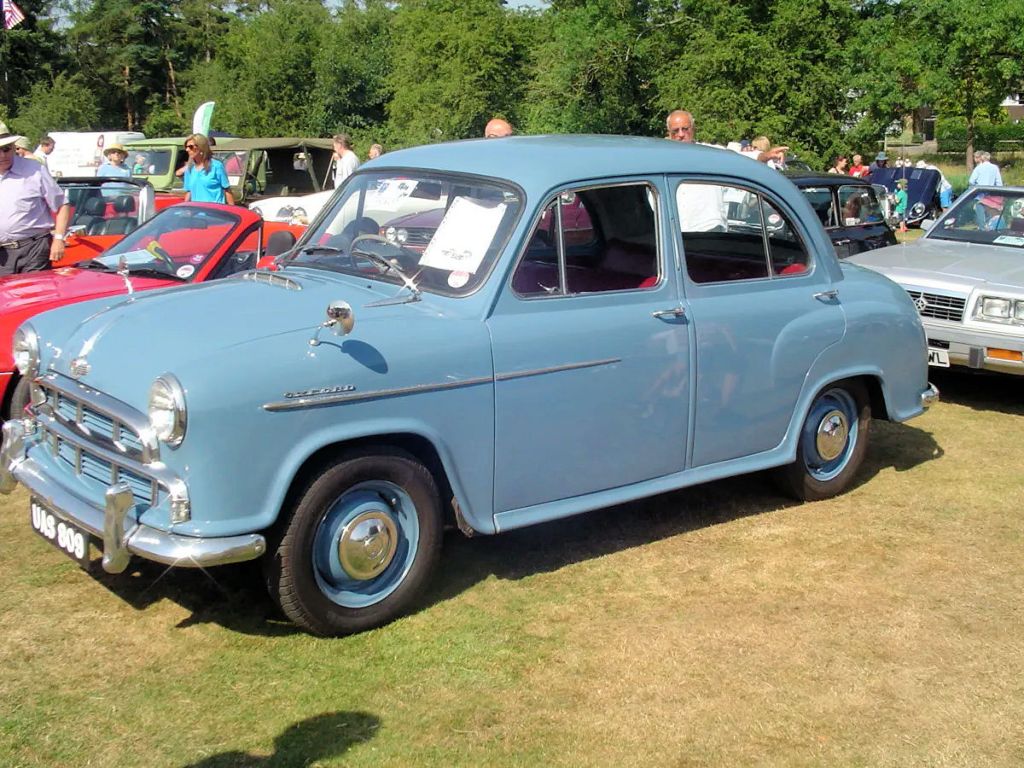
Trempo transports Bond and Tatiana in a Morris Oxford saloon. British firm Morris Motors, originally W.R.M. Motors, was established in 1912 by former bicycle manufacturer William Morris (1877 – 1963). In a 1952 merger Morris became part of the British Motor Corporation. Various models of the Morris Oxford line were manufactured from 1913 – 1935 and again from 1948 – 1971. The Oxford was heavily redesigned in 1954 for the Oxford Series II, perhaps this is the car Trempo is driving.
Universal Export:
Bond and M conduct a fairly convincing coded phone call posing as a traveling salesman and the managing director of Universal Export, the cover name introduced in Live and Let Die and used again in Moonraker.
Bond / Tatiana Lunch:
At Trempo’s aparment, Tatiana and 007 have lunch of smoked ham, peaches, and slivovic. Better known as slivovitz, the plum brandy comes from parts of central, eastern, or southern Europe, and is known by a variety of names depending on the region. The beverage is made with damson plums, a variety of plum primarily used for jam or preserves in addition to slivovitz.
Orient Express:
We’re treated to another list of place names as the Orient Express charges westward and Bond becomes increasingly confident:
- Sava River: The Sava is the longest tributary of the Danube and passes through republics of the former Yugoslavia. The river is important for navigation, as a water supply in the region, and in modern times for the generation of hydroelectric power.
- Vincovci: Vincovci is a city in eastern Croatia, which was part of the Soviet-era Yugoslavia.
- Brod: There are several cities and towns in Europe called Brod, but the Orient Express passed through Slavonski Brod in eastern Croatia.
- Zagreb: Zagreb is the capital city of Croatia.
- Ljubliana: More often spelled as Ljubljana, the capital city of Slovenia, which was also part of the former Yugoslavia.
- Sezana: Sežana is a town in western Slovenia and very near the Italian border.
- Poggioreale: There are two sites on the Italian map identified as Poggioreale, and both are in southern Italy. This article on the Fleming’s Bond site determined that the town of Opicina, in northern Italy, was called Poggioreale del Carso at the time Fleming wrote From Russia with Love.
- Venezia: The is the Venezia Santa Lucia railway station in Venice, in northern Italy and situated on the Adriatic.
- Trieste: The Italian city of Trieste sits on the Gulf of Trieste, near the Slovenian border. Much of the region declared itself the Free Territory of Trieste from 1947 – 1954 before being divided up between Italy and Yugoslavia.
- Adriatic: The Adriatic Sea separates the Italian and Balkan peninsulas and is the most northern arm of the Mediterranean.
Berliner Maschinenbau Gmbh:
In Zagreb, Bond notices old rusting trains labeled “Berliner Maschinenbau Gmbh.” This was a Berlin factory and later a locomotive manufacturer, started in 1852 by Louis Victor Robert Schwartzkopff (1825 – 1892). The factory was largely destroyed in 1945 and ceased operations. World War II is less than 15 years in the past and the Third Reich was left in ruins.
Bond / Tatiana Breakfast:
After Ljubljana, 007 and Tatiana have breakfast of hard brown bread, fried eggs, and “coffee that was mostly chicory.” Chicory is a perennial flowering plant native to Europe. Chicory roots can be roasted and ground up to use as a food additive, including in coffee. It has often been used as a substitute at times when coffee was not readily available.
Corniche:
Approaching Trieste, Tatiana and Bond admire villas along the corniche. A corniche is a generic term for a road built on the side of a cliff or mountain.
“We’ve Made It”:
Arriving at Trieste, Bond thinks, “We’ve made. I really think we’ve made it.” And we know what a red flag that kind of complacency is.
Kangol:
At Trieste, Bond spies an individual, who will turn out to be Grant, wearing a Kangol cap. Kangol is a clothing company best known for its popular hats. Kangol was founded in England in 1938 by Polish-born Jacob Henryk Spreiregen. Kangol provided berets to the British armed forces in World War II. In 1964 the company obtained sole license to produce Beatles-themed headwear. The company is still in operation.

Revelation:
Grant carries a Revelation suitcase, a brand of Antler luggage, founded in England in 1914 by bicycle seat manufacturer John Boultbee Brooks. The company started out manufacturing sturdy trunks for sea travel or to attach to motor vehicles. They introduced more soft-shell luggage in the 1940s and 1950s as air travel became more accessible to the masses. Antler is still in business but in 2016 Revelation was spun off as a sister brand.
25 A Tie with a Windsor Knot
Ronson:
As part of their verbal exchange to confirm identities, Bond lights Grant’s cigarette with a Ronson lighter. Is this the same Ronson he used in Casino Royale and Moonraker? Ronson began selling lighters in the 1900s. In 1926 the company patented a single-handed lighter sold as the Ronson De-Light Lighter. Ronson introduced the gun-shaped Pist-o-liter in 1912, something fans of The Return of the Pink Panther (1975) will appreciate.
Viyella:
Grant wears a Viyella shirt. The clothing company William Hollins & Co., founded in 1784 in England, developed a wool-cotton blend called viyella in 1893. Viyella was said to be warmer than cotton but lighter than wool. The company later took on the name of their fabric. Viyella clothing is still produced today.
Windsor Knot:
Grant’s tie is tied with a Windsor knot. “Bond mistrusted anyone who tied his tie with a Windsor knot. It showed too much vanity. It was often the mark of a cad.” So what kind of knot does Bond use? Either way, we again see Bond ignoring his intuition and we know he will pay the price for it. Edward VIII (1894 – 1972), then known as the Duke of Windsor after serving as King of England in 1936, is often given credit for the Windsor knot, but the general consensus is that the wide knot was developed to imitate the knots in the thicker fabric of the ties worn by the Duke. The knot is required for personnel of the Royal Air Force, but is generally not used in the other branches of the British Armed Services as a sign of disapproval for Edward’s decision to abdicate the throne so that he could marry twice-divorced American Wallis Simpson (1896 – 1986) in 1937.

Nash:
Grant is traveling under the name Captain Norman Nash of the Royal Automobile Club. The Royal Automobile Club was established in London in 1897 as the Automobile Club of Great Britain. In 1901 the RAC began offering roadside assistance to British drivers, but that service was later spun off as a separate organization. The RAC is something of a Blades for motoring enthusiasts.
Players:
Grant offers Bond a Players cigarette, produced by John Player & Sons. Established in Scotland in 1820, John Player bought the business in 1877 and set up shop in Nottingham in northern England. At one point, two-thirds of cigarettes sold in Britain were Player’s. The cigarettes were sold in decorative tins like the one Bond saw in a Special Branch office in Moonraker. Another red flag, as Bond dislikes the Virginia tobacco Players are supposedly made from.
Corriere de la Sera:
Grant shows Bond an Italian newspaper headline about an explosion at the Soviet consulate in Istanbul, the work of Kerim’s offspring. The newspaper is really Corriere della Sera, the Italian daily newspaper published in Milan and established in 1876. In the 1950s, the influential paper was heavily anti-communist and a supporter of NATO.
Valhalla:
Bond wonders if Kerim watched the destruction of the Soviet consulate from Valhalla. Valhalla is the hall in Asgard presided over by the Norse god Odin, the destination of those who die in combat.
Deuxième:
Train staff announces the Deuxième Service, which does not refer to the French intelligence service but to a second meal service, in this case a second seating for lunch.
Nash Revisited:
Tatiana advises 007 that “nash” means “ours” in Russian, implying that Nash is with the Soviets. Conversely, “svoi” means “theirs,” or with the Western allies.
Bond / Tatiana Lunch:
For lunch on the Orient Express, Bond and Tatiana have Americanos (see Chapter 13), Chaianti Broglio (Chianti is a red wine produced in Italy’s Chianti region; Broglio is really Castello di Brolio, a castle in the town of Gaiole in Chianti where the Ricasoli family has been producing wines for hundreds of years), “wonderful” hors d’œuvres, tagliatelli verdi (tagliatelle is a long, fat pasta, similar in shape to fettuccine, “verdi” means the pasta was made with spinach and would have a green color), and escalope (a French term referring to a piece of boneless meat flattened with a mallet or rolling pin, then breaded and fried).
Orient Express in Italy:
Bond and Tatiana become increasingly relaxed as the train progresses through a series of stations in Italy:
- Maestra: Really Mestre, a borough of Venice on the mainland rather than the island that is traditionally thought of as Venice.
- Venice: One of the classic cities of love and literature, Venice was built largely on 126 islands along the Adriatic. Such writers as Casanova, Shakespeare, Thomas Mann, Henry James, Evelyn Waugh, and Ezra Pound have written about, or been inspired by, Venice.
- Padua: Padua is a city in northern Italy and about 25 miles west of Venice. Copernicus (1473 – 1543) studied at the University of Padua, founded in 1222, and Galileo (1564 – 1642) taught there.
- Vicenza: Vicenza is in northeastern Italy about 37 miles west of Venice. The city was heavily bombed by the Allies in World War II with over 2,000 civilian casualties.
- Verona: Verona is a popular tourist destination in northern Italy, partly because Shakespeare’s plays Romeo and Juliet and The Two Gentlemen of Verona are set there.
- Lombardy plain: Lombardy is an administrative region of northern Italy that includes the city of Milan. The Roman poet Virgil, the Roman author Pliny the Elder, the artist Caravaggio, and Pope John XXIII are some of the historic figures from the Lombardy region.
War and Peace:
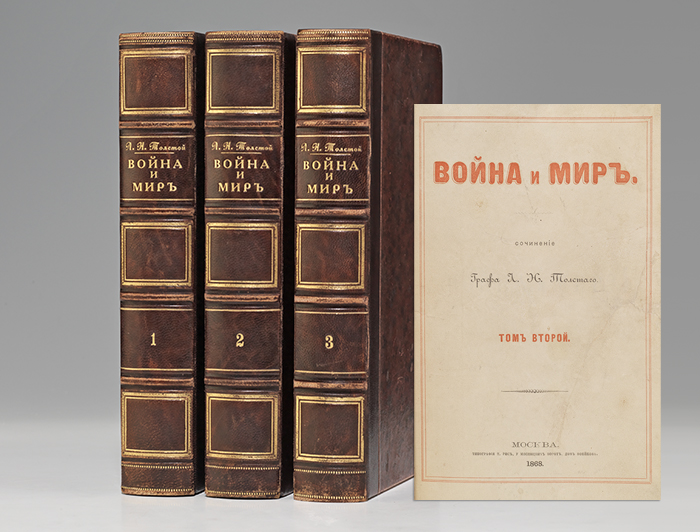
There’s an obvious irony in Grant (or was it Kronsteen?) choosing Leo Tolstoy‘s (1828 – 1910) novel War and Peace to conceal his gun. The story was originally published in 1865 in serial form under the title 1805, then as a complete book in 1869 with the title War and Peace. The novel (though Tolstoy himself debated whether the work should even be called a novel) is oriented around Napoleon’s invasion of Russia in 1812 and the years following. In the epilogue, Tolstoy rejects the Great Man Theory of history in the belief that history’s events are the outcome of smaller events driven by many people. Despite not being entirely in step with Stalinism, Tolstoy was generally highly regarded in the Soviet Union; Nikita Khrushchev cited Tolstoy as one of his favorite writers in a 1960 interview. In a single scene, Fleming depicts the Soviets as willing to weaponize an important work of Russian literature – the first edition of War and Peace ran over 1,200 pages, plenty of space to conceal a handgun – only to be defeated by the lowbrow British spy thriller.
Luger:
Grant / Nash claims to have a Luger that’s “too bulky for this sort of job.” Lugers were manufactured in, and used for military service in, multiple countries, beginning with Switzerland in 1900 and including Germany during World Wars I and II. The UK’s SOE (Chapter 23) was known to have Lugers.
26 The Killing Bottle
Phosphorus Numerals:
Woken by Grant, 007 tries to read the time on “the phosphorus numerals” on his wristwatch. Radioluminescence is a light-generating phenomenon resulting from material bombarded by ionizing radiation. Chemicals that release a specific color of light from this process are not phosphorus, but phosphors. Radioluminescent paint, the kind used on watches, contain a radioactive isotope and a radioluminescent phosphor chemical. The less radioactive phosphorescent materials more common today came along later.
Chloral Hydrate:
Grant claims to have dosed Tatiana with chloral hydrate. Chloral hydrate was developed by the German chemist Justus von Liebig (1803 – 1873) in 1832, but it was not widely used as a sedative and anxiety treatment until the 1870s. Long-term use was sometimes found to lead to addiction or serious health problems.
Bulldog Drummond:
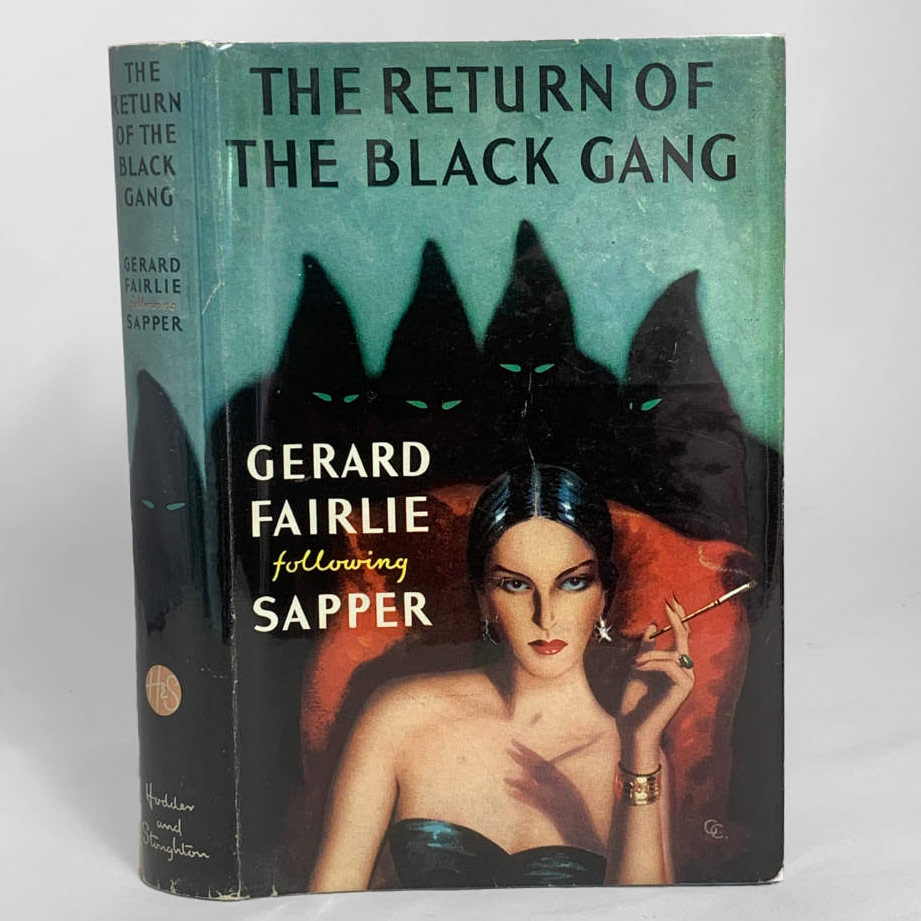
Grant tells Bond, “No Bulldog Drummond stuff’ll get you out of this one.” The fictional Hugh “Bulldog” Drummond was created by British author H.C. McNeile (1888 – 1937) writing under the pen-name Sapper. McNeile wrote a series of Bulldog Drummond novels, beginning with Bulldog Drummond in 1922. After his death in 1937, Gerard Fairlie (1899 – 1983) took up the mantle. Fairlie’s The Return of the Black Gang in 1954 would have been the most recent Bulldog Drummond novel published prior to publication of From Russia with Love. Drummond, a dedicated Brit and former World War I officer, was an adventurer who often found himself involved in one international incident or another. Anyone doubting Bulldog’s influence on Fleming’s writing need only look at Bulldog Drummond’s lifestyle: drinks martinis, owns a Bentley, poker player, expert marksman, skilled at hand-to-hand combat, tends toward misogyny and bigotry. Grant is basically insulting Bond’s, and Britain’s, heritage.
Chess Pieces:
Grant reminds us that Kronsteen the chess master is still manipulating the characters. He credits Kronsteen with figuring out that vanity and greed and “a bit of craziness in the plot” would put Bond at their mercy. We’re still on a global chess board, and Kronsteen understood, at least to a point, how the pieces could be moved before he started the game.
Simplon Tunnel:
Grant intends to shoot 007 when the train passes through the Simplon Tunnel. The Simplon Tunnel runs more than twelve miles through the Alps, connecting Domodossola, Italy, with Brig, Switzerland. The eastbound tunnel opened in 1906 and the westbound in 1921. Until 1968, the Simplon was the longest rail tunnel in the world.
Atom Secrets:
Grant predicts that one outcome of the plot to both kill and humiliate Bond will be, “No more atom secrets from the Yanks.” This returns us to the Burgess and Maclean debacle referenced in Chapter 5. The “special relationship” between England and the U.S. is already on fragile enough ground. A successful outcome for the Soviet scheme would certainly limit information-sharing between the Western allies.
Orient Express:
Another listing of Orient Express stops as the train carries Bond and Grant to their final confrontation:
- Domodossola: Domodossola is a town in northern Italy, very close to the Swiss border, and an entry point for the Simplon Tunnel.
- Vallorbes: Really Vallorbe, a town in western Switzerland and situated on the French border.
- Brigue: Really Brig, in Switzerland, and also an entry point to the Simplon Tunnel.
- Lausanne: Lausanne is a city in western Switzerland. T.S. Eliot (1888 – 1965) wrote much of The Waste Land while under psychiatric care in Laussane.
Explosive Toys:
Bond wishes for a magnesium flare cigarette or some other gadget with which to defeat Grant. “If only his Service went in for those explosive toys!” Oh, the irony, pubished five years before the first Bond film was released, setting us on the path of all sorts of explosive toys.
Third Man in Dijon:

Grant plans to exit the train at Dijon, go to Paris, and “get lost there,” comparing himself to The Third Man (1949). The film involves a writer in post-war Vienna searching for his friend Harry Lime, reportedly dead but (spoiler alert!) very much alive and in hiding from those who want him dead. Grant forgets that in the movie (another spoiler alert!), Lime dies a very real death in the end. Graham Greene (1904 – 1991) wrote the screenplay, but the novella he wrote as a treatment for that screenplay was also published. The movie featured Joseph Cotten, who also appeared in Niagara with Marilyn Monroe (Chapter 19).
27 Ten Pints of Blood
Orient Express:
As the train moves across Switzerland toward its end-point in Paris, another partial list of Orient Express stops and sites:
- Wasenhorn: A mountain in the Lepontine Alps on the border between Switzerland and Italy, Wasenhorn‘s peak is over 10,600 feet high.
- Monte Leon: Also on the Swiss / Italian border, Monte Leon is the tallest mountain in the Lepontine Alps, over 11,600 feet high.
- Gare de Lyon: A major train station in Paris, opened in 1849; the text implies that Gare de Lyon is the end of the line for the Orient Express, but Wikipedia indicates that Gare de l’Est was the Paris terminus. Gare de Lyon is located in eastern Paris on the right bank of the Seine.
- Canton Valais: A canton, roughly equivalent to a state or province, Canton Valais is in southwestern Switzerland, bordering both France and Italy.
Ten Pints of Blood:
Seeing the blood from Grant’s violent death, Bond recalls that the human body contains ten pints of blood. According to Encyclopedia Britannica, a human adult contains about 9.5 to 11.6 pints of blood, depending on the individual’s size, age, and gender.
Voilà que nous y sommes:
“Here we are,” spoken by the train conductor after Bond bribes him to let Grant “sleep.”
28 La Tricoteuse
Ritz Hotel:
Bond finds Rosa Klebb at the Ritz Hotel on rue Cambon in Paris. The front of the Ritz is actually one block over, on Place Vendôme. The rue Cambon entrance as of 2024 is a hotel pastry shop. Swiss hotel operator César Ritz (1850 – 1918) and French chef Auguste Escoffier (1846 – 1935) opened the Ritz Paris in 1898. Historic guests over the years have included King Edward VII and Coco Chanel. The hotel is so popular it has appeared in such works as Tender is the Night by F. Scott Fitzgerald, The Sun Also Rises by Ernest Hemingway, The Devil Wears Prada by Lauren Weisberger, and Love in the Afternoon (1957) with Audrey Hepburn and Gary Cooper.
Mathis:
René Mathis has been mentioned several times in the book, but now at the end he makes a direct appearance to assist Bond.
Orly:
Bond and Mathis intend to abduct Klebb and take her from Paris at Orly, which at the time was the primary airport in Paris. The airport opened in 1932 and was temporarily used by the Luftwaffe after Germany invaded in 1940. Most international air travel moved to Charles de Gaulle Airport when it opened in 1974.
Canberra:
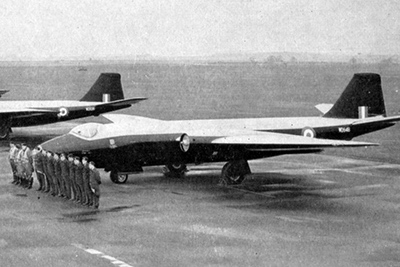
Mathis specifies that Klebb will be smuggled out on an RAF Canberra. The Canberra was a jet-powered bomber manufactured by English Electric and first put in to service for the Royal Air Force in 1951. The Canberra could fly higher than most other aircraft in the 1950s, and in 1957 set a world altitude record of 70,310 feet. The RAF’s final Canberra was retired in 2006.
Directoire:
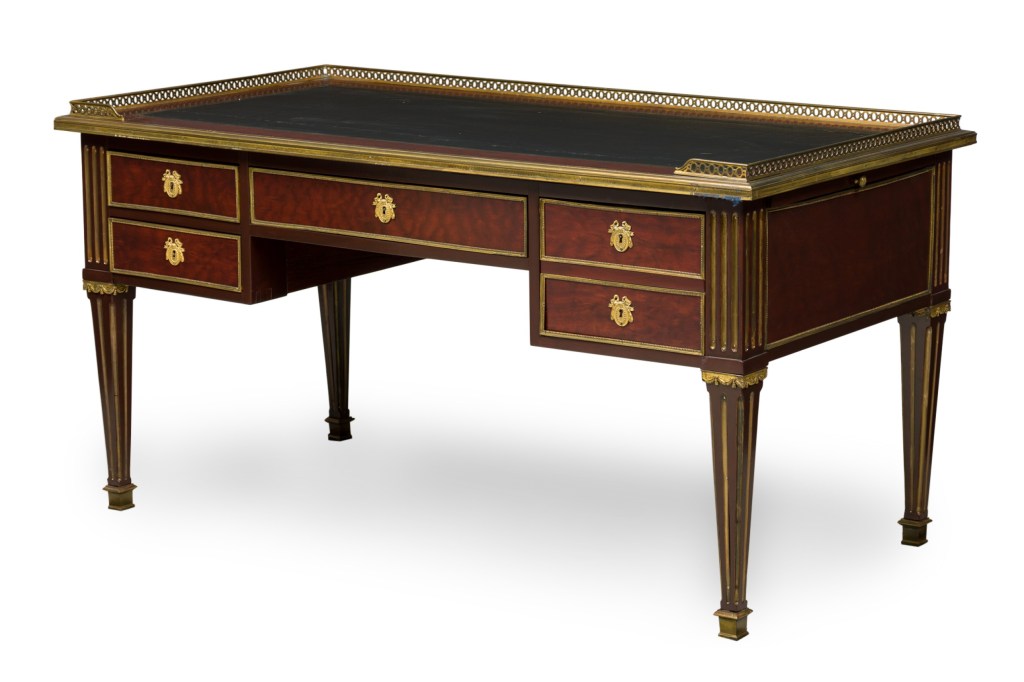
Klebb sits next to a Directoire desk. The Directoire style was a design and fashion style that corresponded approximately with the final years of the French Revolution, when the five-member Directory committee governed the First Republic, from 1795 – 1799. It was a transitional period between the styles of Louis XVI and Empire (Chapter 15).
Tricoteuse:
Here we see Klebb knitting, as foreshadowed in Chapter 7, fully intending to slip under the radar and hoping that others pay the price for her failed mission.
Rue de Berri:
Bond imagines Klebb as a “rich widow” who would be “driven to the tea-room in the rue de Berri…” The Rue de Berri is a short street in Paris of the Champs-Élysées, and home to several upscale (isn’t everything in Paris upscale?) hotels and restaurants. If there is a specific tea room Bond has in mind, I’m unable to locate it.
Klebb:
Fleming makes our enemy’s ugliness clear one last time. Bond sees Klebb as “toadlike,” with “wet and blubbery” lips and a “nicotine-stained moustache.”
Denier:
Klebb knits with a small-denier wool. Denier, from the French denier, a medieval coin of small value, is a measure of fabric thickness. A high-denier fabric would be thicker and more durable, while small-denier fabric would be thinner to the point of perhaps being sheer, depending on the fabric.
Malheur:
Mathis nicknames Klebb as Rosa Melheur. “Malheur” is the French word for “misfortune.”
Panier de fleurs:
Mathis and his people have brought a laundry basket in which to transport Klebb. Mathis refers to it as the “panier de fleurs,” or “flower basket.”
Bond Really Dies!:
I find the final page as shocking today as when I first read From Russia with Love decades ago. It’s not clear to me what readers thought at the time; the reviews for the British paper The Observer asked, “Is this the end of Bond?” Supposedly it was about this time, though so far I’m unable to confirm the date, that Fleming wrote to Raymond Chandler, “I am getting fed up with Bond and it has been very difficult to make him go through his tawdry tricks.” Whatever the circumstances, it’s a bang-up conclusion that leaves Bond’s fate completely up in the air.
Final Thoughts:
It’s hard to talk about From Russia with Love without mentioning the 1961 Life article listing this novel as one of President Kennedy’s favorite books. It’s easy to understand why; Fleming’s skill at incorporating historic events and people into a fictional secret agent story has never been so well displayed. How much did the truth influence fiction, and how much did fiction influence the truth? This shadowy terrain is part of what made the Cold War so dangerous and, in hindsight, so fascinating. Many of the references seem obscure today, but they would have been a lot more evident to readers in 1957.
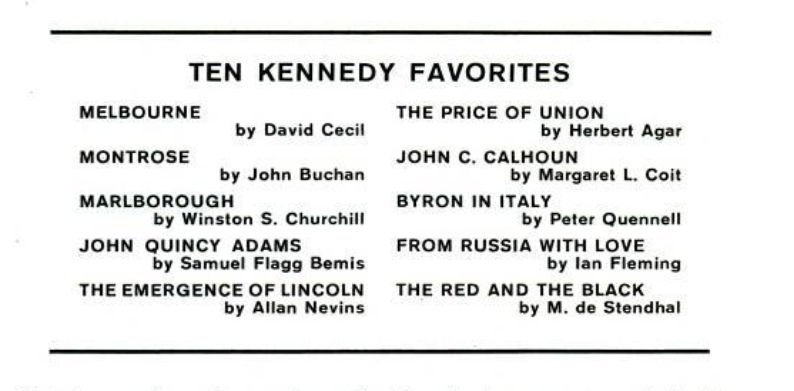
Fleming’s choice in how to structure the book – opening with the Soviet perspective and keeping Bond out of the narrative until a third of the way through the text – is equally fascinating. Bond’s exhaustion when he does appear, along with fewer detailed meal and beverage descriptions than in the previous books, seems to partly mirror the early stages of Fleming’s own condition of physical and emotional decline at the time. Fleming’s love of travel is reflected here even more than the previous Bond books. He had been to Moscow and Istanbul; Fleming reportedly survived a rail crash in his late teens that caused him to assocate train travel with dangerous situations.
Still, this choice of a cliffhanger ending was certainly uncommon at the time, far different from the conventional happy ending Fleming initially imagined. The bold conclusion perfectly compliments the book’s structure. After four novels, we readers might think we have the 007 formula figured out. Then, here we are, left hanging at the end. It’s fun to think that readers in 1957 were left in suspense about Bond’s future, but perhaps they weren’t – Fleming had started writing the next Bond book before From Russia with Love was published.
 The Creative Life Adventure