Goldfinger (1959) was Ian Fleming‘s seventh James Bond novel.
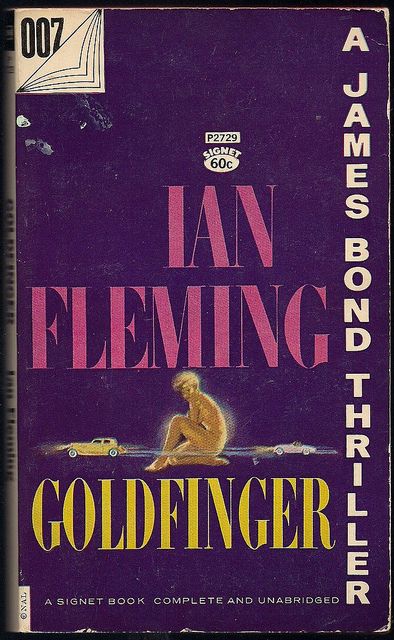
Fleming dedicated his novel to “my gentle reader” William Plomer (1903 – 1973). Plomer was born in South Africa, but he was already a published writer by the time he moved to England in 1929. In the late 1930s, Plomer became a reader for Jonathan Cape, the firm that published the Bond novels. Plomer may not have been a truly gentle reader, as he edited a number of Fleming’s Bond books.
As I’ve done with the previous Bond novels, this is my informal Goldfinger reader’s guide regarding brand and place names, historic references, themes, and character development. A few references are repeated from previous books, in which case I’ve generally just copied those entries. In Goldfinger, Bond makes a long drive through England and then France in pursuit of his quarry – I don’t have entries for every city mentioned simply because there are so many, but in Chapters Seven and Thirteen I have provided maps of Bond’s approximate route.
I also haven’t included page numbers, as this will vary by edition. I’m reading the Signet Books mass market paperback. Mr. Fleming was kind enough to divide his books into brief chapters, so references should be easy to find in the text. The best approach, if it’s feasible, is to keep this handy while you read the book.
I’m only human, so if I’ve made any factual errors, please feel free to reach out to me via the Contact Me page.
Last revised: 23 January 2026
1. Happenstance
Chapter One: Reflections in a Double Bourbon
James Bond:
The story has a somewhat melancholic beginning, introducing our hero James Bond having already consumed two double bourbons and reflecting on a recent mission to Mexico. 007’s wavering attitude about his mission feels reminiscent of a similar emotional state near the end of Casino Royale.
Miami Airport:
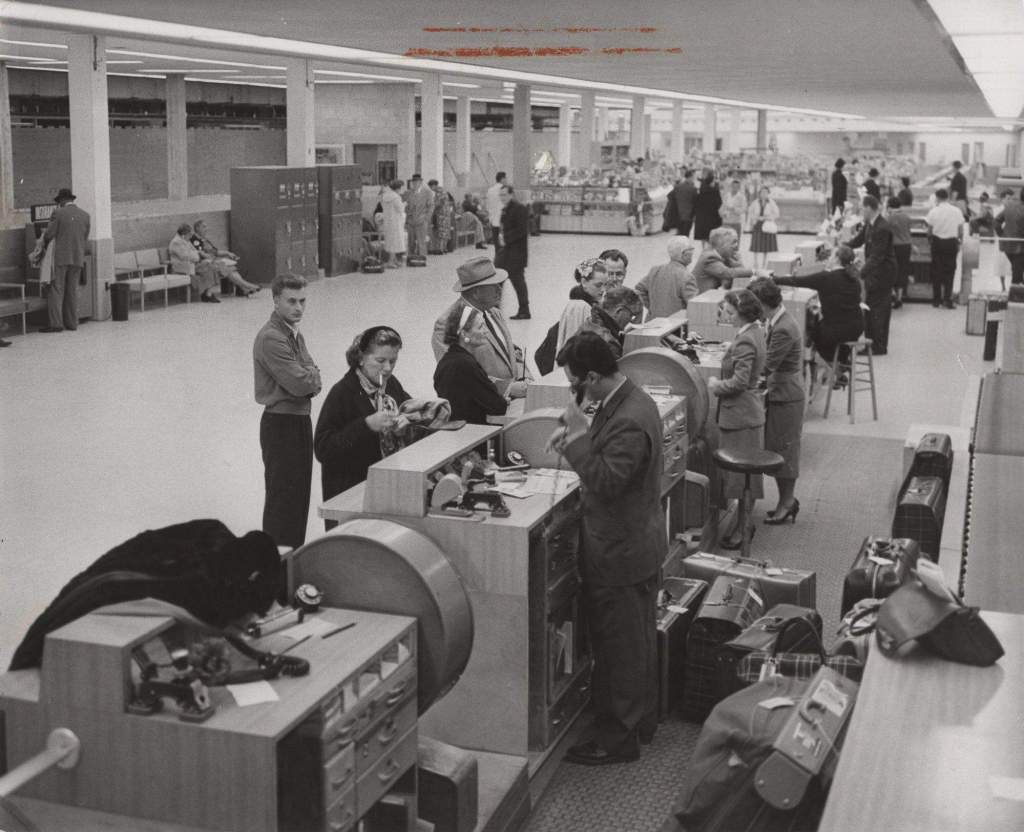
Bond is in “Miami Airport” en route to London via New York City. This is certainly Miami International Airport, established by Pan American Airways as a privately operated air field, beginning with Air Mail flights in 1928 and becoming the first U.S. mainland passenger airport with an international port of entry in 1929. (Amelia Earhart attended the dedication ceremony.) An adjoining airport, publicly and privately financed, was opened in the early 1940s, and the two airports merged in 1946 to become Miami International. Due to a boom in passenger traffic in the 1950s, a new airport south and east of the original location opened in February, 1959, not long before Goldfinger was published. Because the novel was actually written in early 1958, Bond would have traveled through the airport’s original location.
Regret:
While Bond had the benefit of a pep talk from Mathis in Casino Royale, here he is alone and must provide his own encouragement, concluding that “regret was unprofessional…” But who is really experiencing career regret? Is this Fleming’s own regret? After completing the novel, Fleming apparently considered this to be his final full-length Bond tale, with only shorter adventures expected in the future.
Capungo:
Bond’s target in Mexico City was a “capungo…a bandit who will kill for as little as forty pesos…” “Capungo” doesn’t seem to be an actual Spanish word. A discussion on the Fleming’s Bond site indicates that Fleming might have misheard the word “capanga,” which in some countries refers to a violent foreman. In fact, Google Translate, at the time I consulted it, matched the Portuguese word “capanga” with the English word “henchman,” which is what the “capungo” of the novel turns out to be.
Haitian Primitives:
Upon killing the Mexican, Bond imagines the man’s life coming “out of his mouth as it does, in the shape of a bird, in Haitian primitives.” I can find no information about this. This site talks about a priest ritual in Haitian voodoo (vodou) to release the soul from the body after death, but I can find no bird references. Perhaps Fleming made this up?
National Airlines:
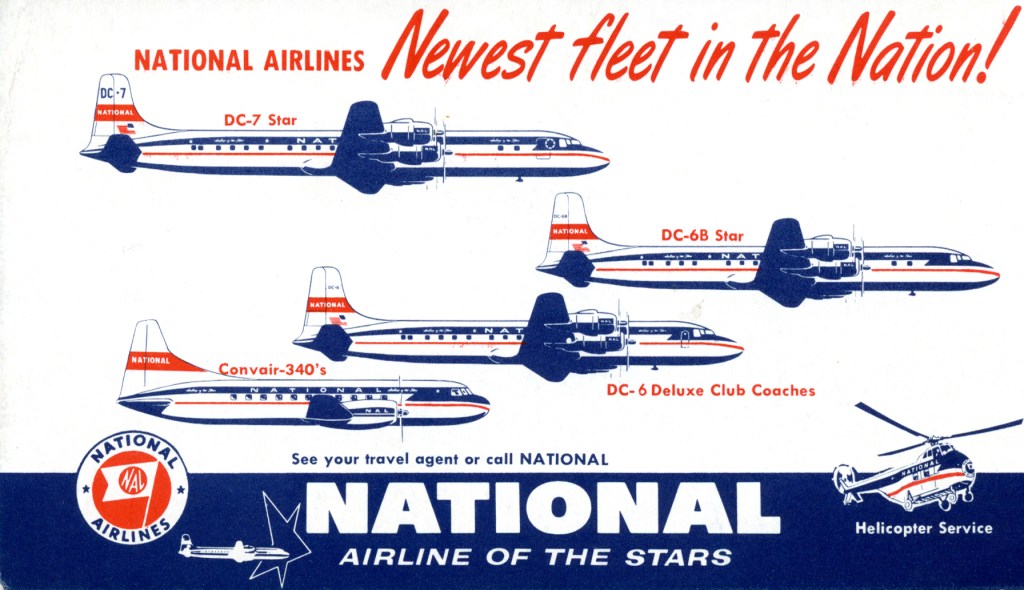
While he waits, 007 hears an announcement for National Airlines, “Airline of the Stars.” National Airlines was established in 1943 in St. Petersburg, Florida, but moved its headquarters to Miami in 1946. In late 1958 National became the first airline to operate domestic jet flights in the U.S. The airline was acquired by Pan Am in 1980. In the 1950s, National promoted itself as the “airline of the stars,” though this seems to have been more about marketing than actual celebrity passengers.
Tannoy:
The airport flight announcements are being made over a Tannoy public address system. Tannoy is a London-based company founded in 1926 as a maker of battery chargers for wireless radios. Tannoy’s PA systems have been used by the British armed forces, in Buckingham Palace, and in many British factories, among other places. The Tannoy name was so common in Britain that the word came to be a generic term for all public address systems, so it is possible that Bond is using the term in this context rather than to identify a specific brand. Today Tannoy is owned by the holding company Music Tribe.
Poppy Fields:

The Mexican mission involved poppy fields that “were broken down for opium.” Opium is derived from a specific poppy, papaver somniferum. The “opium poppy” is native to the eastern Mediterranean, but it has been cultivated to grow throughout the world. The plants are also a source of food (poppy seeds) and as an ingredient in medications like morphine or codeine.
Madre de Cacao:
Bond follows the drug traffickers’ trail to the Madre de Cacao cafe in Mexico City. I imagine the cafe is fictional, but madre de cacao (mother of cocoa) is a common name for the tree species Gliricidia sepium, a medium-sized legume tree native to Mexico and parts of Central America. Among the tree’s many benefits is the shade it provides to plantation crops such as cacao and coffee.
Heroin:
Fleming cites a United Nations campaign against drug trafficking and a corresponding UK ban on heroin. I can find no specific action or legislation in support of this, so I suspect Fleming wrote in anticipation of future government actions. The 1926 Rolleston Committee Report, from a committee chaired by British Minister of Health Sir Humphrey Rolleston, authorized doctors to prescribe heroin and morphine as medical treatment for addiction and supported the disease model of addiction. The Brain Committee, chaired by neurologist Sir Russell Brain was convened in 1958 to reconsider the conclusions of the Rolleston Committee Report. The 1950s in general was a time of widespread debate over the legality and control of heroin and other substances. The British government had debated criminalizing heroin in 1955, partly in response to aggressive criminalization of narcotics by the U.S. throughout the decade. The Single Convention on Narcotic Drugs treaty was signed in 1961 and established the International Narcotics Control Board to monitor production and trade of narcotics and psychotropic drugs.
Soho:
The threatened heroin ban has caused “alarm in Soho.” Soho is a neighborhood in London’s West End and a popular entertainment district. While New York City’s SoHo neighborhood refers to “South of Houston Street,” London’s Soho appears to have been named from a hunting cry used in the 17th century. Sex, drugs, and music were known factors in the Soho scene during much of the 20th century.
Prohibition:
Bond (Fleming) observes, “Prohibition is the trigger of crime.” There are powerful examples to support this sentiment, including the U.S. prohibition of alcohol during 1920 – 1933: while rates of liver cirrhosis and other conditions did decline during Prohibition, bootlegging and organized crime prospered simultaneously. The never-ending U.S. War on Drugs also helped fuel crime and gave influence to global cartels. What these attempts at substance prohibition fail to acknowledge is that the substances are only symptoms, and such symptoms will continue as long as the real problems are not addressed.
Blackwell:
Britain’s interest in the Mexico mission came about because of an “Import and Export merchant called Blackwell” who, in response to his own sister’s addiction, partners with the Mexican poppy grower. As far as I can tell, Blackwell is a fictional character, though the name may come from Blanche Blackwell, who I will return to in the Final Thoughts section.
Victoria Station:
The drug trafficking route includes suitcases of heroin being deposited at Victoria Station, a major transit center serving the Westminster area of central London since the mid-1800s. It was named for its location, nearby Victoria Street, and not Queen Victoria (1819 – 1901) as one might expect. However, the street was named after the queen, so it’s perhaps a trivial distinction.
Schwab:
Schwab, “a band man,” figures prominently in expanding heroin distribution into Britain, and he is presumably another fictional character.
Pimlico:

Schwab’s drug business involves diluting the heroin with “stomach powder” at a location in Pimlico before distribution to users. Pimlico is a Central London district on the south side of Victoria Station. The origin of the name is uncertain, but the area was heavily developed in the 1800s. Following periods of decline and re-development, heavy residential development occurred in the 1950s. A few of Pimlico’s historic residents over the years include former Prime Minister Sir Winston Churchill, writer Joseph Conrad, and the first president of Kenya, Jomo Kenyatta. (There appears to be no consistent definition of “stomach powder,” other than a mix of herbs and supplements intended to soothe gastrointestinal discomfort.)
C.I.D. Ghost Squad:
Schwab is soon under investigation by Scotland Yard’s C.I.D. Ghost Squad. C.I.D. = Criminal Investigation Department, made up of plain-clothes police officers. Ghost Squad was established after World War II, partly in response to hoarding and criminal trafficking of commodities that were rationed during and after the war. Ghost Squad was to recruit and manage street-level informants, which clearly raises complicated ethical matters. The squad was disbanded in 1949, but they lived on in the ITC Entertainment TV series Ghost Squad that aired from 1961 – 1964.
Copacabana:
Bond departs Mexico City after “a last drink at the Copacabana.” I can’t find any hotel or restaurant/bar that seems appropriate in Mexico City, so if this was a real location it doesn’t seem to be in operation today.
Parry Defence Against Underhand Thrust:
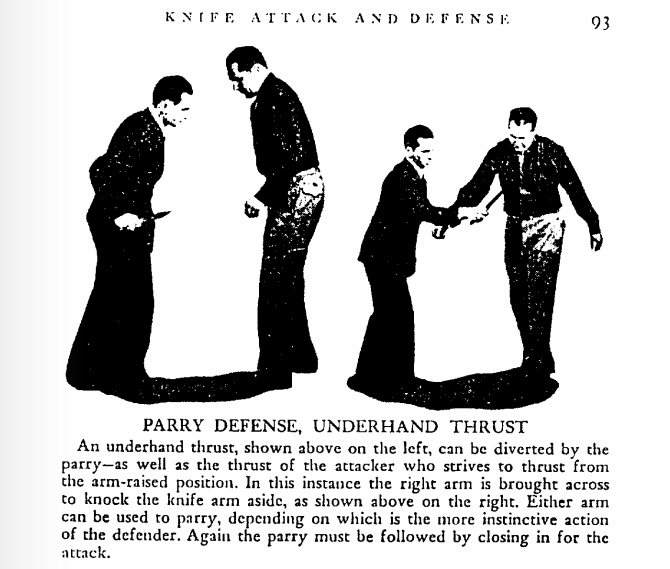
Bond confronts his knife-wielding attacker with the “Parry defence against underhand thrust,” which is “out of the book.” I had to consult the Fleming’s Bond site for help with this: they found an illustration from a U.S. Army field manual describing exactly this defense. The field manual concludes with, “Again the parry must be followed by closing in for the attack,” which Bond clearly does. I assume “the book” Bond thinks of is a training manual from his own service.
Caracas:
Bond gets a seat on the first international flight available to leave Mexico, taking him to Caracas, the capital of Venezuela. A coastal city in northern Venezuela, the area was populated by indigenous peoples before the city of Caracas was established by Europeans in the 1500s. The 1950s and 1960s were something of a boom-time for Caracas, with considerable public infrastructure investment. These days, the area is not so fortunate thanks to economic and political instability; as of June 2025, World Population Review ranks Caracas as the third most violent city in the world.
Transamerica Constellation:
007 flies from Caracas to Miami on a Transamerica Constellation. I’m stumped by the Transamerica reference. Los Angeles Air Service was acquired by businessman Kirk Kerkorian in 1948 and, after a period of rapid growth, was renamed Trans International Airlines (TIA) in 1960. The airline was acquired by the Transamerica Corporation in 1968, and was not actually named Transamerica Airlines until 1979, twenty years after Goldfinger was published. The airline was sold off in pieces to other airlines and ceased operations in 1986. The Constellation may be the same model of Super G Constellation Bond flew on in Diamonds Are Forever and Doctor No, the Lockheed L-1049G, first operated by TWA (Trans World Airlines, distinct from Trans International) in 1955 with a maximum capacity of 99 passengers. The plane was powered by turbo-compound engines, a reciprocating engine with a turbine to recover energy from exhaust gases, increasing the engine’s total power. TIA did operate a handful of Super Constellation models, including the E, G, and H, which were not significantly different from a passenger perspective.

Air Travel:
Even in the 1950s, passengers were at the mercy of the airlines. Bond is stranded overnight in Miami after his flight to New York is canceled due to “a mechanical defect,” thereby setting the entire story in motion.
Sober Bond:
Bond plans a wild night in Miami, with the preposterous claim, “He hadn’t been drunk for years.” That doesn’t explain where all those martinis, bottles of champagne, and various other beverages have been going.
Tense and Introspective:
Bond feels that he is “too tense, too introspective.” “Too introspective” seems hard to imagine, as Bond’s inner thoughts make up a big part of the stories. Again, however, this feels reminiscent of Bond’s emotional state near the end of Casino Royale, but it’s also hard not to project Fleming’s own attitudes into this narrative. Bond even tries to put his workplace killings into a greater context (as Fleming may have tried to place his own writing into a larger literary context?): “Anyway, people were killing other people all the time, all over the world. People were using their motor cars to kill with. They were carrying infectious diseases around, blowing microbes in other people’s faces, leaving gas-jets turned on in kitchens, pumping out carbon monoxide in closed garages. How many people, for instance, were involved in manufacturing H-bombs, from the miners who mined the uranium to the shareholders who owned the mining shares?”
DC 7:
Bond and his fellow travelers in the airport terminal are distracted by the noise of a DC-7. The DC-7 was produced by the Douglas Aircraft Company from 1953 – 1958. Powered by four turbo-compound engines, the first DC-7 was operated by American Airlines in May 1953 with the beginning of non-stop east-coast-to-west-coast passenger service in the U.S. Increased fuel capacity and greater engine power made long-haul flights more attainable for later variants, the DC-7B and DC-7C, both of which were in operation by the time of Bond’s travels.
Too Much Death:
Bond continues his maudlin thoughts with, “You’ve seen too much death. You want a slice of life – easy, soft, high.” Too bad he will only receive that for a very short time.
Chapter Two: Living It Up
Du Pont:
Bond immediately encounters Junius Du Pont, half of the couple who were present at Bond’s defeat of Le Chiffre at the card table in Casino Royale. (I’m fairly certain the Du Ponts’ first names weren’t given in that previous book.)
Brooks Brothers:
Bond is not impressed with Du Pont’s suit, “the conventional disguise with which Brooks Brothers cover the shame of American millionaires.” H. & D. H. Brooks & Co. clothing company was founded by Henry Sands Brooks (1772 – 1833) in New York City in 1818. Upon his death, H.S. gave the business to his four sons, who changed the name to Brooks Brothers in 1850. The Brooks family managed the company until it was acquired by Julius Garfinckel & Co. in 1946. Brooks Brothers introduced argyle socks to the U.S. market in 1957 and wash-and-wear shirts in 1953. The company has long had a reputation for conservative fashion, and Brooks Brothers suits have been worn by many U.S. presidents, including Abraham Lincoln, Ulysses S. Grant, John F. Kennedy, and Barack Obama. Andy Warhol was also said to have bought many of his clothes from Brooks Brothers.
Brigade of Guards:
Fleming compares Du Pont’s red-and-blue tie to the Brigade of Guards, an administrative formation of the British Army that existed from 1856 until 1968, when it was renamed the Guards Division.
Cabochon Crystal:
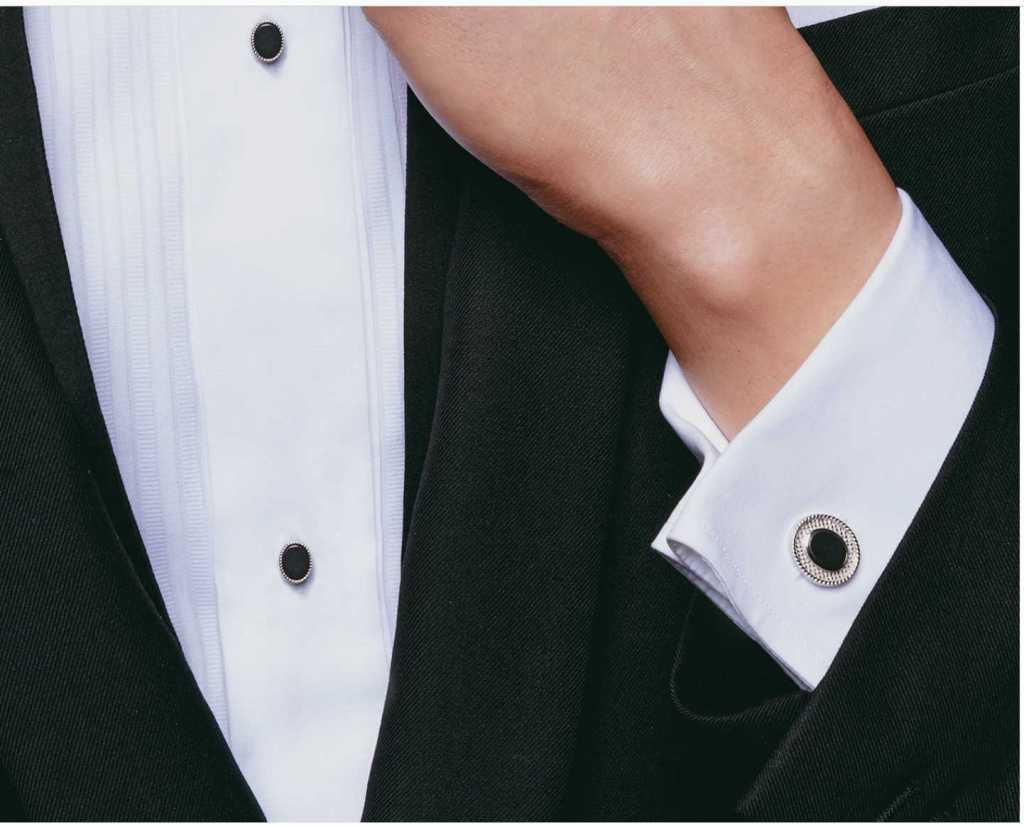
Du Pont wears cabochon crystal cufflinks. Cabochon is not an actual gemstone but a way of shaping and polishing gemstones to omit facets. Cutting gemstones “en cabochon” is typically best suited for opaque or softer gems.
Peal:
Du Pont’s shoes “hinted Peal.” Peal & Co. was an English shoe manufacturer that operated from 1565 – 1965. The Peal name was ironically purchased by Brooks Brothers in 1965. Peal’s high-end shoes were worn by the likes of Fred Astaire, Gary Cooper, Laurence Olivier, and Charles Chaplin.
Homburg:
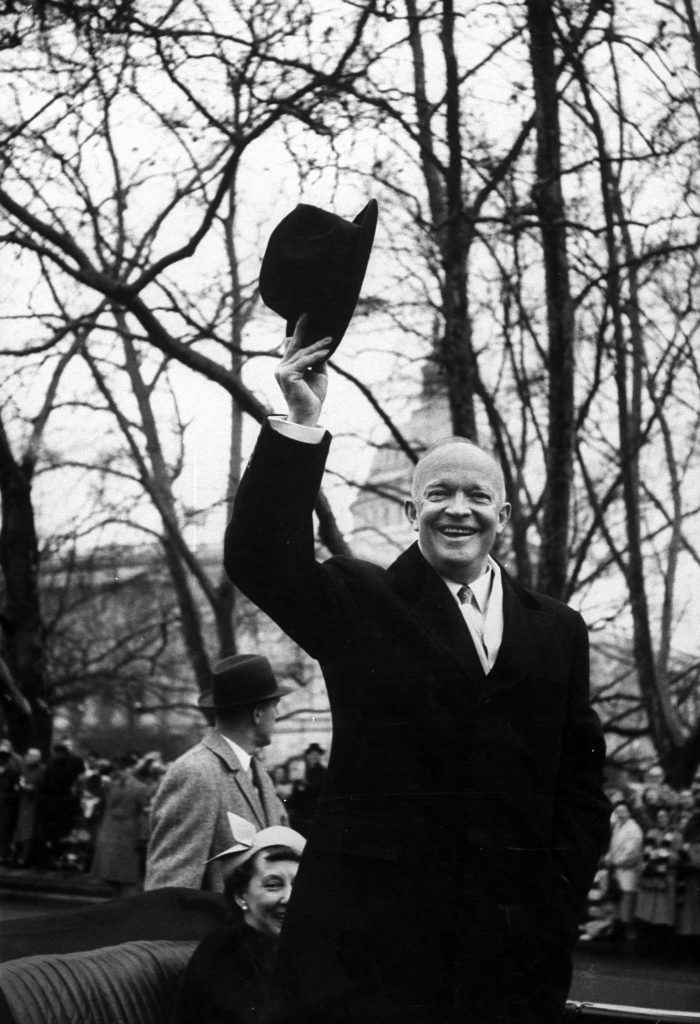
Du Pont carries a homburg, a semi-formal felt hat with a dent along the center of the crown and a wide ribbon. The style originated as hunting wear in Bad Homburg in what was the German Empire at the time. Winston Churchill was a well-known wearer of homburgs, and Dwight D. Eisenhower wore homburgs to his inaugurations in 1953 and 1957. Al Pacino wore a homburg as Michael Corleone in The Godfather (1972).
Zippo:
Du Pont uses the quintessential American cigarette lighter, a Zippo, primarily manufactured in the U.S. since 1933.
Parliament:
Du Pont offers Bond a Parliament cigarette. Parliament is a U.S. brand first sold in 1931. The cigarettes featured a recessed paper filter, highly uncommon at the time. In the 1950s, Parliaments became associated with “affluent” smokers. The brand is currently owned by Philip Morris International.
Royale les Eaux:
Du Pont references Royale les Eaux, the fictional town and casino that hosted Bond’s first adventure, which Du Pont places in 1951.
Dimple Haig:
While Bond drinks a bourbon on the rocks, Du Pont has a “dimple Haig and water.” Haig & Haig (or, today, simply Haig) is a variety of Scotch whiskey. The distiller was founded in the 1700s but today is owned by the multinational Diageo. The bottles had a unique dimpled shape, which was referred to as a pinchbottle when Leiter ordered it in Live and Let Die.
Lentheric:
Bond guesses that Du Pont uses Lentheric aftershave, the same brand Bond was given in Dr. No’s lair. Lentheric is a perfume, cosmetics, and personal care company established by Guillaume Lentheric in France in 1875. Today, after multiple acquisitions and name changes, what used to be Lentheric is part of Indigo Brands, a subsidiary of AVI.
Passenger List:
Du Pont identifies Bond by consulting the airline’s passenger list. Because that’s how few air travel security measures existed at the time.
Red Indians:
Du Pont has guessed that 007 is an “intelligence operative.” Du Pont used to “dabble” in such work, “playing Red Indians.” While “Red Indian” can be a highly offensive term for American indigenous people, in this case it was a nickname for No. 30 Commando, the intelligence-gathering unit formed in 1942 on the recommendation of Ian Fleming, who at the time was an officer in British naval intelligence. The unit’s mission was to advance into enemy territory ahead of Allied forces to gather codes, secret documents, equipment, etc. No. 30 Commando reportedly tried (and failed) to capture a German Enigma machine, which was the inspiration for the Spektor cypher machine in From Russia with Love. The unit took part in the Normandy landing and was instrumental in retaking Paris from the Nazis in 1944.
Universal Import and Export:
Bond claims to be employed by Universal Import and Export, the same (or similar) cover name he has used in five of the previous novels.
The Other Du Ponts:
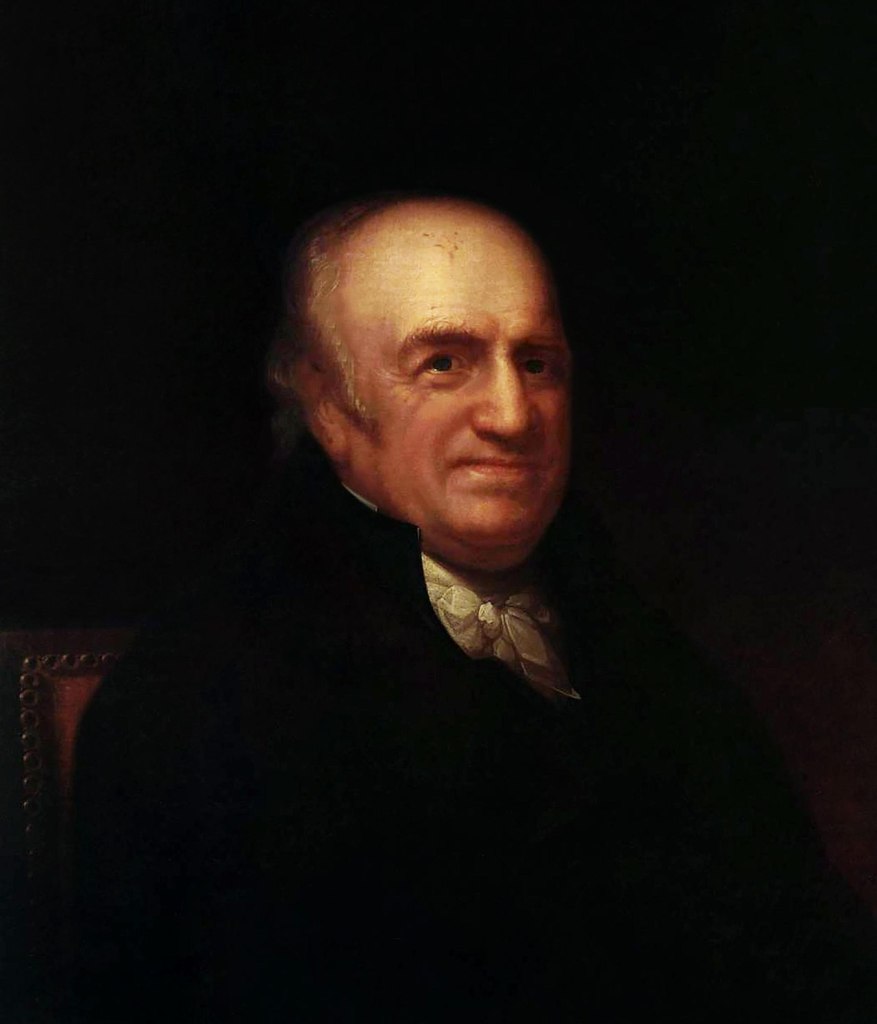
Junius Du Pont reports that he is “not one of the chemical Du Ponts.” The descendants of French writer and bureaucrat Pierre Samuel de Pont de Nemours (1739 – 1817) made quite a fortune in chemicals – the DuPont company was founded by Pierre’s son Éleuthère Irénée du Pont – but also automotive and other industries. Today the du Ponts live primarily in Delaware and Pennsylvania and, as in Bond’s time, are one of the wealthiest families around.
Buckingham Palace:
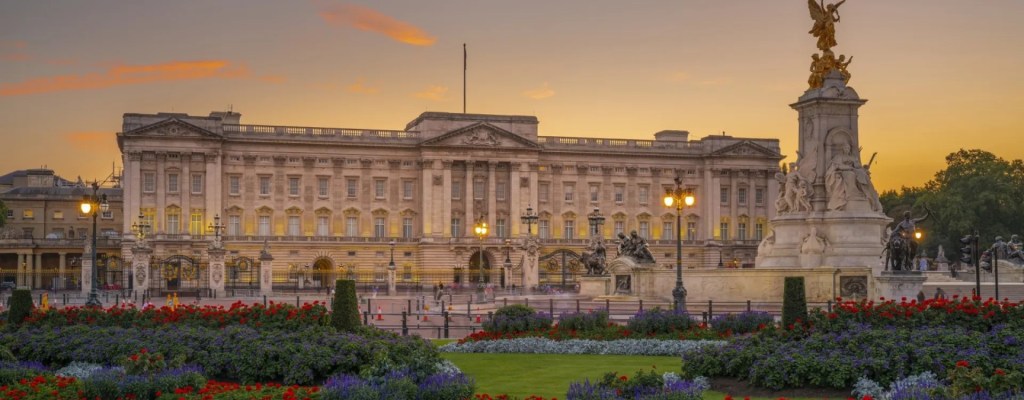
Bond’s take on Du Pont is that he “looked as harmless as any of the middle-aged Americans with cameras who stand outside Buckingham Palace.” Buckingham Palace, located in London’s Westminster, is the residence and administrative headquarters for the UK monarchy. The original structure was built in 1703 for the Duke of Buckingham and Normanby, with major additions since, the most recent occurring in the late 1800s and early 1900s. As a major London tourist attraction, plenty of visitors from the U.S. and other countries pass by with cameras.
Floridiana:
Du Pont possesses an ownership stake in the fictional Floridiana hotel in Miami. There is a Floridian Hotel in nearby Homestead. “Floridiana” is more commonly a term for Florida artifacts and collectibles.
Fontainebleau:
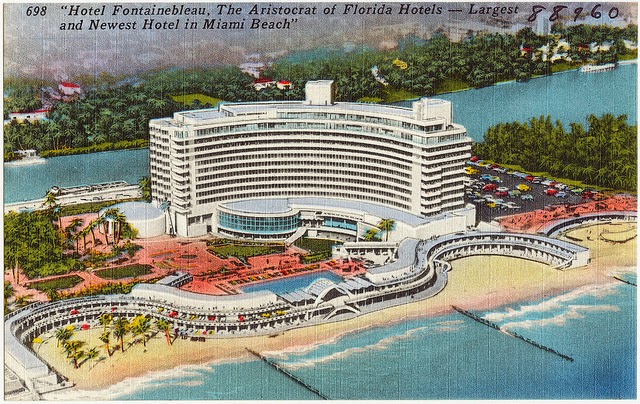
Du Pont promotes his own hotel with a disparaging reference to the famed Fontainebleau Hotel in Miami Beach. (Miami Beach, a distinct municipality from Miami, is the pair’s real destination.) The Fontainebleau opened in 1954, built by hotel developer Ben Novack (1907 – 1985), who owned the hotel until 1977. The year Goldfinger was published, the Fontainebleau won a court appeal defeating an injunction filed by the Eden Roc Hotel next door. The Fontainebleau wanted to build an expansion that would block sunlight from the swimming pool at the Eden Roc. The appeals court ruled that the Fontainebleau’s vertical property rights took precedence. The Fontainbleau was featured in the film adaptation of Goldfinger, as well as numerous other film and TV appearances, including 1959’s A Hole in the Head starring Frank Sinatra and directed by Frank Capra. Both the Fontainebleau and the Eden Roc are still in operation today.
Indecent Exposure:
Du Pont has a level of style that today’s wealthy could learn from. “Like many very rich men he considered that showing his money, letting someone see how much he tipped, amounted to indecent exposure.”
Chrysler Imperial:
Du Pont’s chauffeur-driven car is a Chrysler Imperial. Walter P. Chrysler (1875 – 1940) took over the struggling Maxwell Motor Company and reformed it as the Chrysler Corporation in 1925. Chrysler gradually added Plymouth, Dodge, and other brand names to its product line. Today Chrysler and its collective brand names operate as a subsidiary of Stellantis. Chrysler introduced the luxury Imperial in 1955 and produced it until 1975, briefly relaunching the model in 1981-1982. I have vague memories of riding in a late 1960s-era Imperial owned by a childhood neighbor, and it felt like a luxury resort on wheels.
Biscayne Bay:
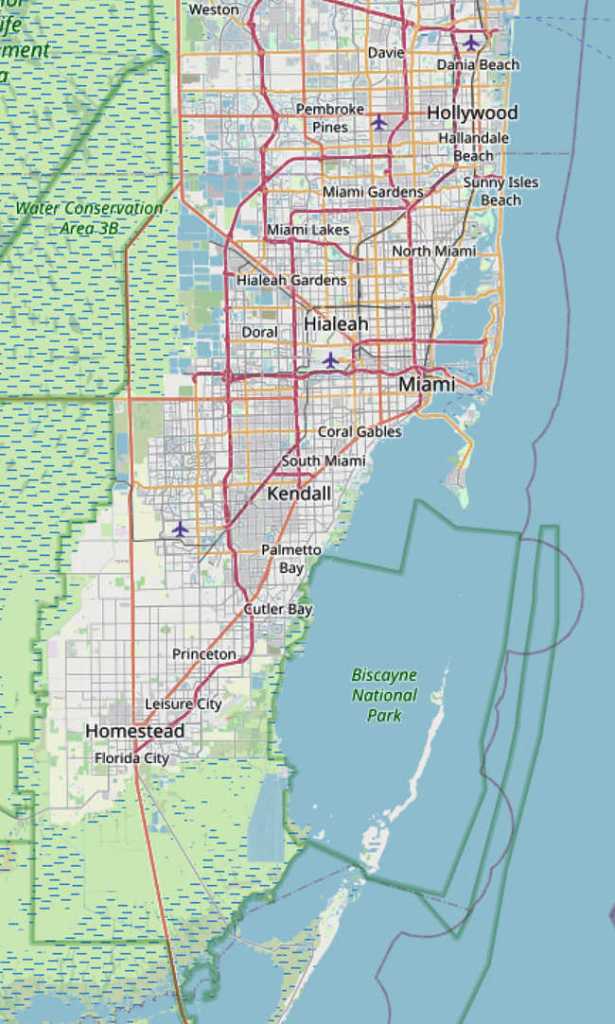
En route to dinner, Bond and Du Pont drive along Biscayne Boulevard and over Biscayne Bay. Biscayne Bay is an oddly shaped body of water on south Florida’s Atlantic coast. A small northern section of the bay (which is technically a lagoon) separates Miami and Miami Beach, while a larger southern section of the bay includes Biscayne Bay Aquatic Preserve and Biscayne National Park. What hasn’t been ruined by development and pollution remains a sanctuary for a diverse range of coastal animal and plant life. Biscayne Boulevard is simply the Miami-Dade County stretch of U.S. Route 1, the longest north-south highway in the U.S., that runs from Fort Kent, Maine, to Key West, Florida.
Douglas MacArthur Causeway:
The two men cross the Douglas MacArthur Causeway, the roadway that connects downtown Miami with Miami Beach. The road was designated the County Causeway when it opened in 1920, but was renamed after General Douglas MacArthur (1880 – 1964) in 1942.
Regency Frontage:
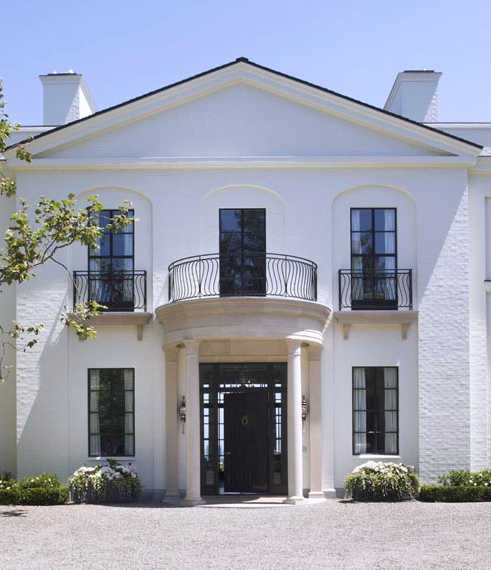
The restaurant (more on that shortly) has a “mock-Regency frontage.” Regency architecture is associated with the Regency Era, approximately 1811 – 1820 when George, Prince of Wales, was authorized by the Regency Act to discharge royal functions in light of the mental illness of his father, King George III. Sometimes the term is applied more loosely, from 1795, when the Prince of Wales married Princess Caroline of Brunswick-Wolfenbüttel, until 1837, when Queen Victoria took the throne. Regency houses often feature white stucco facades, entryways framed by columns, wrought iron balconies, and bow windows.
Bill’s On the Beach:
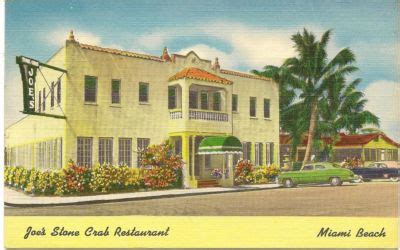
Du Pont takes Bond to Bill’s On the Beach for dinner, which is a fictional name but was supposedly based on Joe’s Stone Crab, the Miami Beach seafood restaurant founded by Hungarian immigrants Joe and Jenny Weiss in 1913. Ian Fleming and Sean Connery were both fans of the restaurant, as were other celebrities such as Muhammad Ali, Frank Sinatra, and Larry King. Today, Joe’s Stone Crab is one of the highest-grossing restaurants in the U.S. and is so popular that it can influence the wholesale price of stone crabs.
Pommery Champagne:
While Bond precedes dinner with a vodka martini, Du Pont drinks Pommery Champagne, from Champagne Pommery in Reims, France. The business was founded by Alexandre Louis Pommery and Narcisse Greno as Pommery & Greno to trade in wool, but after Pommery’s death, his widow Louise (1819 – 1890), who was apparently the brains of the operation, took the company into champagne production. The business is currently owned by the Vranken-Pommery Monopole Group.
Canasta, Gin, Oklahoma:
Du Pont wants to talk about canasta, a card game developed in Montevideo, Uruguay, in 1939 by attorney Segundo Sánchez Santos and architect Albert Serrato. The two men were bridge players but wanted a game that required less time. Canasta is generally played by two pairs of players, though Du Pont has been playing a version for two players. Canasta is played with two standard card decks, with players trying to play all cards in their hands by forming melds (sets) of seven cards in the same rank. The 1950s was the peak of canasta’s popularity in the U.S. Du Pont compares the game slightly unfavorably to gin – a two player scoring game based on sets of the same rank or sequences of the same suit – and Oklahoma, a variation of gin.
Regency Club:
Du Pont offers membership in the Regency Club as evidence of his skills as a card player. I believe he refers to what today is called the Regency Whist Club, formed in 1964 by a merger of the Regency Club, opened in 1936, and the Whist Club, established in 1894. During 1948 – 1951, the Regency Club issued official canasta rules. Today the club is available for membership by invitation only.
Goren and Crawford:
Du Pont claims to have played cards with the likes of “Charlie Goren, Johnny Crawford.” Charles Goren (1901 – 1991) was a bridge player and writer sometimes referred to as “Mr. Bridge.” Goren wrote a long series of books and other publications, most of them on bridge. John R. Crawford (1915 – 1976) was a professional bridge and backgammon player who won numerous tournaments during his career and published six books, including Canasta in 1950 and Samba, Three-Deck Canasta in 1951.
Card Cheats:
Du Pont believes he has identified a card cheat, and we learned in Moonraker how dishonorable this is considered among gentlemen. Du Pont’s goal is to prove his claim against his opponent and “have him hounded out of Miami.”
Red Hair:
We haven’t even met Goldfinger yet, but we know he’s a villainous sort because of his “flaming red hair.” This puts him in dastardly company with Le Chiffre, Shady Tree, Hugo Drax, and Red Grant.
Stone Crabs:
Bond and Du Pont have dinner of stone crabs, toast, melted butter, and pink champagne, wearing white bibs like the customers at Joe’s Stone Crab. Bond considers this “the most delicious meal he had had in his life,” which is a fairly shocking pronouncement given how well Bond eats. Stone crabs are found in the western Atlantic from Connecticut in the north to Colombia in the south, and in the Gulf of Mexico and throughout the Bahamas. The crabs have a carapace width of 5 – 6.5 inches. Reputable sources today recommend avoiding stone crab as human over-consumption hash put the species’ survival in jeopardy.
Charles Laughton:

The decadent meal gives Bond the image of Charles Laughton as Henry VIII. Charles Laughton (1899 – 1962) played Henry VIII during his illustrious stage career, but Bond is probably thinking of Laughton’s starring role in The Private Life of Henry VIII (1933). Laughton had appeared in several movies prior to that but The Private Life of Henry VIII made him an international film star. The movie opened to record attendance numbers in London at the Leicester Square Theatre (today the Odeon West End), and in New York City at Radio City Music Hall. Laughton’s performance also contributed heavily to the enduring image of King Henry VIII (1491 – 1547) as decadent, lecherous, and slovenly. The reality – one of many historical inaccuracies in the movie – is that Henry VIII had “highly refined” table manners, was “unusually obsessed with hygiene,” and was “discreet” in his ways with women. The movie apparently intended to express an anti-disarmament message, an attitude M and Bond would surely have agreed with.
Puritanical Bond:
Bond quickly goes from enjoying “the most delicious meal” to feeling “revolted” over the decadent feast. “He had asked and it had been given. It was the puritan in him that couldn’t take it.” While Bond tends toward some old-fashioned attitudes, I don’t recall him seeming notably “puritanical” prior to this.
Chapter Three: The Man with Agoraphobia
Flags of All Nations:
Waking the following morning, Bond takes note of the “flags of all nations” flying at the hotel’s pier. In our current highly politicized times, it’s hard to imagine this type of international display at a Florida hotel. Current street views of our closest reference point, the Fontainebleau, show no national flags displayed.
Humid Breeze:
A humid breeze off the ocean gives rise to the thought, “Bond guessed it was the breeze that the visitors like, but the residents hate.” As a long-time Florida resident, I can attest that we generally love breezes during the long, scorching summers. The sentiment does, however, highlight the fact that vacationing someplace is a very different experience than living there.
Chesterfields:
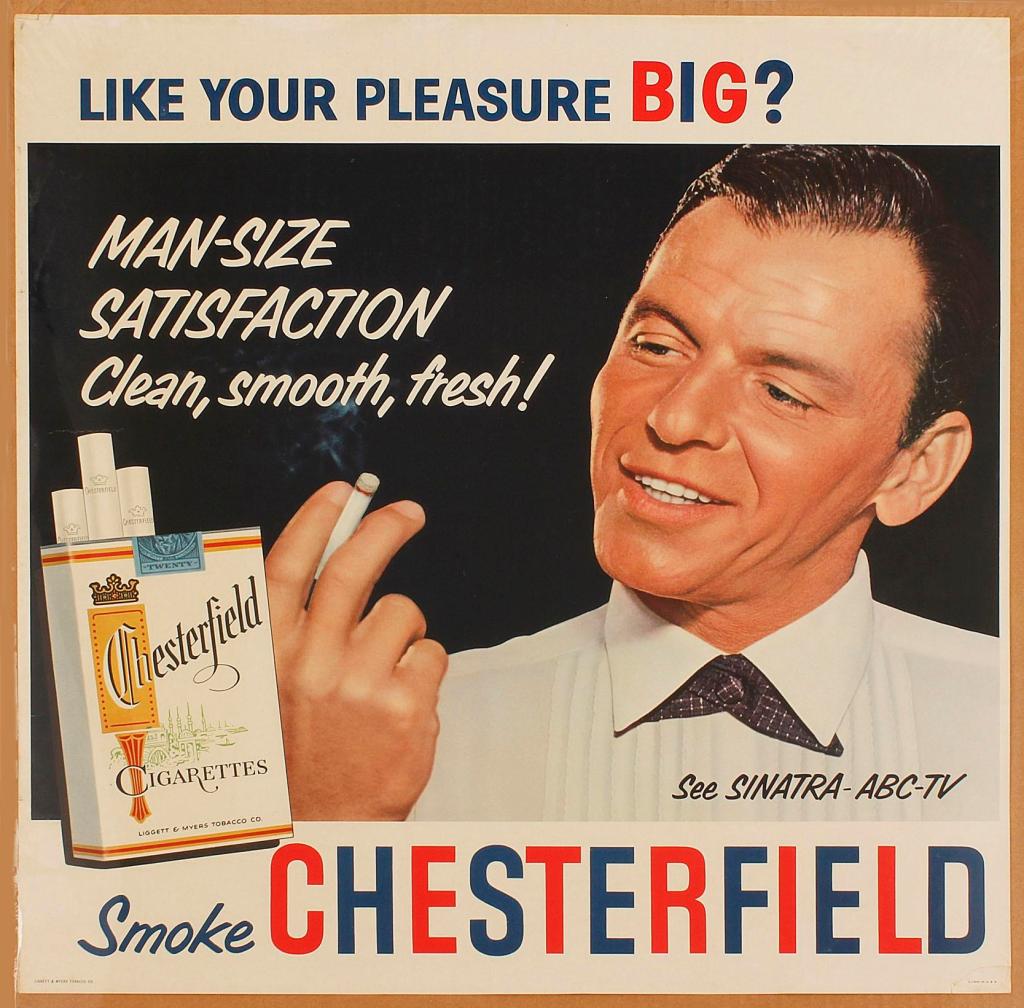
Along with his “wasteful breakfast” (contents unspecified), Bond orders a carton of Chesterfield cigarettes from room service. This is the same brand Leiter smoked in Casino Royale and Bond smoked in Live and Let Die. Chesterfields were launched in 1873 with a blend of Turkish and Virginia tobacco, and at the time the brand was owned by Liggett & Myers. The name comes from Chesterfield County, Virginia. Today the brand name is owned by Altria and is produced in the U.S. by Philip Morris. Chesterfields have shown up in a number of movies, including To Have and Have Not (1944), South Pacific (1958), and Breathless (1960). Rod Serling sometimes smoked Chesterfields when he appeared at the end of episodes of The Twilight Zone (1959 – 1964).
Miami Herald:
Bond reads the day’s edition of the Miami Herald with his breakfast. The Miami Evening Record was first published in 1903 when Frank B. Stoneman (father of suffragist Marjory Stoneman Douglas) moved the Orlando Record to Miami. The paper was renamed the Miami Herald in 1910. The Herald has an international edition that is available in various parts of the Caribbean and Latin America. In 1960, not long after Bond’s visit, the Herald began construction of a new headquarters overlooking Biscayne Bay. Novelist/journalist Carl Hiaasen wrote for the Miami Herald for many years. The Herald has earned numerous Pulitzers over the years.
ICBM Failure:
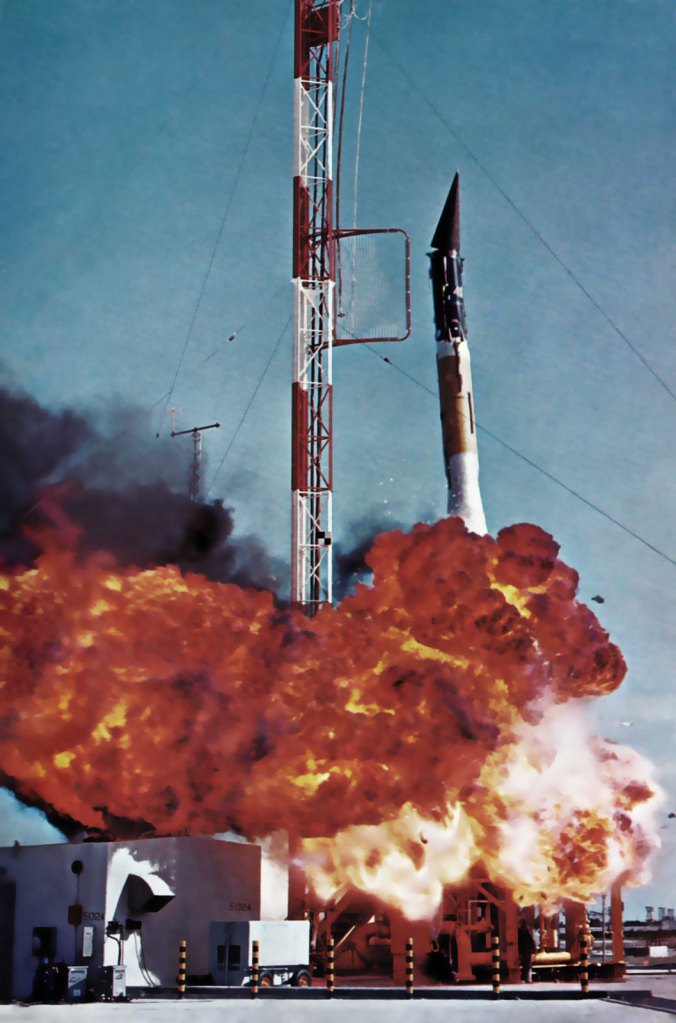
In the newspaper, Bond reads of the “failure of an American ICBM at the nearby Cape Canaveral.” Cape Canaveral is on the Atlantic Coast in central Florida. From the 1950s, a great many rockets and missiles have been launched from the Kennedy Space Center and what used to be called the Long Range Proving Ground. It’s hard to determine if Fleming refers to a specific event; I think he’s using the term “ICBM” in a broader sense than a specific type of missile. Considering that Fleming wrote Goldfinger in early 1958, he may have been recalling the December 6, 1957, launch of Vanguard TV-3, which carried a 3.3-pound satellite. The rocket ascended all of four feet before it exploded. Despite being considered a test flight, TV-3 was a very public failure.
Hialeah:
Bond also reads of “a bad upset in a big race at Hialeah.” Hialeah Park Race Track opened for horse racing in 1932 in the town of Hialeah, in south Florida’s Miami-Dade County. Hialeah hosted numerous thoroughbred races at various times in its history.
Scale of Cheating:
“If Goldfinger cheated at cards, although he didn’t need the money, it was certain that he had also made himself rich by cheating or sharp practices in a much bigger scale.” Goldfinger could have simply formed a corporation, which is a legal structure designed for large-scale cheating. But if Bond’s opinion seems like a stretch, just read about the obsessive rule-breaking and self-entitlement of 21st century oligarchs. (Careless People by Sarah Wynn-Williams is a possible starting point.)
Short Arm Delivery:
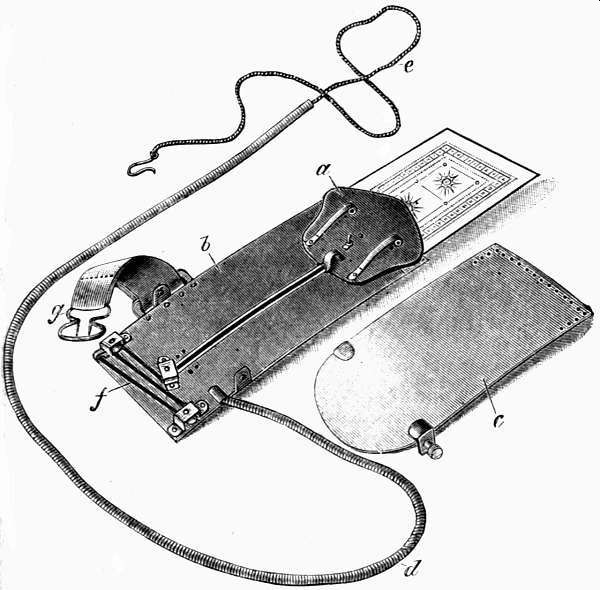
Anticipating how Goldfinger might be cheating at canasta, Bond speculates that he might carry “the apparatus for the Short Arm Delivery.” I can’t find anything on the specific term “short arm delivery,” but this is probably a holdout device. Holdout devices come in a variety of designs, but typically allow a card player to conceal a specific card, often up their sleeve, so the card can be easily retrieved for play at the optimal time. One of the best known holdout devices was developed by P. J. Kepplinger in the late 1800s.
Goldfinger:
We finally meet our villain, Auric Goldfinger. Legend has it that the name comes from architect Ernő Goldfinger (1902 – 1987), who was born in Hungary but lived in the UK much of his life. Both Goldfingers were Jewish immigrants from Eastern Europe. Fleming didn’t like Goldfinger’s modernist style, particularly a collection of three attached homes at 2 Willow Road in Hampstead, London, which required the destruction of more traditional cottages. When Ernő Goldfinger learned he was the inspiration for a Bond villain, he tried to stop publication of the novel, but without success. Supposedly, the architect was thereafter the victim of crank calls by people pretending to be Sean Connery. The actual character of Goldfinger, however, was perhaps influenced by Charles W. Engelhard Jr (1917 – 1971), a U.S. businessman who was prominent in thoroughbred horse racing and the mining and refining of metals, including gold. Apparently Engelhard, unlike Ernő Goldfinger, was pleased with the association.

Huntercombe:
Goldfinger quickly brings up the topic of golf and it’s established that Bond plays at Huntercombe, located about 40 miles west of London near Henley-on-Thames. Ian Fleming was a long-time member of Huntercombe Golf Club, which opened in 1901. The course was designed by Open Championship winner Willie Park Jr (1864 – 1925) and has changed little since then. Bond and Goldfinger both have a nine handicap, as Fleming did.
Royal St. Marks:
Goldfinger plays golf at the fictional Royal St. Marks, which was based on Royal St. George’s Golf Club in Sandwich, Kent, in southeastern England near the English Channel. St. George’s opened in 1887. U.S.-born Jack Nicklaus won the club’s amateur Challenge Cup tournament in 1959. Ian Fleming was Captain-elect of St. George’s at the time of his death in 1964.
Short Men:
As is typical with Bond villains, Goldfinger has an unpleasant appearance. He is described with “everything was out of proportion.” He is about five feet tall, has a “thick body” with “peasant legs” and an “exactly round head.” And Bond is immediately biased. “Bond always mistrusted short men. They grew up from childhood with an inferiority complex. … It was the short men that caused all the trouble in the world.” The bias is reinforced by the fact that Goldfinger’s role as the antagonist is already understood, thereby justifying Bond’s discriminatory attitude.
Mechanic’s Grip:
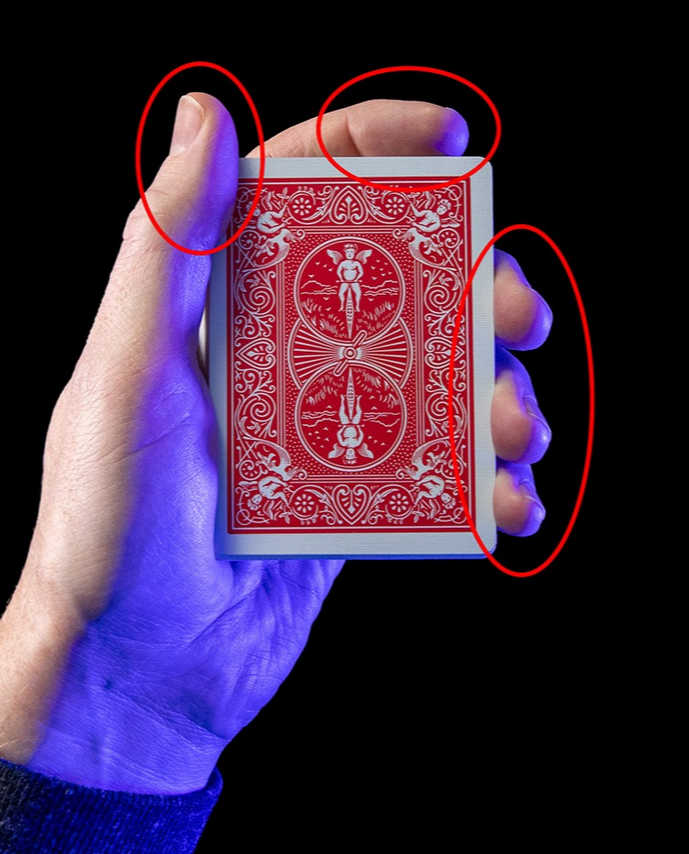
Goldfinger deals cards without using the Mechanic’s Grip, sometimes called a dealer’s grip. With the thumb on one side of the deck, three fingers on the opposite side, and the index finger at the top of the deck, the grip is often used by card cheats and magicians to select a card or view the face of the top card without others observing.
Regency Rules:
Goldfinger and Du Pont agree to play canasta by Regency rules, which presumably refers to the rules issued by the Regency Club referred to in Chapter Two.
Agoraphobia:
Goldfinger chooses the location for their canasta games – with him facing the hotel – very carefully under the guise that he suffers from agoraphobia. Agoraphobia is a disorder causing anxiety when one feels unsafe in a particular environment. It’s often associated with open spaces, but can also be triggered by crowds or anyplace that is unfamiliar. Some individuals suffer such extreme agoraphobia that they are unable to leave home. The condition is more common among those with a weakened vestibular system, the sensory system that contributes to balance and spatial orientation. The name is derived from the Greek word agora, which referred to central public gathering sites in Greek cities.
Chapter Four: Over the Barrel
Bond’s Lunch:
The trio has lunch of shrimp cocktail, snapper with tartar sauce, roast prime ribs au jus (“au jus” = “with juice” in French and refers to a broth or gravy made with the juices from the meat as it cooks), and pineapple surprise (a pineapple based dessert with many variations but often involves pineapple served in a kind of cobbler or casserole with butter, flour, sugar, and spices).
Leica:

Bond prepares some gear with which to observe Goldfinger, including a Leica M3 camera. Leica was a German camera and optics company originally named Leitz after its founder, Ernst Leitz. The company was founded in 1869, introduced its first 35mm production camera models in the 1920s, and had a reputation for top-quality lenses. Ernst Leitz II (1871 – 1956), who took over the company in 1920, helped Jews escape Germany after Hitler came to power in the 1930s. Thankfully for the Allies, Leica was positioned in West Germany after World War II, thereby making it more practical for the Secret Service to supply agents with Leica cameras. Bond used a Leica in Moonraker but no model was specified. The M3 was a 35mm rangefinder camera produced from 1954 – 1967. Despite the out-of-order numbering, the M3 was the first of a series of M cameras sold by Leica.
MC Light Meter:
007 also uses an MC Light Meter, which, like the camera, was a Leica product. A light meter, as the name implies, is a light-measuring device photographers use to determine the desired shutter speed and aperture setting. So far I’m unable to find much on this specific product, but it appears that Leica introduced their light meter line in the early 1950s.
K2 Filter:
Photographers sometimes use lens filters to affect the color balance or light quality of their images. A K2 filter is a yellow filter often used in black-and-white photography that darkens blues but gives a lighter shade to other colors.
Flash Bulbs:

Bond is using 1950s flash photography technology, a flash holder and bulbs. Flash bulbs used magnesium filaments in oxygen-filled glass bulbs; the filaments were ignited when the camera shutter was triggered. The first flash bulbs were produced in Germany in the 1920s. The bulbs were single-use as they basically contained a small explosion.
The Bible:
Bond’s gun is hidden in a cut-out book, specifically The Bible Designed to Be Read as Literature. I believe this is really The Bible: Designed to Be Read as Living Literature, first published in 1936 by Ernest Sutherland Bates (1879 – 1939). Bates was an English and philosophy professor and writer best known for co-writing a biography of Mary Baker Eddy, founder of the Christian Science church. Despite the name, many Christian Scientists are hardcore wingnuts who believe, for example, that illness is the fault of the victim and should be treated by prayer rather than medical science. I can’t find much on The Bible: Designed to Be Read as Living Literature, but it seems to have been an attempt to make the Bible (Old and New Testaments) more easily accessible to contemporary readers. The irony of hiding a gun in a book that has been used to justify so much violence seems obvious, though I can’t guarantee that’s what Fleming intended. Recall that Red Grant hid a gun in a cut-out copy of Tolstoy‘s War and Peace in From Russia with Love.
Walther PPK:
Bond is carrying the Walther PPK that M forced on him in Doctor No. There have been several models of the Walther PP, a semi-automatic pistol developed by German firm Carl Walther GmbH Sportwaffen, founded in 1886. The initial PP was introduced in 1929; PP = polizeipistole, or police pistol. The PPK was introduced in 1931, designed for increased concealability with shorter grip, barrel, and frame. PPK = polizeipistole kriminal, or police pistol criminal, though “kriminalamt” refers to a crime investigation unit. Hitler used a PPK when he took his own life in 1945.
Berns Martin Holster:
The Berns Martin Holster Bond uses came with the Walther PPK. Based on the description in Doctor No, this is the Berns-Martin Lightnin’ holster, widely used by U.S. law enforcement during the 1950s – 1970s. The original Berns-Martin holster was developed in the 1930s by two members of the U.S. Navy Rifle Team, J.E. Berns and Jack Martin.
Worsted Suit:
007 goes to Goldfinger’s suite wearing a dark blue tropical worsted suit. “Worsted” fabric is wool that has been processed to be less fuzzy, flatter, than regular wool.
Camel Hair Coat:
Entering Goldfinger’s room, Bond notices, among other things, a camel hair coat. The term these days sometimes refers to a coat of a particular brown/beige color, but true camel-hair coats are made with a blend of actual camel fur, which has strong insulating properties.
Jill Masterson:
We will learn her name later, but now we meet Goldfinger’s assistant Jill Masterson.
Pinkerton:
Bond assures Masterson that he doesn’t work for the Miami Police Department or Pinkerton. The private security and investigative agency Pinkerton was founded in 1850. The business was formed by Allan Pinkerton (1819 – 1884), a cooper who became Chicago’s first police detective in 1849, and Chicago attorney Edward Rucker (who seems to have had little to do with the business). Pinkerton was hired in 1861 to escort President-elect Abraham Lincoln, already threatened with assassination, from Illinois to Washington, DC. Lincoln was accompanied by Pinkerton detective Kate Warne (1833 – 1868) during an overnight train journey from Philadelphia to DC. Warne remained awake the entire time, giving rise to Pinkerton’s early slogan, “We never sleep,” which was mentioned by Felix Leiter when we learned that he was a Pinkerton detective in Diamonds Are Forever.
Purchasing Power:
Masterson describes the privilege of the wealthy in bending, or breaking, the rules the rest of us are subject to when he says that Goldfinger “can buy anyone off. No one can resist gold.”
Claddagh Ring:
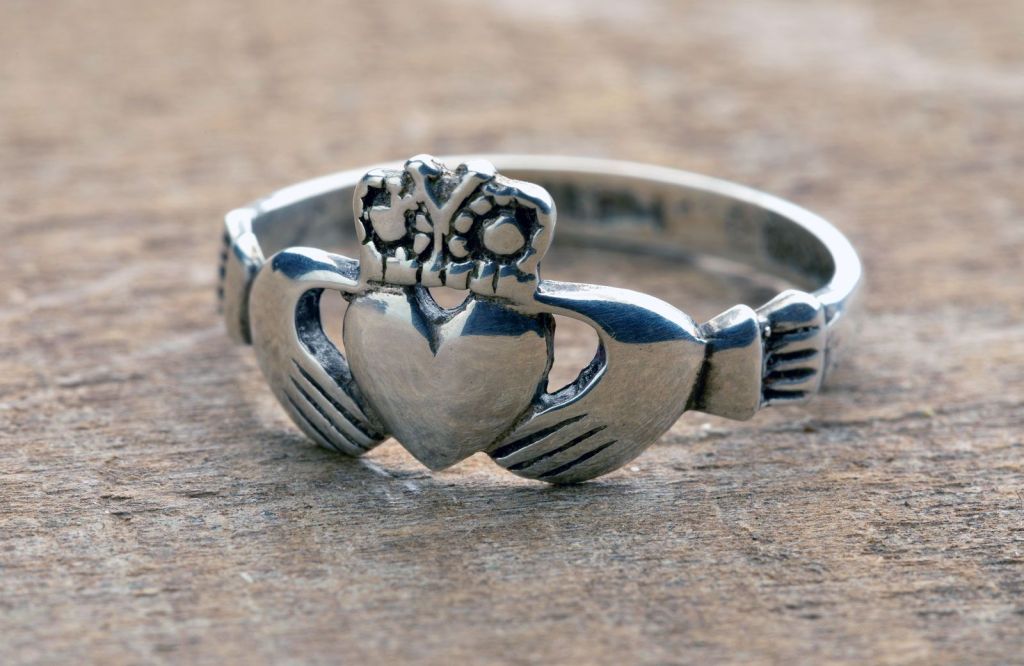
Masterson wears a Claddagh ring, a traditional Irish ring that generally has a pair of hands (friendship) clasping a heart (love) and a crown (loyalty). The design originated in the 17th century in Claddagh, a village in County Galway. They were popular as engagement rings and wedding rings in Europe during the medieval and Renaissance periods. President and Mrs. Kennedy were given Claddagh rings during a 1963 trip to Galway.
Masterson’s Warning:
There’s a point in most Bond novels when Bond ignores a warning of danger ahead. This time the warning comes in an obvious form from Jill Masterson when she expresses fear for her safety after Bond exposes Goldfinger’s cheating. “Can’t you leave him alone? I don’t know what he’ll do to me. Please.”
Silver Meteor:
Rather than fly to New York, Bond instructs Goldfinger to book him on the Silver Meteor. In Live and Let Die, 007 took the fictional Silver Phantom train from New York to Miami. But it was based on the Silver Meteor, first operated by the Seaboard Air Line Railroad in 1939. With a somewhat revised route, the Silver Meteor is still operated by Amtrak. Service was suspended for a while during the peak of the Covid-19 pandemic but has since been restored.
Chapter Five: Night Duty
Regent’s Park:
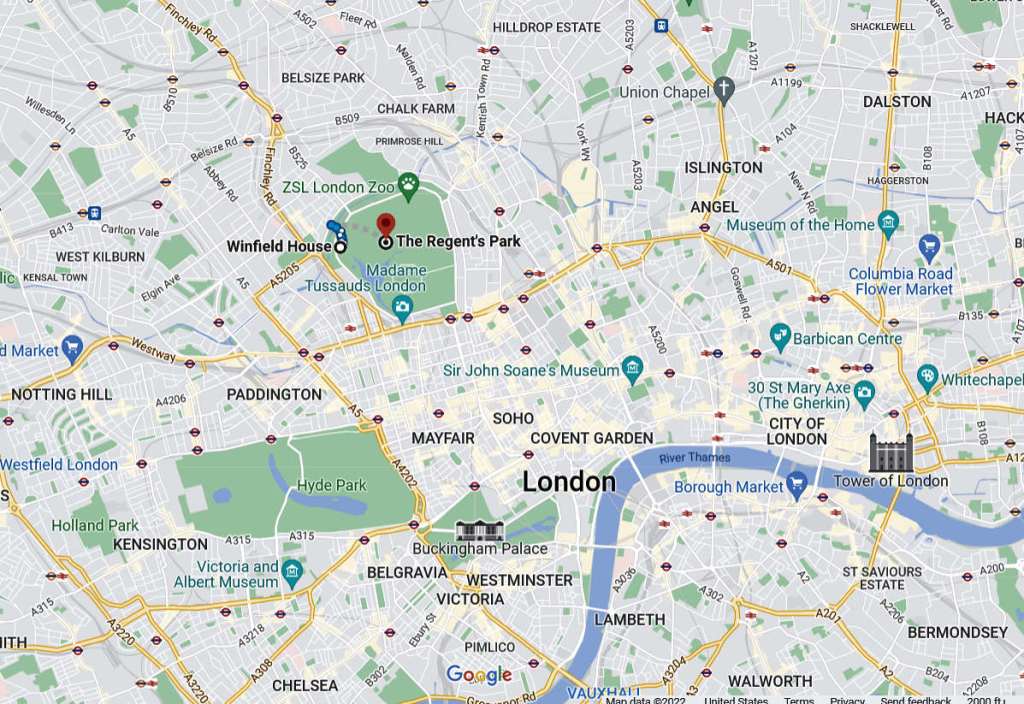
Bond endures a night shift as the duty officer in the Secret Service headquarters overlooking Regent’s Park in London. (Bond is working on the seventh floor.) Regent’s Park is 410 acres and a convenient location for the Secret Service, home to Winfield House, which was occupied by the Royal Air Force during World War II and in 1955 became residence for the U.S. ambassador to the UK. Bedford College was also located there in the 1950s, and five London Underground stations are located in or very near the park. I can find no evidence that the Secret Service was actually headquartered there, though it appears that the Special Operations Branch once occupied a building nearby.
Big Ben:
Big Ben is audible from Bond’s office and the clock strikes 3AM. It seems surprising that this is the first time Big Ben has been mentioned in a Bond novel. Big Ben was the clock tower in Westminster in central London, overlooking the Thames. Originally called the Clock Tower – “Big Ben” is technically the name of the tower bell and the name was applied to the tower over the years – it is part of the Palace of Westminster that was constructed in the 1840s. In 2012 the official name was changed to Elizabeth Tower in honor of Queen Elizabeth II (1926 – 2022).
Station H:
Bond receives a call from Station H in Hong Kong. Hong Kong was a Chinese territory but became a British colony in the early 1840s after the First Opium War, wherein the British were pro-opium. Japan controlled the island during World War II, but Hong Kong was still a British territory during Bond’s time. Despite disagreement among inhabitants whether they favored the Republic of China or the Chinese Communist Party, Hong Kong gradually became an important location for finance and shipping. Hong Kong was returned to Chinese control in 1997.
Dickson 279:
We never see him, but Bond has a brief call with Dickson, later identified by the number 279, who is presumably Chief of Station H.
Limpet Mines:
Station H is calling to request limpet mines, “mangoes” in the current code-speak. A limpet mine is a mine that is attached to its target with magnets; for example, a diver could attach the mine to a ship or submarine. They were first used by the British in World War II. Bond used a limpet mine in Live and Let Die.
Junks:
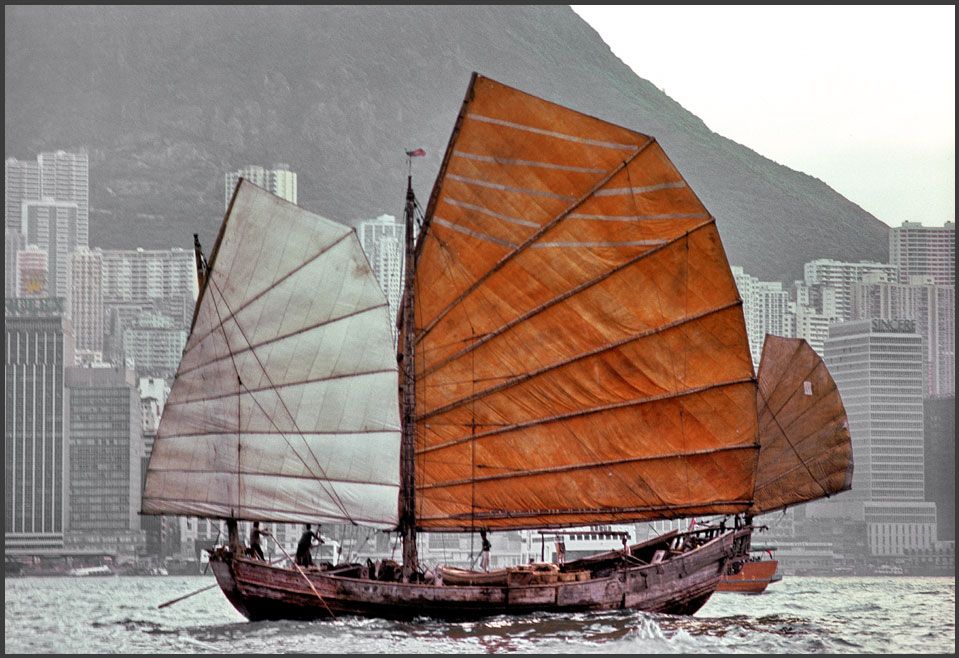
The limpet mines are to be used on “Communist spy junks” that are interfering with British freighters. A junk is a sailing vessel common in China, with a central rudder and a flat bottom.
Macao:
The junks intercepting the British freighters in Macao (often called Macau) are looking for Chinese refugees. Macau was a Portuguese colony until it was handed over to China in 1999. Macau became a path for refugees from China during and after the Chinese Civil War, fought in two phases from the 1920s through the 1940s. I can’t find much on this refugee issue, but it appears to have been a concern for China especially during the late 1950s.
Wilco:
Bond signs off the call by saying, “Wilco.” This is a common radio sign-off expression that is short for “will comply.”
Q Branch:
Bond confirms that Q Branch will arrange the needed limpet mines. We met head of Q Branch, quartermaster Major Boothroyd, in Doctor No.
BOAC Britannia:
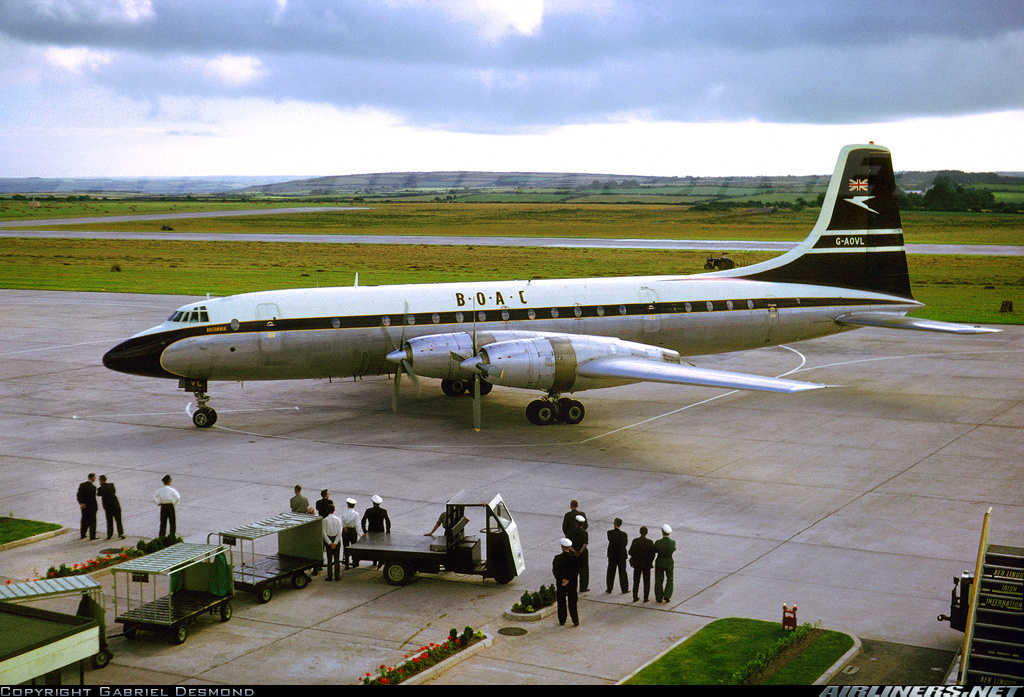
The limpet mines will be delivered on a BOAC Britannia. BOAC, British Overseas Airways Corporation, was a British government-owned airline that operated from 1939 – 1974. The airline performed a crucial function of maintaining air routes between Britain and its colonies and allied countries during World War II. BOAC was the first airline to use aircraft powered by jet engines (i.e., not propellers) in passenger service, in 1952. The Britannia is a Bristol Type 175 Britannia aircraft manufactured by the British Aeroplane Company from 1952 – 1960. Only 85 Britannias were produced because they were turboprop aircraft at the start of the jet age.
Too Many?:
Bond probably expresses Fleming’s anti-Chinese sentiments when he thinks, “He’d never liked being up against the Chinese. There were too many of them.”
M:
We finally meet M in flashback, when he assigns 007 to night duty.
Redundant:
M explains that he will be giving more administrative duties to double-0 agents because of a liaison from the Treasury who considers the department “redundant.” This is a theme that will be explored cinematically in Skyfall (2012) and Spectre (2015).
Tea or Coffee:
We know that Bond is a coffee drinker, but I believe this is the first time we get his opinion of tea, when “one of the pretty girls from the canteen” brings him some. “I don’t drink tea. I hate it. It’s mud. Moreover it’s one of the main reasons for the downfall of the British Empire.” As a fan of Yorkshire Gold tea, I find this hard to believe.
Stay Alive!:
We get the news that Bond is working on Stay Alive!, which will be “a handbook of all secret methods of unarmed combat.” It’s implied that, if approved, the book will be for use within the Secret Service and not for public purchase.
OSS, CIA, Deuxième:
Bond’s book will incorporate methods from the OSS, CIA, and Deuxième, among others. OSS was the U.S. Office of Strategic Services, an intelligence agency that operated from the 1942 to 1945, and its functions were later taken over by the INR (Bureau of Intelligence and Research) and the CIA. The Central Intelligence Agency (CIA) was established in 1947 as a foreign intelligence service equivalent to the British Secret Service or the French Deuxième. The Deuxième Bureau de l’État-major général, “Second Bureau of the General Staff,” was a French intelligence agency that monitored enemy forces. The Deuxième was dissolved in an intelligence reorganization in 1940, but the term remained in common use.
SMERSH:
As part of his research, 007 reads a SMERSH handbook called Defence. SMERSH, Smert’ shpiónam, or “Death to Spies,” was a Soviet counter-intelligence organization. The real SMERSH was active from 1943 to 1946, when its activities were absorbed by MGB. Officially, SMERSH was charged with operations in the Red Army: counter-intelligence, counter-terrorism, and investigation of suspected traitors or deserters. The agency’s primary objective was to identify and eliminate alleged German spies operating within the Red Army during World War II. At one time, SMERSH was estimated to have recruited anywhere from 1.5 to 3.4 million informants within the Red Army, giving a sense of how large the army was. About 30,000 German “spies,” some actual spies but others perhaps not, are believed to have been killed as a result of SMERSH operations. It seems that Fleming’s portrayal of SMERSH was generally discredited in later years, particularly as the agency didn’t even exist after 1946. In the late 1960s, famous wingnut L. Ron Hubbard claimed that SMERSH had taken over governments throughout the world, and you can bet he had a complicated plan to defeat them. Even Fleming’s fictional world seemed to have said goodbye to SMERSH after From Russia with Love, as the organization was not key to Doctor No, but it seems that here they are still active.
Restraint Holds:
Bond reviews a series of restraint holds, which are difficult to describe in text and are better researched via visual sources online.
Fed Up:
Bond “decided he was fed up with the variations of violent physical behavior…” Where did this come from? In the entire series so far, Bond hasn’t engaged in a great deal of hand-to-hand combat. This stems somewhat from the physical altercation on the Mexico job described in Chapter One, but really seems to reflect a greater restlessness on Bond’s part.
Pennsylvania Station:
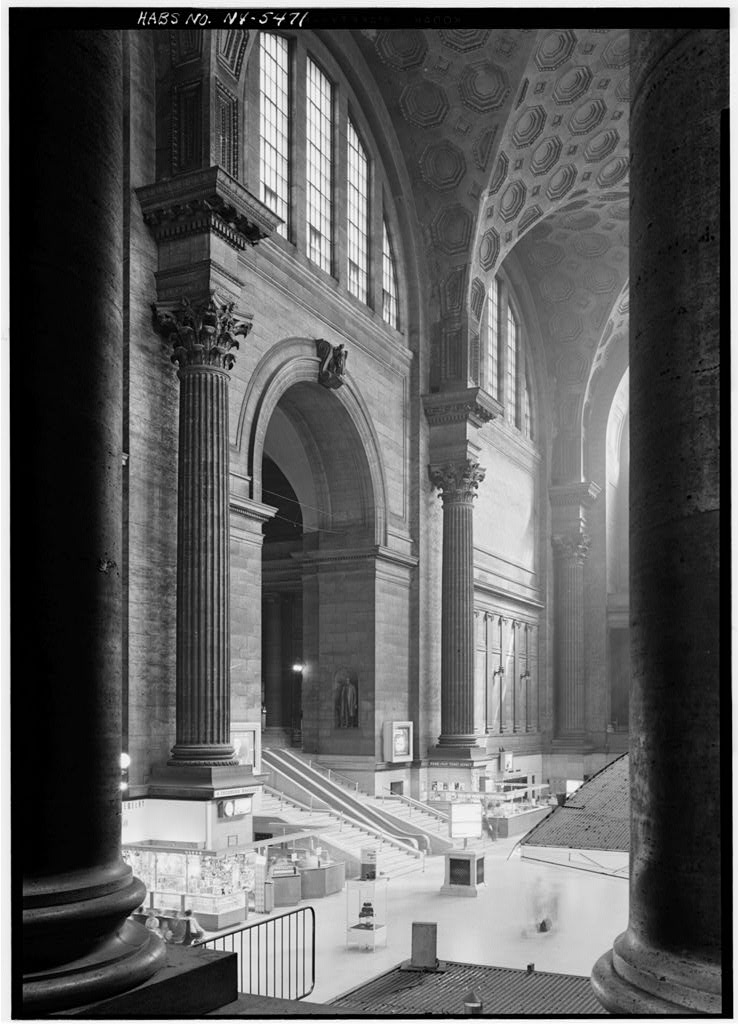
After a romantic train ride with Jill Masterson from Miami to New York City, Bond parts with Masterson at Pennsylvania Station, a station he also visited in Live and Let Die. It must have been one of the great rail stations in its day. Opened in 1910 by the Pennsylvania Railroad, Penn Station offered the largest interior space in New York City at the time. Even before Bond’s visit, passenger traffic through the station was declining, thanks to increased air travel and the development of the U.S. interstate system. The original station was demolished in the 1960s to make way for Madison Square Garden, but a new Penn Station was built and the Moynihan Train Hall expansion opened in 2011.
Some Love is Fire…:
Parting from Masterson, Bond recalls a line from a poem: “Some love is fire, some love is rust. But the finest, cleanest love is lust.” This is from The Wild Party, by Joseph Moncure March (1899 – 1977), and published in 1926. The poem was considered lewd and banned in some areas. Bond’s memory is slightly off, as the poem actually says, “But the fiercest, cleanest love is lust.”
Saint Augustine:
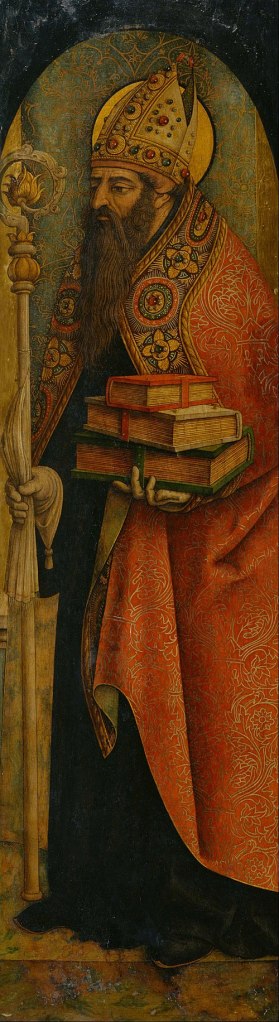
Bond also recalls a quote from Saint Augustine, and again Bond’s memory is flawed. The actual quote is: “Grant me chastity and continence, but not yet.” Augustine of Hippo (354 – 430) was an influential Western thinker and contributed greatly to present-day concepts of original sin and the just war theory. The chastity quote was motivated by the end of a romantic affair, the result of Augustine’s mother arranging what she considered a “proper” marriage for her son.
C.I.D.:
Trying to learn more about Goldfinger, 007 is offered a search by C.I.D. Records. C.I.D. = Criminal Investigation Division (or Department), which is essentially what the name implies.
Identicast:
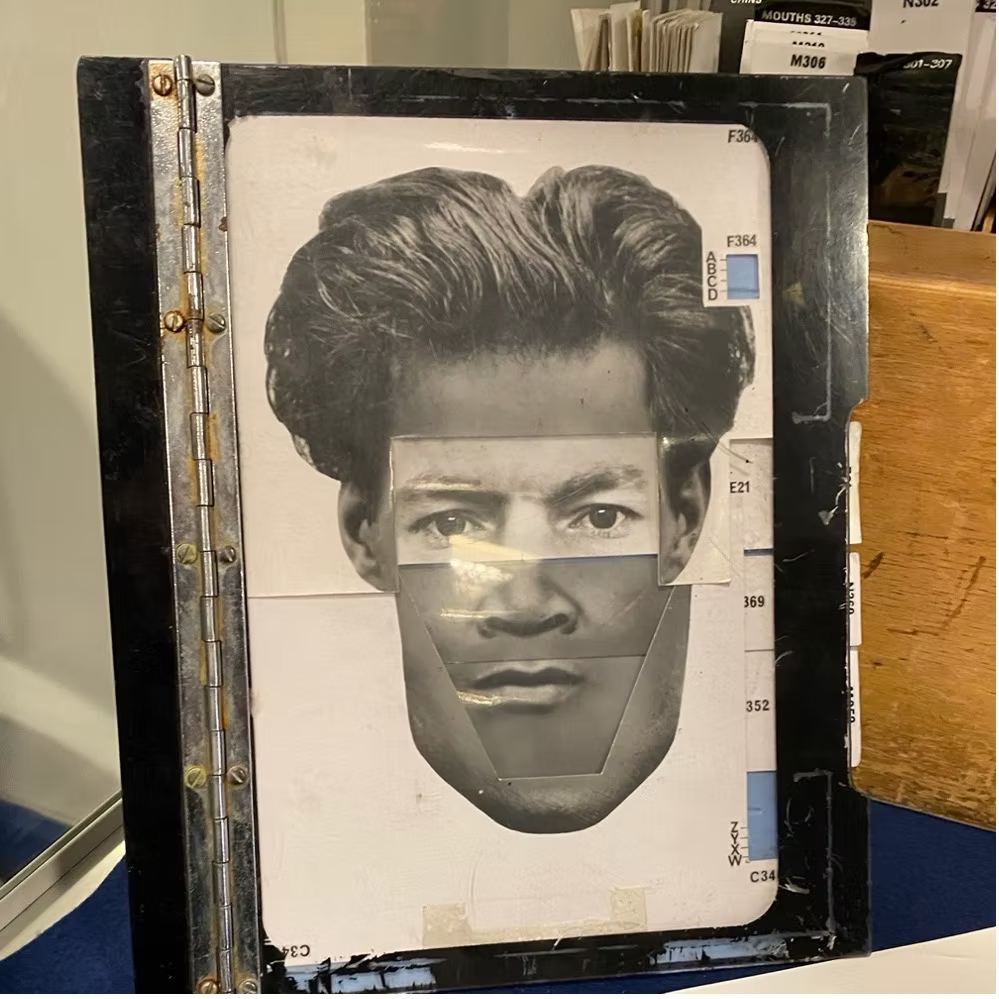
Bond assembles an illustration of Goldfinger using the Identicast, “a machine for building up an approximate picture of a suspect,” creating a composite facial image from a database of head shapes, sizes, hairstyles, eye shapes, etc. The real-life version of the Identicast is the Identi-Kit, which operated in a similar manner. A Web search indicates some disagreement about who actually developed the premise behind the Identi-Kit, but the technology is generally credited to Los Angeles police officers Hugh McDonald and Harry Rogers in 1959, the same year Goldfinger was published. The device will be called an Identigraph in the film For Your Eyes Only (1981).
Eighth Floor:
Bond is called up to M’s office, on the eighth and top floor of headquarters.
Governor of the Bank of England:
M tells Bond about an enlightening meeting with the Governor of the Bank of England. The Governor is the senior-most officer of the Bank of England, the UK’s central bank and the second oldest bank in the world. The Governor also serves as chairman of the bank’s Monetary Policy Committee, and has considerable influence on the UK’s economic policies. The real Governor of the Bank of England in 1959 was Cameron Cobbold, 1st Baron Cobbold (1904 – 1987).
Italian Sovereigns:
M refers to a Beirut scandal involving dollar balances, and I’m unable to find details about that case. However, M also mentions counterfeiting of British gold sovereign coins by some Italians. This first came to light in 1952 when an appeals court refused to extradite a pair of Italian counterfeiters. Many of the fake coins were being circulated through Switzerland. The involvement of courts and law enforcement personnel in three countries caused the situation to drag on for years, and the counterfeiting was still a problem in 1959.
Rich People:
M asks Bond to identify England’s wealthiest people, and Bond drops some real names: Sassoon, a Baghdad family that profited heavily from the opium trade and some of whose members migrated to England (no clue which specific Sassoon Bond refers to, perhaps hotelier Sir Victor (1881 – 1961)); Sir John Ellerman, 2nd Baronet (1909 – 1973), who carried on the shipping business founded by his father and was sometimes actually referred to as the richest man in Britain; Lord Cowdray, who is possibly John Pearson, 3rd Viscount Cowdray (1910 – 1995), chairman of a prominent civil engineering and manufacturing conglomerate; banking families the Rothschilds, Barings, and Hambros; John Williamson (1907 – 1958), a Canadian geologist who “established” the Williamson Diamond Mine in Tanzania, which has been in operation since 1940; and Harry Oppenheimer (1908 – 2000), a South African businessman prominent in mining and diamonds.
White Cross Fund:
M chastises Bond for giving the gambling winnings from Goldfinger to Jill Masterson instead of the White Cross Fund, a fund “for the families of Secret Service men and women who were killed on duty.” So far I’m unable to find any specifics on such a fund, though we can easily imagine why Bond didn’t think of this, what with him having no immediate family.
Victorian Soul:
M also disapproves of Bond’s womanizing because, “It was anathema to his Victorian soul.” The British Victorian era corresponds approximately to the reign of Queen Victoria (1819 – 1901), from 1837 to 1901. It was a time of relative prosperity for many but also great inequality, when Britain was the world’s dominant country. An evangelical movement led to more attention on moral and cultural behavior. While the Victorian era was probably not as prudish as Fleming would have us believe, male sexuality was granted much more permissiveness than female sexuality. During the 1860s to 1880s, for example, women even suspected of prostitution might be forced to undergo exams for sexually transmitted diseases, more for the protection of men than women.
Blades:
M claims to have seen Goldfinger at Blades, the gentlemen’s club featured so prominently in Moonraker. Since Blades members were clearly the cream of the British economic crop, I’m a little surprised that Goldfinger would draw that kind of attention to himself.
Chapter Six: Talk of Gold
Boris Anrep:
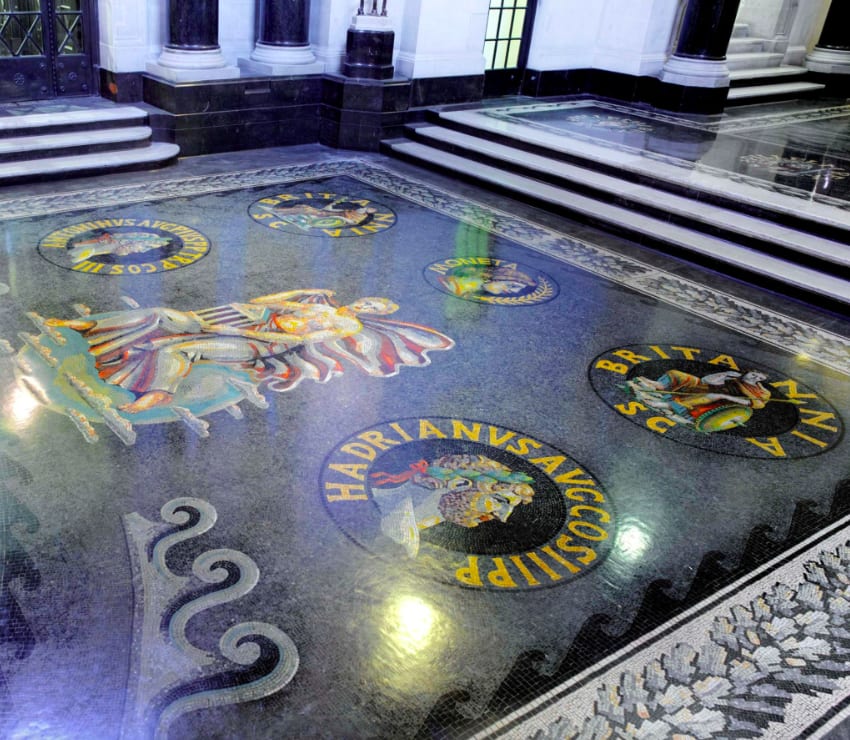
The floor of the lobby of the Bank of England is decorated with a mosaic by Russian artist Boris Anrep (1883 – 1969). Anrep specialized in mosaics, and his work still graces the Bank of England’s floor. His mosaics can also be found in London’s National Gallery, Westminster Cathedral, and Ireland’s Christ the King Cathedral.
Hopton Wood Stone:
The Bank of England is also decorated with Hopton Wood stone. This is a type of limestone that has an appearance similar to marble and is quarried near Middleton-by-Wirksworth, Derbyshire in England. The limestone is suitable for carving and is found throughout England in buildings, sculptures, and tombstones.
Adam Style:
A corridor in the Bank of England features an “Adam’s window,” presumably a window in the Adam style. The Adam style was established by Scottish architect William Adam (1689 – 1748) and his sons Robert (1728 – 1792) and James (1732 – 1794). It was a neoclassical architecture and design style featuring curved walls and domes, elaborate plasterwork, and innovative color schemes. It was a significant influence on the Federal style practiced in the U.S. Windows became larger during this period because of the availability of larger panes of glass. A type of window sometimes used in the Adam style involved a central arched window with two smaller windows on the sides.
Wilton Carpet:
The Bank of England hallway has a Wilton carpet, as did Dr. No’s hideout. Named after the town of Wilton in southwestern England, a hub of carpet manufacturing since the 1700s, Wilton is a pile carpet created on a wire loom and is generally of very good quality.
Double First:
At the bank, Bond meets a secretary who “looked as if she had once taken a double first.” I’m not entirely sure how that looks, but undergraduate degree programs are sometimes divided into two parts, prelims or moderations, and finals. A “double first” often refers to a student who earns first-class honors in both parts of the degree program.
Colonel Smithers:
Bond meets Colonel Smithers, the Bank of England’s gold expert, who shares Bond’s interest in Goldfinger’s gold obsession.
Senior Service:
Smithers offers Bond a Senior Service cigarette. The Senior Service brand was established in Britain in 1925. Manufacturing of the cigarettes was moved out of England in 1999 and the brand is not currently available in the UK.
Other People’s Secrets:
When Smithers reminds 007 of the need for secrecy, Bond offers an interesting insight: “Other people’s secrets are never quite as important as one’s own.” Is this the entire basis of the Secret Service?
Gold-Backed Currencies:
Smithers describes gold-backed currency as “the foundation of our international credit.” The so-called “gold standard” was the basis for much of the global monetary system during the late 1800s and various parts of the 1900s. The Bretton Woods Agreement, joined by 44 countries (including the U.S.) at the end of World War II, guaranteed that other currencies could be converted to U.S. dollars and that U.S. dollars could be converted to gold bullion. The Nixon Administration unilaterally departed the agreement in 1971, effectively ending the gold standard.
Gold Properties:
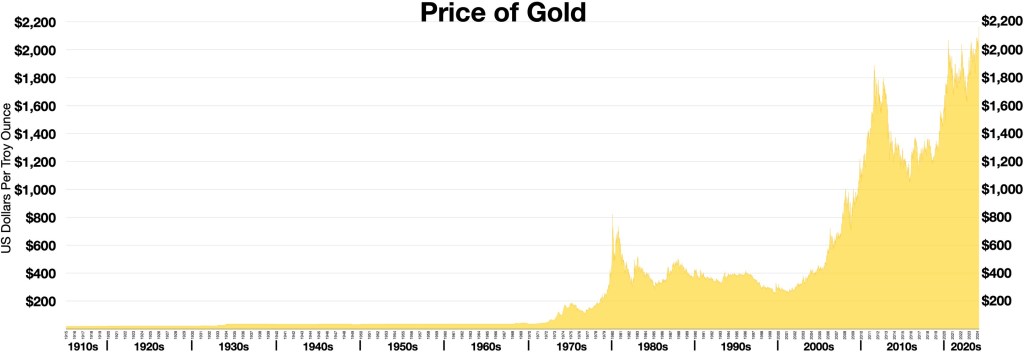
While explaining gold’s many properties – brilliant, malleable, ductile, “almost” unalterable, dense, but too soft – Smithers reminds Bond of those people who hoard gold out of fear of national currencies or expectations of a global calamity. This is reflected in the skyrocketing value of gold since the early 1970s.
Third Gold Age:
Smithers says that the world is in the “third Gold Age with the opening up of the Orange Free State deposits.” The Orange Free State was a Boer republic that eventually became part of South Africa’s Free State province. Diamond fields were found there in the late 1800s and large amounts of gold were discovered in 1934. The first gold bar from the Orange Free State fields was formed in 1951.
Discount Houses:
Smithers’ department at the Bank is preparing for a women’s hockey match with the Discount Houses, which helped maintain liquidity in Britain’s monetary system by lending money or by serving as intermediaries between commercial lenders and borrowers.
Gymkhana:
Smithers mentions an impending annual gymkhana. Based on the context, I believe he’s talking about an organized sports tournament. “Gymkhana” often refers to social and sporting clubs in India, Thailand, and other Asian countries.
Players:
Smithers gives an example of a gold bar the size of “a couple of packets of Players.” Players cigarettes were produced by John Player & Sons. Established in Scotland in 1820, John Player bought the business in 1877 and set up shop in Nottingham in northern England. At one point, two-thirds of cigarettes sold in Britain were Players. The cigarettes were sold in decorative tins, which we saw in Moonraker.
Riga:
Goldfinger is described as a refugee from Riga, the capital and largest city of Latvia. The city was occupied by the Nazis during World War II and suffered heavy bombing. Latvia was part of the USSR in the post-war years until the collapse of the Soviet Union.
Goldfinger’s Age:
Goldfinger came to England in 1937, when he was twenty years old, meaning he was born in 1917.
Fabergé:
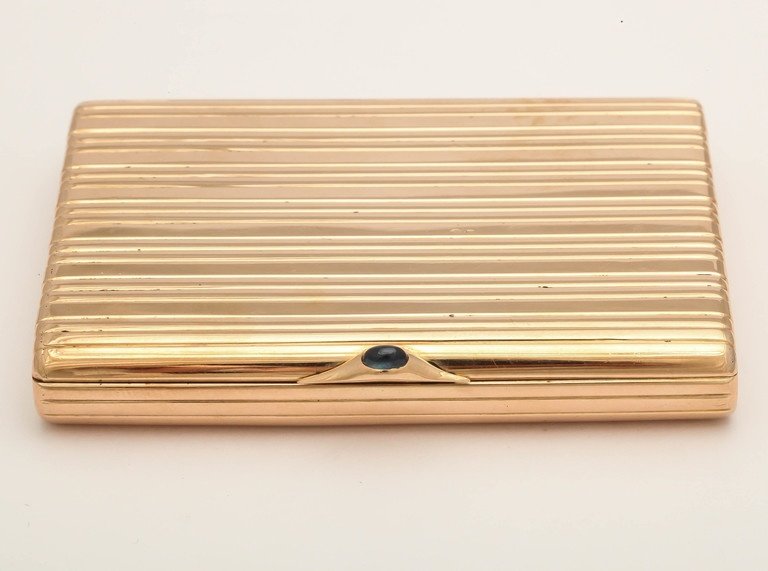
Goldfinger’s father and grandfather refined gold for Fabergé, which seems like an illustrious career to me. The House of Fabergé was founded in Russia by Gustav Fabergé (1814 – 1894) in 1842 but it was Gustav’s son Peter Carl Fabergé (1846 – 1920) who really brought the firm to prominence with the design of elaborate Fabergé eggs for Russian Tsars. They also made many other types of luxury items, including jewelry, cigarette cases, etc.
Reculver:
One of Goldfinger’s post-war actions was to buy a house in Reculver, “at the mouth of the Thames.” Reculver is a seaside village, located in the Thames Estuary, in southeast England in the county of Kent.
Brixham Trawler:
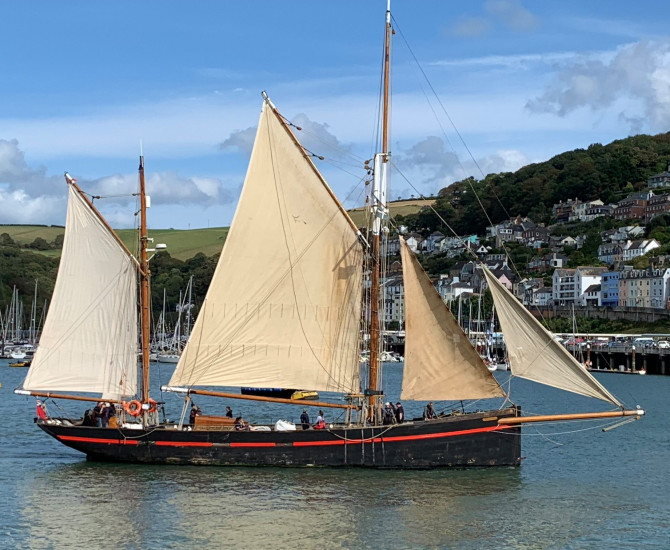
Goldfinger also invested in a Brixham trawler, a style of wooden trawler intended for deep-sea fishing. They are named for the town where they were first built in the 1800s, Brixham, in the county of Devon in southwest England.
Rolls Royce Silver Ghost:
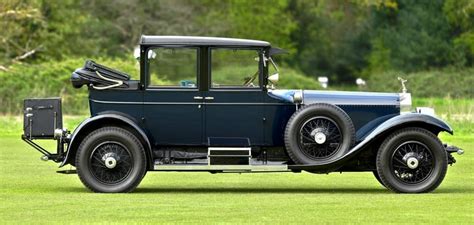
Goldfinger also purchased an armored Rolls-Royce Silver Ghost. Rolls-Royce was a luxury car and aircraft engine manufacturer founded in 1904 in Manchester, more than 200 miles northwest of London. Rolls-Royce Motors was separated from the aerospace business in 1973 and eventually BMW acquired the rights to use the Rolls-Royce trademark. The Silver Ghost originally referred to a specific Rolls chassis number (60551), built as a demonstration model in 1907. But the name was eventually applied to Rolls’ 40/50 h.p. model produced from 1906 – 1926. Fewer than 8,000 were made and some considered it the “best car in the world.”
Goodwin Sands:
Smithers reports that in 1954, Goldfinger’s trawler “went ashore on the Goodwins” after returning from India. I believe this is the Goodwin Sands, a sandbank that stretches for ten miles on the North Sea near Kent, England. The Sands are part of the same geological formation that gives rise to the White Cliffs of Dover. Because of the proximity to important shipping lanes in the Straits of Dover, as of today it’s estimated that over 2,000 ships have been lost to the Goodwin Sands. Also in 1954, the South Goodwin Lightship was lost to strong winds in the area of the Goodwin Sands, as mentioned in Moonraker.
Dover Salvage Company:
Goldfinger sold his wrecked trawler to the Dover Salvage Company, which appears to be a fictional business.
Barclays in Ramsgate:
Goldfinger is found to have a bank account of twenty thousand pounds at Barclays in Ramsgate. Barclays is a full-service multinational bank. It was founded in London in 1690 but took on the name Barclays when James Barclay, son-in-law of founder John Freame (1669 – 1745), became a partner in the bank. In 1958 Barclays became the first UK bank to appoint a female bank manager. Ramsgate is a coastal town in Kent in southeastern England. In 1940, Ramsgate Harbour was the primary assembly area for small watercraft used to evacuate British forces from Dunkirk.
Royal Bank of Canada:
Goldfinger has five million pounds worth of gold in the Royal Bank of Canada in Nassau, Bahamas. RBC was founded in Halifax, Nova Scotia, in 1864 as the Merchants Bank of Halifax. Due to expansion of operations, the name was changed to the Royal Bank of Canada in 1901. The Bahamas were still a British territory in the 1950s.
Chapter Seven: Thoughts in a D.B. III
Berlin:
Smithers talks of Russian forces obtaining currency plates for creating forgeries when they took Berlin at the end of World War II. The division of Germany into Eastern and Western nations after the war left Berlin deep in Soviet-controlled East Germany. The 1945 Potsdam Agreement divided the city into four sectors, three controlled by Western allies (U.S., UK, France) and the fourth controlled by the Soviets. Berlin was a hub of Cold War drama and intrigue until the collapse of the Berlin Wall in 1989.
Narodny Bank:
Britain tried to recover the stolen currency plates by making a request to the Narodny (Narodni) Bank. Moscow Narodny Bank was established in 1911. In 1919, the bank’s London office was reorganized into an independent, British bank called Moscow Narodny Bank Limited. After the USSR’s harsh response to the Hungarian Revolution in 1956, the Soviet government feared that assets held in the U.S. would be frozen. To protect their funds, the Soviet Union moved some assets to Moscow Narodny Bank Limited; being a British-based bank, Narodny could then deposit those funds in the U.S. without fear of losing them.
Threadneedle Street:
By the time Bond and Smithers finish their meeting, Threadneedle Street, where the Bank of England is located, is nearly deserted. The Bank has been at this location since 1734 and is sometimes referred to as “the Old Lady of Threadneedle Street.” The street is also home to a range of commercial and retail businesses.
Tube:
After his meeting at the Bank, Bond takes the Tube, or the London Underground, back to the office. The Underground is the London transit system that consists primarily of above- and below-ground rail. The first below-ground rail lines had separate private owners, and these were combined to form the Underground in the early 1900s. While I admire Bond’s conscientiousness in using public transit, it seems like a very un-Bond-like way to travel, given his love of cars and driving.
Gold vs. Work:
Confused by the complexity of the gold-currency matter, M says, “Personally I should have thought the strength of the pound depended on how hard we all worked rather than how much gold we’d got. Germans didn’t have much gold after the war. Look where they’ve got in ten years.” It’s a wise insight into how capitalism and economics, even then, had created a society that placed little value on matters of true value. Of course, M is simplifying the matter somewhat, as Germany had considerable aid from other countries during post-war reconstruction.
Redland / Tangier:
M mentions the office of the Redland Resident Director’s in Tangier catching fire. I’m at a total loss as to what this refers to. There was a Redland PLC building materials company that operated from 1919 – 1997. But I can find little about the company’s history. Tangier is in northwestern Morocco, which had become independent from France in 1956. Any leads on this would be appreciated.
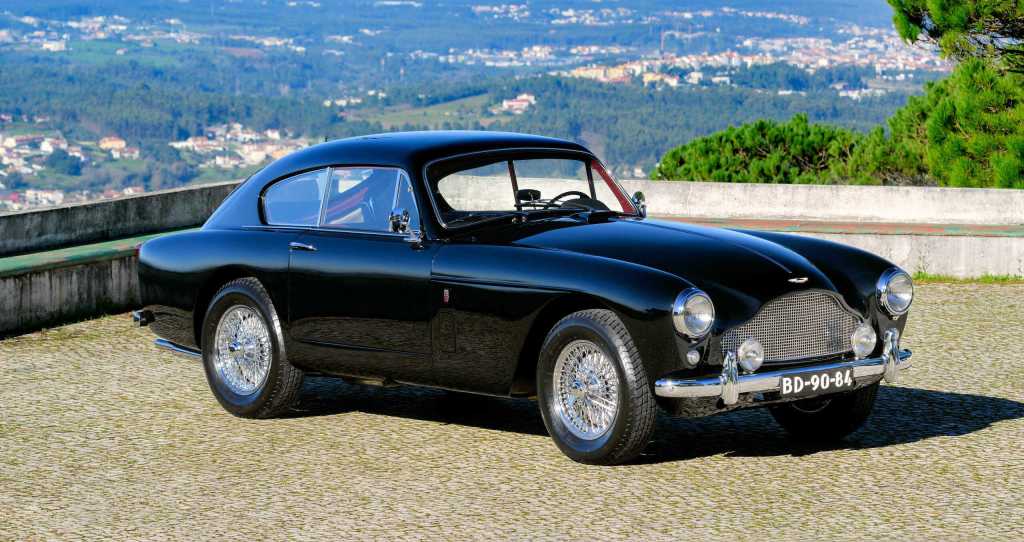
DB Mark III:
To maintain his cover, Bond drives an Aston Martin DB Mark III (the D.B. III of the chapter title) from the Secret Service pool, instead of his own car. (The Secret Service has some impressive cars on hand.) Only 551 DB Mark III’s were produced from 1957 – 1959. “DB” is in honor of Sir David Brown (1904 – 1993), who acquired Aston Martin in 1947. The DB Mark III was replaced by the DB4, which was then replaced by the DB5. Cinematic Bond drove a DB5 in Goldfinger, Thunderball, Goldeneye, Casino Royale, Skyfall, Spectre, and No Time to Die.
Morland Cigarettes:
007 brings a supply of Morland cigarettes on his road trip. The style is not specified, but we can assume these are Bond’s custom-made cigarettes with the three gold bands and made from a blend of Turkish tobacco. Morland & Co. was a real tobacconist, where Fleming bought his own custom-made cigarettes similar to Bond’s, but the company has long since gone out of business.
A2 / A20:
Bond prefers the A2 over the A20 for his easterly driving route, as it will take him through Goldfinger’s territory in Reculver. The A2 connects London with Dover on the English Channel; it approximately follows routes used by the Celts and the Romans. The newer A20 also connects London and Dover by a more southerly route.
Jaguar 3.4:
Bond’s alternative to the Aston Martin was a Jaguar 3.4, which was later referred to as the Jaguar Mark 1. The Mark 1 (it came with 2.3 or 3.4 liter engines, hence Fleming’s description) was produced from 1955 – 1959.

Triptyque:
Bond chose the Aston Martin over the Jaguar because it sports an updated triptyque (which I believe Fleming spelled triptique in Casino Royale). The triptyque was a special form offered by the Automobile Club of Switzerland that allowed motorists to cross borders without paying customs duties on their vehicle. (I’m guessing the Automobile of Switzerland is the organization known today as the Touring Club Suisse.)
Spy Car:
Bond also prefers the Aston Martin because of some special modifications, including variable front and rear lights, reinforced bumpers, a secret gun compartment, and other concealed spaces for smuggling. These features would be greatly exaggerated for the DB5 used in the film adaptation of Goldfinger.
Order of Lenin:
Bond speculates, if it’s true that Goldfinger is managing SMERSH finances, that the Soviet Union might award Goldfinger the Order of Lenin. Named after Vladimir Lenin (1870 – 1924), one of the leaders of the October Revolution, the Order of Lenin was established by the Soviet Central Committee in 1930 and was the USSR’s highest decoration awarded to civilians. The first Order of Lenin was presented to Komsoomolskaya Pravda, a daily newspaper aimed at readers aged 14 to 28. For a time, the order was also awarded for 25 years of conspicuous military service, and for this reason Rosa Klebb wore an Order of Lenin in From Russia with Love.
Goldfinger’s Motives:
Bond speculates that Goldfinger is less interested in personal financial gain than service to SMERSH. Like Drax in Moonraker, we will find that the villain’s behavior is almost entirely self-serving.
Times Agony Column:
Bond guesses that Goldfinger uses the “Agony column” of The Times to communicate with SMERSH handlers. The Times was founded in 1785 as The Daily Universal Register, then changed its name to The Times in 1788. Since 1981 The Times has been a subsidiary of the sinister News Corp. Kim Philby was a correspondent for The Times in the 1930s. The Agony column refers to personal ads, but the name originated in the 1800s, when brief reader-submitted contributions about moral indiscretions and secretive correspondence appeared on the front page of some newspapers.
Faversham Growers:
Bond’s drive takes him past “the endless orchards of the Faversham growers.” Hops are widely grown in the area and there are several breweries in Faversham, about 50 miles southeast of London, but Bond might be seeing Brogdale Farm, 150 acres of apple, pear, plum, cherry, and other fruit trees. Brogdale is one of the largest collections of fruit trees in the world.
Dutch Schuyts:
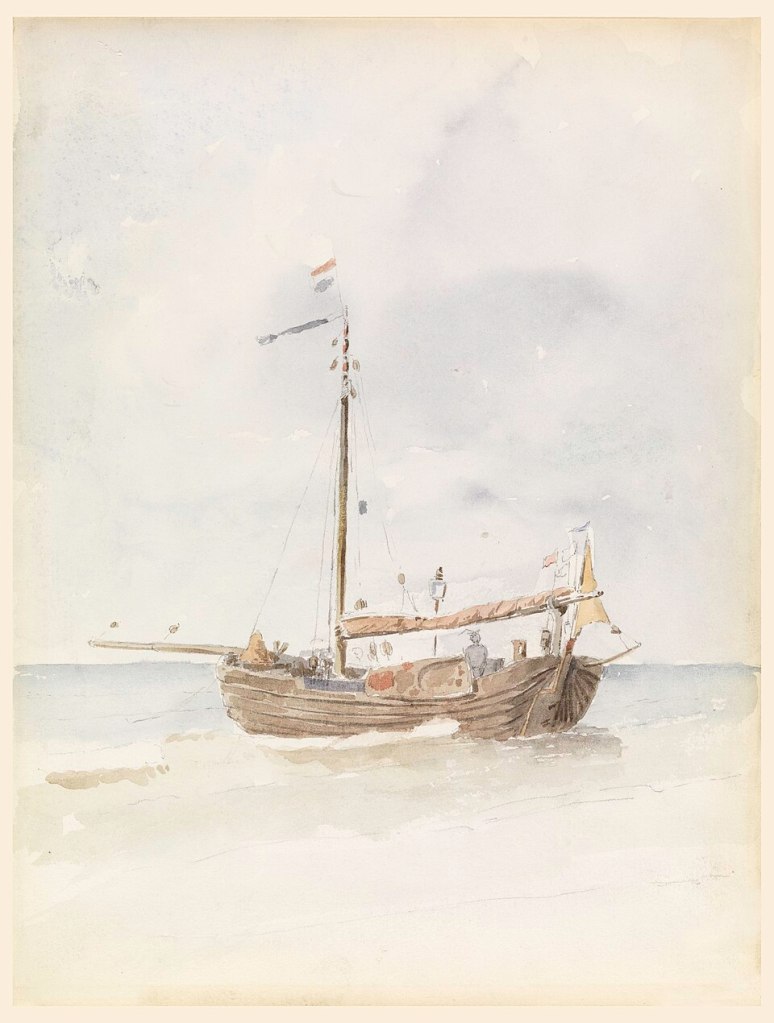
Bond observes Dutch schuyts on the Thames. Schuyts are barges designed for shallow waters, typically anywhere from 50 – 130 feet in length. They originally had sails but more modern versions are motorized.
Ford Popular:
Bond tries to pass a Ford Popular that, we will later learn, is being driven by Goldfinger’s servant Oddjob. The Popular was manufactured by Ford UK from 1953 – 1962. The car was appropriately named: because of the temporary halt to car manufacturing during World War II, and post-war quotas and restrictions on purchase and resale of new cars, the Popular sold well. The Popular’s relatively light weight also made it a hit with hot rodders in the late 1950s.

Manston:
After passing the Ford Popular, Bond notices the “howl of Manston.” Established as an air base during World War I, during World War II Manston became a forward base for the Royal Air Force and home to a jet squadron assigned to intercept German V-1 missiles launched toward London. The U.S. Air Force used Manston as an air base in the 1950s. Manston later became a civilian airport but ceased operations in 2014.
Super Sabres:
Bond observes three Super Sabres landing at Manston, signifying the U.S. presence at the air base, and in the UK and Europe in general. The North American F-100 Super Sabre was produced by North American Aviation from 1953 – 1959. It was the first USAF fighter capable of supersonic speed during level flight. F-100s were among the aircraft deployed for a possible strike against Cuba during the 1962 Cuban Missile Crisis.
Channel Packet:
Bond stays in the Channel Packet in Ramsgate, which is presumably some sort of hotel or lodge, but I’m unable to find any specifics about it.
Bond’s Lunch:
Bond has a rather plain-sounding lunch of ham sandwiches with mustard and an obligatory vodka and tonic.
Alfred Blacking:
At the Royal St. Marks golf club, we meet the resident golf pro Alfred Blacking, with whom Bond has a long and friendly history.
Kent Championship:
When Bond inquires about the Blacking family, we learn that Alfred’s son Cecil won the previous year’s Kent Championship. This might be the amateur championship at the Kent Golf Union, first held in 1925 and sponsored by a union of twenty regional golf clubs.
London Golf Courses:
Bond reflects on his long absence from Kent County golf courses while enjoying weekend golf at London courses: Huntercombe, Swinley, Sunningdale, and the Berkshire. All four are real golf courses. Huntercombe has already been mentioned. Sunningdale was the course of choice for Rufus B. Saye in Diamonds Are Forever.
Ten Pound Nassau:
When Bond plays golf, he plays “ten-pound Nassaus.” A Nassau is a three-way bet on a golf game, wagering on the front nine holes, the back nine, and the total eighteen. The name comes from Long Island’s Nassau Country Club, where the bet was first used by John B. Coles Tappan in 1900.
Goldfinger Cheats:
Since Goldfinger cheats at cards, we shouldn’t be surprised that he also cheats at golf, as described by Blacking. Remember Bond’s prediction in Chapter Three that Goldfinger “also made himself rich by cheating or sharp practices on a much bigger scale.” The rich often become convinced that they deserve special treatment, regardless of how others are affected.
Lucas Headlamps:
Goldfinger’s Silver Ghost is equipped with Lucas “King of the Road” headlamps. Lucas Industries (originally Joseph Lucas & Son) was founded in 1860 by Joseph Lucas (1834 – 1902) to produce metal products such as plant pot holders and buckets. The company expanded into ship, bicycle, and automobile components. Lucas entered the semiconductor industry in 1957. The first King of the Road Lamp was designed for bicycles in 1879. The King of the Road name was later applied to Lucas’ higher-end car headlamps, but the public came to associate the name with all of Lucas’ lamps.
Carrosserie Lines:
The Silver Ghost has “black carrosserie lines.” The French word “carrosserie” translates to “body” in English, so this just refers to the lines of the car body.
Lord Lonsdale:
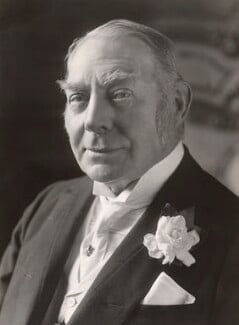
Bond compares the Silver Ghost to “the famous yellow fleet in which Lord Lonsdale had driven to the Derby and Ascot.” Hugh Lowther, 5th Earl of Lonsdale (1857 – 1944), was such a fan of the color yellow that he was known as the Yellow Earl. He was first president of the Automobile Association, the British motoring association that offers road maps, vehicle insurance, motoring advice, and other services to drivers. According to this excerpt from the Tweedland Gentlemans Club site: “As he drove down the course at Ascot [a horse racing venue] behind the King, his yellow carriages and liveried postillions made the Royal Carriages look drab and dowdy by comparison, the cheers for ‘Lordy’ as the working classes called him, were at least as loud and prolonged as those for the King.”
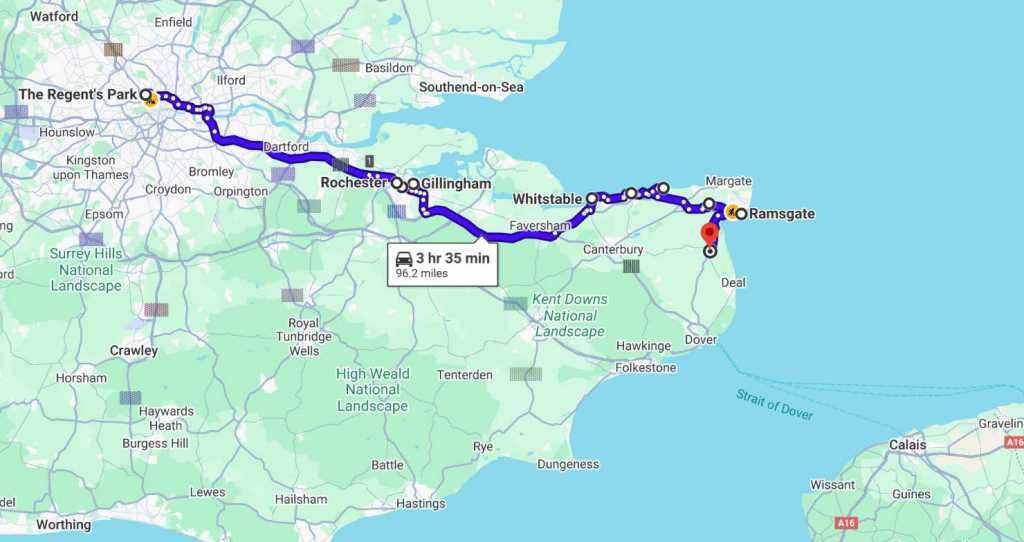
2. Coincidence
Chapter Eight: All to Play For
Sunningdale:
Bond reflects that he has a nine handicap at Sunningdale, a course already mentioned in Chapter Seven, with two 18-hole courses. Sunningdale was founded in 1900 about 30 miles west-southwest of London. In Bond’s era, Sunningdale was an occasional host of the British Masters. 007 and Bill Tanner play a round of golf at Sunningdale in the first post-Fleming Bond novel, Colonel Sun (1968) by Kingsley Amis (1922 – 1995). Ian Fleming was an avid golfer with a nine handicap and a flat swing, both of which he passed on to Bond. According to For Your Eyes Only: Ian Fleming and James Bond by Ben Macintyre: “Fleming never became a golf bore, because while he was passionate about the game he never took it too seriously.”
Penfold:
Bond plays with Penfold golf balls. Penfold Golf Ltd. manufactures a variety of golfing equipment and was founded in the UK in 1929 by Albert Ernest Penfold (1884 – 1941).
Hampton:
We briefly meet Hampton, the steward at Royal St. Marks.
Saxones:
Bond wears a pair of Saxone shoes, which I believe refers to Saxone of Scotland, founded in 1783 in Kilmarnock, about 23 miles southwest of Glasgow, though today the business is headquartered in Genova, Italy.
American / Calcutta Tournaments:
Bond believes that his wager with Goldfinger is the single biggest singles game wager in history, “except in the finals of American Championships or in the big amatuer Calcutta Sweeps.” Both terms are a little vague and don’t seem to refer to a specific tournament. The Masters Tournament, PGA Championship, and U.S. Open are the big three U.S. professional golf tournaments. A Calcutta auction is a style of sequential auction developed in Calcutta, India, and applied to contests with multiple entrants, such as golf tournaments, horse races, backgammon, and other such events. Betting participants bid to wager on each contestant one at a time.
Hawker:
We meet Hawker, Bond’s caddy for the golf game.
Calamity Jane:
Bond plays with a Calamity Jane putter, manufactured by Louisville Golf with a hickory wood shaft. It is based on a putter sold to Bobby Jones (1902 – 1971) by fellow golfer James Maiden (1881 – 1958) in 1923. Jones used the putter successfully until he retired in 1930.
Blaster:
Bond and Hawker test out a “blaster,” which is a golf club designed for tight spots like a rough or sand trap.
Dunch:
Warming up, Bond hits a “dunch,” also known as a fat hit, meaning he also struck the turf behind the ball, thereby limiting its distance.
Foulks:
We also meet Foulks, who is Goldfinger’s caddy and someone Bond is not fond of.
Ben Hogan:
Goldfinger uses a set of Ben Hogan golf clubs. Ben Hogan Golf Company was founded by pro golfer Ben Hogan (1912 – 1997) in 1953. Hogan was a perfectionist and applied these standards to his business – he once threw out an early batch of golf clubs, at a loss of $100,000, because he wasn’t satisfied with their quality. After struggling to compete with established club manufacturers, the company went through various ownership changes over the years, and today is a brand of Perry Ellis International. See more on Hogan in Chapter Twenty-Two.
Dunlop 65:
Goldfinger plays with Dunlop 65 balls, as Bond used in Diamonds Are Forever. Dunlop began as a rubber goods manufacturer in 1889 and started manufacturing golf balls in 1910. The company sponsored the Dunlop Masters golf tournament from 1946 until 1982, when it became the British Masters. The 65 was inspired by golfer Henry Cotton (1907 – 1987), who played a round of 65 strokes at the British Open Championship in 1934, which was apparently considered a “perfect” game.
Strict Rules of Golf:
Goldfinger and 007 agree to play by the “strict rules of golf,” which simply means that they will strictly observe the formal rules of the game, as written jointly by the U.S. Golf Association (USGA) and the R&A, the governing organization for golf in every country outside the U.S. and Mexico.
May:
The golf competition takes place on “a beautiful day in May,” the kind of weather Fleming loved.
Chapter Nine: The Cup and the Lip
Pegwell Bay:
Pegwell Bay is visible from parts of the golf course. Pegwell Bay is an inlet off the English Channel, situated between Ramsgate and Sandwich. It was the landing site for Roman invasions of Britain led by Julius Caesar in 55 BC and 54 BC. The area is the subject ot Pegwell Bay, Kent – a Recollection of October 5th 1858, an 1860 painting by Scottish artist William Dyce (1806 – 1864).
Homer Nods:
When Goldfinger hits a ball into a bunker, Bond is grateful that “for once Homer had nodded.” The expression “even Homer sometimes nods” means that even the most careful or conscientious individual makes mistakes. The reference comes from the poems of Homer (8th century BC), which contain significant continuity errors.
Philip Scrutton:
Struggling to compete with Goldfinger, Bond recalls the same course being played by Philip Scrutton (1923 – 1958). Scrutton was an English amateur golfer who, in 1952, won both the Brabazon and Berkshire Trophies, prizes for, respectively, the English Men’s Open Amateur Stroke Play Championship and the Berkshire Golf Club amateur stroke play championship. (In the specific game remembered by Bond, Scrutton was competing for the Gold Bowl, which appears to be a fictional trophy.)
Chapter Ten: Up at the Grange
The Grange:
Goldfinger’s residence is referred to as The Grange. A grange is typically a country house with farm-related outbuildings, but it can also be a local farming association. It’s an odd choice of a name for someone like Goldfinger.
Lydd Air Ferry:
Goldfinger is traveling to France via the Lydd Air Ferry. Lydd is the southernmost town in Kent. I can’t find a definite source for the air ferry, but Silver City Airways operated an air ferry service across the English Channel beginning in the late 1940s, transporting both passengers and their motor vehicles.
Oddjob:
We finally meet Goldfinger’s driver and general assistant, the infamous Oddjob. Fleming’s racism is transparent in his animalistic description of the Korean character, and like many Bond villains, Oddjob has a physical disfigurement, in this case a cleft palate (see Chapter Eleven).
Koreans:
Bond’s opinion of Oddjob is: “This Korean matched up with what he had always heard about Koreans…” Thankfully, “what he had always heard” is not spelled out, but given Fleming’s/Bond’s history, we can imagine it isn’t positive.
Knole Sofa:
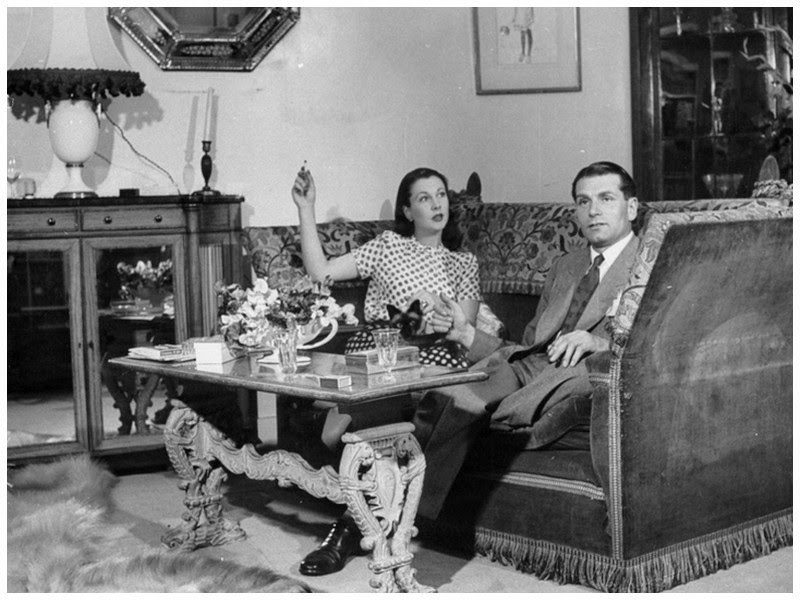
Goldfinger’s living room is decorated with a Knole sofa. The original Knole sofa was built in approximately 1640 and today sits in the historic Knole country house in Kent. Originally designed for the seating of a royal pair – a king and queen, for example – Knole sofas often have side arms as high as the back, with deep seating.
Rothschildian Furniture:
Goldfinger’s living room is also stocked with “Rothschildian” decor. The “Rothschild taste” is an interior design style inspired by the Rothschild banking family in the 1800s. The style developed in Britain, France, Austria, and Germany, and was a big influence on the U.S. Gilded Age and the powerful Astor, Vanderbilt, and Rockefeller families. The style includes heavy fabrics, gilding, stucco ceilings, and French furniture from, or influenced by, the 1700s.
Second Empire:
The specific furnishings of the room are of the Second Empire. Second Empire Style is sometimes described as the Napoleon III Style or Haussmann Style. The Second French Empire refers to the French government from 1852, when Napoleon Bonaparte declared himself Emperor Napoleon III, until the Franco-Prussian War of 1870 and the rise of the French Third Republic.
Indian Clubs:
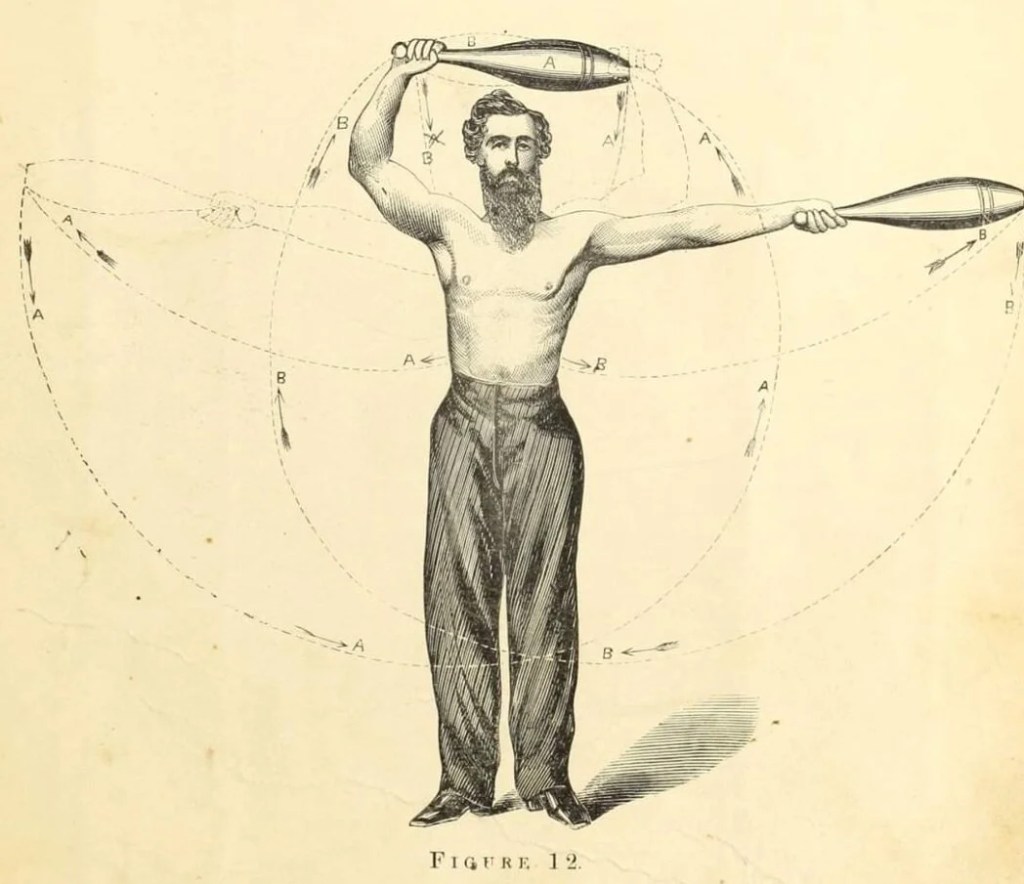
During his examination of Goldfinger’s house, Bond finds exercise equipment, including Indian clubs, in the bathroom. Indian clubs are resistance exercise equipment shaped somewhat like bowling pins or juggling clubs. They come in various sizes/weights and are often used in group exercise routines. They were first used in India and Persia and got their name from British colonists to Indian in the 1800s.
Rallie Health Belt:
Goldfinger’s fitness equipment includes a “Ralli Health Belt.” Rallie Health Applicances of London manufactured what looks like a medieval torture device, according to this listing from the Kerry Taylor Auctions site. Otherwise, I’m unable to find more information about the product or the company.
Purges:
Goldfinger stocks multiple products for use in purges – senna pods, cascara, Calsalettes, Enos – which are laxatives used for intestinal cleansing.
The Hidden Sight of Love:
In a bedside drawer, Bond finds a copy of The Hidden Sight of Love, published by Palladium Publications, Paris. I can’t find much on the book or the publisher, but The Hidden Sight of Love appears to be a bit of Victorian-era adult entertainment, possibly written by Frederick Popham Pike, a London barrister with a side gig writing naughty novels. The book was reprinted by Palladium in 1958 at about the time Fleming was writing Goldfinger.
The Field:
Bond tries to look nonchalant by browsing a copy of The Field, with a golf commentary column by Bernard Darwin (1876 – 1961). The Field is a sporting and outdoors magazine, first published as a weekly in 1853 and published monthly today. Darwin, grandson of Charles Darwin, was an amateur golfer and golf writer, best known for his writing in The Times and Country Life (see Chapter Eleven).
Chapter Eleven: The Odd-Job Man
Country Life:
Sure enough, Bond comes across a copy of Country Life, a weekly periodical first published in 1897. In the early years, the magazine focused primarily on coverage of upscale properties, golf, and horse racing. Over time the coverage expanded to include such topics as interior design, gardening, architecture, and luxury products.
Blenheim Palace:
The Country Life issue has a photo of Blenheim Palace. The English Baroque palace was constructed in 1705 – 1722 and is home to the Duke of Marlborough. It was the birthplace of Sir Winston Churchill (1874 – 1965), Prime Minister of the UK in 1940 – 1945 and 1951 – 1955.
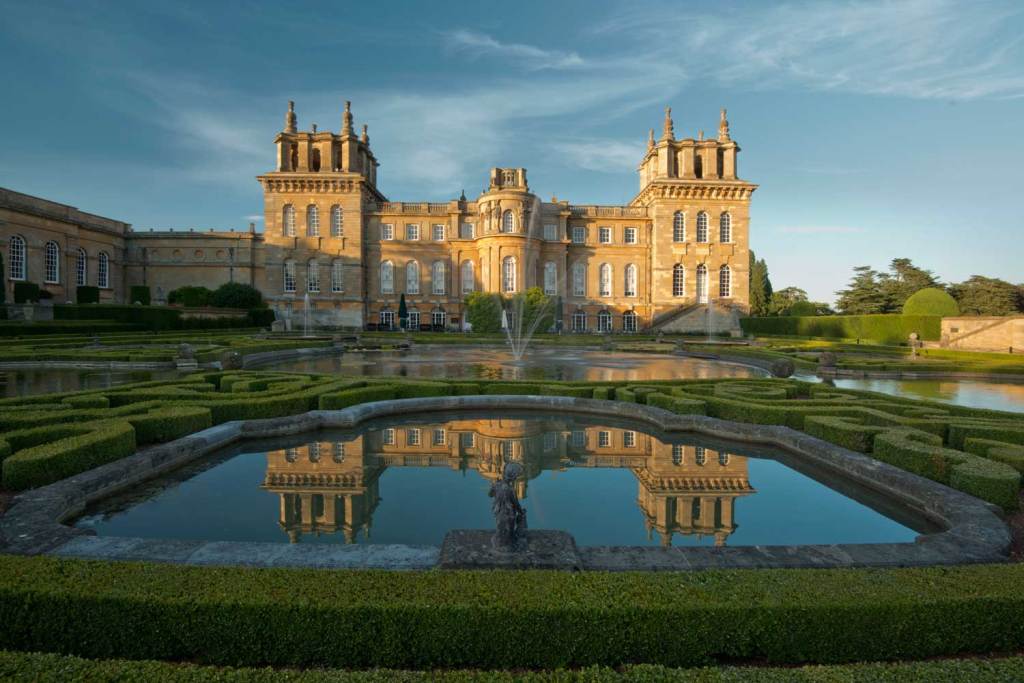
Carapace:
Oddjob has “yellowish carapace” on his fingertips instead of conventional fingernails. Perhaps this is a case of shell nail syndrome, a condition of unknown cause, which according to a medical journal involves “the production of a curved nail…which grows out as a shell…”
Cleft Palate:
Oddjob also suffers from a cleft palate, limiting his ability to communicate with anyone but Goldfinger. A cleft palate occurs when the two plates of the skull forming the roof of the mouth fail to join completely, causing a gap in the roof of the mouth and, often, the nasal septum, so that the roof of the mouth connects directly to the inside of the nose. Cleft palate is often associated with other medical conditions and the exact causes are unknown.
Most Dangerous Animal:
Bond considers Oddjob to be “…perhaps the most dangerous animal on the face of the earth.” Oddjob is clearly the most physically formidable of Bond’s villains, a progression that seems inevitable after the likes of Mr. Big and Red Grant, who were both imposing but had civilizing influences that Oddjob lacks.
Cat for Dinner:
To spite Bond, who blamed Goldfinger’s cat for disturbing the premises, Goldfinger gives the cat to Oddjob for dinner, playing on the stereotype of Koreans and other southeast Asian countries as regularly dining on cats and dogs. (Later reference to the dining room attendants as “yellow-faced servants” is additional dehumanization.)
Moselle:
Goldfinger offers Bond a Moselle wine, spelled Mosel in English. The Mosel wine region is primarily in Germany but also touches on Luxembourg and France, and is named after the Mosel River. The Piesporter Goldtröpfchen ’53 served by Goldfinger would come from the Piesporter Goldtröpfchen vineyard in Piesport, in western Germany on the right bank of the Mosel River. The German “goldtröpfchen” translates to “gold droplets” in English.
Smoking / Drinking:
Goldfinger provides quite sound reasons for not engaging in the vices of smoking and drinking, and time has proven Goldfinger correct on the subject, including trace toxins sometimes found in alcohol. Of course, in Bond’s world, as we have seen in previous adventures, it is usually only the villains who don’t drink or smoke, marking them as out of touch with the physical, sensual world in which Bond thrives.
Napoleon Brandy:
Goldfinger warns 007 that “Napoleon brandy” is especially high in poisons relative to other alcoholic beverages. Cognac is a type of brandy, made from twice distilling dry, acidic white wine and aging it in oak casks. Cognac typically contains a blend of such brandies of different ages. Napoleon cognac is a blend in which the youngest brandy has been aged for at least six years.
Mouton Rothschild:
Goldfinger also serves Bond a bottle of Mouton Rothschild 1947. Château Mouton Rothschild is a wine estate with a wine-growing history going back to at least the 1700s. Long known as Château Brane-Mouton, it was renamed by Nathaniel de Rothschild (1812 – 1870). It is located near the Gironde Estuary northwest of Bordeaux in southwestern France.
Karate:
Oddjob is said to be one of only three holders of a black belt in karate. Karate was developed by occupants of the Ryukyu Kingdom, today part of Japan’s Okinawa Prefecture. The inhabitants were prohibited from carrying swords, so they developed their own form of unarmed combat derived from techniques of Chinese martial artists who had come to the islands in the 1300s. The word “karate” translates as “Chinese hand.” Karate was not introduced to mainland Japan until the early 1900s, where it caught the attention of U.S. military personnel stationed there in the 1940s. The belt ranking system began to be introduced in the 1920s and 1930s. The exact criteria for earning a black belt are not precisely defined, but it seems highly unlikely that there were only two or three holders of black belts by the late 1950s.
Spandau:
Goldfinger engages in a bit of hyperbole when he says: “Karate…is to judo what a Spandau is to a catapult.” The true “Spandau” was the German MG 08 machine gun developed by Spandau Arsenal in 1908 and heavily used by the Germans in World War I. German World War II machine guns, the MG 34 and MG 42, were often referred to by the Allies as Spandaus, even though Spandau Arsenal had ceased weapons manufacturing in 1919 by order of the Treaty of Versailles.
Buddhists:
Goldfinger relates karate to martial arts developed by Buddhist priests. Some Buddhists wee early practitioners of martial arts, and the first confirmed reference to martial arts comes from the 5th century BC, approximately the time of the Buddha. But the discipline is believed to have originated long before that, perhaps as much as four thousand years ago.
Korean Famine:
Goldfinger claims that Oddjob developed a taste for cats while suffering through a famine in Korea during Oddjob’s youth. Having no real sense of how old Oddjob is, we might assume Oddjob’s childhood overlapped with Japan’s occupation of Korea from 1910 – 1945. Japan inflicted great cruelty on Korean citizens, stealing farmland, forcing Koreans to adopt Japanese names, and conscripting Koreans into forced labor. Tens of thousands of Koreans died after being taken to Japan as laborers.
Rich Protection:
Goldfinger wisely says that “the richer the man the more he needs protection.” Is this because the rich man has more of what other people want? Or is it because the rich man has acquired his wealth unethically and is afraid his ill-gotten gains will be returned to the people?
Cruel and Ruthless:
Goldfinger also claims that Koreans are “the cruelest, most ruthless people in the world.” Later, he says that Koreans want to “submit the white race to the grossest indignities.” Of course, this is mostly racist ramlbing, but reading about the barbaric treatment inflicted on Koreans by various conquerors over the years, including Japan and the U.S., one could easily imagine that it would inspire a little ruthless cruelty in response. The Bridge at No Gun Ri by Charles J. Hanley, Sang-hun Choe, and Martha Mendoza, is a good primer on the subject.
Silver City Company:
Bond asks about the challenge of transporting the gold-lined Rolls Royce, and Goldfinger specifically names the “Silver City company” as his transporter. This is Silver City Airways, as mentioned in Chapter Ten.
Isle of Thanet:
Leaving Goldfinger, Bond crosses the Isle of Thanet back to his lodgings. The Isle of Thanet is a small peninsula in eastern Kent, overlooking the English Channel and made almost entirely of chalk.
Chapter Twelve: Long Tail On a Ghost
Chief of Staff:
Bond has a phone conversation with M’s Chief of Staff, who is not named but is almost certainly Bill Tanner, as first identified in Casino Royale.
Ferryfield:
Bond reports that Goldfinger will be departing for France from Ferryfield. This is the Lydd airfield mentioned in Chapter Ten, which was originally named Lydd Ferryfield and today is known formally as London Ashford Airport.
Loelia Ponsonby:
Bond requsts that Miss Ponsonby book his travel to follow Goldfinger to France. This is Loelia Ponsonby, the 00-branch secretary introduced in Moonraker.
Scotland Yard:
The scoundrel Goldfinger reports 007 to Scotland Yard for carrying “a large amount of undeclared dollars.” Scotland Yard is the headquarters for London’s Metropolitcan Police, given its name from the street (Great Scotland Yard) on which the original headquarters was located.
Moneypenny:
Bond imagines the Chief of Staff translating the phone call’s code speak for Moneypenny, M’s secretary who we first met in Casino Royale.
Homer:
Bond wants to “plant a Homer in the boot” of Goldfinger’s Rolls Royce. This is just a homing device, which Bond will make good use of later.
Canterbury Road:
Bond takes Canterbury Road out of Ramsgate. Today the road heads west out of Ramsgate until it intersects the A299 near Manston International Airport.
Triumph:
When Bond inspects Goldfinger’s car before it’s loaded on the air ferry, he also notices a Triumph TR3 conertible, which will be significant later. Triumph Motor Company was founded in 1885 as S. Bettmann & co. Import Export Agency by Siegfried Bettman (1863 – 1951). The company name was changed to Triumph in 1886. Starting out importing and then manufacturing bicycles, the company began auto production in 1923. Today the Triumph name is owned by BMW. The two-seater TR3 was manufactured from 1955 – 1962 by Standard Motor Company, which had purchased Triumph in 1945.

Bristol Freighter:
The specific plane flown for the air ferry is a Bristol Freighter. Bristol Aeroplane Company was an early British aviation firm established in 1910. In 1956 the company split into Bristol Aircraft and Bristol Aero Engines, and in 1959 Bristol Aircraft joined three other aerospace companies to form British Aircraft Corporation (BAC). The Bristol Freighter was manufactered from 1945 – 1958. It was a twin-engine aircraft specifically designed for use as an air ferry, and was used by both civilian and military organizations, including Silver City Airways.
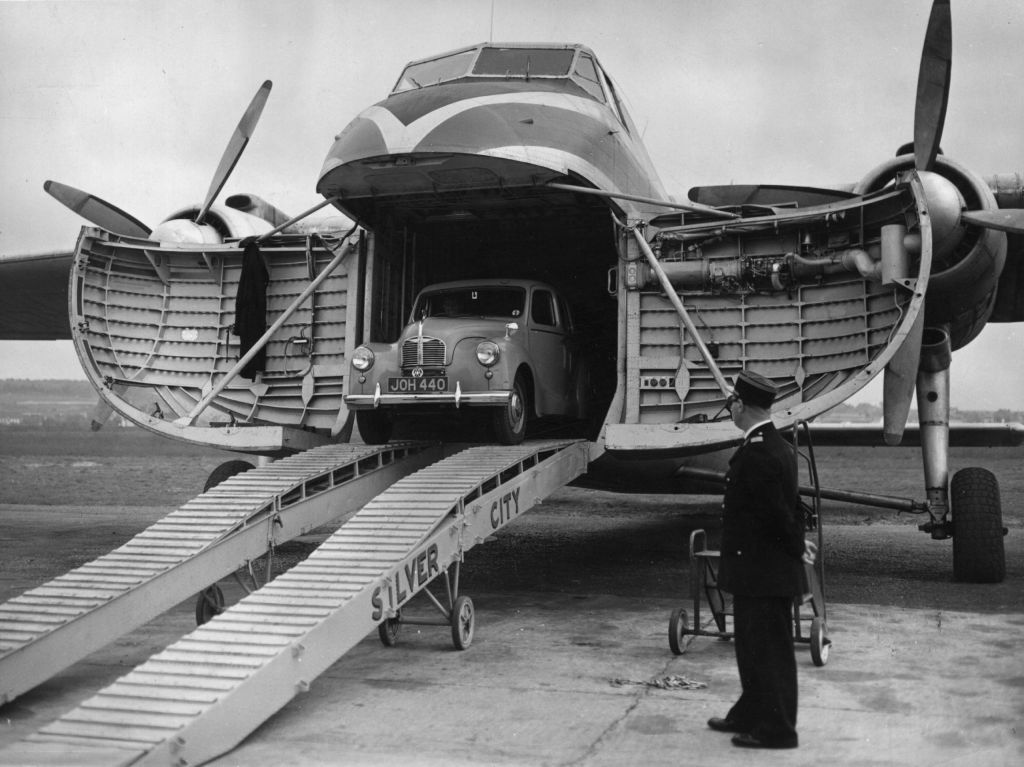
Rye:
After Goldfinger departs, Bond goes to a pub in Rye for a drink. Rye is a small town in East Sussex and is about 11 miles west of Lydd.
Le Touquet:
Goldfinger’s flight will land in Le Touquet in northern France, a popular summer tourist destination on the coast of the English Channel. The town suffered heavy destruction from both the Germans and Allies during World War II. The Le Touquet – Côte d’Opale Airport was opened in 1936 and was renamed Le Touquet – Elizabeth II Airport after the queen’s death in 2022. Today it seems mostly home to charter flights and flying clubs, as there are currently no regularly scheduled passenger operators.
N38 / N1:
Following Goldfinger, 007 takes the N38 out of Le Touquet to the N1. I can’t find any information on these roads, and according to current maps they appear to no longer exist under those names.
Michelin:
Bond consults a Michelin map during his long drive. Michelin was founded in 1899 as a manufacturer of bicycle tires, and later motor vehicle tires. The company went to great lengths to increase its potential market by promoting automobile use among the public, including publishing roadside services guides and maps. The maps were so good, they were used by Allied Forces in World War II.
Marchal Headlights:
Bond’s car is equipped with Marchal headlights. S.E.V. Marchal‘s company was founded in the 1920s. Marchal was inspired by the reflecting power of cats’ eyes and used black cats in early advertising. In the 1960s Marchal merged with S.E.V. to become S.E.V. Marchal.
MG / Austin Healey:
Bond again observes the mysterious Triumph from earlier in the chapter, but he initially wonders if it might be an MG or Austin Healey. Both were British companiess. MG was established in the 1920s from Morris Garages, a car dealership founded by William Morris (1877 – 1963). MG has gone through various name and ownership changes and currently the MG brand is owned by SAIC Motor of China. Austin-Healey resulted from a joint venture between British Motor Corporation’s Austin division, founded in 1905, and the Donald Healey Motor Company, founded in 1945. Austin-Healeys were manufactured until the expiration of the joint venture in 1972. Today the Austin-Healey name is also owned by SAIC Motor.
Joan of Arc:
Bond is internally critical of the French city of Orléans because “it was content to live off Joan of Arc…” Orléans does have several historic sites and statues dedicated to Joan of Arc (1412 – 1431), the patron saint of France, who claimed to be motivated by divine visions in a militant defense of Charles VII‘s claim to the French throne in the Hundred Years’ War. In the Siege of Orléans, during 1428 – 1429, Joan of Arc led French forces in a battle that became a turning point in the war in favor of France.
Arcades / Moderne Auberge / Hôtel de la Gare:
Bond speculates as to which Orléans hotel he and Goldfinger will spend the night in. Bond prefers to stay at the Auberge de la Montespon but settles for the Hôtel de la Gare by the rail station. He expects Goldfinger to stay at either the Moderne or the Arcade. All four hotels appear to have actually existed. The James Bond Food web site has interesting posts on the Moderne and the Auberge.
Quenelles de Brochet:
Bond imagines dining on quenelles de brochet, dumplings made with pike, a type of fish. It seems significant that at this point in the seriess Bond spends almost as much time imagining food as he spends actually consuming it.
Bond’s Dinner:
It seems like it has been awhile since Bond had the kind of well-prepared solo meal that was more common in the earlier books. At the Hôtel de la Gare he enjoys two œufs cocotte à la crème (a baked egg-and-cream concoction that looks delicious), a large sole meunière (sole sauteed with flour, butter, and herbs), camembert (a soft cheese), Rosé d’Anjou (a rosé wine from the Loire Valley of northern France), Hennessy’s Three Star (a “young aged” cognac from Hennessy, founded in 1765 in Cognac, France, by Irishman Richard Hennesy (1720 – 1800)) with coffee.
Café Complet:
Bond’s breakfast the next day is a “café complet,” popular in parts of Europe, consisting of coffee, a croissant or baguette, with a selection of preserves, butter, and honey. Café complet supposedly originated in Switzerland as an evening meal and became especially popular after World War II, when more women entered the work force and had less time and energy to cook evening meals.
Plane Trees:
Bond stops on the road to wait for Goldfinger to move on, watching between the trunks of plane trees. Plane trees are tall, deciduous trees, related to sycamores. They are also planted around the square where Bond lives in Chelsea, as described in From Russia with Love.
Bosch Horns:
The Triumph from earlier in the chapter passes 007 with an alert from two Bosch horns. Robert Bosch GmbH is an engineering and technology company founded in Stuttgart, Germany, in 1886 by engineer/inventor Robert Bosch (1861 – 1942). The company started out producing electrical components and, over time, expanded into a large conglomerate. The company doesn’t have a highly ethical history, collaborating with the Nazis during World War II, and collaborating with Volkswagen in the early 2000s to developing “emission cheating software” to avoid reducing vehicle emissions.
Friture and Vouvray:
Bond imagines a friture and Vouvray with the elusive Triumph driver. Friture is the French word for frying, and in this case probably refers to a small fast-food restaurant or specific type of fried food. A Vouvray is a wine from the Vouvray region in the Loire Valley east of Tours, in east-central France.
Baumanière:
Bond takes his romantic fantasy to southern France and the Hôtel Baumanière in Provence, a luxury hotel/restaurant/spa established in the 1940s.
Gratin de Langouste:
Bond gets a little carried away with his fantasizing. Now he imagines a romantic dinner of gratin de langouste, langoustines (lobster-like crustaceans) with butter and other seasonings.
Vent Vert / Muguet:
Bond imagines the mysterious Triumph driver wearing either Balmain’s Vent Vert or Caron’s Muguet. Vent Vert was made by the fashion company named after its founder, Pierre Balmain (1914 – 1982). Balmain, the company, was founded in 1945, and introduced the green-colored Vent Vert, French for “green wind,” in 1947. Solitaire wore the scent in Live and Let Die. The original Vent Vert supposedly had 1,100 components. In 1991, the company introduced a different Vent Vert forumulation. Muguet du Bonheur (“lily of the valley of happiness”) is a floral scent introduced in 1952 by Parfums Caron, founded in France in 1904 by Ernest Daltroff (1867 – 1941).
The Bridge:
Goldfinger has devised a clever scheme of using a casual picnic stop by a bridge to deliver one of his gold bars to whatever organization he’s actually working with (which Bond assumes to be sinister communists, presumably SMERSH).
Chapter Thirteen: ‘If You Touch Me There…’
Tilly Soames:
Bond forces a meeting with Tilly Soames, who, as we know, will turn out to be Jill Masterson’s sister. I’ll continue referring to her as Tilly Soames to minimize confusion with her sister.
Allez y La Gosse:
Soames is understandably angry, though I don’t quite understand the translation of her exclamation, which is literally, “Go ahead kid, now for the knockout.” Nuances are often lost in translation.
Lyon Sausage / Mâcon:
Bond tries to tempt Soames with a lunch of Lyon sausage and Mâcon. Lyon sausage, or cervelas de Lyon, is a Lyonnaise dish with minced pork mixed with truffles or pistachios. Mâcon, also know as Mâconnais, is a (usually) white wine from the Mâconnais district in the southern part of Burgundy, in eastern France.
Master / Slave:
It tells us a lot about Bond (and Fleming) that his thoughts go to “a flurry of masculine|feminine master|slave signals.” It’s ironic that Bond puts the female in the “slave” position even though he’s the one who seems consistently entranced by thoughts of romance.
Bergues of Geneva:
Soames plans to stay at the Hotel des Bergues in Geneva. Known today as the Four Seasons Hotel des Bergues Geneva, the hotel was founded in 1834.
Alpine Trials:
Bond drives through foothills “as if he was competing in the Alpine Trials.” It’s probably a generic reference but alpine, or downhill, skiing, has three primary international competitions: the FIS World Cup, the World Championships, and the Winter Olympics. The World Cup was not established until 1966. The World Championships were established in 1931. The two Winter Olympics prior to the publication of Goldfinger were held in 1952 in Oslo, Norway, and in 1956 in Cortina d’Ampezzo, Italy.
Swiss Women’s Open:
Soames claims to be a golfer competing in the Swiss Women’s Open Championships at Divonne. I can find no record of an actual Swiss Women’s Open; the modern-day Ladies Swiss Open was first held in 1998. Divonne, I believe, refers to Divonne-les-Bains, a commune in eastern France near Lake Geneva.
Temple Golf Club:
Soames claims that her primary golf course is Temple, opened in 1910, in Hurley, Berkshire, in southern England.
Henley:
Soames has an aunt who lives in Henley, near Temple Golf Club. I believe this is Henley-on-Thames, in Oxfordshire, about 35 miles west of London, and only a few miles from the village of Hurley, where Temple is located.
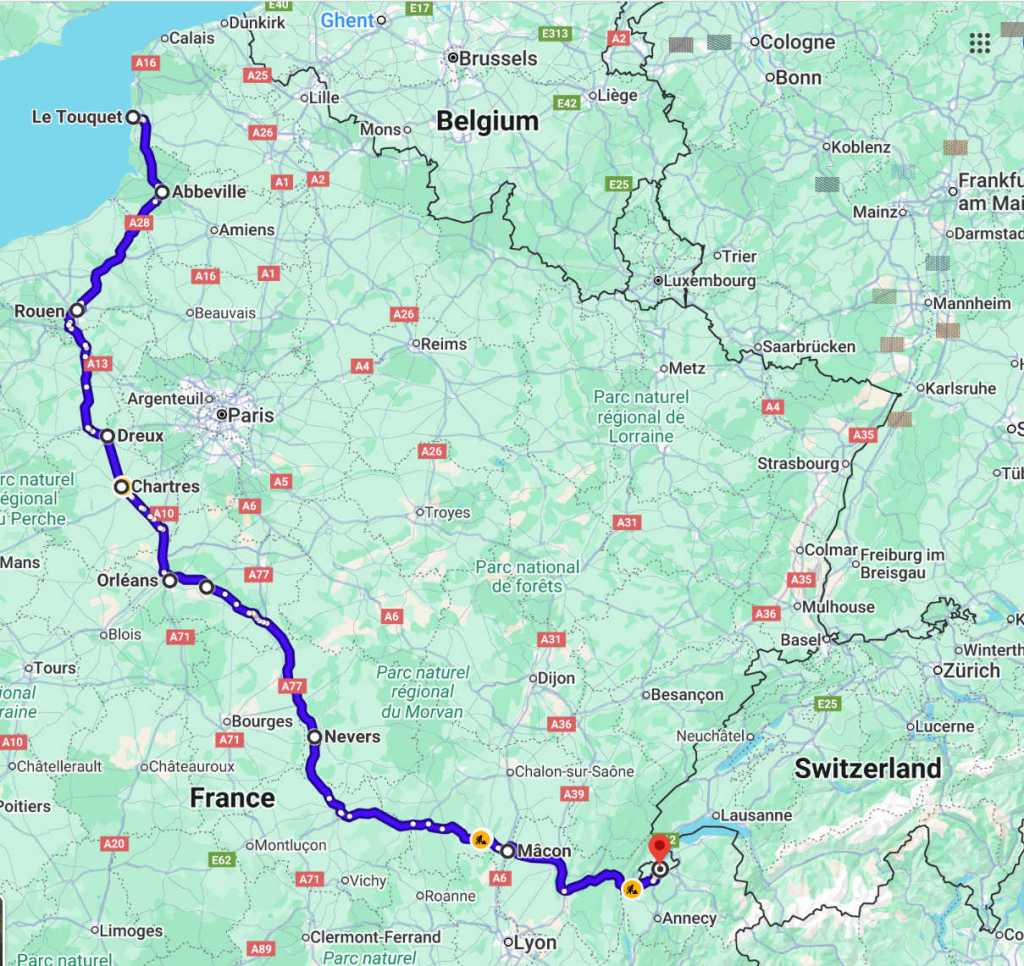
Quai Wilson:
After dropping off Soames, 007 drives along the Quai Wilson, a short section of road along the southwest end of Lake Geneva. It is the site of Palais Wilson, built as a hotel in the 1870s but home to the Secretariat of the International Bureau of Education from 1937 – 1984, and currently the headquarters of the Office of the United Nations High Commissioner for Human Rights. The Quai was named after President Woodrow Wilson (1856 – 1924) because of his role in establishing the League of Nations, the precursor for the United Nations.
Madame de Staël:
Bond catches up with Goldfinger near Coppet, “the tiny lakeside hamlet made famous by Madame de Staël.” Madame Germaine de Staël (1766 – 1817) was a woman of letters, or a writer. She was exiled from France for criticizing Napoleon, and chose to live at Château Coppet in Coppet on Lake Geneva. The French artist Élisabeth Vigée Le Brun (1755 – 1842) painted Madame de Staël posing as Corinne, the protagonist of de Staël’s 1807 novel Corinne, or Italy.
Decca Radar:
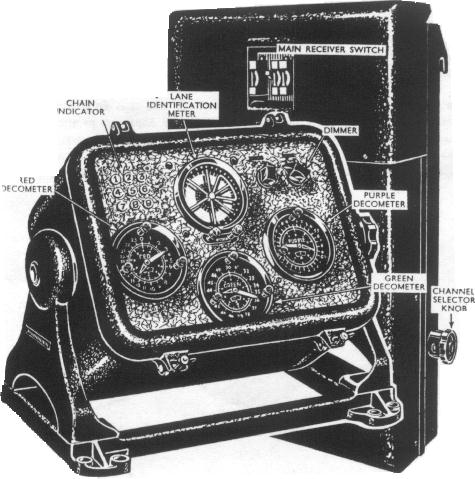
Bond notes a Decca radar system on the roof of Goldfinger’s house. The Decca Navigator System was developed in the U.S. but produced by the British company Decca and first used by the Royal Navy in World War II. The Decca used hyperbolic radio navigation, receiving signals from land-based transmitters and determining the location based on the time difference between the receipt of those signals.
Brighton Pier:
Bond compares Goldfinger’s arrival to a diorama at Brighton Pier, known more formally as Brighton Palace Pier. The pier was constructed in the 1890s as a pleasure pier, a place for cruise ship passengers to arrive and disembark and for taking in the sea view; theatres and amusement-park-type entertainments were sometimes available, such as the arcade at Brighton Pier. Stan Laurel and Charlie Chaplin were among the celebrities who entertained at Brighton Pier, and it was featured in the Who‘s 1979 movie Quadrophenia.
Annigoni:
Bond visits the Geneva office of “Universal Export,” where the lobby has a portrait of the Queen by Annigoni. Pietro Annigoni (1910 – 1988) was an Italian artist whose work retained a Renaissance style in opposition to abstract and other modern art styles of the mid-century. Annigoni actually painted several portraits of Queen Elizabeth II, but the reproduction in the office is probably a 1955 portrait commissioned by London’s Worshipful Company of Fishmongers. As of 2024, the original portrait is displayed in Fishmongers’ Hall near London Bridge. A 1962 issue of Time magazine featured an Annigoni portrait of President John F. Kennedy as Time‘s Person of the Year.
Ferguson Tractors:
The Universal Export office also has an advertisement for Ferguson tractors. The Ferguson-Brown Company was established in Ireland by inventor Harry Ferguson (1884 – 1960) and industrialist David Brown (1904 – 1993) in 1938. The company merged with Massey-Harris in 1953 to eventually become Massey Ferguson. Ferguson’s best-known tractor was the TE20, manufactured from 1946 – 1956, a lightweight highly maneuverable design.
Dumont:
The officer at the Universal Export office mentions “the Dumont business,” but I’m unable to determine what that refers to.
Berne:
The Universal Export officer plans to send the pilfered gold bar to Berne (Bern) in east-central Switzerland. While Switzerland’s constitution does not specify a capital city, Berne is considered the “Federal City” as it is home to the national government offices.
Mecca Air / Air India:
Goldfinger’s company has a contract to supply seating for Mecca Air, an Indian airline. As far as I can tell, Mecca is a fictional airline. It is described as the main competitor of Air India, which is a real company. The airline was founded in 1932 by aviator Jehangir Ratanji Dadabhoy Tata (1904 – 1993). In the late 1940s, Air India took delivery of its first Constellation aircraft (see Chapter One), whic is the specific aircraft Bond associates with the gold seats that will be provided by Goldfinger.
Chapter Fourteen Things That Go Bump in the Night
Pont du Mont Blanc:
Getting settled in Geneva at the Hotel des Bergues (see Chapter Thirteen), Bond walks along the Pont du Mont Blanc, a bridge over the southwest tip of Lake Geneva at the mouth of the Rhône River. The bridge opened in 1862.
Bavaria:
Bond stops for drinks at the Bavaria, described as an Alsatian brasserie. The Bavaria opened in 1912, named as it was because of its specialization in German beers. When the League of Nations – a global association of national governments established in 1919 to try to prevent another global catastrophe like World War I – opened its headquarters in Geneva in 1919, the nearby Bavaria became a popular spot for the League staff and associated personnel to unwind. Much later, the establishment was renamed Le Relais de l’Entrecôte, whic had to relocate to a nearby location in 2014 when the original building was taken over by new owners.
Enzian:
At the Bavaria, Bond drinks Enzian, a clear liqueur sometimes known as Gentian schnapps or Gentian liqueur. It is made from the roots of the gentian plant, a genus of plant grown in numerous parts of the world and often featuring bright blue flowers.
Löwenbräu:
Bond follows up the Enzian with a pale Löwenbräu, from the German brewery founded in the late 1300s. Löwenbräu has typically been brewed according to the Reinheitsgebot, a 1516 regulation that limits the ingredients that can be used in brewing, which caused problems in the 1970s when Miller Brewing gained the rights to sell Löwenbräu in North America and began adding artificial ingredients. Today Löwenbräu is exported to North America from Munich, Germany.
Bombay / Calcutta:
Bond imagines the process of Goldfinger’s melted down gold being shipped through Bombay or Calcutta in the form of airplane seats. Bombay became known as Mumbai in 1995 and is the largest city in India based on population, and also the country’s financial hub. Calcutta today is more commonly referred to as Kolkata and is the capital of the Indian state of West Bengal, in eastern India but near the border of Bangladesh.
Nassau:
Still not fully understanding Goldfinger’s designs for the gold market, he imagines Goldfinger selling the gold in India and receiving sterling credit in Nassau, which is both a city and an island, and the capital of the Bahamas, which, recall, was still a British colony at the time. (See Chapter Six)
Swiss Alcoholism:
Bond believes that the Enzian is responsible for “Switzerland’s chronic alcoholism.” So far I’m unable to find anything specific to the novel’s time period, but this 2011 report claimed that the rate of alcohol consumption in Switzerland was “almost twice the global average.” However, this 2021 SWI article reported that alcohol consumption in Switzerland declined during the Covid-19 pandemic.
Choucroute:
While reflecting on Swiss alcoholism, Bond orders a coucroute and a carafe of Fondant. The dish more often referred to as choucroute garnie is sauerkraut with sausages and often includes potatoes or other types of meat. I’m unable to determine what kind of beverage Fondant is.
Journal de Genève:
007 rings the sports editor at the Journal de Genève to confirm Tilly Soames’ story of golf tournaments. The Journal de Genève was a French-language Swiss newspaper established as a weekly in 1826, moving to daily publication in 1950. Financial difficulties beginning in the 1970s resulted in a series of mergers until the paper was absorbed by the Swiss daily Le Temps in the late 1990s.
Pas de Quoi:
The sports editor replies to Bond’s thanks with “Pas de quoi, monsieur,” which simply translates as “Don’t mention it, sir.”
Gruyère:
Still at the Bavarian brasserie, Bond has a light dinner of gruyère, pumpernickel, and coffee. Gruyère is a hard cheese of Swiss origin, named for the town of Gruyères in southwestern Switzerland. Apparently gruyère should be matured at the high humidity of a cave to achieve the proper consistency. Pumpernickel is a rye bread made with a sourdough starter.
Maidstone / Lewes:
Bond imagines Goldfinger having a trial in either Maidstone or Lewes. Maidstone is about 32 miles east-southeast of London; historically a center of agriculture, Maidstone was home to more of an industrial economy in the 1950s. Lewes is about 80 miles south of London, close to the English Channel. Both towns are home to a Crown Court, a UK court system that handles serious criminal cases and appeals from the lower magistrates’ courts.
Train:
Soames/Masterson tells Bond of her sister’s death after being painted with gold, citing as her source a well-known British skin specialist named Train. This seems like an odd detail to make up, but I can’t find any reference for an actual person.
Station J:
Bond recalls inhabitants of Japanese prison camps as described by the men of Station J, which would be the Secret Service headquarters in Japan.
Barograph:
Bond spots a device resembling a barograph which he suspects of being a sonic detector. A barograph is simply a barometer – a device to measure barometric, or atmospheric, pressure – that records pressure in graphical form, which would have been on a roll of paper.
3. Enemy Action
Chapter Fifteen: The Pressure Room
Cyclops:
After being knocked unconscious by Oddjob, Bond wakes to a circle of light that expands to “a burning Cyclops eye.” A Cyclops – plural Cyclopes – in Greek and Roman mythology was a large, one-eyed creature.
Société Anonyme Mazda:
This is the first thing Bond sees when he wakes. Mazda Corporation is the translation, but I’m stumped as to its significance in this context.
Hypnotism:
Goldfinger claims to have interrogated Soames/Masterson with the use of hypnotism. Is hypnosis real? This still seems to be a debated topic. Wikipedia defines hypnosis as a “condition involving focused attention…, reduced peripheral awareness, and an enhanced capacity to respond to suggestion.” Hypnotism is sometimes used in therapy to process childhood trauma, but the validity of hypnosis, and, conversely, the possibility of using hypnosis to plant false memories, are widely disputed. The U.S. military invested in hypnosis research in the 1960s and determined that the subject had no military applications and likely was not even an actually achievable state.
008:
007 imagines that, in the event of his death, M will send 008 after Goldfinger, and 008 is “more careful than Bond.” This passage confirms that there are still three 00-agents, as described in Moonraker, when we learned that 008 had narrowly escaped death during a mission to Peenemünde in Germany.
258:
Bond believes that “258 in Geneva” will aid 008’s search for Goldfinger. Is 258 the head of the Secret Service’s station in Geneva? Or an agent assigned to the city? Perhaps this is the individual Bond delivered the gold bar to in Chapter Thirteen?
Bond Dies:
Being tortured by Oddjob, Bond nearly reaches the point of wishing himself to die. Bond suffering real or symbolic near-death has been a recurring theme in the novels, as witnessed in Casino Royale, Moonraker, and From Russia with Love.
Chapter Sixteen: The Last and the Biggest
Hark the Herald Angels Sing:
Still very much alive, Bond awakens thinking of “Hark the Herald Angels Sing,” the well known Christmas carol that has a multitude of sources. It originated as “Hymn for Christmas-Day” by Charles Wesley and appeared in the book Hymns and Sacred Poems in 1739. It was modified to “Hark! The Herald Angels Sing” by George Whitefield in 1754. Felix Mendelssohn‘s 1840 music from Festgesang, or Gutenberg Cantata, was adapted by British musician William Hayman Cummings to create something close to the song we know today.
Saint Peter:
Bond imagines that the first voice he hears might be that of Saint Peter, one of the twelve New Testament apostles. Peter and his brother Andrew were the original “fishers of men,” according to Christ in the New Testament books of Matthew and Mark. It was Peter who denied Christ three times prior to the crucifixion.
Vesper:
It is intriguing that Bond recalls Casino Royale‘s Vesper Lynd at this moment, wondering if he will see her again after death. Was Vesper the true love of his life? At some level, this implies that he has forgiven her for her actions in Casino Royale.
People to Avoid:
Bond also reckons there are “a lot of people he’d better avoid” in his vision of the afterlife. Does he expect to see his past enemies here? His thoughts are preoccupied with former love interests, so maybe he’s concerned about women he betrayed or otherwise disappointed.
Idlewild:
Bond has woken up not in the afterlife, but in Idlewild, New York. Idlewild Airport opened in Queens, New York City, in 1948. Officially called the New York International Airport, Anderson Field, the airport was commonly referred to as Idlewild after the name of the golf course that previously occupied the land. It was renamed John F. Kennedy International Airport in December, 1963. The year Goldfinger was published, United and Delta Airlines opened Terminal 7 (later Terminal 9), but that building was demolished in 2008. Bond entered the U.S. via Idlewild in Live and Let Die.
Dr. Foch:
Goldfinger, justifying Bond’s and Soames’ condition, refers to Dr. Foch, “the best man in Geneva.” I’m unable to find anything on a Dr. Foch in Geneva, so I’m guessing this is a fictional name.
Presbyterian Hospital:
Goldfinger claims to be sending his “patients” to the Harkness Pavilion at Presbyterian Hospital. Presbyterian opened to patients in Manhattan in 1872. Presbyterian joined with New York Hospital to form New York – Presbyterian Hospital in 1998, which currently has six locations, five of them in Manhattan. U.S. philanthropist Edward Harkness (1874 – 1940), the sixth richest person in the U.S. in 1918, became a hospital board member in 1920. He donated land to build a combined medical school and hospital, which today is the Columbia University Irving Medical Center in upper Manhattan.
Intraval Sodium:
Goldfinger knocks Bond out with an injection of intraval sodium, also known as sodium thiopental, a barbiturate that can be used as a general anaesthetic.
Plain Deal Table:
Bond awakens again, this time in a spare room in which the minimal furnishings include a “plain deal table.” This would have been a simple, basic table made of inexpensive wood, perhaps pine.
“Any Other Korean”:
This is perhaps where Bond’s (and Fleming’s?) bigotry shows through most crudely, when Bond intends “putting Oddjob and any other Korean firmly in his place, which, in Bond’s estimation, was rather lower than apes in the mammalian hierarchy.” Egad, how do people come up with such notions?
Hudson and East Rivers:
Bond deduces that his New York location is near either the Hudson River or the East River. The Hudson River is 315 miles long and originates at Henderson Lake in Newcomb, New York, before eventually draining into the Atlantic Ocean via New York Bay. Several U.S. Revolutionary War battles were fought over control of the Hudson. The East River is not technically a river, but a tidal strait that connects Upper New York Bay in the south with Long Island Sound in the north, separating Long Island from Manhattan Island. Like the Hudson, the East River was also significant in the Revolutionary War. See Chapter Seventeen for a map showing the rivers relative to central Manhattan.
Hi-speed Trucking Corporation:
Goldfinger holds Bond and Soames in a warehouse of the Hi-speed Trucking Corp., one of Goldfinger’s businesses. This is almost certainly fictional, though there is (or was) a Hi-Speed Trucking business based in California.
Penicillin:
Goldfinger talks of one of his earlier schemes, reselling watered down penicillin at a profit during wartime. Penicillin was one of the first widely effective antibiotics, first identified as such by Scottish physician Alexander Fleming (1881 – 1955) while working at a London hospital in the late 1920s. Reselling diluted penicillin was a key plot point of the movie The Third Man (1949).
Everest:
Goldfinger considers his plan the criminal equivalent of scaling Mt. Everest. Everest is the tallest mountain above sea level on earth, over 29,000 feet. It sits in the Himalayas on the border between China and Nepal. The first confirmed climb to the summit of Everest was achieved by Edmund Hillary (1919 – 2008) of New Zealand and Tenzing Norgay (1914 – 1986) of Nepal.
Fort Knox:
Goldfinger’s scheme, to rob Fort Knox, is finally revealed. Fort Knox is actually a U.S. Army base, dating back to the Civil War period, in the town of Fort Knox in north-central Kentucky. What we often refer to as Fort Knox is actually the U.S. Bullion Depository, built in the 1930s to store gold that had previously been held in New York City and Philadelphia, as those cities were considered more susceptible to foreign attack. The depository has since been the primary location of most of the U.S. gold reserves, peaking at 651 million troy ounces in 1941. I’ll continue referring to the Bullion Depository as Fort Knox to be consistent with the novel.
Chapter Seventeen: Hoods’ Congress
Gangsters:
Goldfinger has assembled members of the “six most dangerous gangster groups in the United States” to fulfill his scheme. Recall that in Diamonds Are Forever M cited “American gangsters” as one of the four criminal forces that kept him awake at night. So Goldfinger’s estimation that his assemblage will be “the toughest and most compact fighting unit that has ever been assembled in peace time” may not be all hyperbole.
Remington Typewriter:
As part of their cover as Goldfinger’s assistants, Bond and Soames are set up with a Remington typewriter. The first commercially successful typewriter was the Remington No. 1, designed by Christopher Latham Sholes (1819 – 1890), Samuel W. Soulé (1830 – 1875), and Carlos Glidden (1834 – 1877). The typewriter was sold to E. Remington and Sons, the weapons maker, in 1873, and they released it to the market in 1874. Remington sold its typewriter business to Standard Typewriter Manufacturing Company in 1886, which became the Remington Typewriter Company in 1902. They merged with Rand Kardex Bureau in 1927 to form Remington Rand, which continued to manufacture a variety of business machines, including UNIVAC mainframe computers, until it went through a series of mergers and name changes to become Unisys in 1986.
Spangled Mob:
Part of Goldfinger’s group is a representative of the Spangled Mob (Jack Strap). Bond killed one of the Spangled Mob’s leaders, Rufus B. Saye, aka Jack Spang, in Diamonds Are Forever, so it seems disappointing that 007’s work appears to have had little impact on the gang’s operations. Later, Bond will recall the Spang brother with no apparent concern for his previous mission.
West Side Highway:
Bond hears what he believes to be a truck heading toward the West Side Highway. The West Side Highway, also called the Joe DiMaggio Highway, is a section of New York State Route 9A that extends from the southern end of Manhattan north to West 72nd Street, where it becomes the Henry Hudson Parkway. The Highway parallels the Hudson River, thereby confirming Bond’s guess from Chapter Sixteen.
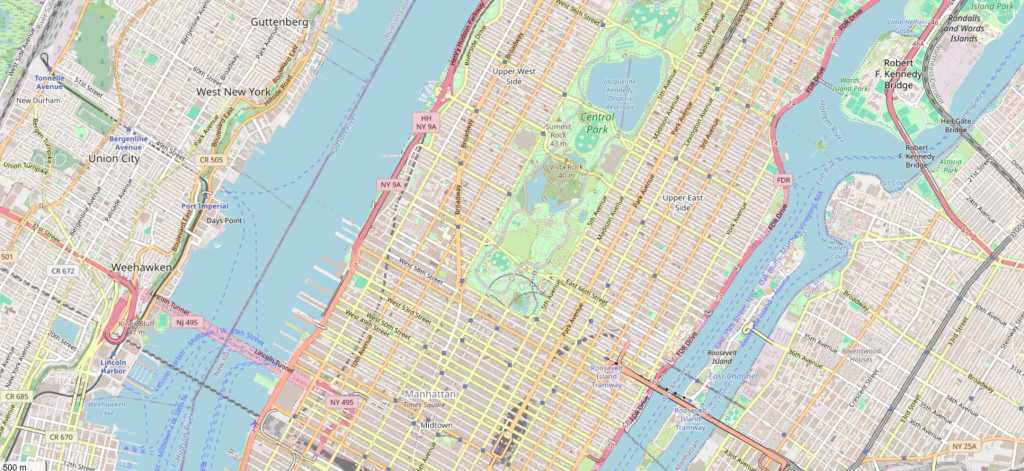
Yale Lock:
Bond, Soames, and Oddjob enter the conference room to the sound of a Yale key being turned, which presumably corresponds to a Yale lock. Both Linus Yale Sr. (1797 – 1858) and Linus Yale Jr. (1821 – 1868) held patents for pin tumbler locks, but the concept was based on lock designs dating back to the 8th century BC. A pin tumbler locking mechanism uses pins of varying length to secure a bolt; only the correctly designed key will lift the pins the correct distance to release the bolt. The Yale company was founded in 1868 by Yale Jr. and Henry R. Towne (1844 – 1924), and the company had additional patents relating to safe locks, padlocks, and others. Yale was founded in Connecticut and sold primarily in the U.S. until the 1920s, when they became the dominant lock company in Britain by acquiring British firm H&T Vaughan. Today Yale is a subsidiary of Swedish conglomerate Assa Abloy.
Jersey City:
Jersey City is visible from the conference room. Jersey City is in Hudson County, New Jersey, and is part of a peninsula between the Hudson River and Upper New York Bay to the east and Hackensack River and Newark Bay to the west. Originally occupied by the Lenape, the present-day Jersey City was formed in the early 1870s by a merger of a collection of smaller towns. As of 2022, Jersey City was the most ethnically diverse city in the U.S.
Beluga Caviar:
Goldfinger offers his guests, among other things, Beluga caviar, something M had with his dinner at Blades in Moonraker. This type of caviar was banned in the U.S. in 2005 as it comes from the critically endangered beluga sturgeon.
Cement Mixers:
Pussy Galore’s gang is called the Cement Mixers and I’m still on the fence as to whether this name has some double meaning. Other than the obvious industrial application of a truck that mixes concrete, gastronomic sites say it is a drink involving Bailey’s Irish Cream and lime juice; dictionary.com calls it an especially challenging baseball pitch involving side spin; Green’s Dictionary of Slang says it can refer to a strip-tease artist or a promiscuous woman; the Jewish-English Lexicon calls it Yiddish slang for a non-Jewish woman; and Urban Dictionary has such disturbing definitions that you will need to look them up for yourself.
Hathaway Shirt:
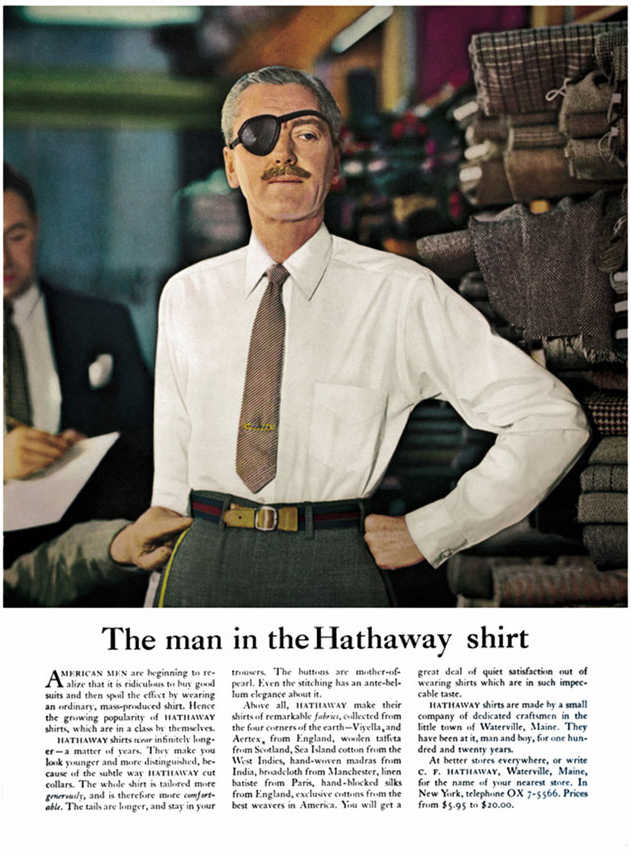
Helmut Springer of the Purple Gang – a real-life crime outfit that was also mentioned in Diamonds Are Forever – wears a Hathaway shirt. C.F. Hathaway Company was established in Massachusetts in the 1840s (or possibly earlier) by Charles Foster Hathaway (1816 – 1893). One of the company’s early projects was the production of uniform shirts for Union soldiers in the U.S. Civil War. “Hathaway Man” ads of the 1950s featured a well-dressed man wearing an eyepatch, implying a life of intrigue, and was voted one of the greatest ad campaigns of the 20th century by Advertising Age. Except for Gitman Bros, Hathaway was the last major American shirt company producing shirts in the U.S. when it ceased operations in 2002.
Aqua Velva:
Springer also wears Aqua Velva afershave, introduced by the J.B. Williams Company in 1917. Best known for the Ice Blue line, J.B. Williams sold Aqua Velva until 1982; after a series of acquisitions, today the products are sold by U.S.-based Combe Incorporated and UK-based Unilever (see Chapter Nineteen).
Vassar:
Springer’s daughter attends Vassar College, the private liberal arts school founded in New York State in 1861 by brewer and philanthropist Matthew Vassar (1792 – 1868). At the time, Vassar was only the second degree-granting women’s higher education institution in the U.S. While founded as a women’s college, Vassar became coeducational in 1969, although it had accepted a few male veterans on the G.I. Bill after World War II.
Jabot:
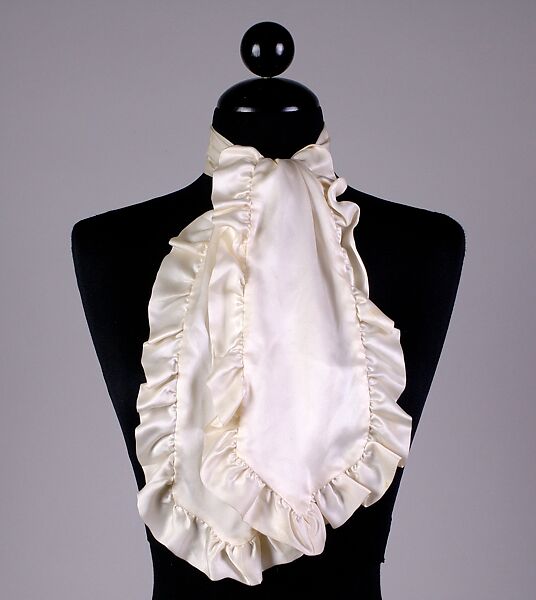
We meet the soon-to-be-infamous Pussy Galore, whose wardrobe includes a silk jabot. A jabot somewhat resembles a napkin, is usually made of silk or lace, and is hung from the neckband or collar and falling over the throat. Its use seems to have originated in the mid-1600s and has been worn by both men and women in various settings and time periods.
Rupert Brooke:
While thinking disparaging thoughts about lesbians, Bond compares Galore’s appearance to Rupert Brooke (1887 – 1915), an English poet who was described by W.B. Yeats as “the handsomest young man in England.” Brooke came to real fame as a poet when The Times Literary Supplement published two of his sonnets about World War I in 1915.
Golden Poppy Distributors:
Goldfinger describes one of his previous business undertakings as Golden Poppy Distributors in Hong Kong. Hong Kong became a British territory in 1841 after China’s Qing Dynasty lost to the British in the First Opium War. France joined the British in defeating the Qing again in the Second Opium War in the late 1850s. The golden poppy, Eschscholzia californica, the state flower of California, is not the same as Papaver somniferum, the opium poppy. Technicalities aside, we can safely assume that Gold Poppy Distributors involved Goldfinger in the drug trade, while having “golden” in the name implies it could also have facilitiated transfers of Goldfinger’s gold holdings.
Einstein:
The group, in Bond’s estimation, regards Goldfinger as if he were Einstein. Albert Einstein (1879 – 1955) is, of course, best known for the theory of relativity, for which he was awarded the Nobel Prize in Physics in 1921. After becoming a resident of the U.S., so many people approached Einstein in public that he sometimes pretended to be someone else who only resembled the famous physicist.
Chapter Eighteen: Crime de la Crime
Federal Mint and Federal Reserve:
Springer claims that, in addition to Fort Knox, the Federal Mint in Washington, DC, and the Federal Reserve, in New York City, are the three primary gold depositories in the U.S. In fact, the U.S. Bullion Depository (Fort Knox) is part of the United States Mint, headquartered in DC and a bureau within the Department of the Treasury. I can find no indication that the DC headquarters was ever a large depository of gold. The Federal Reserve Bank of New York was founded in 1914 and is one of twelve Federal Reserve Banks in the U.S. This bank really does have a large gold depository, as it did when Goldfinger was published. The 1995 movie Die Hard with a Vengeance depicts a theft of the bank’s gold.
Miltown:
Jed Midnight of the Shadow Syndicate expresses his skepticism for Goldfinger’s plan by saying, “You should have a talk with your head-shrinker or get yourselve Miltownized.” Psychotropic drugs entered the public consciousness in 1955 with the introduction of the prescription tranquilizer meprobamate. Under the commercial name Miltown (and advertised by “Uncle Miltown” himself, Milton Berle, on his popular television show), by 1956 nearly 5% of all Americans had used the drug. Meprobamate was later shown to have addictive properties and taken off the market, but many more reputable psychotropic drugs followed.
Brink’s:
Defending the audacity of his plan, Goldfinger cites a 1950 robbery of the previously “unbeatable” Brink’s. Brink’s was founded as an armored cash transportation service in 1859 by Perry and Fidelia Brink. While the business operations have expanded considerably, the company is probably still best known for its armored trucks. The Great Brink’s Robbery was conducted on January 17, 1950, when eleven people conspired to rob a Brink’s building in Boston. The thieves made off with $1.2 million in cash and $1.6 million in other liquid securities. It was the largest robbery in the country at that time. The culprits were identified after they eventually turned on each other. Eight of the gang members received life sentences (most were eventually paroled), despite no one being killed or seriously injured during the robbery. To date there have been four movies based on the robbery.
Sing Sing:
Goldfinger further cites escapes from the “impossible to escape” Sing Sing. The Sing Sing Correctional Facility opened in 1826 as the Ossining Correctional Facility because of its location in Ossining, about 30 miles north of New York City. Sing Sing is a maximum security facility. Julius and Ethel Rosenberg were executed at Sing Sing in 1953. The expression “up the river” as describing someone being sent to prison comes from Sing Sing’s location up the Hudson River from New York City. I can find references to escapes from Sing Sing prior to 1920 (when a new death row racility was built for greater security) and in 1935.
3rd Armored Division:
Billy Ring of the Machine points out that Fort Knox is defended by the “Third Armoured.” The 3rd Armored Division was active from 1941 until 1992, when it was inactivated as part of a downsizing of U.S. armed forces resulting from the end of the Cold War. During World War II, the 3rd Armored was active in the Normandy Campaign and the Battle of the Bulge, both in 1944, among other operations. While the 3rd Armored was reactivated at Fort Knox in 1947, it was transferred to Germany in 1956 and, except for a time in Saudi Arabia during the 1990 – 1991 Gulf War, remained there until 1992. Elvis Presley and Colin Powell were among the division’s better-known members. Goldfinger corrects Ring about the presence of the 3rd Armored, and cites several other divisions and groups, but I’m unable to confirm if any of those were actually present at the Depository in the late 1950s.
Godman Army Airfield:
The text includes a map of the Fort Knox area, which I believe is the first (and only?) map included in a Fleming Bond novel. On the map, Goldfinger specifically points out Godman Army Airfield, the military airport at Fort Knox. The airfield was the site of a notable alleged UFO sighting in 1948, in which Kentucky Air National Guard pilot Captain Thomas F. Mantell died in a plane crash while pursuing the alleged object. Later investigations concluded that Martell had probably spotted a Skyhook meteorological balloon, which was a top-secret project at the time.
Dixie Highway:
The depository is positioned in a triangle formed by the Dixie Highway, Bullion Boulevard, and Vine Grove Road. As far as I can tell, Vine Grove Road no longer exists. The Dixie Highway was a loose collection of roads initiated in 1914 to connect Miami, Florida, with Chicago, Illinois, and Sault Ste. Marie, Michigan. Today it is a series of primarily state and U.S. roads. In some areas, including Kentucky, parts of the route are still referred to as the Dixie Highway.
Illinois Central Railroad:
Part of the Illinois Central Railroad also runs through the map area. The Illinois Central was the first land grant railroad in the U.S., initiated in 1851. It connected Chicago and New Orleans, with short side routes linking other destinations along the way. The IC offered both passenger and freight service. Some of the passenger service was later taken over by Amtrak and much of the freight route was taken over by the Canadian National Railway in the 1990s.
Tennessee Granite:
Goldfinger points out that the depository is constructed of Tennessee granite. While granite is significant in the depository’s construction, I’ve found no information on the source, or what might be unique about granite from Tennessee.
Avoirdupois:
Goldfinger refers to the “avoirdupois” weight of the gold bars in Fort Knox. The avoirdupois weight system was used as far back as the 13th century. In 1959, countries using the pound as the common unit of mass set the International Avoirdupois Pound at 0.45359237 kilograms, and this is the figure still in use today. The term avoirdupois very loosely translates as “goods of weight,” or “to have weight.”
Summa Cum Laude:
Midnight tells Goldfinger that “if you can heist that joint, you got yourself a summum cum laude.” Pronounciation errors aside, summa cum laude is part of the Latin honors system used by colleges and universities to bestow a level of distinction on the awarding of an academic degree. It is primarily a U.S. system that originated with Harvard in 1869. There are three levels of distinction: cum laude, or “with praise,” magna cum laude, or “with great praise,” and summa cum laude, or “with highest praise,” which typically applies to graduates in the top 1% – 5% of their class based on grade point average and depending on the school.
Teamsters:
Goldfinger predicts that the Teamsters’ Union will be “a fruitful source for reliable” truck drivers to transport the gold. The International Brotherhood of Teamsters was formed in 1903 when two earlier unions – the Team Drivers International Union and the Teamsters National Union – joined forces. The Teamsters has had a tumultuous history, often in conflict not only with management but with other unions and even its own members. Some Teamsters leaders were affiliated with organized crime – this is no doubt the inspiration behind Goldfinger’s comment – including Jimmy Hoffa (1913 – 1975), who relied on Mafia support when he took control of the Teamsters, becoming president of the union in 1957. Hoffa even raided Teamsters pension funds to help finance the development of Las Vegas casinos. The Teamsters’ influence has declined in recent decades, but it sill has well over one million members across the U.S. and Canada.
Red Ball Express:
Goldfinger also suggests his conspirators seek drivers from the “Negro Red Ball Express.” After the 1944 Normandy invasion, Allied forces advanced through Europe with logistics support from the Red Ball Express, an informal fleet of 23,000 truck drivers and cargo loaders operating about 6,000 cargo trucks. While German forces relied primarily on rail and horses, the Allies could advanec more aggressively with supplies from the Red Ball Express. About 70%-75% of Red Ball drivers and loaders were Black.
German Chemical Warfare:
Goldfinger plans to knock the Fort Knox security forces unconscious with an opiate derivative developed by the “German chemical warfare experts.” The Japanese engaged in chemical warfare during World War II, and the British planned to deploy mustard gas if they were invaded by Germany, but the Nazis are remembered for their use of chemical weapons – primarily carbon monoxide and hydrogen cyanide – during the Holocaust, and they developed sarin nerve gas in 1938. Operation Paperclip gave about 1,600 German scientists, engineers, and technicians safe passage into the U.S. after World War II, some of whom were involved in chemical and biological warfare.
Puss in Boots:
Something about Goldfinger’s scheme calls to mind the European fairy tale Puss in Boots. The oldest known version dates back to the mid-1500s. The fable involves a wise cat manipulating the wealthy so that his poor master can gain wealth and a bride. I confess, I don’t entirely see the connection.
Corporal Missile:

Goldfinger is in possession of an atomic warhead intended for use with the “Corporal Intermediate Range Guided Missile.” The MGM-5 Corporal was a short-range nuclear missile, just over 45 feet in length, designed by the U.S. Army and the Jet Propulsion Laboratory in 1952. The missile was used by the U.S. and British armies from 1954 – 1964. There were several variants of the Corporal, with a range of 30 – 81 miles.
King Cobra:

Bond reckons he has gotten involved with a king cobra level of criminal. The king cobra is a species of snake native to parts of Asia, roughly 10 to 13 feet in average length. The king cobra has a reputation for aggression, but it generally only hunts other snakes and will only attack humans by accident or if threatened. However, the venom can be fatal to humans within only half an hour if not treated with antivenom.
Clean Atomic Bomb:
Goldfinger plans to use a “clean” atomic bomb to break into Fort Knox. During the late 1950s and early 1960s, there was serious discussion within the U.S. government about “clean” atomic weapons that would generate less fallout than “dirty” bombs. This ultimately led to the neutron bomb, a low-yield thermonuclear device designed to release increased neutron radiation while reducing the physical destruction from the bomb’s impact. Variations of neutron bombs were developed from the 1960s through the 1980s.
Chapter Nineteen: Secret Appendix
Cain and Abel:
Midnight calls Goldfinger “the greatest thing in crime since Cain invented murder and used it on Abel.” For those, like me, who skipped Sunday school, Cain was the first born son of Adam and Eve, and Abel was the second. Since God created Adam and Eve, this would make Cain the first human to be born. As described in the Book of Genesis, Cain and Abel both offered material tributes to God, but for some reason God took pleasure in Abel’s tributes but not Cain’s. (This is the kind of thing that helps explain why I’m an atheist.) Jealous of his brother, Cain killed Abel, making Abel the first human to die. God’s punishment of Cain, a farmer, was as follows: “When you till the ground, it will no longer yield to you its strength; you will be a fugitive and a wanderer of the earth.” Cain and Abel are mentioned no where else in the Hebrew Bible, but are briefly mentioned in the New Testament book Epistle to the Hebrews.
Gangsters:
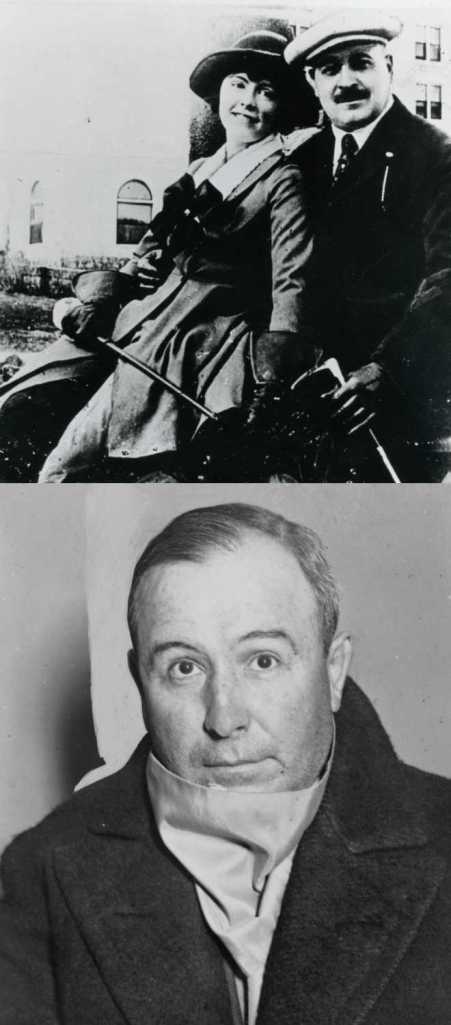
Billy Ring name drops a series of gangster names who he considers representative of an out-dated criminal lifestyle. James “Big Jim” Colosimo (1878 – 1920), also known as “Diamond Jim,” emigrated from Italy to the U.S. in 1895 and became leader of a Chicago crime gang until he was murdered in 1920. Johnny “The Fox” Torrio (1882 – 1957), also from Italy, took over Colosimo’s gang after his death. Unlike Colosimo, Torrio took the gang into bootlegging for greater profits. After he nearly died in an assassination attempt in 1925, Torrio gave up control of the gang to Al Capone and he left Chicago for New York. “Dion O’Bannion,” who is probably Dean O’Banion (1892 – 1924), born in Illinois and another Chicago-based gangster, primarily engaged in bootlegging during Prohibition, until he was assassinated by rival gang members in 1924. Al Capone (1899 – 1947) was born in New York City but moved to Chicago in 1919, where he became a bodyguard for Johnny Torrio until taking over the business in 1925. Capone suffered from syphilis for years before his death.
Little Bohemia:
Ring talks about hiding “between fights in Little Bohemia up behind Milwaukee.” Milwaukee is in southeastern Wisconsin, along Lake Michigan. Chicago gangsters did spend time in Milwaukee; Al Capone owned a home there. I believe Little Bohemia refers to the Little Bohemia Lodge, a restaurant/vacation lodge in Manitowish Waters, in north-central Wisconsin. When a number of renowned gangsters – including Baby Face Nelson and John Dillinger – vacationed there in 1934, the FBI attempted to capture the criminals. A shootout ensued, leading to the death of a lodge customer and an FBI agent, along with several injuries. None of the criminal targets were seriously injured or captured. The Little Bohemia Lodge still operates as a restaurant.
Fibrositis:
While declining the offer to join Goldfinger’s agenda, Springer moves his head “as if he was trying to exercise fibrositis.” Fibrositis was an early name for what is today known as fibromyalgia, a term first used in 1976. Fibromyalgia is primarily characterized by widespread chronic pain, but can also include fatigue, troubled sleep, memory issues, and other symptoms.
Saratoga Vichy:
Goldfinger drinks Saratoga Vichy, which is not water from the famous mineral springs in Vichy, France, but mineral water from springs in Saratoga Springs, New York, an area Bond traveled to in Diamonds Are Forever. The name, of course, is intended to remind consumers of the more historic French variety, but a lawsuit gave the New York company the right to use the name. Saratoga Water was established in 1872 and is still in business today as a part of Blue Triton Brands.
GB / Trilone:
Goldfinger tells 007 that, instead of rending the Fort Knox residents unconscious, he really intends to kill them with GB of “the Trilone group of nerve agents.” Back to the Germans again. German scientists in the mid-1930s developed a nerve gas while trying to develop insecticide; they called the substance Tabun, which was later referred to as Trilon-83. One of the same scientists was involved a few years later in the development of Sarin, considerably more powerful than Trilon-83. When the U.S. learned about the Germans’ work after the war, Sarin was given the name GB.
Wehrmacht:
Goldfinger says that the Wehrmacht improved on GB (sarin), which is true, but the Wehrmacht represented the entire armed forces of Nazi Germany during the years 1935 – 1945.
Dyhernfurth:
Goldfinger claims that the Russians captured the German supply of GB (sarin) at Dyhernfurth and later routed some of that supply to him. Dyhernfurth is known today as Brzeg Dolny and is located in southwestern Poland. The town was the site of a nerve gas production facility during World War II; the plant was staffed with forced labor from Nazi concentration camps. According to Wikipedia, the nerve gas supply at the plant was dumped in a river by the Germans near the end of the war, before the Russians reached the area.
Sverdlovsk:
Goldfinger reveals that he plans to escape the U.S., with the gold, on a Soviet “Sverdlovsk” class cruiser. Sverdlov class cruisers were built in the 1950s and were in commission during the years 1952 – 1992. The cruisers were part of a modernization/expansion plan for the Soviet Navy ordered by Joseph Stalin at the end of the war.
Norfolk:
The Soviet cruiser will be visiting Norfolk, Virgina, on a good will cruise, facilitating Goldfinger’s escape. I can find no record of such a good will cruise in the 1950s, but a similar good will voyage did take place in 1989. Norfolk, Virginia, is at the intersection of the Elizabeth River and Chesapeake Bay, making it a seaport of strategic significance throughout the nation’s history. Naval Station Norfolk, a U.S. Navy base, was established in 1917. It is currently the world’s largest naval station.
Kronstadt:
Goldfinger will enter the Soviet Union at Kronstadt, a Russian port city next to Saint Petersburg, on the Gulf of Finland. Kronstadt played a significant defense role when Saint Petersburg was the capital of Russia, and during World War II.
High Presidium:
For Bond, the Soviet cruiser seems to confirm the role of SMERSH (see Chapters Five and Seven) and the High Praesidium (or Presidium). The Presidium of the Supreme Soviet was the collective head of state, its members chosen by both houses of the Supreme Soviet, the USSR’s primary legislative body and its only collective branch of government. The Presidium had 39 members and the chairman was sometimes described outside the USSR as President of the Soviet Union. The Presidium was headquartered in the Kremlin in Moscow.
Bloody Morgan:
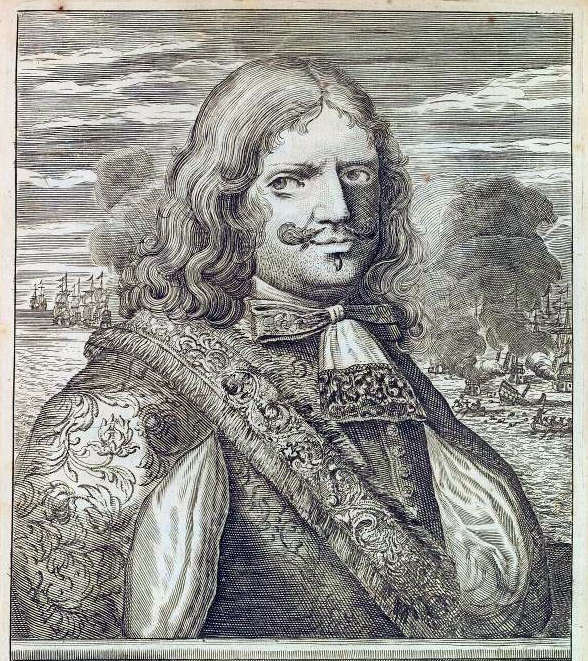
“Goldfinger was sacking Fort Knox as Bloody Morgan had sacked Panama.” Bloody Morgan was Sir Henry Morgan (1635 – 1688), a privateer (basically a state-sanctioned pirate) active throughout the Caribbean in the 1600s, raiding Spanish settlements in Cuba, the Yucatan Peninsula, Panama, and other areas. In response to Spanish raids of English ships in the Caribbean in the late 1660s, Morgan led an attack on Panama City, Panama, in 1671, burning much of the city. Morgan was arrested and taken to London in 1672 to help improve relations between Spain and England, but the English considered Morgan a hero and he returned to Jamaica in 1675. He became a wealthy plantation owner and continued his nefarious ways until his death in 1688.
Unilever:
Bond learns that Tilly Soames previously performed secretarial work at “Unilevers,” or Unilever, the British consumer goods company founded in 1929. Unilever is the company that introduced Dove soap to the U.S. in 1957, acquired Birds Eye (formerly Frosted Foods) in 1957, and acquired Good Humor ice cream in 1961.
Earl’s Court:
Soames lived in Earl’s Court, a neighborhood in West London. After the 11th century Norman conquest of England, the land was owned by the Earls of Oxford, descendants of Aubrey de Vere I (???? – 1112). Development of rail transit and the London Underground promoted residential development of the Earl’s Court area in the late 1800s. Earl’s Court Road became known as the Polish Corridor after World War II when many Polish war veterans, unable to return to Poland because of the Soviet takeover, settled in Earl’s Court. Agatha Christie and Alfred Hitchcock were both residents at some point.
Sex Equality:
Witnessing Soames’ infatuation with Galore, Bond has some ghastly thoughts that homosexuality, among both men and women, is “a direct consequence of giving votes to women and ‘sex equality.’” Egad, even in the 1950s, I don’t know how people came up with this stuff.
LaGuardia:
Goldfinger and his crew will depart from LaGuardia for the Fort Knox area. The Queens, New York, airport began as a private seaplane port in 1929. The airport was expanded to commercial service thanks to Fiorello La Guardia (1882 – 1947), who was mayor of New York City from 1934 to 1945 and was frustrated by the lack of commercial air service into the city. Thanks to the Works Progress Administration (WPA), which did much of the expansion work, New York Municipal Airport was dedicated in 1939. It was formally renamed in honor of the former mayor in 1947. In April, 1957, there were 283 weekday fixed-wing departures from LaGuardia.
Felix Leiter:
Bond leaves behind a note describing Operation Grand Slam that, if found, should be delivered to Felix Leiter at Pinkerton (see Chapter Four). Even though we don’t know at this point whether or not Leiter will appear, it’s a reminder of Leiter’s loyal friendship; Bond knows that if he needs help in the States, he can cound on Leiter.
Chapter Twenty: Journey into Holocaust
Beechcraft:
Goldfinger and company depart on an Executive Beechcraft. Beechcraft Aircraft Company was founded by Walter Beech (1891 – 1950) and his wife Olive Ann Beech (1903 – 1993) in Wichita, Kansas. Beechcraft has produced a long series of civilian and military aircraft. Today the Beechcraft brand is owned by Textron Aviation. The plane in question is described as a ten-seater; the closest Beechcraft model I can find is the Queen Air, but it generally only seated nine and didn’t enter commercial use until 1960.
Paramount:
Goldfinger’s cover story to get past air traffic control is a claim of a location scouting trip for Paramount Pictures Corporation. Paramount Pictures was founded in 1912 and for years was one of the most important Hollywood studios, having released the early Star Trek movies and the Godfather films, among many others. Some of the actors under contract with Paramount in the studio’s early years included Mary Pickford, Gloria Swanson, Rudolph Valentino, and Douglas Fairbanks. One of Paramount’s most influential directors was Cecil B. DeMille, who died in 1959, the same year Goldfinger was published.
Muldraugh Hill:
Goldfinger describes a fictional movie about an 1861 Civil War battle at Muldraugh Hill resulting in the capture of General Sherman. General William T. Sherman (1820 – 1891) was a Union officer in charge of forces in Kentucky in 1861, but I can find no record of a significant battle at Muldraugh Hill, an escarpment that covers part of central Indiana and northern Kentucky, including the Fort Knox area. Sherman did headquarter his troops in the area in September of 1861, but he was not captured by the Confederates. Perhaps Goldfinger is simply making this up to confuse his listener.
Grant / Taylor:
Goldfinger claims that the fictional Civil War movie will feature Elizabeth Taylor (1932 – 2011) and Cary Grant (1904 – 1986). Both stars were quite popular in the late 1950s. Taylor starred in Raintree County (1957) and Cat On a Hot Tin Roof (1958), while Grant appeared in An Affair to Remember (1957) and Indiscreet (1958).
Buick:
In flashback, Bond was transported from Goldfinger’s hideout to LaGuardia in a Buick saloon. Buick was founded in 1899 and by the early 1900s was the largest carmaker in the U.S. Various acquisitions and partnerships by Buick led to the formation of General Motors, where Buick is still a division. A saloon is another word for sedan, a “three-box” car (with separate compartments for engine, passengers, and trunk), probably with a four-door passenger compartment.
Dacron:
Garlore wears a black Dacron macintosh (raincoat). Dacron was DuPont‘s brand name for polyester fibers, first developed for commercial use in the 1940s. Dacron was introduced in 1950, used in both clothing and sailcloth for boats.
Elsan:
Bond cleverly attaches his note, requesting help, on the toilet seat, which he knows will need to be removed “to get at the Elsan.” An Elsan was a small water closet, or toilet room, originally designed for use in military aircraft.
Triborough Bridge:
Goldfinger’s group returns to the warehouse via the Triborough, which was renamed the Robert F. Kennedy Bridge in 2008. Still often called the Triborough, this complex of bridges opened in 1936 and connects Manhattan, Queens, and the Bronx. Some of the drama behind the Triborough’s construction is described in Robert Caro‘s The Power Broker, a biography of Robert Moses (1888 – 1981), the mastermind behind the bridge and many other NYC infrastructure projects of the time.
Trypanosomiasis:
Posing as a doctor, Goldfinger blames the catastrophe among the Fort Knox population on a possible case of trypanosomiasis. There are a few conditions to which this name is applied, but here it probably refers to African trypanosomiasis, sometimes called “sleeping sickness.” This is a parasitic infection transmitted by tsetse flies. Sleep disorders such as fragmented sleep-wake cycles and daytime somnolence occur during the second phase of the disease, which generally occurs weeks or even months after infection.
Pullman:
The group’s train travel is in a Pullman car. The Pullman Company was founded by George Pullman (1831 – 1897) in 1862 to build luxury sleeper cars after he spent an uncomfortable night trying to sleep on a New York train. Pullman was the primary manufacturer of U.S. passenger rail cars for many years, but it ended production in 1968. The company was so influential that it built the town of Pullman, Illinois, now a neighborhood of Chicago, in the 1880s.
Chapter Twenty-One: The Richest Man in History
Dexedrine:
The more nervous members of the raiding party are given Dexedrine. Dextroamphetamine is an amphetamine, sold under the trade name Dexedrine by Smith, Kline beginning in 1937. (Dexedrine came after another amphetamine product, Benzedrine, which 007 made use of in Moonraker.)
Americans:
Trying to convince Soames that the unconscious bodies all around them are still alive, and debating the pink foam at some of their mouths, Bond dismisses it as the result of chewing candy, because Americans are “always chewing something.” Between gum, chewing tobacco, candy, etc., it does seem that we Americans are a bit high-strung and often chewing something to burn off anxious energy.
Maroon Signal:
Bond observes an airborne object which descends with the “ear-splitting crack of a maroon signal.” A maroon is a small rocket that generates a loud noise and a flash of light. It seems similar to a flare. Used primarily by the British, maroons have been used to signal the approach of German bombers in World War I, as railway signals, and to alert a ship’s crew when lifeboats are needed.
Soames:
Bond tries to persuade Soames to follow him, but she instead seeks Galore, who she believes will keep her safe. It’s hard not to see Soames’ death as a deliberate choice by the author, moral retribution for choosing a woman over a man. Bond emphasizes this soon after, when he tells Leiter, “I could have got her away if she’d only followed me.”
Cortez:
We’re joined by our old friend Felix Leiter, who introduces himself with what is allegedly the battle cry of Cortes, “Santiago!” Referring to St. James, Leiter supposedly “allotted” this nickname to Bond but I can’t recall when it happened. The New Testament apostle James was believed to have been buried in Santiago de Compostela, Spain, and is sometimes referred to as Santiago as a result. As for Cortes, this is Hernan Cortes (1485 – 1547), the Spanish conquistador who behaved with complete sadism toward the Aztecs of Mexico. Leiter’s appearance expands on Fleming’s ongoing inversion of the “special relationship” and America’s role as the dominant Western superpower. Bond is essentially preventing a U.S. tragedy – the conquering of Fort Knox – but 007 still depends on Leiter’s friendship to save the day.
Chapter Twenty-Two: The Last Trick
Studillac:

Leiter takes Bond to the airport in the Studillac, a Studebaker with a Cadillac engine. It’s the same vehicle Leiter drove in Diamonds Are Forever. Founded in 1852 as a wagon and carriage maker, Studebaker began producing motor vehicles in 1902. The company never fully recovered from a failed 1954 merger with Packard and produced its final cars in 1966. Cadillac was founded in 1902 and acquired by General Motors in 1909. Cadillac had a reputation for powerful engines – its V8 powered cars produced in 1915 traveled up to 65 mph, faster than some roads of that time could handle. The company’s 1949 V8 engine with overhead valves led to a Car of the Year award from Motor Trend magazine.
BOAC Monarch:
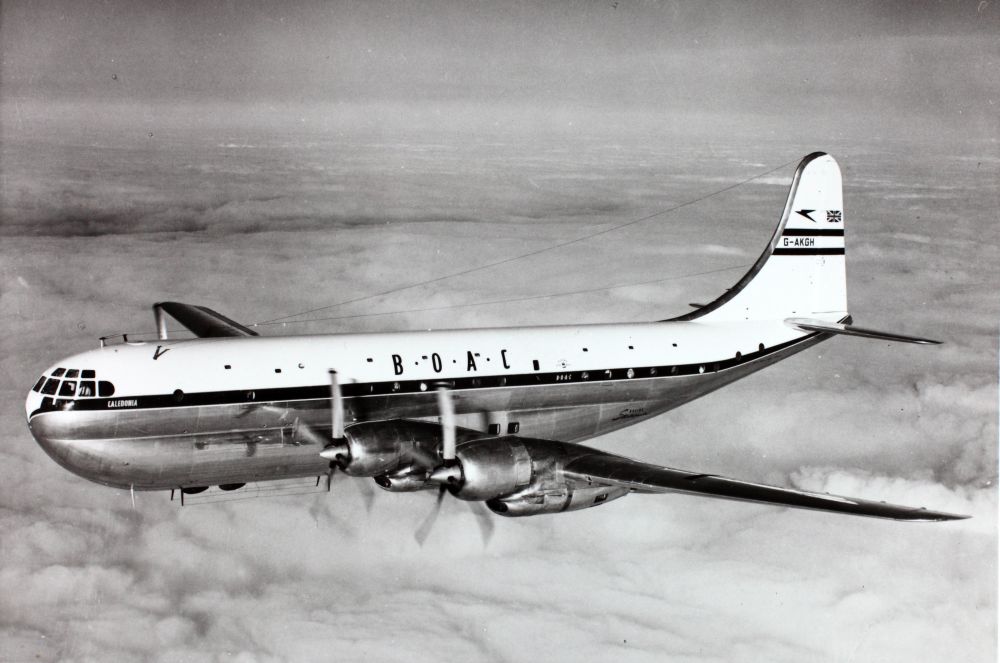
Chapter Five saw mention of a BOAC Britannia, but Bond plans to return to London on a BOAC Monarch. BOAC used Boeing Stratocruisers for Monarch flights in trans-Atlantic first-class travel. The Stratocruiser was a commercial design that can be traced back to the B-29 Superfortress and it generally seated 63 or 84 passengers.
Oldsmobile:
One of the vehicles Leiter passes in his Studillac is an Oldsmobile. Founded as the Olds Motor Vehicle Company by Ransom E. Olds (1864 – 1950) in 1897, the company was acquired by General Motors in 1908. Oldsmobiles were some of the fastest consumer cars available in the 1950s thanks to the Rocket V8 engine introduced in 1949. A gradual decline in sales and profitability led to GM terminating the Oldsmobile line in 2004.
Hoover:
The FBI and J. Edgar Hoover (1895 – 1972) himself are involved in the wrap-up after terminating Operation Grand Slam. A racist and general back-stabber, Hoover was director of the FBI from 1935 to 1972 and through much of the 1940s and 1950s he was so busy obsessing over mythical Communists that he denied the existence of organized crime and their activities in drugs, prostitution, etc. At the time Goldfinger was published, Hoover was well into COINTELPRO, the 1956 – 1971 program designed to discredit and destroy organizations involved in civil rights, the anti-war movement, and other issues.
Daytona Beach:
Leiter suspects that Goldfinger escaped to Cuba via Daytona Beach. Located in east-central Florida on the Atlantic coast, Daytona is best known in modern times as a sport racing hub, and it would probably have offered a more anonymous route to sea compared to Miami Beach or the Florida Keys.
Swiss Special Brigade:
Bond’s car, abandoned in Switzerland, was recovered by the Swiss Special Brigade. I can’t find a Swiss government or military branch with this title. Perhaps it refers to Military Intelligence Service, the military intelligence branch of the Swiss Armed Forces.
Paragon Safe Deposit:
Goldfinger had left some of his gold with Paragon Safe Deposit Co. in New York, withdrawing it when he made his escape. As far as I can tell, this is a fictional business. There is a Paragon Lock & Safe in Ohio, but I can find no information about the company’s age or history.
American Medal of Merit:
Bond is offered, but is required to decline, an American Medal of Merit. I believe Fleming’s information was out of date in this regard. The Medal for Merit was created in 1942 to be granted to civilians who “distinguished themselves by exceptionally meritorious conduct in the performance of outstanding services” during World War II. While foreign citizens could receive the award, it ws still intended for war-time service. The final Medal for Merit was awarded in 1952, long before the events of this book.
Van Wyck Expressway:
The duo drives on the Van Wyck Expressway en route to the airport. The Van Wyck extends from John F. Kennedy Airport (see Chapter Sixteen) to Queens, Long Island. The Van Wyck opened in stages, from 1950 to 1954. Today the Van Wyck is a section of Interstate 678.
Pan Am / TWA:
Arriving at the airport, Bond hears flight announcements for Pan American Airways and Trans World Airlines. Pan Am was established in 1927 and was the preeminent airline of both the U.S. and the world by mid-century. Increasing competition after World War II and industry deregulation in 1978 contributed to Pan Am’s decline, and the airline declared bankruptcy in 1991. TWA was a U.S. airline formed in 1930 by the merger of about half a dozen smaller airlines. Howard Hughes obtained majority control of TWA in 1944. The airline began offering nonstop cross-country service in 1953. TWA’s delay in entering the jet age had a lot to do with Hughes eventually losing control of the airline. In 1958, TWA was the first major airline to hire a Black flight attendant. Thanks partly to a money-losing ticket scheme arranged by corporate raider Carl Icahn, TWA declared bankruptcy in 1995 and was eventually acquired by American Airlines in 2001.
Ben Hogan:
At the airport, Bond buys a copy of Modern Fundamentals of Golf by Ben Hogan. Hogan (1912 – 1997) was a U.S. professional golfer and is still considered one of the all-time great golf players. Hogan won nine major championships in his career and was among only six individuals to complete the men’s modern grand slam. His last professional tournament victory was the Colonial National Invitation in 1959. The real title of Hogan’s book was Five Lessons: The Modern Fundamentals of Golf, first published in serial form in Sports Illustrated in 1957 and published in book form later the same year.
Raymond Chandler:
Bond also buys a copy of “the latest” Raymond Chandler book. Fleming admired Chandler (1888 – 1959), claiming that Chandler wrote “some of the finest dialogue written in any prose today.” Chandler’s “latest” book at the time was Playback, published in 1958 and featuring the fictional detective Philip Marlowe. However, Chandler also published a short story collection the same year called Pearls Are a Nuisance.
Gander:
Bond is flying to London via Gander, a town in the northeast of the island of Newfoundland in Canada. Gander International Airport opened in 1938; the location was chosen specifically as a refueling stop on the NYC – London route. Once longer range jets became common, the airport’s significance declined. The town is oriented toward air travel, with streets named after Amelia Earhart, Charles Lindbergh, Chuck Yeager, and other aviators of note.
Typhoid:
The excuse for getting Bond away from a public area is a case of typhoid in Gander. Typhoid fever is caused by the Salmonella typhi bacteria and is spread by consuming food or water contaminated with the feces of an infected person, which is one reason reliable sewage systems and careful hand-washing are so important. The condition can become fatal if not treated with antibiotics. The first typhoid vaccines were developed in the late 1800s; multiple types of vaccines are available today and are anywhere from 50% to 85% effective.
Life of Reilly:
Galore claims that Brits live “the life of Reilly” when traveling by air. The phrase (often spelled “Riley”) refers to a very comfortable or luxurious life. In pop culture, a 1927 film The Life of Riley appears to be lost to history, but a 1940s U.S. radio program, a 1949 movie, and a 1949 TV series all depicted the trials and tribulations of a weary factory worker. There was also a 1937 novel by Harvey Fergusson, but I’m unable to find a description of the story.
Cape Hatteras:
Goldfinger reveals that he escaped first by driving to Cape Hatteras, on Hatteras Island, one of North Carolina’s barrier islands on the Atlantic coast. Waters around the cape are sometimes known as the Graveyard of the Atlantic because of the number of vessels that have been lost there due to turbulence and shallow waters.
Luftwaffe:
Some of Goldfinger’s men were formerly of the Luftwaffe and were able to assist in flying his getaway plane. The Luftwaffe was the aerial branch of the German military from 1935 until 1946, and it played a significant role in Germany’s early victories in World War II.
KLM:
Goldfinger’s pilots follow a KLM flight during takeoff to locate the correct runway. KLM Royal Dutch Airlines is the flag carrier airline of the Netherlands. KLM was founded in 1919 and is the oldest airline still in operation under its original name.
Distant Early Warning:
Goldfinger reports that his flight was detected by the Distant Early Warning System after passing Nantucket, the island off southeastern Massachusetts. The Distant Early Warning (DEW) Line was a collection of radar stations in northern Canada, Alaska, Greenland, and Iceland. The intent of the DEW line was to detect approaching Soviet bombers or a land/sea invasion. The system was operated by the U.S. Air Force and the Royal Canadian Air Force from 1957 to 1993.
Cellini:
Bond considers Goldfinger a “scientist in crime” equivalent to Cellini or Einstein. (Recall that Goldfinger has already been compared to Einstein, in Chapter Seventeen.) Benvenuto Cellini (1500 – 1571) was an Italian artist also proficient in other disciplines, as a sculptor, goldsmith, and author. Cellini’s life was not as peaceful as Einstein’s; his life was rife with violence, both directed toward and inflicted by him. Embezzlement and “immorality” (sleeping with his models) were among the charges against him, but he inflicted violence with his fists and guns and fled more than one city during his life to avoid imprisonment.
Chapter Twenty-Three: T.L.C. Treatment
Persia 1957:
Bond plans to depressurize the aircraft after recalling a similar air incident over Persia – modern-day Iran – in 1957. I’m unable to find any information on such a crash – according to Wikipedia, Fleming based this on an event “some years previously,” when a U.S. passenger was sucked out of an airplane window while flying over Lebanon.
Perspex:
The aircraft windwso are made of Perspex, sold by the UK’s Imperial Chemical Industries. Polymethyl methacrylate (PMMA), also known as acrylic glass, was sold by other companies as Plexiglass, Lucite, and various other trade names. It’s a relatively lightweight material with a higher impact strength than regular glass. According to Wikipedia, “Non-modified PMMA behaves in a brittle manner when under load, especially under an impact force, and is more prone to scratching than conventional inorganic glass…” This gives me the impression that it might be plausible for Bond to damage the window with a sturdy knife while in flight.
Berserk:
In his final duel with Goldfinger, we’re told, “For the first time in his life, Bond went berserk.” While this seems unlikely, I can’t recall a specific “berserk” incident in the previous books. However, this also seems to refer back to Chapter Five, when Bond felt “fed up” with physical violence. Here he is back in business and ready to utilize his licence to kill.
Colt:
Goldfinger’s gun is a Colt .25 automatic. Bond has used Colt handguns before, but of larger caliber. Goldfinger’s gun might be the Model 1908 Vest Pocket, manufactured from 1908 – 1948 and sold as a small, short-range, easily concealed weapon. The gun was offered with a custom gold-plated finish.
Luger:
Goldfinger’s bodyguard, now deceased, carried a Luger. Lugers were manufactured in multiple countries and used for military service by a number of nations, beginning with Switzerland in 1900 and including Germany during World Wars I and II.
Goose Bay:
Goldfinger had instructed his crew to land the plane near Goose Bay and reassemble in Montreal. Goose Bay is on the west end of Lake Melville in eastern Canada. A military airport serving the Royal Canadian Air Force opened there in 1941. The airport also serves some civilian traffic, but I’m not sure when this started. Montreal, near Vermont and upstate New York, is a good 20-hour drive away, so reassembling there would have been quite a project.
Weather Ship Charlie:
After securing the aircraft, Bond makes radio contact with Weather Ship Charlie, which was also mentioned in Diamonds Are Forever. Europe, Canada, and the U.S. created the International Civil Aviation Organization (ICAO) in 1948 to establish a network of stationary weather-reporting ships in the Atlantic and Pacific Oceans. The ships were gradually replaced by unmanned weather buoys. Weather Ship C (Charlie) was discontinued in 1973.
Whitehall Radio:
Bond instructs the military radio operators to confirm his identity with “Whitehall Radio.” Whitehall is an area in the City of Westminster in Central London and home to a number of British government departments, including the Ministry of Defence and the Foreign Office.
Vertes:
After they are rescued and safe, Bond compares Galore to a painting by Vertes. It seems like an odd comparison, as Marcel Vertes (1895 – 1961) was primarily known as a costume designer and illustrator. The 1952 British film Moulin Rouge, directed by John Huston, was Vertes’ best known cinematic constume design work. Vertes’ work did include illustrations of nude and semi-nude women, however, so this is perhaps what caught Fleming’s attention.
Girl’s Voice:
Galore is magically no longer a gangster or even a shadow of her formerly strong-willed self. Suddenly, she speaks with “a girl’s voice.”
Sing Sing:
Galore fears she’ll be sent to Sing Sing for her life of crime. Sing Sing was already mentioned in Chapter Five. Built primarily as a men’s prison, according to one source, Sing Sing did house women inmates during part of the 1800s, but not by the era of Goldfinger.
Final Thoughts
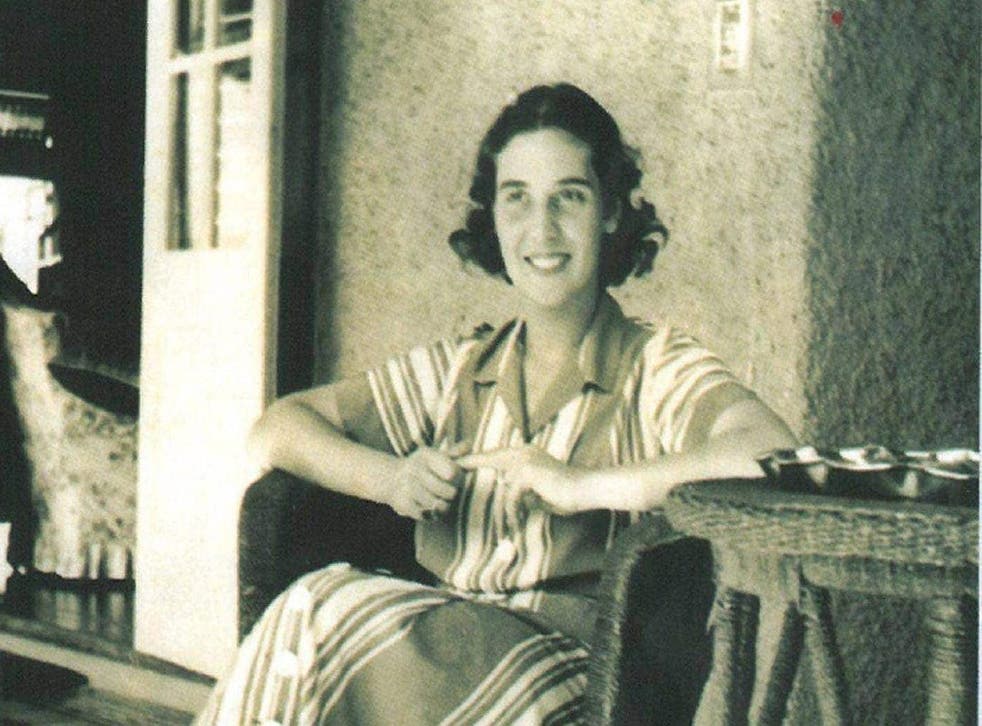
Pussy Galore’s “rehabilitation” at Bond’s hands is preposterous. Her claim that “I never met a man before” is lazy male-fantasy writing, even for Fleming. It’s even lazier to link this abrupt change of sexual orientation to the success or failure of Bond’s mission. Supposedly Galore’s character was loosely inspired by Blanche Blackwell (1912 – 2017), who lived near Fleming’s Goldeneye estate in Jamaica and who had an affair with Fleming. The continuation novel Trigger Mortis by Anthony Horowitz follows up on Galore’s relationship with Bond.
Fleming’s bigotry and misogyny are fully evident here, perhaps even more so than in Live and Let Die. These ramblings do a lot to weaken the book today.
I also feel there is a continuing trend of Bond not savoring food and drink as explicitly as he did in the earlier books, and perhaps this was a reflection of Fleming’s own gradual health decline.

According to Ben Macintyre in For Your Eyes Only: Ian Fleming and James Bond, Goldfinger’s Operation Grand Slam may have been inspired by Sir William Stephenson (1897 – 1989), who operated during World War II under the code name Intrepid. Despite being Canadian by birth, Stephenson was the head of the British Security Coordination (BSC), a British intelligence operation ordered by Winston Churchill and headquartered in New York City. BSC engaged in pro-British propaganda and generally kept watch over British interests in the Americas. Stephenson also oversaw Camp X in Canada (see Chapter 9 of my From Russia with Love guide). During the war, Stephenson devised a plan to steal about $2.8 million worth of gold from the Vichy French colonial government in Martinique, in the eastern Caribbean. Stephenson wanted to steal the gold, convince the French inhabitants of the island to reject the Vichy regime, and give the gold to the Free French. The plan was not implemented, but it certainly seems like a non-fiction basis for Grand Slam. Unlike Bond, Stephenson was awarded and accepted the Medal for Merit.
The disappointing final scene with Galore is part of a fairly rushed wrap-up of the novel, as if Fleming was eager to be done with it. He reportedly predicted Goldfinger to be the last novel-length Bond story, leaving room for short stories in the future. For the short term, he was true to his word, because the next Bond book was, in fact, a collection of short stories.
 The Creative Life Adventure