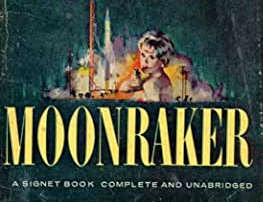
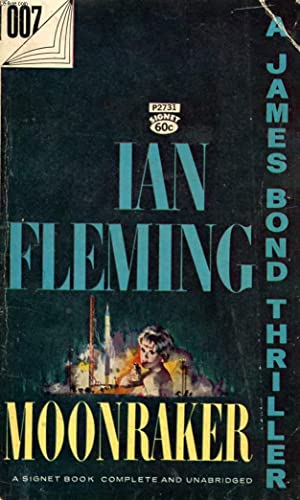
Moonraker (1955) was Ian Fleming’s third James Bond novel and, in some ways, it was the most plausible of the three. A mission to stop an infiltrated rocket launch seems more logical than gambling to stop communism or using buried treasure to fund a global network of Voodoo operatives. World War II, with the fully realized threat of Nazi V-2 rockets, had only ended ten years earlier. The U.S. and Soviet Union were already competing in a nuclear age space race: in 1954 the USSR began plans to launch an artificial satellite, with President Eisenhower announcing in 1955 a similar objective for the U.S. And while the technology in Moonraker is outdated, Fleming’s cautionary tale of a missile-wielding technocrat remains relevant today – do we really believe the likes of Bezos and Musk have noble intentions with their privatized space programs?
As I’ve done previously with Casino Royale and Live and Let Die, this is my informal Moonraker reader’s guide regarding brand and place names, historic references, themes, and character development. A few references are repeated from the previous books, in which case I’ve generally copied those entries. I haven’t included page numbers as this will vary by edition. I’m reading the 1964 Signet Books mass market paperback. Mr. Fleming was kind enough to divide his books into brief chapters, so references should be easy to find in the text. If I’ve made any factual errors, I’m only human, so please feel free to reach out to me via the Contact Me page.
Last updated 11 January 2026
Part 1: Monday
Chapter One: Secret Paper-Work
Ventaxia fan:
The novel opens with James Bond in the basement shooting range of the Secret Service headquarters, where cooling is provided by a Ventaxia fan. The HVAC company Vent-Axia was founded in 1936 and claims to have provided the ventilation system for 10 Downing Street when Winston Churchill was prime minister.
Colt Detective Special:
Bond is using a .38 Colt Detective Special, first produced in 1927 and the first snub-nose revolver on the market. The Detective Special is the same gun used by Tee Hee Johnson in Live and Let Die, and a modified version of the Colt Police Positive used by Bond in Casino Royale.
Bond dies:
Just as Bond experienced symbolic deaths in Casino Royale to warn of dangers to come, here he “dies” on the first page, when he is defeated by the unnamed gun range instructor. It’s significant that the operation of the shooting range is automated, so Bond is essentially competing against a machine, which is very different from the living opponents he will face in the field, but also symbolic of the technology shift represented by Moonraker.
Dewar Trophy:
The range instructor suggests Bond switch to shooting with Remingtons if he wants to win “the Dewar Trophy.” He’s referring to the Dewar Match, an annual team shooting competition held by the National Smallbore Rifle Association and established by Thomas Dewar (1864-1930), one of the brothers who founded the Dewar’s distillery.
Regent’s Park:
Bond goes to his office in the eighth floor of the Secret Service’s “tall, grey building near Regent’s Park.” The park is 410 acres and a convenient location for the Secret Service, home to Winfield House, which was occupied by the Royal Air Force during World War II and in 1955 became residence for the U.S. ambassador to the UK. Bedford College was also located there in the 1950s, and five London Underground stations are located in or very near the park. I can find no evidence that the Secret Service was actually headquartered there, though it appears that the Special Operations Branch once occupied a building nearby.
Loelia Ponsonby:
For the first time we are introduced to the secretary to the 00 branch, Loelia Ponsonby. Loelia performed some type of national service during the war and has been in the Secret Service for five years. Bond has openly encouraged Loelia to marry before she becomes a spinster and the passage illuminates how differently women are treated in the Service (which seems entirely plausible but perhaps also had a lot to do with Fleming’s own attitudes). Men are allowed “fragmentary affairs” as a substitute for “marriage and children,” while women who date outside the service are deemed a “security risk” and expected to resign.
Cavell-Nightingale:
Referring to Loelia Ponsonby: “But every day the drama and romance of her Cavell-Nightingale world locked her more securely into the company of the other girls at headquarters.” Edith Cavell (1865-1915) and Florence Nightingale (1820-1910) were British nurses who made significant contributions to their field. Nightingale improved conditions of care for wounded soldiers during the Crimean War, and Cavell was executed by the German government for helping hundreds of Allied soldiers to escape from Belgium, then occupied by the Germans, during World War I. The sentence seems a bit tongue-in-cheek, as there must not have been much romance in the lives of sacrifice lived by Cavell and Nightingale (and Loelia). Cavell was executed by the Germans in 1915.
Pearls and Twin-set:

Loelia and other higher-ranking secretaries are referred to by the lower echelons as “The Pearls and Twin-set,” with “County and Kensington” backgrounds. A “twinset” is a cardigan over another (usually) knitted or crocheted top. It was a popular look in the 1950s thanks in part to being worn by celebrities such as Audrey Hepburn and Grace Kelly.
00 Section:
We learn that there are currently two other 00 agents, 008 (“Bill”) and 0011. Bond is the senior of the three. 008 has recently escaped, with injuries, from a mission in Peenemünde, a city on the Baltic in northern Germany and the location of the Peenemünde Army Research Center, where the V-2 rocket was developed and tested. Peenemünde was heavily bombed by the Allies before being captured by the Soviet Army at the end of the war. Most of the Research Center’s operations seem to have been terminated or relocated after World War II, but the city’s port was used as a Soviet naval base until 1952, when it was taken over by East Germany. 0011, meanwhile, has gone missing in Singapore in an area Fleming calls the “Dirty Half-Mile.” An online discussion suggests this might refer to Bugis Street, a social area popular with trans individuals in the 1950s, something Fleming would definitely have looked down on.
Ronson:
Bond uses a Ronson lighter. Ronson began selling lighters in the early 1900s. In 1926 the company patented a single-handed lighter sold as the Ronson De-Light Lighter. Ronson introduced the gun-shaped Pist-o-liter in 1912, something fans of The Return of the Pink Panther (1975) will appreciate.
Macedonian tobacco:
Bond smokes one of his custom cigarettes with three gold rings from Morlands of Grosvenor Street. Morlands was a real tobacconist of Fleming’s era that has long since gone out of business. The source region of the tobacco has changed somewhat, specified as a “Balkan and Turkish” blend in Casino Royale, while here it is a “Macedonian blend.” Macedonia was an ancient kingdom in the area that is now approximately occupied by Greece, Bulgaria, and North Macedonia, and birthplace of Alexander the Great.
Mid-century Man:
We get a sense of the mundane nature of Bond’s day-to-day life, contrasted sharply with periods of intense danger. Bond typically gets two or three missions per year but otherwise has a commonplace 10AM to 6PM schedule of paperwork and training. He has ongoing affairs with “three similarly disposed married women” and spends many evenings at Crockford’s, a gentlemen’s club that operated from 1823-1845 and again from 1928-1970. Crockford’s was primarily a gambling club (similar to Blades, the fictional club we will visit in Chapter 3) and was located at 50 St. James Street, very close to Hyde Park, Buckingham Palace, and Berkeley Square, of the 1940 song A Nightingale Sang in Berkeley Square. In other words, even in his humdrum daily life, Bond is immersed in history. Bond’s government salary is 1,500 £/year, supplemented with a mysterious 1,000 £/year “free of tax.” Agents are taken off the active-duty list at age 45, and Bond is currently 37, and he fully expects (or even hopes?) to be killed in the line of duty before that time.
King’s Road:
In reviewing the state of his life, we’re reminded of Bond’s flat off King’s Road. This really was the King’s Road, a private road for the use of King Charles II (1630-1685) in the 1600s, and didn’t enter public use until the 1800s. King’s Road was a hub of mod culture in the swinging 1960s.
Bentley:
We’re also reminded of Bond’s beloved 4.5L Bentley convertible. Here the model year is given as 1930, while it was 1933 in Live and Let Die. According to Wikipedia, the 4.5L was only manufactured from 1927 to 1931, so 1933 never seemed right.
May:
We don’t meet her yet, but Bond reflects on his “elderly” Scottish housekeeper, “a treasure called May.”
Paper Bond:
We have an interesting description of paperwork and reading material Bond reviews when not in the field, concerned “only with background information which might be useful or instructive to the only three men in the Service whose duties included assassination.” In this case, 007 reviews a report from NATO’s Radio Intelligence Division. I can’t find specific reference to an actual Radio Intelligence Division within NATO, but perhaps that evolved into NATO’s current Joint Intelligence, Surveillance, and Reconnaissance system.
Inspectoscope:
Part of the NATO report discusses the Inspectoscope, an actual device used in the 1950s to aid in the detection of contraband at ports of entry.
Philopon:
Bond’s reading also includes information on Philopon, a “Japanese murder drug.” In fact, Philopon was a brand name of methamphetamine distributed in Japan to pilots, soldiers, and defense industry workers during World War II. The combination of government distribution with Japan’s disastrous outcome in the war led to widespread addiction among the public, and methamphetamines were banned in Japan in 1951. One can easily imagine Philopon being weaponized as described here, but so far I can’t find a specific history of Japanese military or intelligence services doing so.
Thunderjets:
Bond also reads of reconnaissance of “Vladivostock” (Vladivostok), the city in extreme southeast Russia on the Sea of Japan. Hinting at the superiority of the U.S. military, this intelligence comes from surveillance by U.S. Republic F-84 Thunderjets, first operated by USAF in 1946 and used heavily in the Korean War. It was the first production fighter aircraft to allow inflight refueling and to carry a nuclear weapon.
Radio operators:
Bond wraps up his reading with a report on the distinctive tapping of radio (telegraph) operators, a kind of signature that, when studied closely, could be used to identify the individual operator. This was not made up but a real thing which has been lost in the era of digital communications technology.
Chapter Two: The Columbite King
Briefing with M:
Moonraker is now the third book in a row with a visit to M’s office for background information early in the novel.
Heaviside Layer:
M’s office is on the ninth floor, one floor above Bond’s. Most of the floor is taken up by Communications, “whose only interest was the world of microwaves, sunspots, and the Heaviside Layer.” T.S. Eliot and Andrew Lloyd Webber aside, Fleming is no doubt referring to the Kennelly-Heaviside Layer, a layer of ionized gases approximately 90-150 kilometers in the atmosphere. Radio waves can be transmitted beyond the horizon by reflecting them off the layer. It was named after electrical engineer Arthur Kennelly (1861-1939) and physicist Oliver Heaviside (1850-1925).
Under cover:
To deflect attention from the Secret Service, the names of fictitious businesses are posted on the front of the headquarters building: Radio Tests Ltd., Universal Export Co., Delaney Bros. (1940) Ltd., The Omnium Corporation, and Enquiries (Miss E. Twining, OBE). Bond made use of the Universal Export name in Chapter 9 of Live and Let Die. Miss Twining is a former executive secretary, like Loelia Ponsonby, now “retired” but deflecting and redirecting all the various inquiries and paperwork relating to the fictional businesses. OBE = Officer of the Most Excellent Order of the British Empire, a higher ranking status than MBE but below CBE, putting Miss Twining in the good company of such notables as Keira Knightley and Ewan McGregor.
Miss Moneypenny:
Bond has a brief exchange with M’s secretary, Miss Moneypenny, who “knew that Bond admired her looks.”
Chief of Staff:
Bond passes M’s Chief of Staff before entering M’s office. As in Live and Let Die, his name is not given, but he was identified in Casino Royale as Bill Tanner. In that book, he was a “young sapper,” but here he is “about Bond’s age.”
M:
Bond is sunburned from his recovery time in the tropics following Live and Let Die. M disapproves, the consequence of “the puritan and the jesuit who lived in all leaders of men.” M also mentions the gold recovered from Mr. Big in Live and Let Die, and refers to Bond as James, highly unusual and indicative of the personal nature of M’s request.
Sunday Express:
We get the first mention of Sir Hugo Drax, the subject of a recent, and apparently sensationalized, report in the Sunday Express. The Sunday Express, sister paper of the UK’s Daily Express, was first printed in 1918 and is still published today.
Hobbs and Richards:
Drax has achieved a kind of celebrity status which Bond compares to Jack Hobbs and Gordon Richards. Jack Hobbs (1882-1963) was a highly successful cricketer, and Gordon Richards (1904-1986) was an equally successful jockey; both athletes were knighted in 1953.
Drax:
Like all Bond villains, Drax suffers a physical impairment or disfigurement, in this case scars from war injuries. He is also, according to Bond, “a bit loud-mouthed and ostentatious.”
Technocrats:
Fleming brilliantly foreshadows the narcissistic libertarian technocrats of the 21st century. Drax is developing the Moonraker rocket under the guise of Britain’s defensive posture, “out of his own pocket and far beyond what any government seems to be able to do…” This is what allows Drax to proceed with his hostile plans beyond public oversight. No individual or private company should be allowed to undertake rocket programs or space exploration independently.
Ardennes:
Bond speaks of “the German break-through in the Ardennes in ’44…” The Ardennes is a heavily forested area that stretches through Belgium, Luxembourg, Germany, and France. Bond is referring to the Battle of the Bulge, sometimes known as the Ardennes Offensive, which began with a German surprise attack on Allied forces in Belgium in December, 1944, and included a V-2 rocket destroying a movie theater in Antwerp, killing 567 people.
Werewolves:
Bond credits part of the Ardennes assault to German Werewolf units, groups of elite German soldiers that operated behind enemy lines during the war. They seem to have specialized in assassinations. I can find no confirmation that the Werewolves were directly involved in the Battle of the Bulge, but it seems feasible. The destruction of the American/British liaison office, resulting in Drax’s wartime injuries, appears to be a fictional event.
Amnesia:
Like Le Chiffre, Drax is recovered by the Allies with no memory of his past. He appears to be a man with no history, completely unlike Bond. He assumes the identity of Hugo Drax based primarily on circumstantial evidence. This makes Drax an orphan, which in Fleming’s mind would have primed him to a life of evil.
Columbite:
Drax made his fortune by cornering the market on columbite. According to Bond, “Jet engines can’t be made without it,” and most columbite comes from Nigeria. Nigeria really is a major supplier of columbite, although it appears Rwanda is currently the world’s largest exporter. Columbite is a superconductive metal used primarily in electronics manufacturing, though I can’t find any confirmation of its use in jet engines. The first formally identified sample of columbite was collected by John Winthrop (1606-1676) in Connecticut (when it was a colony) in the 1600s, but it was named after Christopher Columbus.
Tangier:
Like all good capitalists, Drax has operated much of his business in an offshore tax shelter, in this case Tangier, which Bond describes as a “free port, no taxes, no currency restrictions.” Tangier is an ancient city in northern Morocco. In this case, Britain appears to have contributed to the situation, cooperating with Spain and France to create the Tangier International Zone, a multicultural area specifically designed to be favorable to international trade. The area was incorporated back into Morocco when that country became independent in 1956.
Goodwood:
Drax has used his fortune to buy his way into the British upper classes, including box seats at Goodwood. There’s a Goodwood Racecourse for horse-racing that was opened in 1801. But given Fleming’s excess of references to auto racing and cars in general in this book, I suspect he’s referring to Goodwood Circuit, a racing course located in Chichester, in southern England. Originally built as a Royal Air Force facility, motor racing began there in 1948. It is currently home to the Goodwood Festival of Speed and the Goodwood Revival, an annual event featuring vehicles more likely to have been in use in Bond’s time.
Walker Cup:
Drax contributes money to the Walker Cup, a golf match originated by the Royal Liverpool Golf Club in the 1920s and sponsored today by The R&A (a collective group and one of the global governing bodies of golf) and the U.S. Golf Association. The Walker Cup is named after George Herbert Walker (1875-1953), president of the USGA at the time the match was established, and grandfather of George H.W. Bush.
Albert Hall:
In addition, Drax sponsors a Coronation Ball for Nurses at Albert Hall. The Royal Albert Hall is a performance hall opened in 1871 in London’s South Kensington neighborhood. The idea originated with Prince Albert in the 1850s, but he passed away before the hall was completed. With a seating capacity of 5,272, the Royal Albert Hall has hosted the likes of composer Sergei Rachmaninoff, Albert Einstein, and Muhammad Ali.
Atomic rocket:
Drax donates his columbite holdings and 10,000,000£ to England in support of a “super atomic rocket.” In fact, in 1952 the UK became the third country to test a nuclear weapon. What England struggled with was a means of delivering an atomic weapon, hence the significance of Drax’s Moonraker. The British Blue Streak intermediate-range ballistic missile (IRBM) system was developed in the mid-1950s but was considered a failure and canceled in 1960.
Woomera:
Rocket specialists at “Woomera Range” have approved Drax’s Moonraker design. To avoid testing potentially dangerous rockets around the crowded UK, Britain entered a partnership with Australia to develop the Woomera Rocket Range in a thinly populated area of southern Australia. A woomera is a spear-throwing tool used by Australian Aborigines. Many missile and rocket systems have been tested at Woomera over the years and tracking stations there played a significant role in the early U.S. manned space program.
Chapter Three: ‘Belly-Strippers’, Etc.
Society:
M reveals the stratified company he keeps when he tells Bond about Drax cheating at cards. “In so-called ‘society’ it’s about the only crime that can still finish you, whoever you are.”
Tranby Croft:
M frets over the resulting scandal if the public at large should learn about Drax cheating at cards at his gentlemen’s club, Blades. “Tranby Croft all over again.” Tranby Croft was the Yorkshire home of prominent businessman Arthur Wilson (1836-1909), friend of Edward (1841-1910), the Prince of Wales. Sir William Gordon-Cumming (1848-1930) was in the prince’s group when they visited Wilson in 1890 at Tranby Croft. Gordon-Cumming was caught cheating at baccarat. He signed a document promising never to play cards again and the guests agreed to keep this dastardly secret to themselves. Someone talked, however, and Gordon-Cumming filed a libel suit against the Wilson family. Gordon-Cumming lost the case, was dismissed from his position as a lieutenant colonel in the British Army, and was rejected by high society ever after.
Cardshark Bond:
M calls 007 “the best card player in the Service,” referencing Bond’s prior “casino jobs,” specifically mentioning a pre-war mission concerning some Romanians in Monte Carlo, an assignment that was also referred to during another casino job, Casino Royale.
Belly-Strippers:
Bond describes the belly-strippers technique of the chapter title – “trimming a whole pack less than a millimetre down both sides, but leaving a slight belly on the cards you’re interested in – the aces, for instance.” You can find a demonstration at the All Magic web site.
Piquet:
M invites Bond to Blades to confront Drax, prior to which “I’ll take some money off you at piquet.” Piquet is a two-player card game first written about in 1535 and is believed to have originated in Spain. It is played with a 32-card deck with all the 2 through 6 value cards removed.
Bond’s lunch:
Bond has a solo lunch in the officers’ canteen of grilled sole, a large mixed salad “with his own dressing laced with mustard,” Brie with toast, half a carafe of white Bordeaux (at work!), and two cups of black coffee.
Baker Street:
Bond’s drive home takes him along Baker Street, a street that begins near Regent’s Park and heads south to Portman Square. Of course, Sherlock Holmes lived at 221B Baker Street, and that address is now home to the Sherlock Holmes Museum.
Regency house:
Bond’s flat is in a “Regency house.” Regency architecture is associated with the Regency Era, approximately 1811-1820 when George, Prince of Wales, was authorized by the Regency Act to discharge royal functions in light of the mental illness of his father, King George III. Sometimes the term is applied more loosely, to the years 1795, when the Prince of Wales married Princess Caroline of Brunswick-Wolfenbüttel, until 1837, when Queen Victoria took the throne. Regency houses often feature white stucco facades, entryways framed by two columns, wrought iron balconies, and bow windows.
Scarne on Cards:
Bond brushes up on his card-handling skills by reviewing the book Scarne on Cards, a real book published in 1849 by magician John Scarne (1903-1985). Born in Ohio but raised in New Jersey, Scarne set out to be a professional gambler but his Roman Catholic mother convinced him to pursue magic instead.
Cole wallpaper:
Bond’s flat has Cole wallpaper, which must come from Cole and Son, founded in London in 1875 and still providing high-end wallpaper today.
Visualization:
Bond practices a visualization technique in preparation for his first meeting with Drax. He used a similar approach leading up to his casino session against Le Chiffre, as described in Chapter 8 of Casino Royale.
Blades:
Blades, where M is a member and Drax is cheating at cards, is described as “probably the most famous private card-club in the world.” The private gentlemen’s club, a product of the 18th century British empire, originated in London’s West End. The clubs were a reflection of, and reinforcement of, polite establishment, often associated with veterans of a particular military branch or alumni of a specific university, where “gentlemen” could share interests in sports, politics, literature, etc. Card-playing was often a significant activity at such clubs. A few such clubs still operate, some no longer restricted to men only. Leave it to the Americans to sully the tradition and turn “gentlemen’s clubs” into strip clubs. The fictional Blades opened in 1776.
Park Street:
Fleming places Blades on Park Street, “a quiet backwater off St. James’s.” According to the map (and Wikipedia), Fleming really means Park Place, a tiny street off of St. James’s Street, a main street through London’s St. James’s district. In the 1800s, and probably still by Bond’s time, the area was a hub of Blades-like gentlemen’s clubs. Today Park Place is home to, among other organizations, the invitation-only private club the Royal Over-Seas League.
Horace Walpole:
Credited with being first to write about the fictional Blades in 1776, the very real Horace Walpole (1717-1797) was a writer and long-time Member of Parliament. Walpole published The Castle of Otranto in 1764, widely regarded as the first Gothic novel.
Duke of Wirtemberg:
Fleming describes the “Duke of Wirtemberg” writing his brother with great excitement about Blades in 1782. I assume he means the Duke of Württemberg. The Duchy of Württemberg was a part of the Holy Roman Empire in what is now southwest Germany. In 1782, the duke was Charles Eugene (1728-1793). Eugene had a passion for agriculture, and specimens he planted can still be found in arboretums and botanical gardens in Germany. He also engaged in a different kind of gardening, fathering numerous children out of wedlock.
Card playing:
Just as he assumed widespread knowledge of gambling and casinos among his readers in Casino Royale, Fleming mentions various card games – quinz, whist, piquet (see above), etc. – with the expectation that his readers are familiar with the terms.
Blades:
Blades has two primary requirements for membership (three, really, though Fleming wouldn’t have considered gender an issue) – “behave like a gentleman” and demonstrate at least 100,000£ in assets (remember that Bond’s salary is only 1,500£/year). The narrator (Fleming) doesn’t approve of economic trends that level the playing field: “It [Blades] is not as aristocratic as it was, the redistribution of wealth has seen to that…” Britain experienced an economic boom during the 1950s, similar to what happened in the U.S. There were certainly many who didn’t share the wealth, but overall wages increased, unemployment decreased, and more households had considerably more disposable income by the end of the decade. This trend must have been obvious by 1954, the year Fleming wrote Moonraker.
The Times:
When members stay overnight at Blades (because gentlemen’s clubs often served as a home away from home where men could engage in activities their families might not have approved of), one of the luxuries they enjoy is morning delivery of The Times. The paper was founded in 1785 as The Daily Universal Register, then changed its name to The Times in 1788. Since 1981 The Times has been a subsidiary of the sinister News Corp. Kim Philby was a correspondent for The Times in the 1930s. From 1951 to 1966, The Times published The Times Science Review quarterly, which we can imagine would have shown great interest in the Moonraker program.
Floris:
Soaps and lotions at Blades are provided by Floris of London, founded in the 1730s by Juan Famenias Floris and was granted its first Royal Warrant (a contract to serve the royal family) in 1820. Floris was perfumer to Queen Elizabeth II and is still owned by the Floris family.
Ladbrokes:
Blades members are also offered “a direct wire” to Ladbrokes, a real bookmaker and casino operator founded in 1886. Today the company is also active in online gaming.
Sloane Square:
Driving to Blades, Bond pauses at Sloane Square, at the edge of Chelsea, named after Sir Hans Sloane (1660-1753), a doctor who owned the land at the time the square was formed. A lovely fountain with a sculpture of Venus was installed in the square in 1853.
Summer Shell:
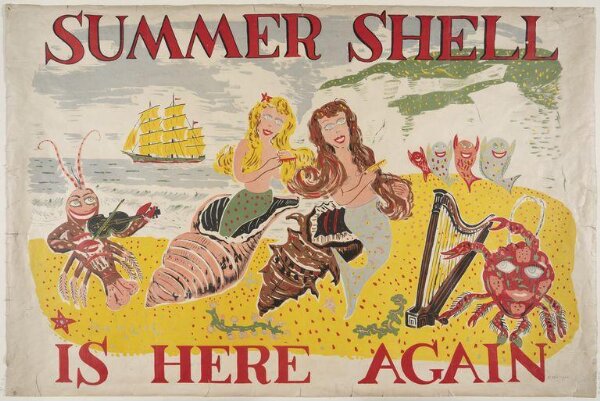
I had to consult the Fleming’s Bond site for insight on this one. Fleming engages in some in-your-face foreshadowing as Bond nears his first encounter with Drax. As if “The sky threatened rain and was suddenly dark” wasn’t enough, Bond sees a neon sign that says “Summer Shell is Here,” but faulty lights make it appear to say “Hell is here.” The ad campaign was conducted by Shell Oil to remind drivers to change to a thicker motor oil in the summer. A subsequent “Winter Shell is Here” campaign reminded drivers to change to a thinner oil for colder months.
Chapter Four: ‘The Shiner’
Brooks’s:
Bond parks his Bentley “outside Brooks’s,” a real-life Blades-like gentlemen’s club founded in 1762 and still in operation today.
Adam style:
Blades has an “Adam frontage.” The Adam style was established by Scottish architect William Adam (1689-1748) and his sons Robert (1728-1792) and James (1732-1794). It was a neoclassical architecture and design style featuring curved walls and domes, elaborate plasterwork, and innovative color schemes. It was a significant influence on the Federal style practiced in the U.S.
Brevett:
Bond is greeted by Brevett, “the guardian of Blades and the counsellor and family friend of half the members.”
M:
We get a little more insight into M’s identity, “Admiral Sir M**** M*******” of the Ministry of Defense. So “M” isn’t a title but his actual initial.
Commander Bond:
We also, for the first time, get Bond’s formal military title, “Commander James Bond, C.M.G., R.N.V.S.R.” CMG is Companion of the Order of St. Michael and St. George, established by George IV, Prince of Wales, in 1818 for British subjects who have rendered important service within or outside the Commonwealth. RNVSR was the Royal Naval Volunteer Supplementary Reserve, established in the 1930s to train additional naval recruits for the pending war. The RNVSR supplemented the Royal Naval Volunteer Reserve (RNVR), created in the early 1900s to allow individuals in civilian jobs to train part-time for service when needed.
Un-English:
007 imagines what the members of Blades must think of him. “Bond knew that there was something alien and un-English about himself.” He speculates they are thinking, “May have been attached to Templer in Malaya. Or Nairobi. Mau Mau work.” Sir Gerald Walter Robert Templer (1898-1979) was a British Field Marshall who fought in both world wars and was appointed British High Commissioner to Malaya in 1952 as a result of the Malayan Emergency, a struggle for Malayan independence. The Mau Mau Uprising took place from 1952 to 1960 in Nairobi, the capital of Kenya, which was still a British colony at the time. The Kenya Land and Freedom Army (KLFA), also known as the Mau Mau, fought against British colonists. Bond’s feeling of being “un-English” is also important in that he expects to never have a mission inside England, as that would be outside the Secret Service’s jurisdiction. “Abroad was what mattered.”
Rot-gut:
Bond drinks a dry vodka martini with a slice of lemon, a drink that M thinks of as “rot-gut.”
Lawrence of Beau Brummell:

M and Bond find Drax playing cards at “the last table beneath the fine Lawrence of Beau Brummel over the wide Adam fireplace.” The Adam style was mentioned earlier in the chapter. Beau Brummell (I’m not sure why Fleming omits the second “l”) (1778-1840) was the classic dandy, an “arbiter of men’s fashion” and good friend of someone we’ve already met, George Augustus Frederick (1762-1830), who became King George IV. Like many a slave to fashion, Brummell had a spending problem and fled England for France in 1816 to avoid debtor’s prison. When he died of syphilis-induced madness, he was broke and poorly dressed. Sir Thomas Lawrence (1769-1830) was an English painter renowned for his many portraits, including one of Brummell. Also like Brummell, Lawrence had problems with debt.
Bridge:
The card game being played here is bridge, a game I’ve never learned, though Fleming assumes the reader will understand the game’s terminology. It seems for more complicated (and less interesting) than the baccarat played in Casino Royale.
Basildon:
He was mentioned earlier but now we meet Lord Basildon, the chairman of Blades and the man who initially reached out to M regarding Drax cheating at cards.
Drax:
We get our first close look at Drax, and Fleming repeatedly de-humanizes him as he tends to do with Bond’s villains. Drax has red hair (definitely sinister, remember Le Chiffre had red-brown hair), a right eye larger than the left, and scars from plastic surgery to rebuild his face after the explosion from which he was recovered. He also has a “prognathous” (protruding) upper jaw, and diasthema (or diastema, gaps) in his upper central teeth, which psychologist Bond concludes must have come from thumb-sucking because that’s what all villains do during childhood.
Virginian cigarettes:
Drax smokes “cork-tipped Virginian cigarettes,” which as far as I can tell is not a brand but refers to the source of the tobacco. The cork is just an early type of filter to prevent the smoker from getting bits of tobacco in their mouth.
Cartier:
Drax wears Cartier cuff links. The French jeweler was founded by Louis-François Cartier (1819 – 1904) in 1847 and was controlled by the Cartier family until 1964.
Patek Philippe:
Drax also wears a Patek Philippe watch. Patek Philippe is a high-end Swiss watch and clock maker founded in 1839 by Antoni Patek (1812-1877) and Adrien Philippe (1815-1894).
Miles:
Now we learn that M’s first initial stands for Miles.
Chapter Five: Dinner at Blades
Regency dining room:
Like Bond’s flat, described in Chapter Three, the Blades dining room is in the Regency style.
Porterfield:
We meet Porterfield, the head steward at Blades.
Bond/M dinner:
M had Beluga caviar (banned in the U.S. in 2005 as it comes from the critically endangered beluga sturgeon), deviled kidney (lamb kidneys served in a spiced sauce), bacon, peas, new potatoes (small potatoes because they are harvested early), strawberries in kirsch (a brandy distilled from cherries), and a marrow bone; Bond has smoked salmon, lamb cutlets, peas, new potatoes, asparagus with Hollandaise sauce, and a pineapple slice. To drink, Mouton Rothschild ’34 claret for M and Dom Pérignon ’46 champagne for Bond, and a vodka that M approves of, Wolfschmidt from Riga. Wolfschmidt was first distilled in Riga, Latvia. I don’t know how these people don’t all have heart and liver disease. This scene also introduces us to Grimley, the wine-waiter at Blades.
Marthe Richard:
A seductive waitress causes Bond to recall a pre-war Paris brothel, and Bond seems disappointed that French brothels were done away with as a result of La Loi Marthe Richard, the 1946 law banning prostitution in France, championed by Marthe Richard (1889-1982), and crucial to Le Chiffre’s financial troubles in Casino Royale.
Moscow:
Bond talks about the time he was “attached” by M to the embassy in Moscow. Was this mentioned in the previous books? I don’t think so, I can’t find it in my notes. Was Bond in Moscow for a specific mission or on long-term duty?
Rich:
M is refreshingly honest in his assessment of how one becomes wealthy in a capitalist society. “Somebody said that to become very rich you have to be helped by a combination of remarkable circumstances and an unbroken run of luck.”
Benzedrine:
Bond ingests some Benzedrine in powder form in preparation for meeting Drax at the bridge table. This is the third novel in a row in which one character or another uses this early amphetamine. The scene also reinforces the attitude of cautious preparation attributed to Bond in the previous two books. “Whenever he had a job of work to do he would take infinite pains beforehand and leave as little as possible to chance.”
English cooking:
After suffering through American cuisine in Live and Let Die, 007 must be relieved to be spending time in England. “The best English cooking is the best in the world…”
Jute:
M describes one member of Blades as having “stacks of money from Jute.” As far as I can tell, the man is an industrialist in the manufacture of jute, the strong fiber produced from Corchorus plants and used primarily in the production of twine, rope, and rugs. The primary sources of jute are India and Bangladesh, both of which were part of the British empire until 1947 and did not historically identify themselves as “India” or “Bangladesh.”
Art:
Fleming drops a series of names to demonstrate what a distinguished art collection Blades has: an unfinished portrait of “Mrs. Fitzherbert” (Maria Anne Fitzherbert (1756-1837), longtime “companion” of George, Prince of Wales, later to become King George IV), by English painter George Romney (1734-1802); Jeu de Cartes (“Game of cards,” and apparently a fictional painting) by French painter Jean-Honoré Fragonard (1732-1806); engravings of the Hell-Fire Club (a name applied to several British clubs for roguish men but most commonly referring to the Order of the Friars of St. Francis of Wycombe, a group that mocked religion and, unusual for the time, admitted both men and women).
Tudor rose:

The interior doors at Blades contain carvings of the Tudor rose, an emblem of England named after the House of Tudor, the royal house that occupied the English throne from 1485 to 1603, after triumphing in the Wars of the Roses, the English civil wars that lasted from 1455 to 1487.
George IV silver:
Blades members dine with George IV sterling silver, which as far as I can tell is not associated with a specific manufacturer, but is from the period of – here he is again – George IV (1762-1830), king of England from 1820 to 1830.
Chapter Six: Cards with a Stranger
Cabinet Havana:
Drax and his partner Meyer smoke “Cabinet Havanas,” cigars that clearly originated in Cuba. Cabinet, however, refers not to the tobacco or cigar-maker, but to cigars purchased in a cigar box made of Spanish cedar.
Impulsive:
It’s significant that Bond takes so many precautions, because the greatest danger always occurs when he is careless or over-confident. “Bond cursed himself for an impulse that earlier in the day would have seemed unthinkable.”
Ape:
Fleming continues to de-humanize the enemy, both to distinguish him from Bond and to increase the sense of danger, referring to Drax as a “hairy ape.”
Rothschild:
Bond drinks a brandy that, according to M, comes from “the Rothschild estates of Cognac.” This (and the claret in Chapter Five) appears to come from Château Mouton Rothschild, established in the 1700s but renamed by Nathaniel de Rothschild (1812-1870) in 1853.
More bridge:
We get a fairly detailed description of the game between Bond, M, Drax, and Meyer, but, as earlier, it is difficult to follow for those of us unfamiliar with the game.
Damaged Drax:
More de-humanizing in the form of physical “imperfection” that, in Fleming’s world, correlates with evil behavior. Here, we’re reminded of Drax’s “damaged eye” and, worse, his “large, beaky nose,” which sounds like stereotyping that’s getting into anti-Semitic territory.
Albany:

Meyer is eager to get back to “his quiet flat in Albany.” I believe this is The Albany, originally called Melbourne House when it was built in the 1700s for Peniston Lamb, 1st Viscount Melbourne (1745-1828). Later it was owned by Prince Frederick, Duke of York and Albany (1763-1827), then converted into apartments by architect Henry Holland (1745-1806), intended primarily for well-to-do bachelors and occupied over the years by the likes of Lord Byron, Aldous Huxley, and J.B. Priestley.
Battersea:
Meyer is alleged to collect “Battersea snuff-boxes.” Whether this is a simple character fact or speculation intended to depict him as a lonely soul, Battersea is a district southwest of central London. In the 1700s, Battersea was a popular source for products of enamel on copper.
Chapter Seven: The Quickness of the Hand
Ghosts:
After hints in the previous books that 007 is superstitious, touching wood in Casino Royale and thanking the stars that guided his flight in Live and Let Die, here is another one. Bond imagines “friendly” ghosts of past gamblers watching over him in a protective way. It definitely appears to be a character trait, but one I have trouble reconciling with Bond’s calculating nature.
Mahomet Ali:
In a nice touch of continuity, Drax tells us he once gambled for high stakes in Cairo with the Mahomet Ali Syndicate, the same syndicate of Egyptian “bankers and businessmen” Le Chiffre was loosely connected with in Casino Royale. Is this a clue as to Drax’s true nature?
More bridge:
Again, Fleming gives us a detailed description of the bridge match, which I find far less compelling than the baccarat duels in Casino Royale.
Morphy:
Fleming describes a ritual of Morphy, “the great chess player,” of never looking his opponent in the eye until Morphy knew victory was in sight. This would be Paul Morphy (1837-1884), born in New Orleans and a child chess prodigy. Morphy overwhelmingly defeated opponents throughout the U.S. and Europe until retiring while he was still in his twenties. He was only 47 when he died of a stroke.
Threats:
Bond defeats the cheater Drax by cheating himself, sending Drax the necessary message. Drax threatens Bond (“I should spend the money quickly, Commander Bond.”), ending the chapter, and Part 1, with a similar foreshadowing of doom as Chapter Three ended with.
Part 2: Tuesday, Wednesday
Chapter Eight: The Red Telephone
Melancholy:
Bond is honest enough to accept responsibility for the consequences of his over-indulgence the night before, suffering “acidity and liver,” “melancholy,” and “spiritual deflation.”
Gain and loss:
Bond is contemplative after his “duel” with Drax. “Before he slept he reflected, as he had often reflected in other moments of triumph at the card table, that the gain to the winner is, in some odd way, always less than the loss of the loser.” This is a corollary to the theory expressed in the original Star Trek series, that “having is not so pleasing a thing after all as wanting.”
008:
Loelia Ponsonby brings an update on 008’s condition: he is supposedly recovering at “the military hospital at Wahnerheide.” Bond doesn’t seem convinced that 008 is out of the woods. The Wahner Heide is a wilderness area near Cologne, in west-central Germany. The Cologne Bonn Airport is nearby. In the 1950s, Cologne was the capital of West Germany. Before World War II, it was the site of a Luftwaffe base which was taken over by the Royal Air Force in 1945. The airport was converted to civilian use in 1957.
Inspectoscope:
Bond continues his reading on the Inspectoscope from Chapter One. The document is from U.S. Customs, but instead of detailing the Customs branch use of the device to detect contraband, the emphasis is on applications in prisons and to discourage theft in diamond mines (something that, perhaps, inspired Diamonds Are Forever (1956)).
Bar Mecca:
Bond also reads more about the “Japanese murder drug” Philopon, referenced in Chapter One. The drug is blamed for the “Bar Mecca murder case,” which apparently was a real crime that took place in a Tokyo bar called Mecca. So far, I can’t find any other details about the event.
Phensic:

Bond takes two Phensic tablets to treat his headache. At the time, Phensic contained aspirin, caffeine, and phenacetin (see this 1960s TV ad). Phenacetin was used to relieve pain and reduce fevers, but was banned in the UK in 1980, and many other countries throughout the 1970s and 1980s, because it was linked to kidney disease.
Persecution:
Bond determines that Drax suffers from paranoia and a persecution complex, much like today’s billionaire oligarchs.
Rolls-Bentley:
Bond hasn’t received his bridge winnings yet, but he mentally spends the money anyway. His first intended purchase is a Rolls-Bentley convertible. Rolls Royce, founded in 1904 by Charles Rolls (1877-1910) and Henry Royce (1863-1933), acquired Bentley in 1931.
Henry Cotton:
“Henry Cotton irons” are among Bond’s planned purchases. Sir Thomas Henry Cotton (1907-1987) was a British golfer who designed a series of golf courses in retirement. The golf clubs in question seem to be a line produced by George Nicoll, which produced golf clubs from the late 1800s until the 1980s. Cotton also had a strong interest in men’s fashion, and Henry Cotton’s, a British tailor, was established in 1978.
Taittinger:
Bond also imagines Taittinger champagne among his fantasy purchases. Taittinger was founded in 1734 in Reims, in northern France.
Chapter Nine: Take It From Here
Ministry of Supply:
Drax’s Moonraker facility is a Royal Air Force base with the Ministry of Supply responsible for the work facilities. The Ministry of Supply was established in 1939 to coordinate supplies and equipment to the branches of the British armed forces. In 1946, the Ministry also took control of British research into atomic weapons. The Ministry of Supply operated until 1959, when its functions were transferred to other government branches.
Dover and Deal:
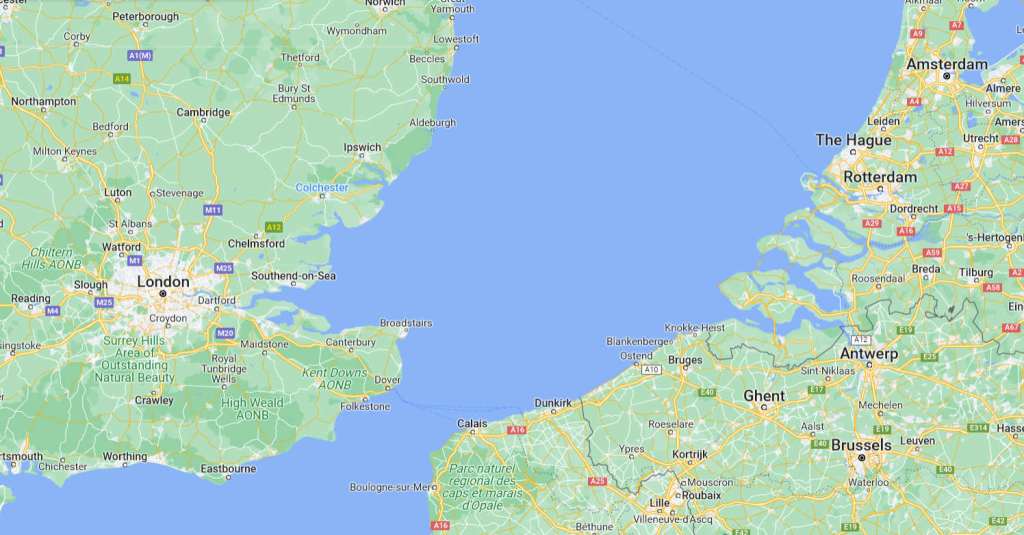
The Moonraker facility is “on the edge of the cliffs between Dover and Deal.” Dover and Deal are coastal towns in southwestern England, only about eight miles apart and facing the English Channel. Today, and in Bond’s time, Dover was a major port city, but the area has been occupied by humans since at least the Stone Age. The famous White Cliffs of Dover, layered with white chalk and black flint, are nearby.
Germans:
Drax has developed the Moonraker by hiring fifty rocket scientists recovered from Germany at the end of World War II. It’s well known that many scientists and engineers from the V-2 program went to either the U.S. or the Soviet Union after the war. I can’t find confirmation of how many actually went to Britain, but in the novel Drax has hired fifty who, according to M, would otherwise have been serving the USSR. The situation creates a jurisdictional dilemma, because crimes at the facility would normally be a matter for local police or the Special Branch, the national security and intelligence agency. In this case, however, the Secret Service conducted security clearances for all of the German rocket scientists, giving the Service a measure of responsibility for the bizarre murder that has occurred at the site.
Luger:
The murder of Major Tallon (who we never meet because of his untimely death) was committed with a Luger. Lugers were manufactured in multiple countries and used for military service by a number of nations, beginning with Switzerland in 1900 and including Germany during World Wars I and II. Considering these people were cleared by the Secret Service, it seems odd that a Luger would remain in anyone’s possession at a sensitive and vital defense facility.
Egon Bartsch:
The killer is (was) a German scientist named Egon Bartsch, who subsequently took his own life. Bond quickly makes assumptions about Bartsch’s personality despite having never met the man. “One of those highly strung nervous chaps with the usual German chip on his shoulder.” Considering the outcome of two world wars and what we know of the work conditions at the Moonraker site, a “chip on the shoulder” doesn’t seem surprising.
The Wash:
M tells Bond that an area in the North Sea north of a line connecting the Hague with the Wash will be cleared for the Moonraker test. The Hague is the administrative center of the Netherlands and home to the UN’s International Court of Justice and the International Criminal Court. The city was occupied by the Germans during World War II and suffered heavy bombing. The Wash is a bay on England’s eastern coast that opens on to the North Sea. The salt marshes and tidal banks of the Wash create a biodiverse environment of considerable importance to the local ecology. The Ministry of Defence maintains a weapons range in an area of the Wash, as it did in Bond’s time.
Independence:
Fleming generally keeps Bond in a world where Britain is still a major world power that takes a leadership role equivalent or superior to the U.S. and other allies. Occasionally, however, he acknowledges Britain’s waning political influence, and this explains both the importance of the Moonraker program and the decision for the Secret Service to intervene in the murder investigation. M tells Bond, “The way things are in the world at the moment it was decided that the sooner the Moonraker could give us an independent say in world affairs the better for us and quite possibly for the world.”
Chapter Ten: Special Branch Agent
Maidstone:
En route to Drax’s facility, Bond drives through Maidstone, about thirty-two miles east-southeast of London. Historically a center of agriculture, Maidstone was home to more of an industrial economy by the 1950s.
Player’s Tobacco:
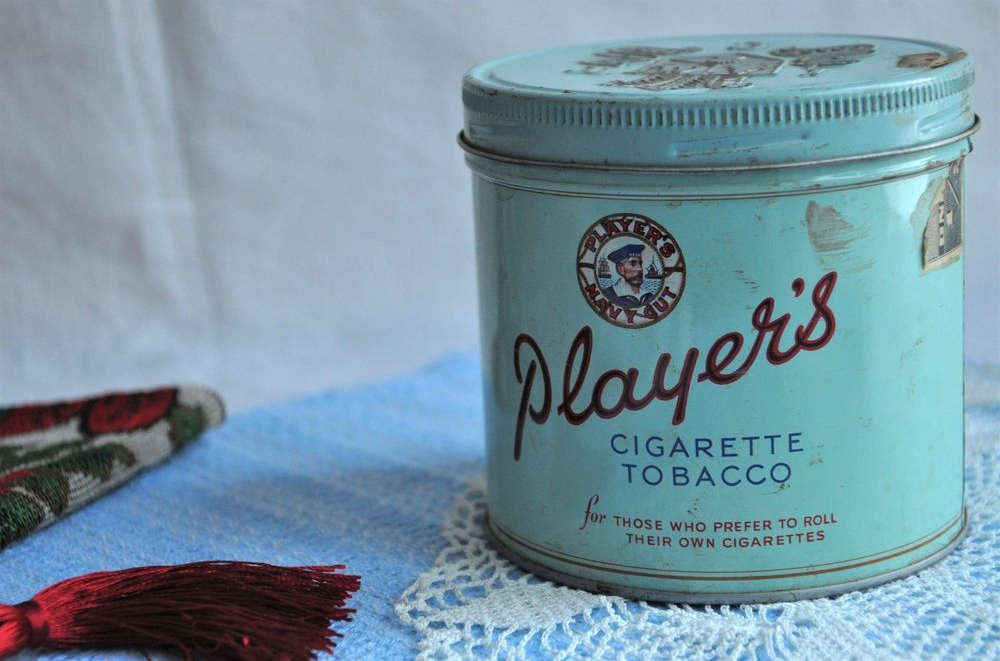
Established in Scotland in 1820, John Player bought the business in 1877 and set up shop in Nottingham in northern England. At one point, two-thirds of cigarettes sold in Britain were Player’s. The cigarettes were sold in decorative tins that were, according to Fleming, commonly found used as ashtrays in government offices, like the one Bond sees when he visits Special Branch.
Vallance:
We meet Assistant Commissioner Ronnie Vallance, Gala Brand’s supervisor at Special Branch.
Clausewitz:
Bond leaves Scotland Yard (Special Branch) “with the feeling that he had achieved Clausewitz’s first principle. He had made his base secure.” Carl von Clausewitz (1780-1831) was a Prussian general and military theorist, best remembered for his work On War, which was uncompleted when he died. Clausewitz introduced the theory of the “fog of war,” the difficulty of assessing military capabilities and intentions during the heat of conflict. Bond seems to be thinking of an earlier Clausewitz work, Principles of War, the first of which is, according to Clausewitz, “To keep our troops covered as long as possible. Since we are always open to attack…we must at every instant be on the defensive and thus should place our forces as much under cover as possible.”
Professor Train:
Bond confers with Professor Train, a Ministry of Defence expert on guided missiles.
V-2:
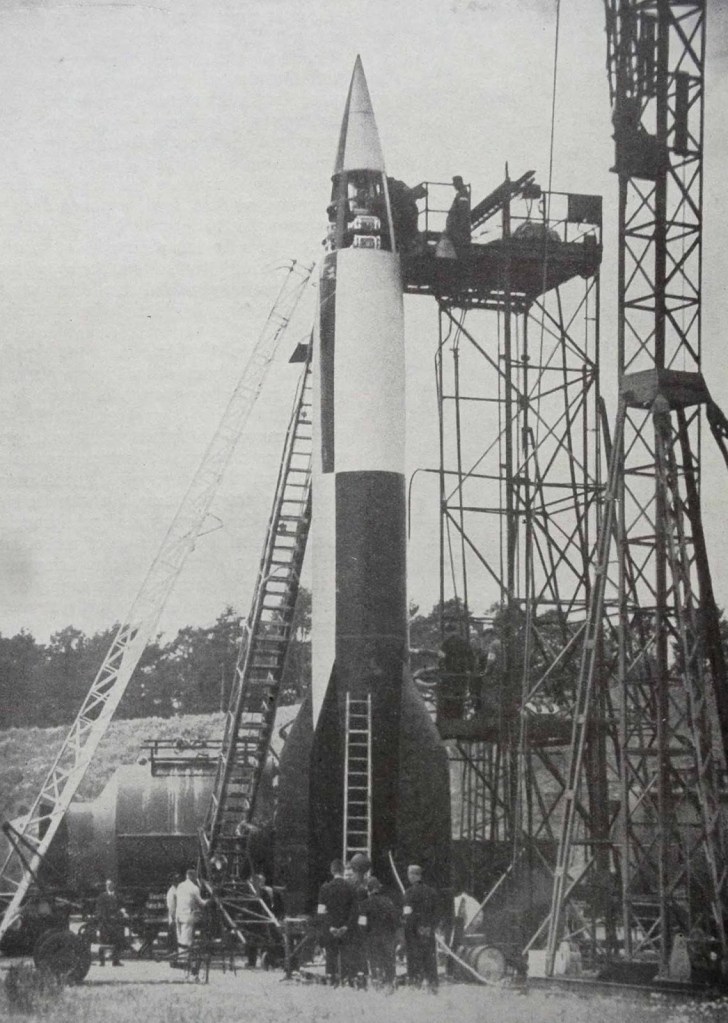
Professor Train explains how the Moonraker is superior to the V-2, the first long-range, guided ballistic missile, developed by Nazi Germany during World War II. It’s estimated that 9,000 Allied deaths, military and civilian, were caused by V-2s. Train reports, accurately, that the V-2 had a range of about 200 miles, whereas the Moonraker is expected to have a range of 4,000 miles.
Comet:
Train compares the self-contained fuel system of the Moonraker with the air-burning propulsion system of a jet engine, specifically mentioning the Comet. Several aircraft models have been named Comet over the years, but I expect he’s referring to the de Havilland DH.106 Comet, the first commercial jet airliner. De Havilland was a British aircraft manufacturer founded in 1920. The Comet entered commercial service in 1952 but was withdrawn from service in 1954 after three of them crashed as a result of structural failure. A redesigned Comet entered service in 1958.
Chilham Castle:
En route to the Moonraker site, Bond passes Chilham Castle. Chilham Castle is the oldest building in the agricultural village of Chilham, with the current structure built in 1174 for King Henry II (1133-1189), but the foundation indicates an older structure perhaps built during the seventh century.
Swingate:
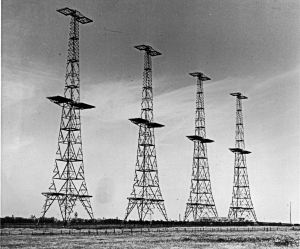
During his drive, Bond passes the “Swinggate radar station,” also known as the Swingate transmitting station. Located in Swingate (I’m not sure why Fleming uses 2 g’s), near Dover, the station was originally built with four transmitting towers in 1936. The year Moonraker was published, one tower was removed, so it’s not clear how many towers 007 observes. Another tower was dismantled in 2010, leaving only two today.
Brand measures up:
We haven’t met Gala Brand yet, but Bond has reviewed her personnel file and it includes, among other personal information, the intimate location of a birthmark and her measurements! Did this kind of thing really happen? Good heavens, I hope not.
Kingsdown:
Bond visits World Without Want, the pub where Major Tallon was killed, in the coastal village of Kingsdown. Historically a fishing and farming village, Kingsdown’s location has made it strategically important during times of war. Supposedly World Without Want was based on the real Swingate Inn, which remained in business for many years after Moonraker was published.
Black and White:
Bond questions the bartender at World Without Want over a Black and White whisky and soda. First made in Scotland in 1789 as Buchanan’s Blend, the black-and-white labeling later led to a name change.
Chapter Eleven: Policewoman Brand
Marchal:
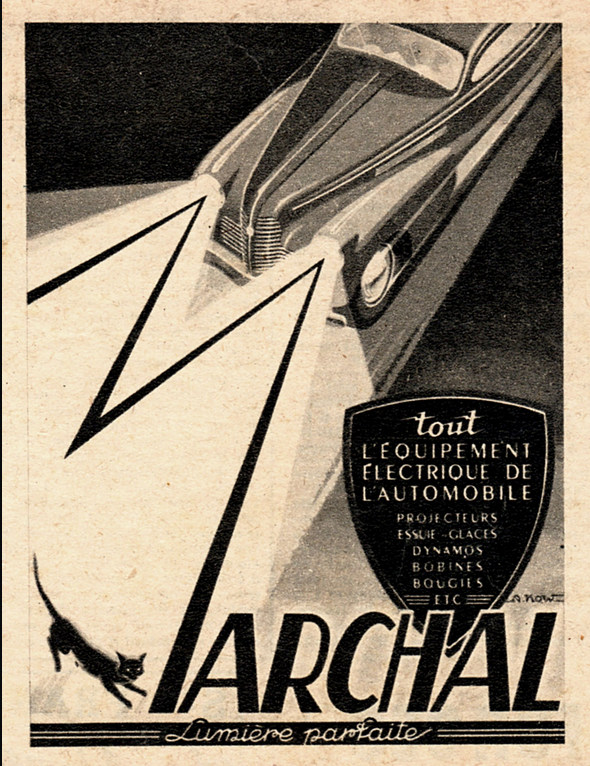
Bond arrives at the Moonraker facility at night with help from his Bentley’s Marchal headlamps. The company was founded by Frenchman Pierre Marchal in the 1920s. Inspired by the reflecting power of cats’ eyes, Marchal used black cats in early advertising. In the 1960s Marchal merged with S.E.V. to become S.E.V. Marchal.
South Goodwin Lightship:
Bond observes the South Goodwin Lightship in the English Channel. A lightship is essentially a floating lighthouse, a ship that remains anchored with a beacon to offer guidance to other vessels. The South Goodwin Lightship, based in Goodwin Sands, a long sandbank near Kent, England, was swept away from its position by hurricane force winds in late November, 1954, after Fleming had written Moonraker but before it was published. Seven crew members were killed.
Gala Brand:
Finally we meet Gala Brand. Bond quickly assesses her to be, “Reserved, efficient, loyal, virginal. [!] … A professional.”
Walter and Krebs:
At the same meeting where Brand is introduced, we meet Dr. Walter, Drax’s “right-hand man,” and Willy Krebs, who Drax refers to as his “ADC,” or aide-de-camp, generally a personal assistant to a military officer or government official. Drax is essentially conducting himself as a branch of the government with no oversight. The name Krebs is probably not random, as the last Chief of Staff of the Germany Army in World War II was Hans Krebs (1898-1945), who took his own life two days after Hitler did the same.
Gala Brand:
It’s no surprise that Bond quickly objectifies Brand, appraising her based almost entirely on her appearance and the fact that she doesn’t immediately appear to want to jump in bed with him.
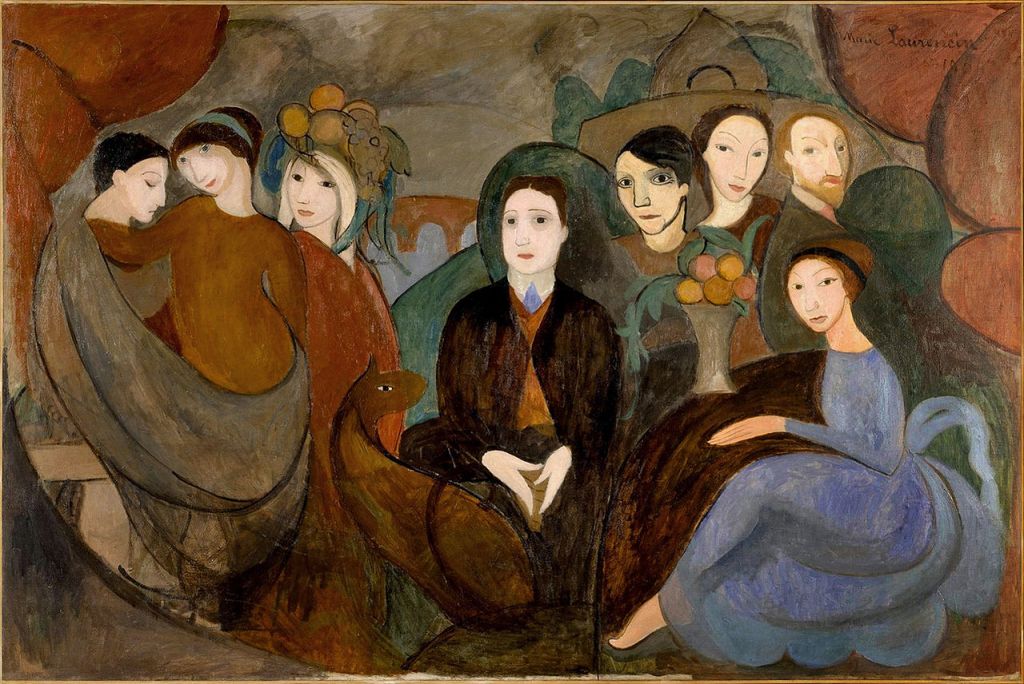
Marie Laurencin:
007 compares Brand to a painting by Marie Laurencin (1883-1956), a French avant-garde painter and poet.
Grosgrain:
Brand’s dress is “charcoal black grosgrain.” According to Wikipedia grosgrain is a “firm, close-woven, fine-corded fabric” with “a dull appearance.” It is most common in black.
Tassie:
Brand wears a “Tassie intaglio” brooch. James Tassie (1735-1799) was a Scottish jeweler and gem engraver. He became known for creating reproductions of pricier engraved gems. Intaglio is a print-making technique where an image is created in sunken images on a plate or surface and the ink is held in the sunken areas, rather than engraving the image above the main surface, as in relief painting.
Chapter Twelve: The Moonraker
Drax:
Bond sees what the British public has seen, which is what Drax wants them to see, a big, complicated technical project that must be important because it’s big and complicated. Like many technocrats, Drax is able to win over Bond by the scale of his achievement and the fact that only a small number of people will really understand the technology involved.
Brotherhood:
Observing Drax’s group of rocket scientists, 007 sees them as a “brotherhood.” All along, Bond sees clues, circumstantial evidence that something is wrong, but he is unable to put it together into a big picture.
Chapter Thirteen: Dead Reckoning
Vichy:
Bond’s room at Drax’s facility includes a bottle of Vichy water. Vichy, a town in central France, was settled by Romans in the first century BC partly because of mineral springs that were believed to produce water of medicinal or healing value. Vichy Celestins is one of the most popular springs and in later years the water was, and still is, bottled and sold throughout the world. Napoleon (1769-1821) was one of the more renowned visitors to Vichy to treat gout and other conditions. Many people still travel to Vichy because the water, naturally carbonated and high in mineral salts, calcium, magnesium, and other elements, is believed to be a tonic for all manner of illnesses.
Heal’s:
Bond sleeps in a Heal’s bed (called Heal by Fleming). Heal’s was founded in London in 1810 by John Harris Heal. The company aimed to combine pleasing design with industrial production. During World War II, Heal’s took up parachute production to support the Allied effort.
Strait of Dover:
Searching the room occupied by the late Tallon, Bond finds a chart of the Strait of Dover, not surprising considering they’re so near the town of Dover. The Strait is the narrowest part of the English Channel and the boundary between the Channel and the North Sea. It’s also a busy passage for international shipping. At this point, only twenty miles separates Britain from continental Europe.
Toolbox:
Bond carries a handy toolbox, a “square leather case” that holds, among other things, a fingerprint kit and magnifying glass. The toolbox was not specifically mentioned in Casino Royale, but this must have been the source of the screwdriver he used to hide his casino winnings in Chapter 13.
Leica:
Bond uses a Leica camera to photograph some of the documents Tallon left behind. Leica was a German camera and optics company originally named Leitz after its founder, Ernst Leitz. The company was founded in 1869, introduced its first 35mm production camera models in the 1920s, and had a reputation for top-quality lenses. Ernst Leitz II, who took over the company in 1920, helped Jews escape Germany after Hitler came to power in the 1930s. Thankfully for the Allies, Leica was positioned in West Germany after World War II, thereby making it more practical for the Secret Service to supply agents with Leica cameras.
Krebs:
Bond, as always, judges people by their appearances. For example, Krebs “looked like a natural snooper. He had the eyes of a petty thief.” A horrible attitude, not helped by the fact that Bond is nearly always correct in his judgments.
Cicero:
Bond wonders if Drax’s “confidential assistant” Krebs could be another “Cicero, the trusted valet of the British Ambassador in Ankara during the war?” Cicero was the code name of Elyesa Bazna (1904-1970), a Nazi agent who became valet to Hughe Knatchbull-Hugessen (1886-1971), British ambassador to Turkey from 1939 to 1944. Cicero disclosed valuable intelligence to the Nazis that included information on the Tehran Conference, where the Germans plotted unsuccessfully to assassinate Franklin D. Roosevelt, Joseph Stalin, and Winston Churchill.
Beretta:
Bond sleeps with his Beretta under his pillow, not the .38 Colt Police Positive he kept under his pillow in Casino Royale. However, he did carry the Beretta in his shoulder holster in that caper and in Live and Let Die. Presumably this gun is a Beretta 950, first produced in 1952, lightweight and low profile, intended for concealed carry but widely considered accurate only at short ranges.
Sea Island cotton:
His first full day at the Moonraker site, Bond wears a Sea Island cotton shirt, which is not a clothing brand but a shirt made of Sea Island cotton. Sea Island is a long-fiber variety of cotton that was grown on barrier islands off the Atlantic coasts of South Carolina, Georgia, and Florida beginning in the 1700s.
Dalí:
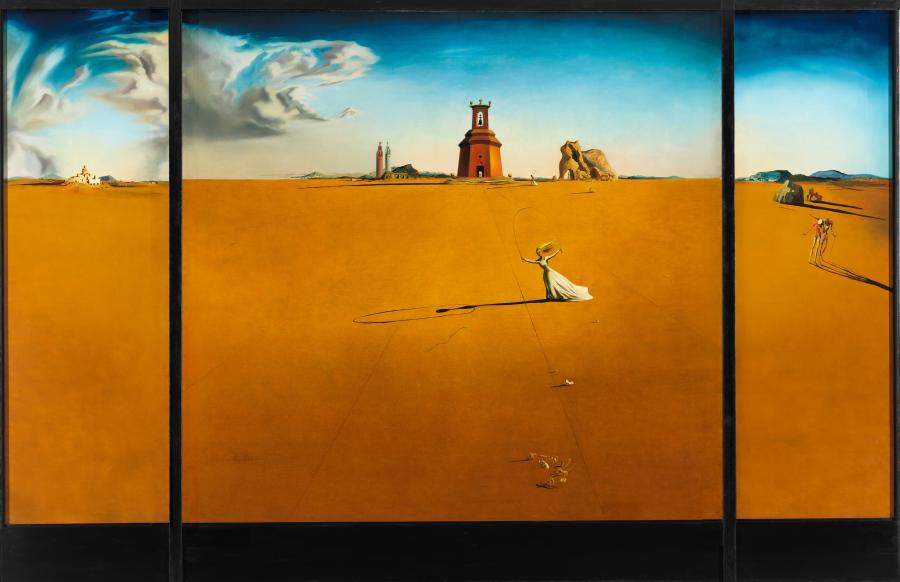
Bond compares the Moonraker launch facility to a “Dalí desert landscape on which three objets trouvés reposed at carefully calculated random.” Objets trouvés are “found items.” Salvador Dalí (1904-1989) painted, among other things, surrealist landscapes populated by distorted and unexpected objects.
Drury Lane:
Bond again notices the South Goodwin Lightship and imagines it as “a property ship on the stage of Drury Lane…” Theatre Royal, Drury Lane, commonly referred to as simply Drury Lane, is in London’s West End theater district, sort of a precursor to New York City’s Broadway. The first version of the theater was built in 1662 and while it’s a different building, the theater still stages productions today.
Housewife’s Choice:
Fleming/Bond pictures the crew of the South Goodwin Lightship eating pork and beans and listening to Housewives’ Choice, which he refers to as “Housewife’s Choice.” BBC Radio broadcast Housewives’ Choice from 1946 to 1967, playing mostly popular music of the time. The show aired in the mornings to appeal to housewives after their husbands had left for work. In a footnote, Fleming acknowledges the demise of the lightship on 26 November 1954.
Breakfast:
Bond has breakfast of scrambled eggs, bacon, and coffee at Café Royal in Dover. Fleming seems to be describing a real business in Dover at the time, except it was called the Royal Café.
Express and Times:
Bond peruses the Daily Express and The Times, both published in London. The Daily Express began publication in 1900 while The Times dates back to 1785, and both are still published today.
Chapter Fourteen: Itching Fingers
Breakfast cigarette:
Gala Brand begins the day with a “breakfast cigarette,” which was apparently common enough that Fleming didn’t think his readers would be surprised.
Teleprints:
Brand begins her work day reviewing a set of teleprints from the Air Ministry. A sort of early version of fax machines, teleprinters resembled typewriters and printed documents transmitted across communications lines.
Brand’s figures:
Brand is resentful that Drax re-checks her flight path calculations every day. Of course, we learn the reason for this later, but the attitude toward women in technical fields at the time, certainly by people like Drax, provides the perfect alibi for Drax that no male industrialist or politician would question, thereby raising no red flags. See, misogyny is a cover for evil-doers.
Prime Minister:
We learn that Bond’s mission has been personally authorized by the Prime Minister. At the time Fleming wrote Moonraker, the PM was Winston Churchill. Ironically, Churchill’s last day in office was April 5, 1955, the same day Moonraker was published in the UK. (Churchill was PM from 1940 to 1945 and again from 1951 to 1955.) Later in the book, Brand will reflect on the many turbulent times when the PM’s voice comforted her, as many were comforted by Churchill’s voice over the radio during World War II.
Hoagy Carmichael:
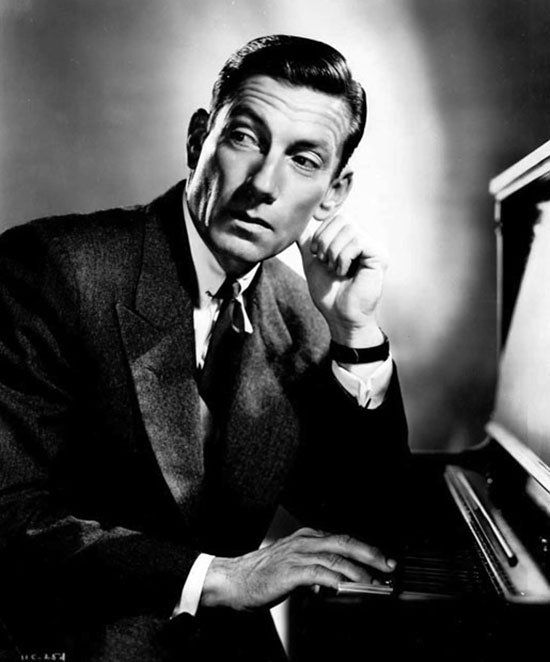
Just like Vesper in Casino Royale, Brand thinks 007 resembles Hoagy Carmichael (1899-1981). Carmichael had a long and prosperous music career. He typically composed music set to lyrics by other songwriters. Probably best known for Stardust (lyrics by Mitchell Parish), Carmichael and Johnny Mercer won the 1951 Academy Award for Best Song for In the Cool, Cool, Cool of the Evening. Carmichael was almost as photogenic as he was talented, appearing in fourteen movies and performing many times on television.
Whitaker’s Almanack:
While waiting in Brand’s office, Bond reads Whitaker’s Almanack, published in the UK and updated regularly since 1868. The book contains data and articles on a wide variety of topics. The most recent edition, the 153rd, was published in 2021, and no further editions are currently planned. It is perhaps no coincidence that one of Bond’s foes in the film version of The Living Daylights (1987) is Brad Whitaker (played by Joe Don Baker).
Chapter Fifteen: Rough Justice
Crepe rubber:
Bond conducts some early morning sleuthing around Drax’s estate, “the crepe rubber soles of his shoes making no noise.” Crepe rubber is made from rubber tree sap that is coagulated and rolled into sheets. It is more porous and lighter than hard rubber but offers a good grip.
Cosh:
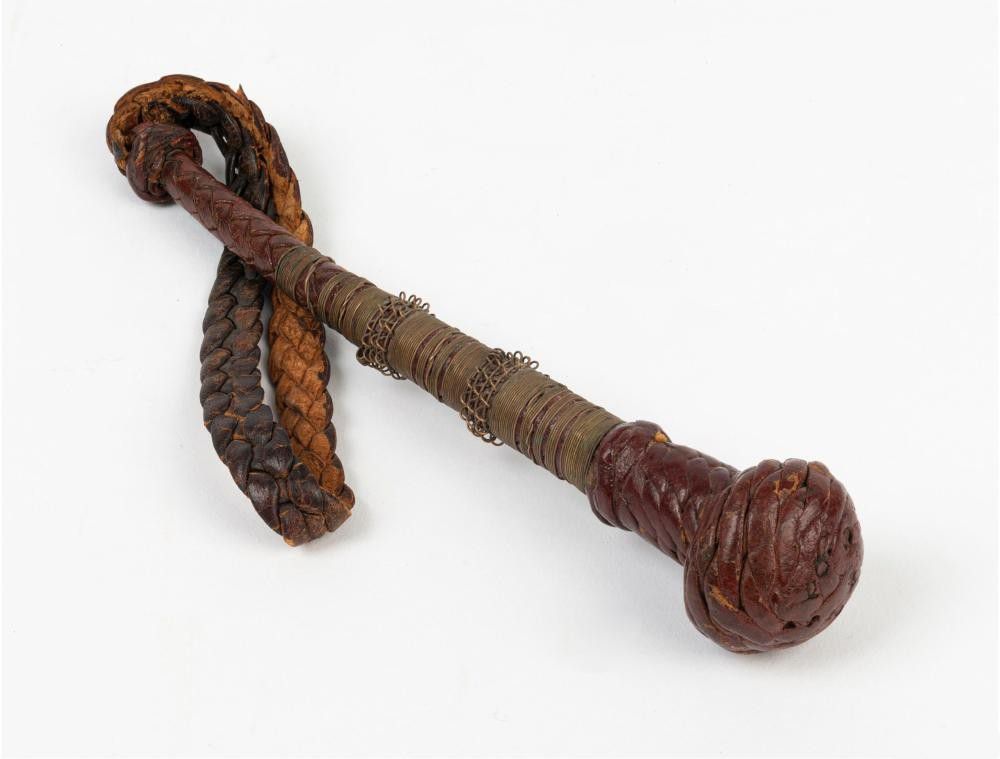
When Bond surprises Krebs snooping in his room he finds a “black leather cosh” in Krebs’ pocket. A cosh is something between a sap and a billy club, intended for striking from close quarters.
Naughty German:
Krebs insults Bond in German, with a phrase that even non-German speakers can probably interpret, but just in case you’re uncertain, “leck mich am Arsch” = “kiss my ass.”
Telegram:
Communicating by telegram was still common in Bond’s time. Just as 007 exercised caution in Casino Royale, by tearing off the sheet below his on a telegram notepad to prevent anyone from learning his secrets, here he burns the telegram he receives from Vallance.
Chapter Sixteen: A Golden Day
Caesar:
Standing on the famous White Cliffs of Dover, Bond “stood gazing over the whole corner of England where Caear had first landed two thousand years before.” In fact, Julius Caesar (100BC – 44BC) invaded Britain twice, in 55BC and again in 54BC. The first “invasion” was little more than a landing near Dover and was not successful from Rome’s perspective. The second invasion involved a much larger Roman force, landing in a similar area, and reaching the Thames. Caesar began forming alliances with local warlords, ultimately leading to Rome’s takeover of Britain, undertaken by Claudius (10BC – 54AD) in the first century AD.
Manston aerodrome:
Bond considers his proximity to the Manston aerodrome, home to American Thunderjets. (See Chapter One for more on Thunderjets.) Established during World War I, during World War II Manston became a forward base for the Royal Air Force and home to a jet squadron assigned to intercept German V-1 missiles launched toward London. The U.S. Air Force used Manston as an air base in the 1950s; by having Bond acknowledge the Thunderjets and then ignore them, Fleming seems to be dismissing the significance of the postwar U.S. military presence in Britain. Manston later became a civilian airport but ceased operations in 2014.
Dutch schuyts:
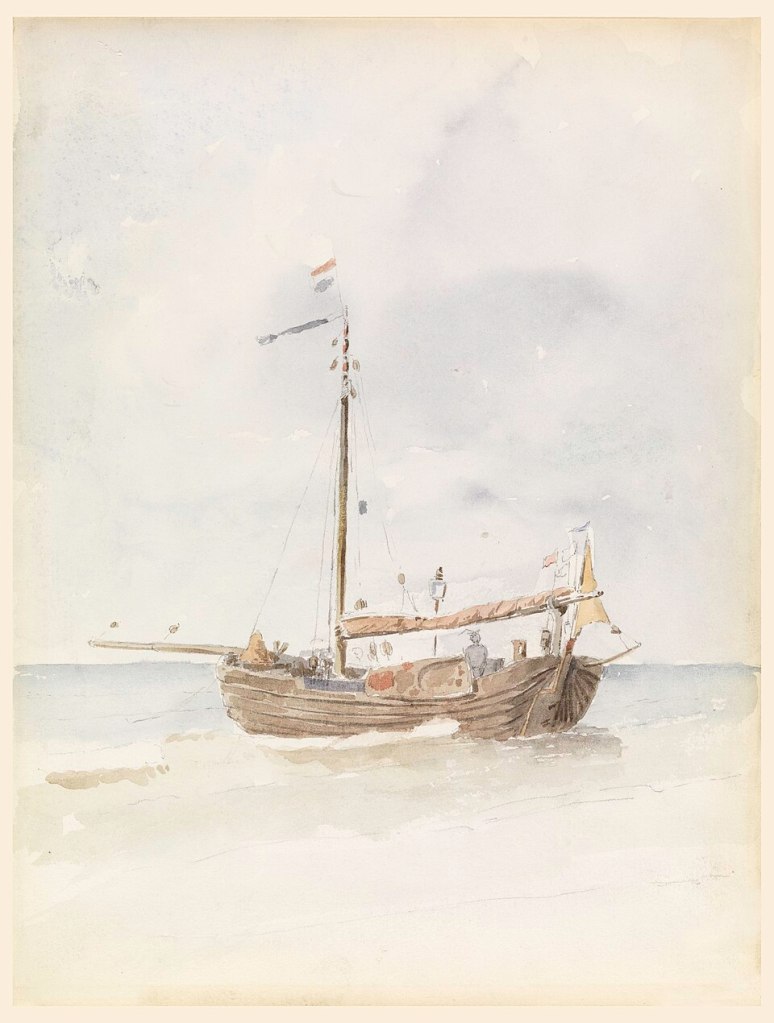
Among the boat traffic 007 observes in the English Channel are Dutch schuyts, barges designed for shallow waters, typically anywhere from 50-130 feet in length. Originally they had sails but more modern versions are motorized.
Coastal beauty:
Bond reflects briefly on the serenity and beauty of the coast and the surrounding activity, a contrast to the grim threat of nuclear war that the Moonraker is supposedly designed to prevent.
Bhose flowers:
Bond tells Brand of a Professor Bhose who determined that flowers “scream” when they are killed. He’s really thinking of Sir Jagadish Chandra Bose (1858-1937), who conducted research into botany, biology, physics, and other disciplines, and founded the Bose Institute, a public research institute, in 1917. Bose researched the behavior of plants to external stimuli and came to believe that plants experienced feelings and pain in a similar way as animals.
Disowning intuitions:
As always, Bond is in greatest danger when he becomes complacent or ignores the warnings of his senses. In this case, he knows there is danger afoot but remains uncertain about how to proceed. “He shrugged his shoulders impatiently, dissatisfied with himself for disowning the intuitions that were so much of his trade.”
Brens:
Brand assures Bond that Drax’s on-site security personnel have, among other things, “Brens.” A Bren was a light machine gun built in Britain in the 1930s. It was used by British forces in World War II, the Korean War, and in the Falkland Islands. It was actually designed by licensing agreement from a Czechoslovakian light machine gun.
Blown up:
The explosives that set off the rock-slide that almost kills Bond and Brand makes this the third novel in a row where someone tries to kill Bond by explosion. See Casino Royale chapters five and six and Live and Let Die chapter thirteen.
Chapter Seventeen: Wild Surmises
Dinner:
After recovering from their near death experience, Bond and Brand have dinner in the village of St. Margaret’s Bay, just northeast of Dover. They dine at the Granville, which is the Granville Hotel, a real establishment in St. Margaret’s that has long since closed up and been demolished. Dinner consists of brandy-and-soda, fried sole, Welsh rarebits (a cheese-based sauce served on toasted bread), and coffee.
Elastoplast:
Krebs needs Elastoplast for the head injury inflicted by Bond in Chapter Fifteen. Elastoplast is just a brand of adhesive bandages, similar to Band-Aid. The bandages were first developed in Germany by Beiersdorf but were marketed in the UK beginning in the 1920s by Smith & Nephew.
Part 3: Thursday, Friday
Chapter Eighteen: Beneath the Flat Stone
Mercedes:

Drax drives a Mercedes 300 S, a clue because he’s driving a German brand rather than Bond’s reliable British Bentley. The luxury Mercedes was first sold in 1901 by the Daimler-Motoren-Gesellschaft (DMG), itself established in 1890, and merged with Benz to become Mercedes-Benz in 1926. Hitler drove a Mercedes-Benz 770 and by 1944, roughly half of the company’s 60,000+ workforce consisted of prisoners of war and concentration camp prisoners. The 300 S was introduced in 1951.
Le Mans and Nürburgring:
Bond recalls that Mercedes-Benz had “swept the board” at Le Mans and Nürburgring. Le Mans is a town in northwestern France and home to the oldest active endurance sports car race, the 24 Hours of Le Mans. Nürburgring is a racing course established in the 1920s in Nürburg, in western Germany.
Blitzen Benz:
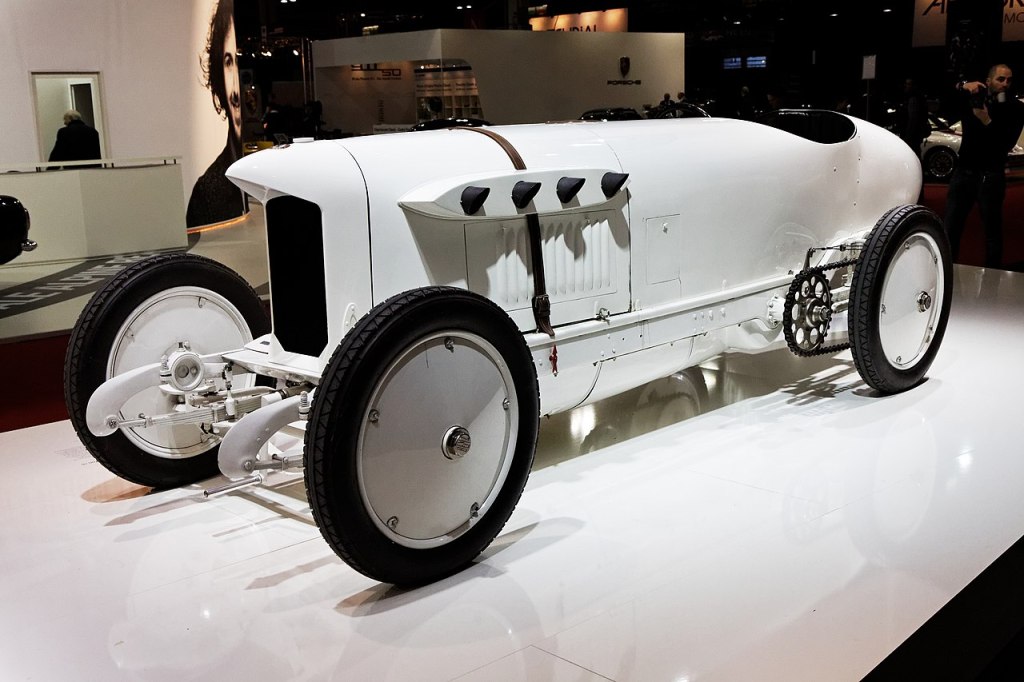
Car enthusiast Bond recalls “the famous Blitzen Benz that had captured the world’s speed record at 142 MPH back in 1911.” The Blitzen Benz race car was built by the Germany machinery company Benz & Cie in 1909 and really did set a land speed record at Daytona Beach, Florida, in 1911.
Drivers:
Fleming name-drops a series of race drivers – Rudolf Caracciola (1901-1959), Hermann Lang (1909-1987), Richard Seaman (1913-1939), and Manfred von Brauchitsch (1905-2003), which Fleming spells as Brauschitz for some reason.
Fabergé:
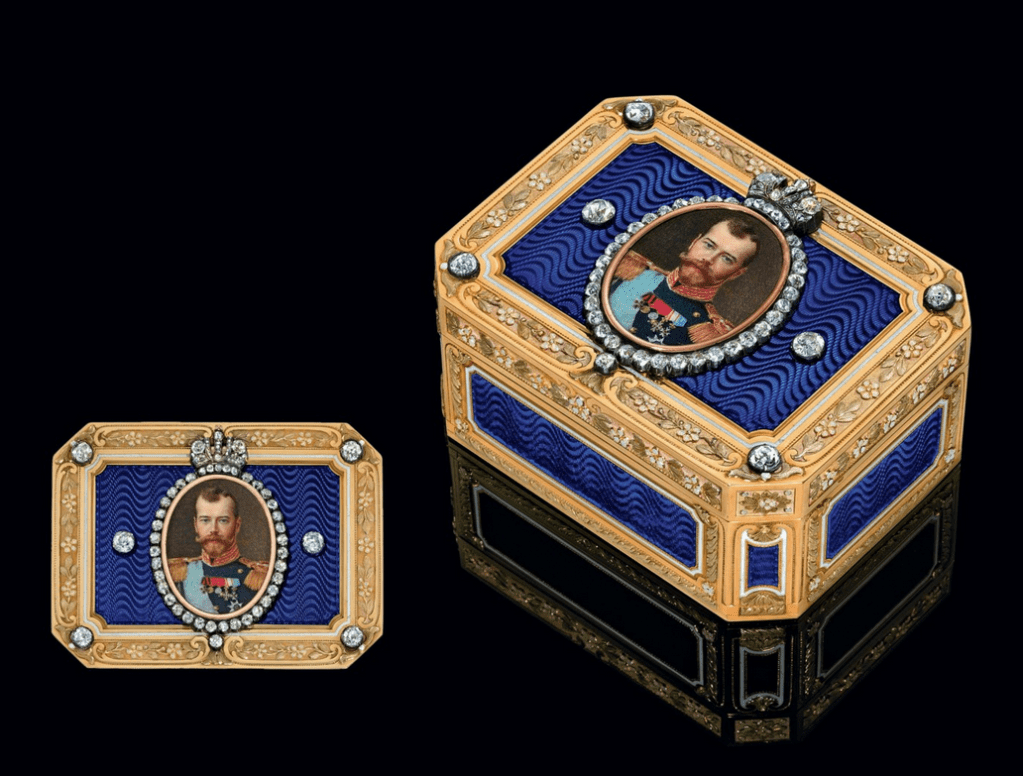
The Mercedes is so well constructed that its door closes “with the rich double click of a Fabergé box.” The House of Fabergé was founded in Russia by Gustav Fabergé (1814-1894) in 1842 but it was Gustav’s son Peter Carl Fabergé (1846-1920) who really brought the firm to prominence with the design of elaborate Fabergé eggs for the Russian Tsars. They made many other types of products, however, including the tobacco box depicting Emperor Nicholas II pictured here.
Mein kapitän:
When Krebs alerts Drax to Brand’s snooping, he says, “Sehen sie her, mein kapitän,” German for “Look here, my captain.” Krebs repeatedly refers to Drax as “my captain.”
Chapter Nineteen: Missing Person
Piccadilly:
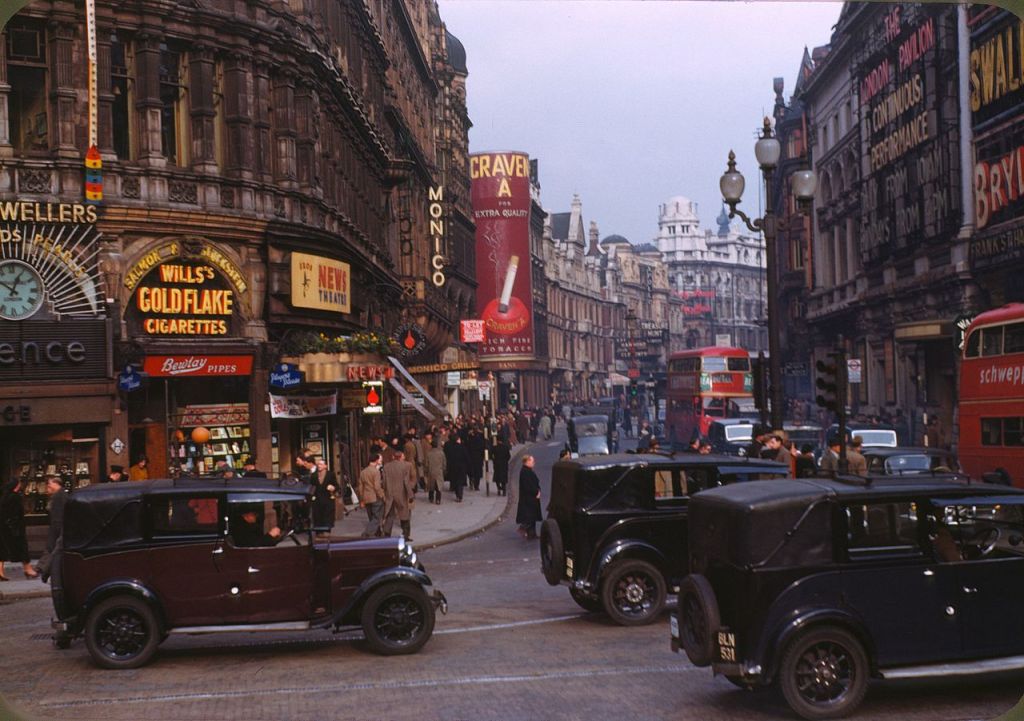
Bond waits for Brand at a restaurant in or very near Piccadilly Circus, a public space in London’s West End and the intersection of several major streets, including Haymarket, another street Bond takes particular note of. Like Times Square in Manhattan, Piccadilly Circus is noted for numerous large signs, including one for the bottler Schweppes that would have been present in Bond’s time.
Mansion House:
Searching for Brand, Bond contacts Vallance, who is dining at Mansion House, built in the 1740s and the official residence of the mayor of London.
Bakelite:
Bond calls Vallance on a phone made of Bakelite, the first synthetic plastic, developed by Leo Baekeland (1863-1944) in New York in 1907. It was used for all manner of products, including telephone casings, because it didn’t conduct electricity and was relatively heat resistant.
Victoria Station:
Drax claims to have left Brand at Victoria Station, a major transit center serving the Westminster area of central London since the mid-1800s. It was named for its location, nearby Victoria Street, and not Queen Victoria (1819-1901) as one might expect. However, the street was named after the queen, so it’s perhaps a trivial distinction.
Ritz:
Vallance reports that Drax is a regular guest at the Ritz, one of the most prestigious hotels in London or anywhere else. César Ritz (1850-1918) of Switzerland opened the Ritz London in the Piccadilly area in 1906. Rita Hayworth, J. Paul Getty, and Congo Prime Minister Patrice Lumumba were among the hotel’s post-war guests. (Lumumba was assassinated in 1961 and there has been speculation over the years that the UK played a role in his death.)
Grosvenor Square:
Drax formerly owned a home in Grosvenor Square, a highly upscale area in central London (and no doubt close to Morland’s where Bond gets his cigarettes) and the location of the U.S. Embassy. The actual square is a green-space developed by Sir Richard Grosvenor (1689-1732) in the 1720s.
Boodle’s:
Bond stakes out Blades while Drax is there, parking near Boodle’s to wait. Boodle’s, like Blades, was a gentlemen’s club, this one founded in 1762. Supposedly Boodle’s, where Fleming was a member, was the basis for Blades. Other notable members over the years included the aptly named Henry Blofeld, philsopher David Hume, and economist Adam Smith.
Lipizzaners:
Bond pursues Drax in the Bentley and “rode his car as if she was a Lipizzaner at the Spanish Riding School in Vienna.” It’s an odd comparison, as Lipizzaners are known more for stylized jumps and other movements rather than speed. The Lipizzaners originated from horses brought to Spain by the Moors but became the subject of focused breeding during the Hapsburg rule of Spain and Austria in the 1500s. The Spanish Riding School was also established in Vienna in the 1500s specifically for the Lipizzaners, but the current facility was built in the 1700s.
Michelins:
By a fortunate coincidence, Bond had a “new set of racing Michelins” installed on his Bentley the previous week. The French tire company Michelin was incorporated in 1889 by brothers Édouard Michelin (1859-1940) and André Michelin (1853-1931) after developing a removable pneumatic tire for a bicycle.
Chelsea Bridge:
Bond chases Drax across the Chelsea Bridge, crossing the River Thames in west London. The first Chelsea Bridge opened in 1858, but was replaced by a new bridge in 1937. Bond is lucky this is Thursday night and not Friday, because motorcycle gangs staged races across Chelsea Bridge on Friday nights beginning in the 1950s.
Cats’ eyes:
Bond races over the cats’ eyes visible in the road at night. Cats’ eyes are special reflectors marking the center-line of the road, first patented by Percy Shaw (1890-1976) of England in 1934. The devices proved especially useful during blackouts in England during World War II.
Chapter Twenty: Drax’s Gambit
Leeds Castle:
Bond continues the pursuit of Drax past Leeds Castle, near Maidstone in southeast England. Some type of castle has occupied the location since 857. Catherine of Aragon (1485-1536), wife of Henry VIII, lived there. The current castle was built primarily in the 1800s and was used as a hospital during World War II.
Alfa Romeo:

The young hipster who passes Bond on the road, and pays for it with his life when he tries the same maneuver on Drax, drives an Alfa Romeo. The Italian automaker was founded in 1910 and specialized in sports car. Bond estimates the car to be a supercharged model from 1932 or 1933, so it could be from Alfa’s 8C line.
Targa Florio:
Bond recalls that an Alfa Romeo won Targa Florio in 1931. Targa Florio was an endurance road race held in Sicily and establshed in 1906 by race driver Vincenzo Florio (1883-1959). The winner in 1931 drove an Alfa Romeo 8C, perhaps confirming my guess above.
Colt Army Special:
Bond prepares to use the same long-barrelled .45 Colt Army Special he carried under the Bentley’s dashboard in Casino Royale. Introduced by Colt in 1873, the Army Special was used by the U.S. Army in the late 1800s and was popular in the American west of the same time period, when it was ironically referred to as the “Peacemaker.” Colt suspended production in 1941 due to shifting wartime priorities and did not resume production until 1956.
Donington:
The racing references never end. Drax drives on the road “as if it was Donnington.” The correct name is Donington Park, established as a racing course at Donington Hall, an estate in Leicestershire near central England, in 1931. It’s an odd reference, as the Donington racing circuit was closed in 1939 for use as a military vehicle depot during World War II. Racing was not re-established there until 1971.
Bowater:
Drax makes use of a Bowater diesel truck carrying rolls of paper to foil Bond. This is W.V. Bowater & Sons, founded in Britain by William Vansittart Bowater (1838-1907) in 1881. In the mid-1950s, about the time Moonraker was published, Bowater was the world’s biggest newsprint producer. The company changed its name to Rexam in 1995 and was acquired by U.S.-based Ball Corporation in 2016.
Hals und Beinbruch:
As Krebs prepares to climb into the moving truck, Drax tells him, “Hals und Beinbruch!” This German phrase (probably derived from Yiddish) literally translates as “neck and leg fracture,” but is somewhat equivalent to “Break a leg,” as when wishing someone good luck.
Chapter Twenty-One: ‘The Persuader’
Zum Kotzen:
Krebs and Drax exchange a few phrases in German. Zum Kotzen = sickening or disgusting; Donnerwetter = literally translates as “thunder weather” but in this context is a cry of anger; Halt’s Maul = a contraction of Halt das Maul, or shut up.
Cyclops:
Bond imagines the Moonraker rocket as “a new toy for Cyclops.” A Cyclops – plural Cyclopes – in Greek and Roman mythology was a large, one-eyed creature. There were three categories of Cyclops and the one most relevant here is probably the Hesiodic Cyclopes, described by the Greek poet Hesiod (late 700s BC – early 600s BC) as having built the thunderbolt used by Zeus.
Writers to the Signet:
Drax describes his solicitors in Edinburgh as “Writers to the Signet.” The Society of Writer’s to His Majesty’s Signet was a group of Scottish solicitors formed in the late 1500s. They were authorized to supervise use of the King’s Signet, the seal representing the crown. This entitled the solicitors to certain privileges, such as freedom from taxation and military service. The group was essentially dissolved in the 1970s.
Reichsdeutscher:
Drax acknowledges that he is not only German but a Reichsdeutscher, a German of the Reich, referring to Imperial Germany of 1871 to 1949. He would have been loyal to Hitler and the Third Reich.
Chapter Twenty-Two: Pandora’s Box
The threat within:
Drax reveals his true identity, Graf Hugo van der Drache, born of a German father and English mother. This possibly reflects Fleming’s opinion that threats from within were as likely as external threats and that Britain at the time was not taking domestic security seriously enough. It may also have reflected his desire that Britain should remain wary about potential alliances with post-war Germany. Despite opposition from Fleming, and much of Britain, West Germany joined NATO in May, 1955, one month after Moonraker was published in the UK.
Rheinmetal Borsig:
Drax began his career working for a subsidiary of “Rheinmetal Borsig.” Rheinmetall was established in 1889 as a German weapons supplier. The company merged with Borsig in 1936 to form Rheinmetall-Borsig AG. The company was forced to cease weapons production in 1945 and did not resume until 1956.
Heydrich and Kaltenbrunner:
Drax talks about changes in the German ranks during World War II “after Heydrich was assassinated in ’42.” Reinhard Heydrich (1904-1942) was a high-ranking Nazi who was so evil that even Hitler referred to him as “the man with the iron heart.” Heydrich organized the 1938 Kristallnacht attacks against Jews in Germany and Austria and founded the German internal security service that deported or murdered anyone suspected of disloyalty to the Nazis. Two Czechoslovak soldiers parachuted into Czechoslovakia and assassinated Heydrich in 1942. He was succeeded by Ernst Kaltenbrunner (1903-1946), another ultra-loyal Nazi who accelerated the genocide that Heydrich and others had started. Kaltenbrunner was executed in 1946.
Skorzeny:
Drax reported directly to Otto Skorzeny (1908-1975), a lieutenant colonel in the German military during World War II. Among other actions, Skorzeny freed Mussolini after he was arrested following the Allied bombing of Rome in 1943, and he led a failed plot to assassinate Stalin, Churchill, and Roosevelt at the Tehran Conference in 1943 (see Chapter 13).
Nissen hut:
Drax talks about the use of Nissen huts during the war. Nissen huts are half-cylinder steel structures commonly used in military barracks, first developed during World War I. The U.S. developed something almost identical called Quonset huts. Nissen or Quonset huts are a common sight in movies and TV shows depicting military life.
Useless and idle:
Fleming frequently seems to struggle with loyalty to England and dismay that the empire is crumbling and the nation has become soft. Is Drax speaking for Fleming when he tells Bond his opinion of the English? “Useless, idle, decadent fools, hiding behind your bloody white cliffs while other people fight your battles. Too weak to defend your colonies, toadying to America with your hats in your hands. Stinking snobs who’ll do anything for money.”
Russians:
Now we learn that Drax has been collaborating with the Soviet Union, the builder of the atomic warhead placed atop the Moonraker. There’s no mention of SMERSH but perhaps they had a hand in this?
Lombroso:
When Bond declares Drax among the “absolute fanatics” and “almost a genius,” he says, “Lombroso would have been delighted with you.” Cesare Lombroso (1835-1909) was an Italian criminologist who published The Man of Genius in 1889, arguing that “genius” and “insanity” were perhaps not so different. (Shakespeare and Mozart, for example, demonstrated “degenerate symptoms” according to Lombroso.) Some of Lombroso’s ideas seem reprehensible today, claiming that physical traits (left-handedness or the shape of the nose, for example) could predict criminality.
Chapter Twenty-Three: Zero Minus
Haig & Haig:
Bond finds a bottle of Haig & Haig Scotch whisky in Drax’s office. Fleming must have loved this brand as it has now been mentioned in all three Bond novels. The distiller was founded in the 1700s but today is owned by the multinational Diageo.
Burning deck:
When Bond shares his plan with Brand, to sacrifice himself and ignite the Moonraker on the launch pad, he quotes, “The boy stood on the burning deck,” and says, “I’ve wanted to copy him since I was five.” He’s referencing the 1826 poem Casabianca by Felicia Dorothea Hemans (1793-1835). The poem tells the story of a young boy, Casabianca, who refuses to abandon a burning ship without orders from his father. Not realizing his father has died, the boy remains – in courage or ignorance, depending on the reader’s perspective – and also dies. The poem was widely taught to schoolchildren in both the U.S. and UK, many of them not realizing that the poem dramatizes an actual event that occurred during the Battle of the Nile in 1798 between the British and the French, and the boy in question was actually French, not British.
Zu befehl:
When Krebs orders a henchman to prepare to search for Bond and Brand with a steam hose, the guard says, “Zu befehl” = “At your command.”
Chapter Twenty-Four: Zero
Beating heart:
Bond approaches the Moonraker that “filled the great steel chamber like the beating heart in Poe’s story…” Edgar Allan Poe’s (1809-1849) 1843 short story The Tell-Tale Heart describes the murder of an old man by a deranged and unidentified narrator. Believing he (or she, as the narrator’s gender is not specified) has committed the perfect murder, the narrator is questioned by the authorities and soon goes mad from the imagined sound of the victim’s beating heart.
Lamestream media:
Minutes before the Moonraker launch, Drax delivers a speech that is hardly secretive about his hatred for England and his plan to destroy London. The BBC announcer, however, blithely continues with his adoring tribute, unable to register the disconnect between the official narrative and Drax’s true nature. Much the way our modern-day media pays tribute to billionaire technocrat bandits.
Merganzer:
The Moonraker target area is monitored by the naval vessel H.M.S. Merganzer. I can’t find any special significanec to this name, but a merganser is a variety of fish-eating duck.
Aldis lamp:
An unexpected submarine, which turns out to be Russian, appears after the Moonraker launch and does not respond to Aldis lamp signals from the authorized naval vessels. An Aldis lamp is another name for a signal lamp used to generate Morse code signals among ships. First used by the Royal Navy in the 1860s, Aldis lamps are still sometimes used today during times of radio silence.
Chapter Twenty-Five: Zero Plus
Tannic ointment:
Recovering from his injuries and meeting in M’s office, Bond has tannic ointment dressing on his facial burns. Tannic acid was first used to treat severe burns in the 1920s but was eventually replaced by more effective treatments. In excess amounts, tannic acid can cause severe side effects.
Atom bomb:
The story somewhat glosses over the reality that a nuclear device was detonated as a result of the Moonraker crash. I get the impression the long-term radiation effects of such an event, including all the nuclear testing going on, were not widely understood at the time. Greater than expected fallout from a 1954 hydrogen bomb test in the Marshall Islands caused radiation burns among island residents along with long-term increases in cancer and birth defects. “The cloud’s got to come down somewhere, of course,” M says, “but by a happy chance such wind as there is is drifting it up north.” Based on the North Sea target area identified in Chapter Nine, it seems that most of the radiation would be distributed northward into the Norweigan Sea and away from populated areas. Still…
Malenkov:
Discussing the political consequences with Russia, M says, “Malenkov’s none too firmly in the saddle and this may mean another Kremlin revolt.” M knew what he was talking about. Georgy Malenkov (1902-1988) became Soviet leader upon Joseph Stalin’s death in 1953. Power struggles within the Kremlin never ended, however, and Malenkov began withdrawing from power in 1955, to ultimately be succeeded by Nikita Kurshchev (1894-1971).
German rearmament:
The pace of German rearmament, or whether it should happen at all, was heavily debated in the post-war years. As a result of the Moonraker fiasco and Drax’s Nazi loyalty, M claims that the British Cabinet “will go just a bit more carefully” on the subject. This very likely represents Fleming’s attitude, who would have opposed German rearmament. This seems more than a little misguided, as the failure was really Britain’s for giving Drax so much unregulated power.
The most deadly saboteur:
M gets perhaps the wisest dialogue in the novel. “These politicians can’t see that the atomic age has created the most deadly saboteur in the history of the world – the little man with the heavy suitcase.” While the specifics have played out differently, Fleming anticipated the easy proliferation of all manner of weapons that created an age of terror, from Muslim jihadists to white supremacists.
George Cross:
Gala Brand is to receive the George Cross, the highest award one can receive from the British government for “non-operational” gallant conduct, sort of a civilian equivalent of the military’s Victoria Cross. Created by King George VI (1895-1952) in 1940, the George Cross is typically awarded at Buckingham Palace.
008:
Back in Chapter Eight, we were led to fear the worst for 008. The novel’s happy ending is solidified by the revelation that 008 is safe and returning home.
Colt and Beretta:
Having lost his firearms in the chaos of chasing Drax and saving London, M gives Bond a gift of a new Beretta and a long-barrel Colt. Bond sees the gifts as “a reminder.” The work is never finished.
1953 Bentley:
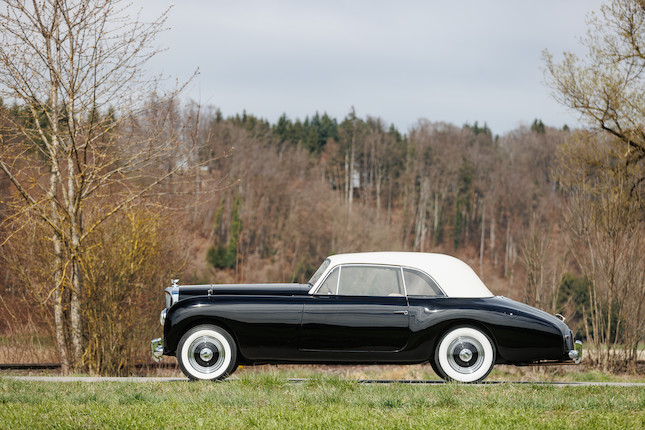
Bond’s beloved Bentley was totaled in the crash in Chapter Twenty. He has wasted no time in buying a replacement, a 1953 Bentley Mark VI. The Mark VI was the first steel-bodied Bentley, first produced in 1946. Production of the Mark VI ended in 1952, but the Continental, produced in 1952-1953, used a Mark VI chassis with a larger engine and a lighter body. At the time they were the world’s most expensive production cars.
Birdcage Walk:
Bond finishes his test drive of the Mark VI at the intersection of Birdcage Walk and Queen Anne’s Gate. Both streets are in London’s Westminster area. Queen Anne’s Gate is known for numerous examples of Queen Anne architecture, and Birdcage Walk was the location of the Royal Aviary of King James I and King Charles II.
Calais:
Planning a month in France with Gala Brand, Bond asks that his new car be delivered to the ferry terminal in Calais. Calais is on the French side of the Strait of Dover, only 21 miles from England, and a common destination for ferries between the two countries.
Morphy:
In Chapter Seven, we were introduced to the chess prodigy Morphy and his habit of not making eye contact with his opponent until victory was certain. Now Bond compares that look with the expression on Gala Brand’s face just before she politely rejects him because she actually has a fiancé and is about to be married.
Final thoughts:
Except for the drawn-out descriptions of bridge matches, in some ways I find Moonraker the most intriguing of the three Bond novels so far. The changing scope, from a card cheat at a gentlemen’s club to a madman attempting to destroy London, is dramatic and well-paced. The romance with Gala Brand is the most believable of the three books – we, the readers, are in the dark about her engagement status, so are surprised in the end to find her fling with Bond was nothing more than that, comfort in a time of overwhelming stress. Despite plenty of condescension in referring to Brand as a girl, she performs nobly and courageously.
While there are some issues of xenophobia, Fleming’s premise, that the greatest threats often come from within, is very sensible. We’ve seen this in the U.S. in the 21st century with the rise of fascistic oligarchs and white supremacy. The entire novel reflects Fleming’s attitudes about the decline of the British empire, fears about internal security, and widespread anxiety over the nuclear arms race. Donald Maclean (1913-1983) and Guy Burgess (1911-1963), British diplomats who turned out to be Soviet spies, had defected in 1951. Both the U.S. and the USSR were charging ahead with their respective space programs, having benefited greatly from the German scientists who ended up with one superpower or the other after World War II. Winston Churchill, Prime Minister at the time, believed a strong British empire was essential to maintain Britain’s presence as a major global power and preserve the post-war peace. Fleming clearly agreed. Fleming still acknowledges the reality of the troublesome new world, as reflected in the shift from the old-fashioned gentlemen’s club to the futuristic rocket facility.
Seeing Bond victorious but heartbroken at the end is unexpected but fitting for the character, and this makes me look forward even more to Diamonds Are Forever.
 The Creative Life Adventure