
Joe, you gotta draw this.
Jerry Siegel, 1935, urging his friend Joe Shuster to help him create Superman
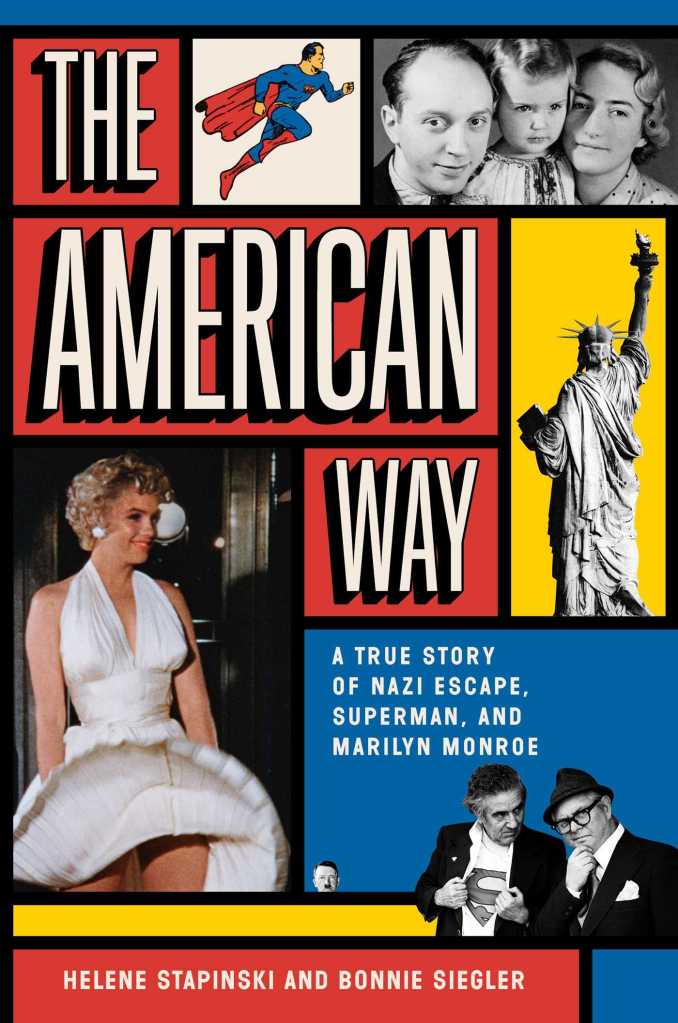
This week I’ve read The American Way: A True Story of Nazi Escape, Superman, and Marilyn Monroe by Helene Stapinski and Bonnie Siegler. What a great, and true, tale. (My only real complaint, which I’m sure is the fault of the publisher and not the authors, is the lack of any index. This is the second non-fiction book in a row I’ve read without an index. Please, publishers, let’s not make this a trend.) The American Way is difficult to describe because it involves so many individuals who live through, and sometimes cause, significant events in modern history. The narrative moves quickly because the book is arranged in short chapters that frequently shift perspective. Still, all the various threads fit together in a compelling way. The ultimate message for this reader is the importance of human interconnectedness and the possible long-term effects, good and bad, of even the simplest of actions. For anyone interested in pop culture, U.S. history, or World War II, The American Way is a must-read.
We had a rouge plant that seemed to have died last year, but this year it has returned vigorously. That’s a great thing about native landscaping, once plants are established they can be surprisingly resilient. The rouge plant produces beautiful blossoms that turn into berries that are supposedly loved by birds, but ours is right by a door, which I think is not a good spot to attract birds. It’s a shade-loving plant so it does well in a location that might otherwise look bare.


In the meantime, I continue reading Lewis Mumford’s The City in History and continue to be fascinated by it.
- P. 246-247: “If it was in the royal palace that the secular instruments of urban civilization first took shape, it was in the monastery that the ideal purposes of the city were sorted out, kept alive, and eventually renewed. It was here, too, that the practical value of restraint, order, regularity, honesty, inner discipline was established, before these qualities were passed over to the medieval town and post-medieval capitalism, in the form of inventions and business practices: the clock, the account book, the ordered day.”

- P. 269: “Without formal opportunities for isolation and contemplation, opportunities that require enclosed space, free from prying eyes and extraneous distractions, even the most extroverted life must eventually suffer. The home without such cells is but a barracks; the city that does not possess them is only a camp. In the medieval city the spirit had organized shelters and accepted forms of escape from worldly importunity in chapel or convent; one might withdraw for an hour or withdraw for a month. Today, the degradation of the inner life is symbolized by the fact that the only place sacred from intrusion is the private toilet.”
I’m taking a second summer break and will resume regular posting in 2 or 3 weeks. To all 2 of my regular readers, try to struggle on without me. Keep looking for beauty in the world and take every opportunity to express your creativity.



 The Creative Life Adventure
Leave a comment