Welcome back to the Creative Life Adventure.
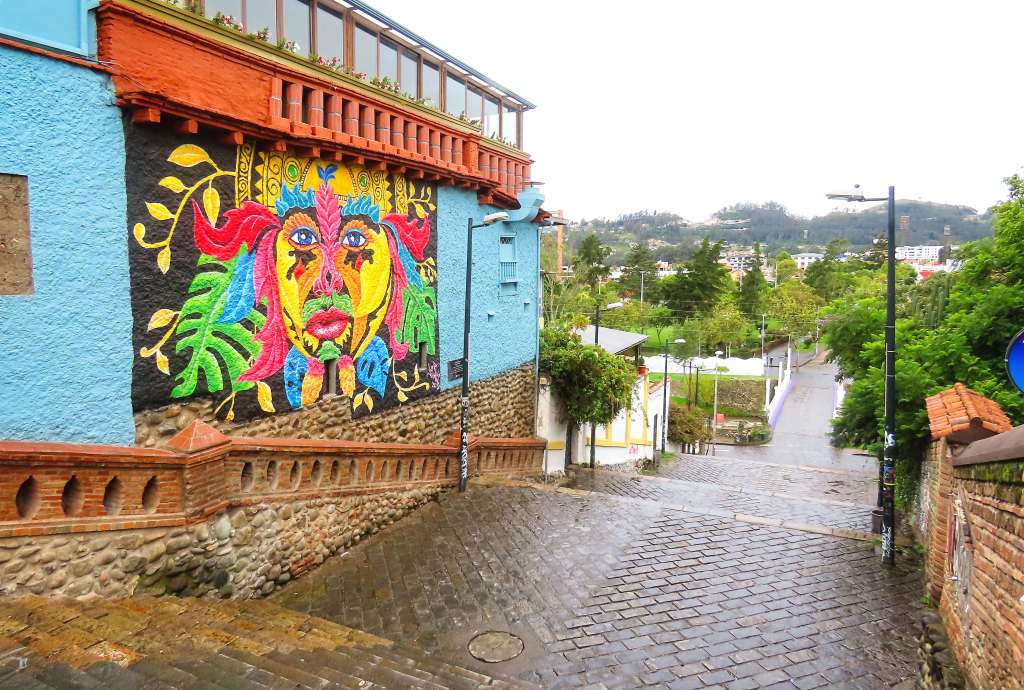
Earlier in the year, my wife and I traveled to Ecuador and spent nearly a week in the beautiful city of Cuenca. Located in the Andean provice of Azuay, Cuenca is at an elevation of about 2,560 meters (8,400 feet). I was very happy to see a wide variety of street art. I’ve been a fan of street art since the time when I lived in Tampa, Florida, more than ten years ago and began reading a little of the history of graffiti and street art in general. A great starting point is The History of American Graffiti by Roger Gastman and Caleb Neelon. Examples of street art can be found as far back as ancient Egypt or Greece, but graffiti in its modern form originated in New York City and spread globally from there. Street art often takes the form of murals, like the one pictured above. Murals have an inherently subversive quality, because unlike “easel pictures,” which can easily be restricted to private ownership, murals are difficult to hide from public view – everyone has an equal opportunity to view the art.
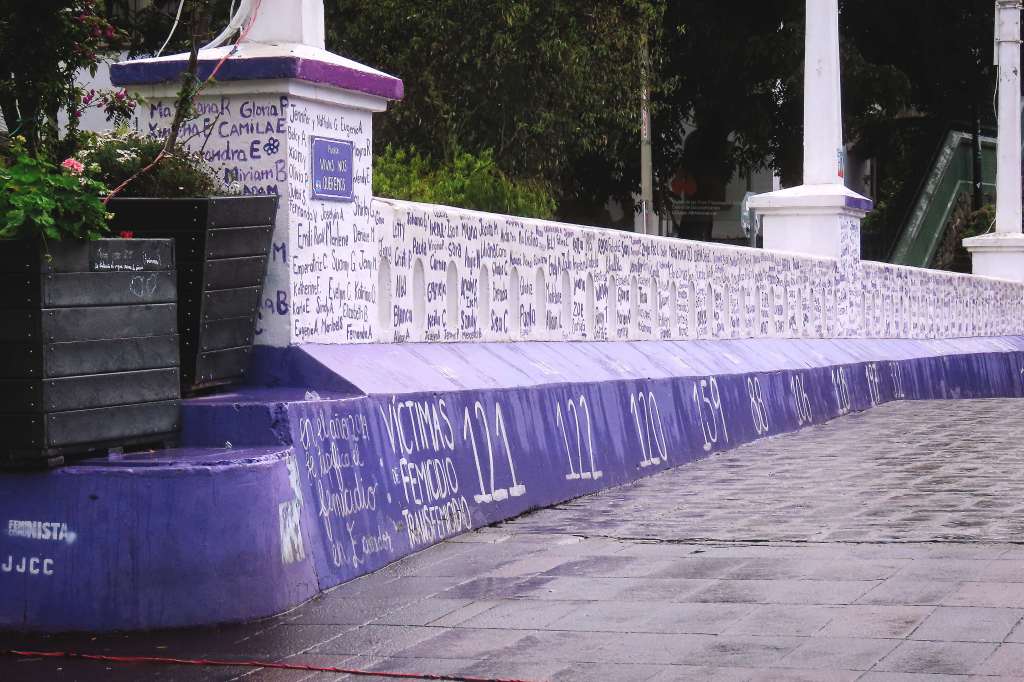
One of the first examples of street art we encountered was the sobering Puente Vivas Nos Queremos, a tribute to victims of femicide, located on the Rio Tomebamba. It’s heartbreaking that this is necessary, but at least encouraging that the city supports this memorial.

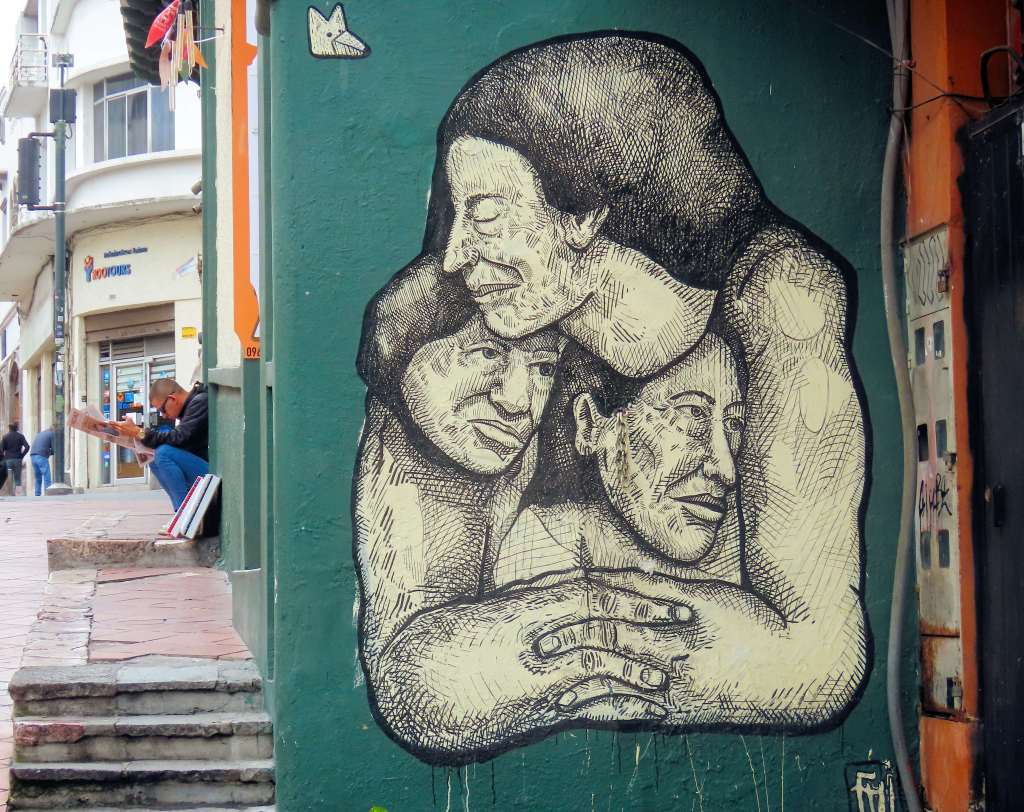
Street art comes in a lot of forms, some of it sanctioned by government or business. The mural above is at Mercado 10 de Agosto, a huge market with many vendors selling a variety of food and craft items. The lovely smaller mural below is on a small street called Benigno Malo. It’s not identified as being affiliated with a business, but it must be there with the approval of the building owner, as it shows up in Google Street View from 2022.
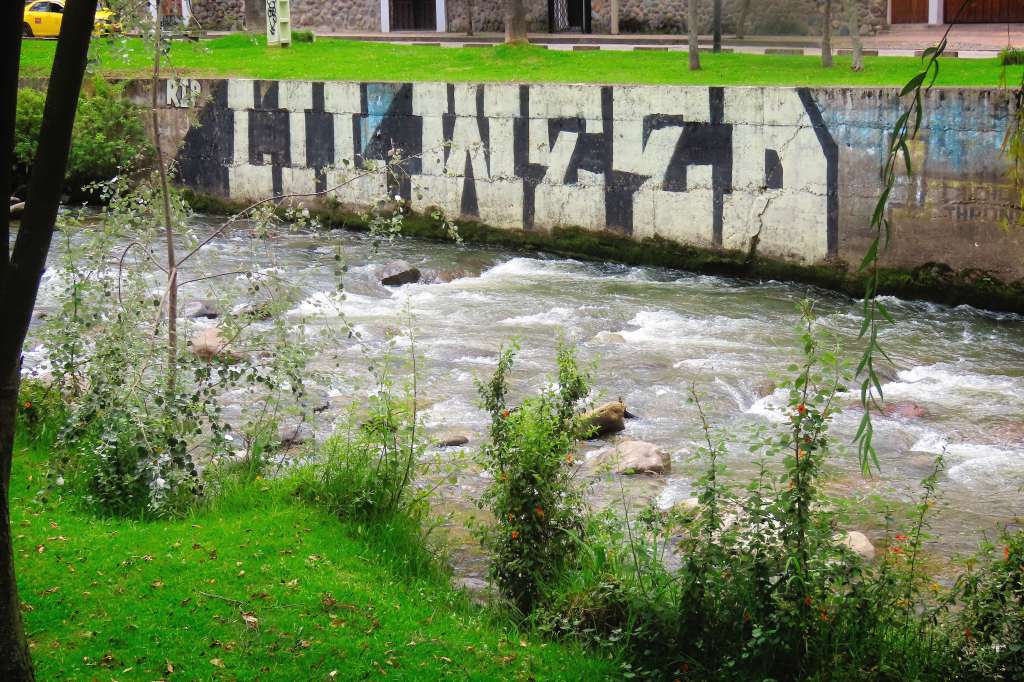
Some street art is more personal and encourages contemplation, like the difficult-to-read chalk writing on Puente Roto (Broken Bridge) overlooking the Rio Tomebamba.

I know many people are turned off by graffiti, but I take a certain amount of graffiti as a good sign. I was pleased to see evidence of a robust counter-culture in Cuenca. I’m not familiar enough with Ecuadorian politics or Cuenca’s local politics to understand the need for a counter-culture, but I feel it often represents the kind of diverse thinking that every community can benefit from. Is the work below directed at corporations, wealthy immigrants to Ecuador, or someone else?
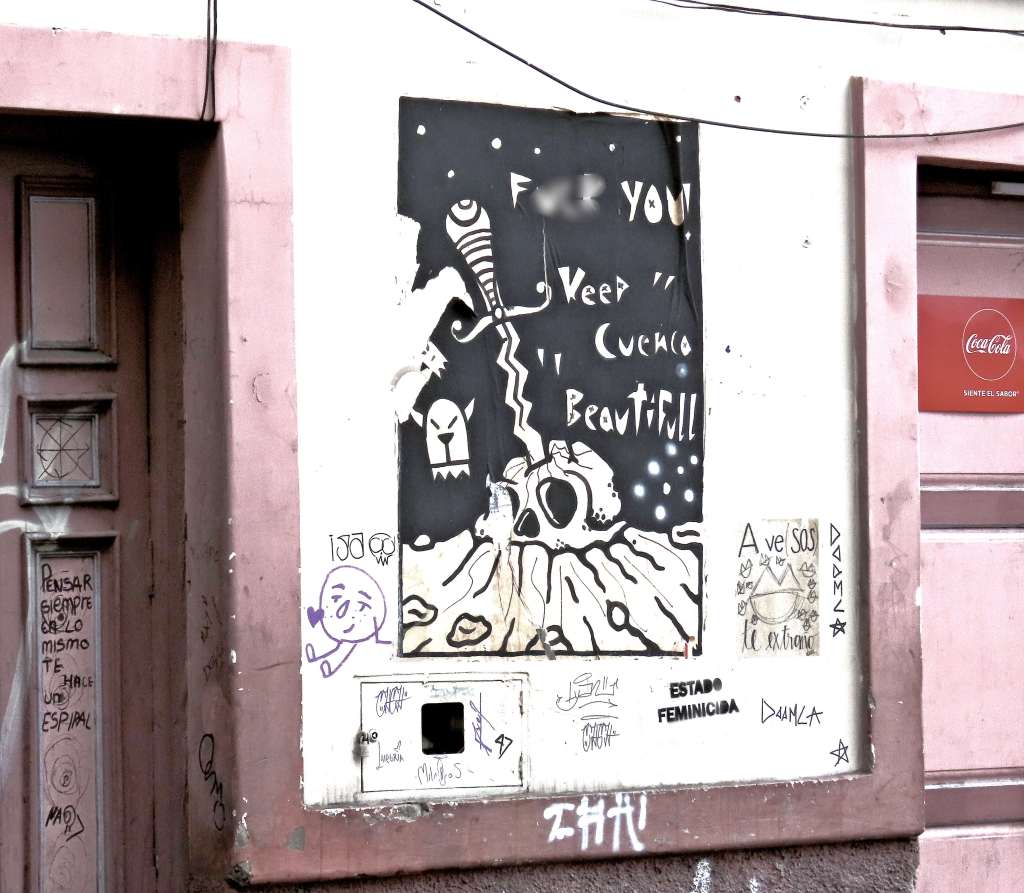
I think most of us can agree that a surveillance state is bad in any city:

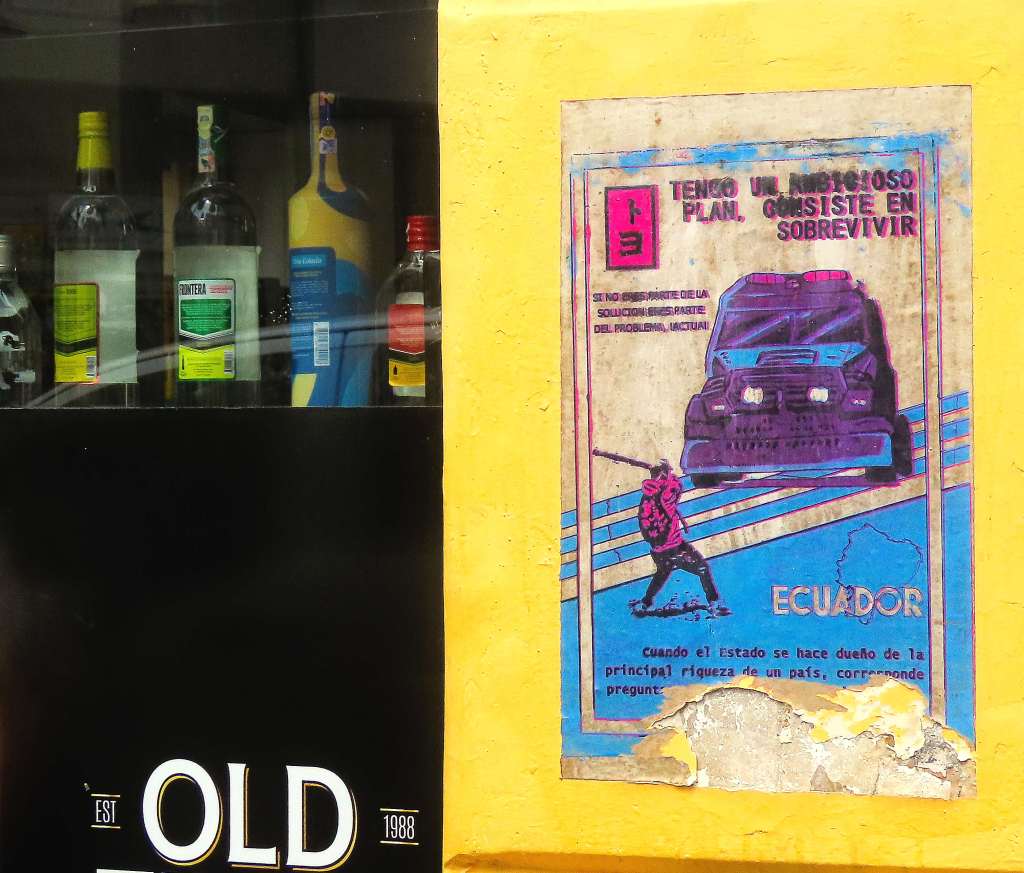
There were widespread demonstrations in Ecuador in 2022, initiated largely by indigenous groups. A lot of people complained about the protests, because the demonstrators were successful in blocking some roads and national ports of entry. I will nearly always agree with indigenous groups because, in fairness, they were there first. The government’s violent response to some of the demonstrators seems to be one of the actions that triggered an impeachment vote against Ecuador’s president at the time. But I was encouraged to see some street art that appeared related to those protests. This is also a reminder that posters, along with paint and chalk, have been important in the history of street art.
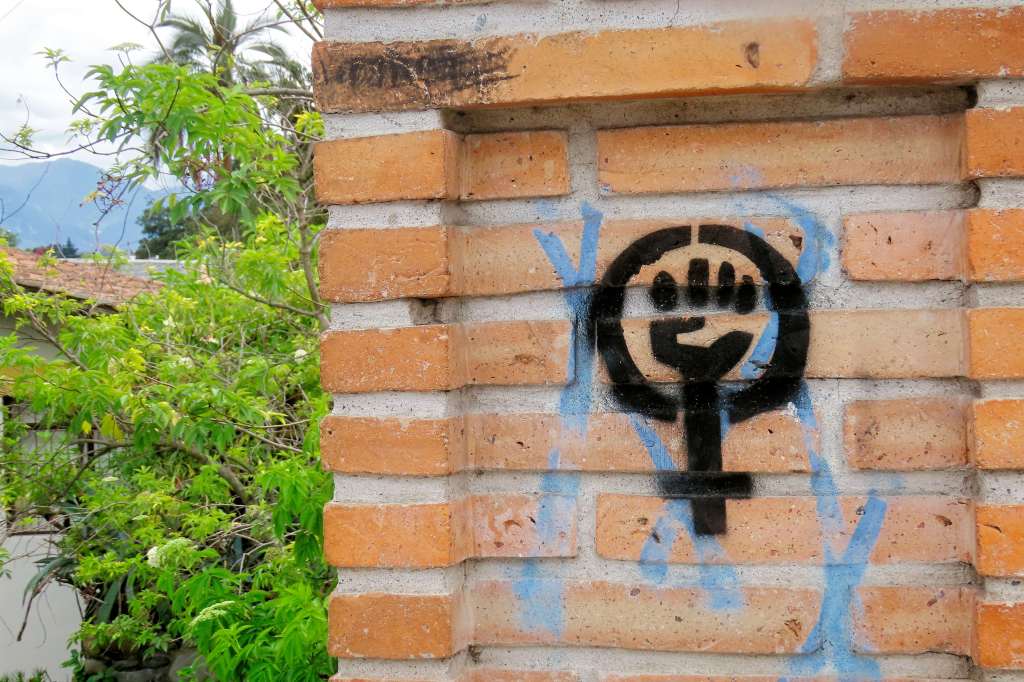
Of course, street art is exposed to the elements and both decay and renovations of buildings. It is transient by nature, and street art that inspires or offends you today might be gone by tomorrow.

Finally, we shouldn’t be too harsh toward street artists even if their work is not sanctioned. Their work is often an expression of dire social or economic circumstances and they, like their work, may not survive very long.
I look forward to returning to Cuenca to see more of this lovely city, including its diverse street art.



 The Creative Life Adventure
Leave a comment