Finally, Michael Crichton did something I like.
Technically, he did this in 1973 by writing and directing the feature film Westworld. I’ve read several of Crichton’s novels over the years and they didn’t do much for me. I did enjoy the film adaptation of Jurassic Park (1993), but much less so the novel. Considering Crichton ended up being a wingnut climate-change denier, I don’t feel bad criticizing him or his work.
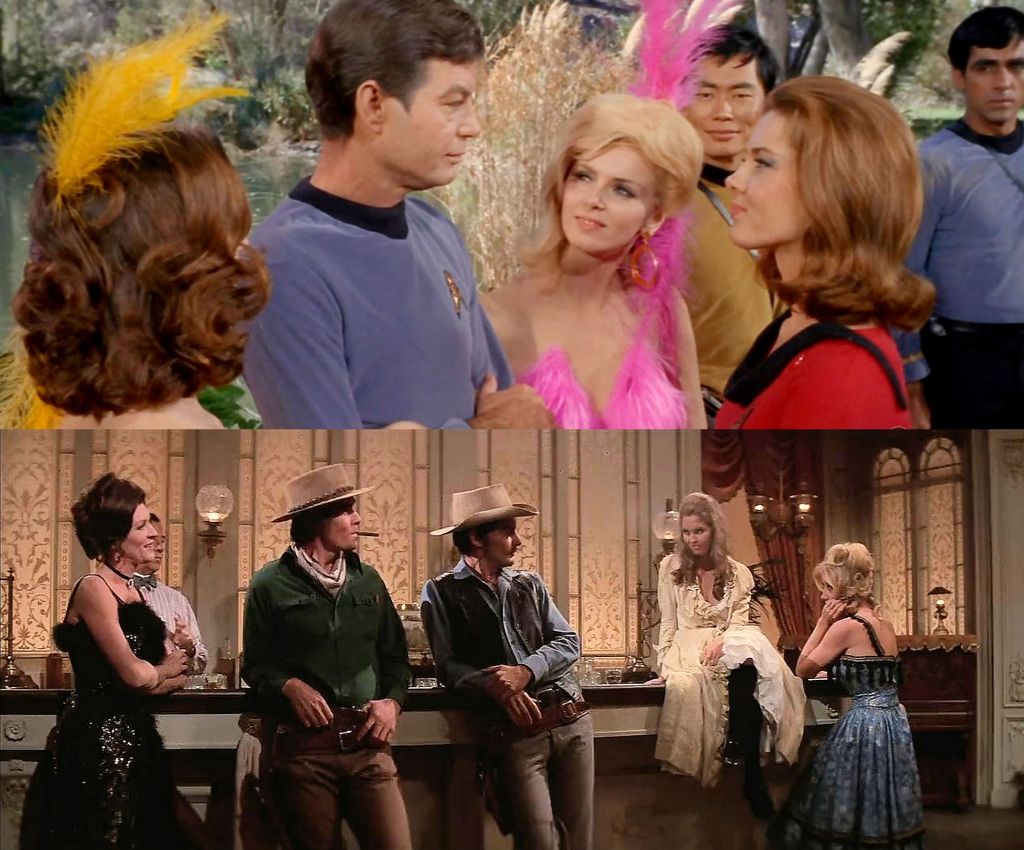
Westworld, however, I enjoyed very much when I finally got around to watching it this week. The premise is reminiscent of the “Shore Leave” episode of Star Trek‘s original series. Technology has allowed creation of a theme park for the wealthy called Delos. Delos has three different “worlds,” West World, Medieval World, and Roman World, each designed according to their names and populated by robots that resemble humans. Guests can give life to their most violent and carnal whims with the promise that “nothing can go wrong.” Of course, something goes wrong and the danger becomes real. Despite being a western in many ways – Yul Brynner essentially performs a sinister version of his role from The Magnificent Seven (1960) – Westworld has legitimate science-fiction qualifications. Crichton himself had already written the technology-themed 1973 film Extreme Close-Up and the mind-control novel Binary in 1972. The cast includes Majel Barrett, who portrayed Nurse Chapel in Star Trek, and Alan Oppenheimer, who would begin playing Dr. Rudy Wells on The Six Million Dollar Man the same year Westworld was released. The influence of Westworld can be seen in films as diverse as The Terminator (1984) and City Slickers (1991).
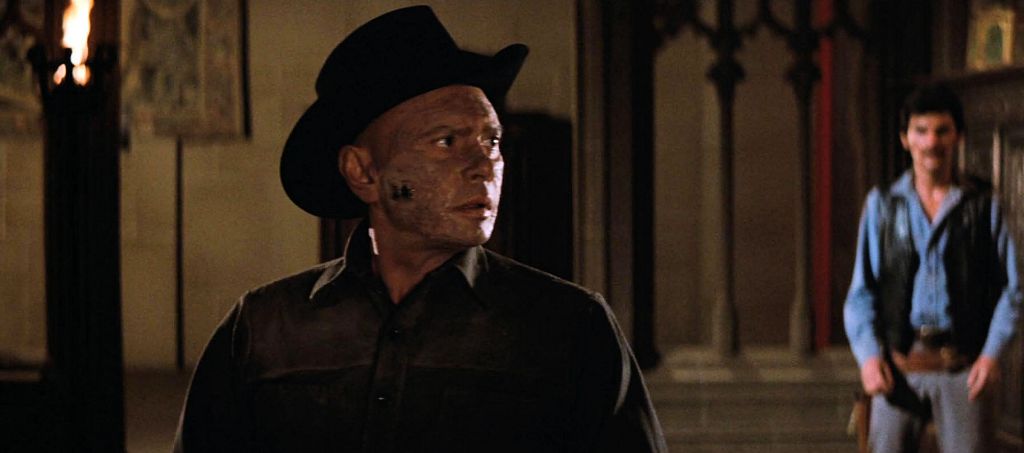
Westworld remains relevant today, with our embrace of AI, self-driving cars, and other Big Tech monstrosities for which we are entirely unprepared. It predicts incomprehensible algorithms and first-person-shooter VR simulations. Of course, the real moral failure isn’t the technology, but the blood lust of the human characters who find violence entertaining. Just as the characters in Westworld, if we don’t learn to temper our own worst tendencies, we will ultimately get what we deserve.

I also watched Alfred Hitchcock‘s Strangers On a Train (1951) this week. I had seen it before but it’s a fun movie to revisit. Like many who came of age in the 1980s, I learned about Strangers On a Train by watching Danny DeVito‘s Throw Momma From the Train (1987), a comedic take on the criss-cross murder premise of Hitchcock’s film. I won’t spoil the ending, but I initially expected the climactic set-piece to be unintentionally funny. Of course, it ends up being as riveting as Hitchcock must have intended. The film has a tragic quality – Robert Walker, who is so good as the unhinged Bruno Antony, lived a troubled life and died soon after Strangers On a Train was released. At the time I’m writing this, Strangers On a Train is streaming on Tubi.


 The Creative Life Adventure
Leave a comment