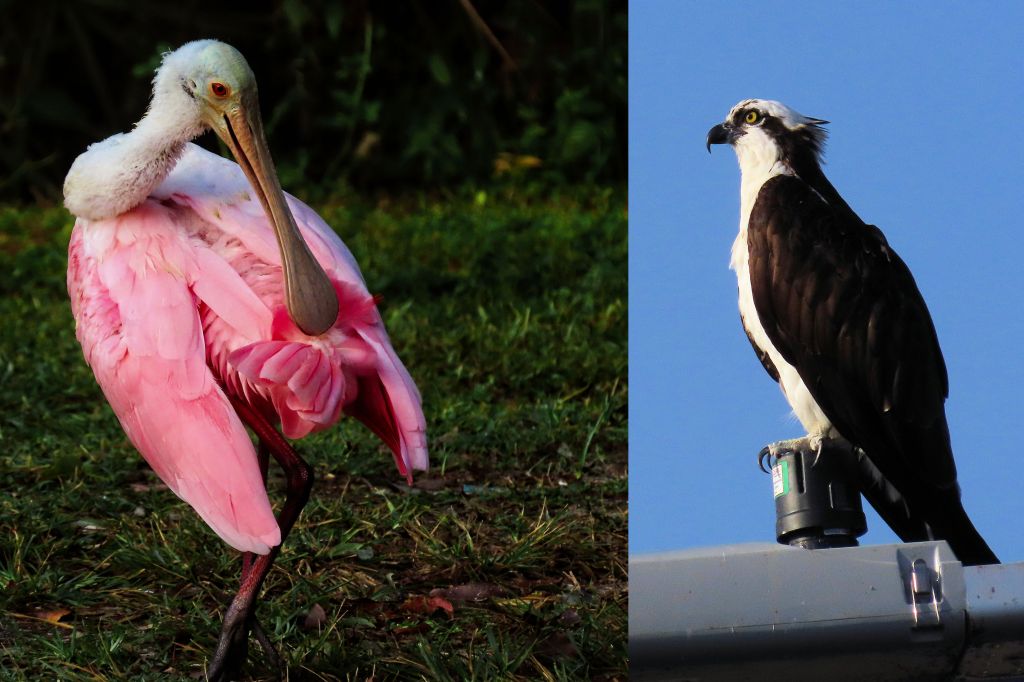
“How…have we become so deaf and so blind to the vital existence of other species, and to the animate landscapes they inhabit, that we now so casually bring about their destruction?”
— The Spell of the Sensuous by David Abram —

This week I read The Spell of the Sensuous: Perception and Language in a More-Than-Human World by David Abram. I was surprised that this book was published in 1997 – 27 years ago! How did that happen? – because it feels perfectly in synch with humanity’s world-destroying mania of 2024. The book’s subtitle is an efficient description of the content, with special emphasis on the impacts of humanity’s move toward written language – using alphabets of abstract characters – and “straightening” of time from a circular space-time into a linear sequence of one-time events.
“The fact that one’s scripted words can be returned to and pondered at any time…grants a timeless quality to this new reflective self, a sense of the relative independence of one’s verbal, speaking self from the breathing body with its shifting needs.”
— The Spell of the Sensuous by David Abram —
According to the Preface, the book is aimed primarily at academics and Abram’s fellow environmental activists. This means that the text can be a little dense for civilians like myself, but the effort is well worth it. On the one hand, I’m not 100% on board with Abram’s conclusions. At one point he seems to edge toward anti-vaxxer territory, an unfounded and potentially dangerous position; not every product of “civilization” is bad.
“For unless Apache listeners are able to picture a physical setting for narrated events…the events themselves will be difficult to imagine. This is because events in the narrative will seem to ‘happen nowhere’ … and such an idea, Apaches assert, is both preposterous and disquieting. Placeless events are an impossibility, everything that happens must happen somewhere.”
— The Spell of the Sensuous by David Abram —
However, I have long understood that place matters, but haven’t always been able to clearly verbalize the reasons for that. Abram’s book brilliantly specifies some of those reasons. The Spell of the Sensuous is well-researched and draws on Western philosophy, but also recites numerous examples from indigenous cultures, all of whom lived, not separately from “the environment,” but as part of a thriving ecosystem of animals (human and otherwise), vegetation, land, sea, and sky. Those lives were formed by, and integrated with, the very regions in which they lived.
“It is difficult to avoid the conclusion that, for ancient Mediterranean cultures no less than for the Lakota and the Navajo, the air was once a singularly sacred presence. As the experiential source of both psyche and spirit, it would seem that the air was once felt to be the very matter of awareness, the subtle body of the mind.”
— The Spell of the Sensuous by David Abram —
My greatest fear with The Spell of the Sensuous is not the book’s contents, but the possibility that, as with Thoreau and other naturalist writers, some readers will only engage with the book superficially. Then these same individuals will buy “vacant” land (sometimes in less developed countries other than their own), clear the foliage for their “eco-friendly” house and a driveway for their dangerously oversized pickup or SUV, order an endless variety of “must-haves” from Amazon, watch Sunday footballs games on their satellite television, and compliment themselves on their sustainable lifestyle.

This is clearly not Abram’s fault; his intentions are all good and he makes a compelling case. But I’ve met plenty of the kind of people described above, who fail to see the irony of the destruction caused by their maximalist “off-grid” lifestyle. This raises a conflict in my own thinking that occurred to me frequently while reading The Spell of the Sensuous. How to reconcile a legitimate need for human engagement with the real (i.e. “uncivilized”) world, against the equally compelling argument in a book like Green Metropolis by David Owen: cities are the only truly sustainable human habitat, because urban dwellers walk more, drive less, consume less, live longer, and trample a lot less of the landscape. We’re talking about true cities, not sprawling suburbs that often pass for cities. The year The Spell of the Sensuous was published, I bought my first home, a condo in San Jose, California. I could take the train to work or day trips to San Francisco; I could walk to my favorite burger joint or the local video store (remember those?); the San Jose Museum of Art was only a short ride away on light rail. That was a long time ago, but I’ve never forgotten the benefits of urban living, just as I’ve never forgotten the joy of exploring the tidal pools of Monterey Bay or the bright yellow banana slugs I encountered while biking through Big Basin Redwoods State Park.
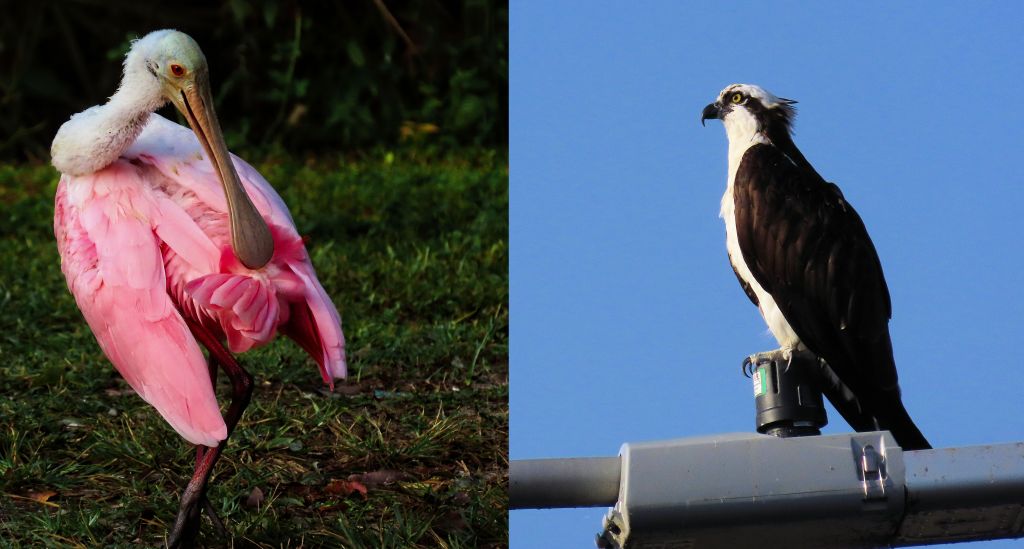
At some point, this all feels like a conundrum with no solution. (The Conundrum is another excellent book by David Owen.) And this may seem like tangential thinking, but I feel it’s important because part of David Abram’s message – and it’s an important message – is to encourage us to rise above mundane first-world concerns and immerse ourselves in the earth’s biodiversity; which we’re a part of, whether we acknowledge it or not. Yet, human engagement, even when well-intentioned, often does more harm than good. We clearly benefit from being among trees, birds, foxes, and butterflies. But maybe the trees are better off without us. Whatever the answer, The Spell of the Sensuous clearly gave me a lot to think about, and I highly recommend it.
“By denying that birds and other animals have their own styles of speech, by insisting that the river has no real voice and that the ground itself is mute, we stifle our direct experience. We cut ourselves off from the deep meanings in many of our words, severing our language from that which supports and sustains it. We then wonder why we are often unable to communicate even among ourselves.”
— The Spell of the Sensuous by David Abram —
The Existential Love Boat
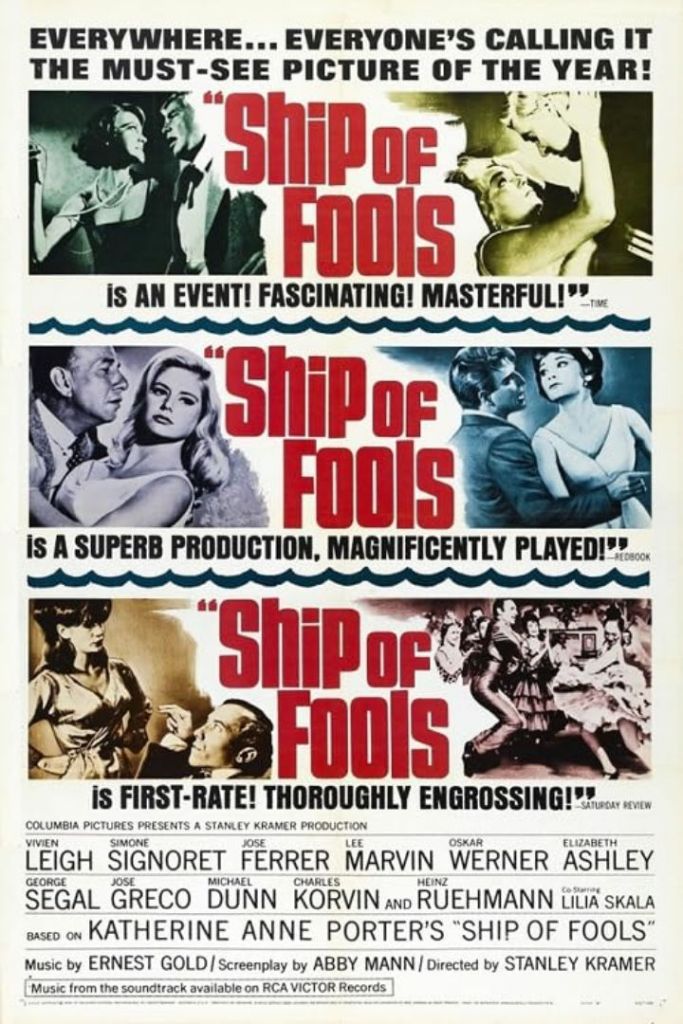
The 1965 movie Ship of Fools takes place almost entirely on a cruise ship from Veracruz, Mexico, bound for Bremerhaven, Germany, in 1933. The year is significant because Hitler was appointed Chancellor of Germany that January, marking the beginning of the Third Reich and Nazi Germany. Many of the passengers in Ship of Fools are well-off Germans or Americans, but the ship also carries farm workers being deported to Spain, where conflict was already brewing that would lead to the start of the Spanish Civil War in 1936. Book-ended by insightful fourth-wall monologues from Glocken (Michael Dunn) – who provides a sort of conscience for both the characters and the audience – the voyage gives this microcosm of humanity time to interact among themselves and express their hopes, fears, wisdom, and ignorance, all the while approaching a new Germany, where freedom of the press and many basic civil liberties had already been revoked.
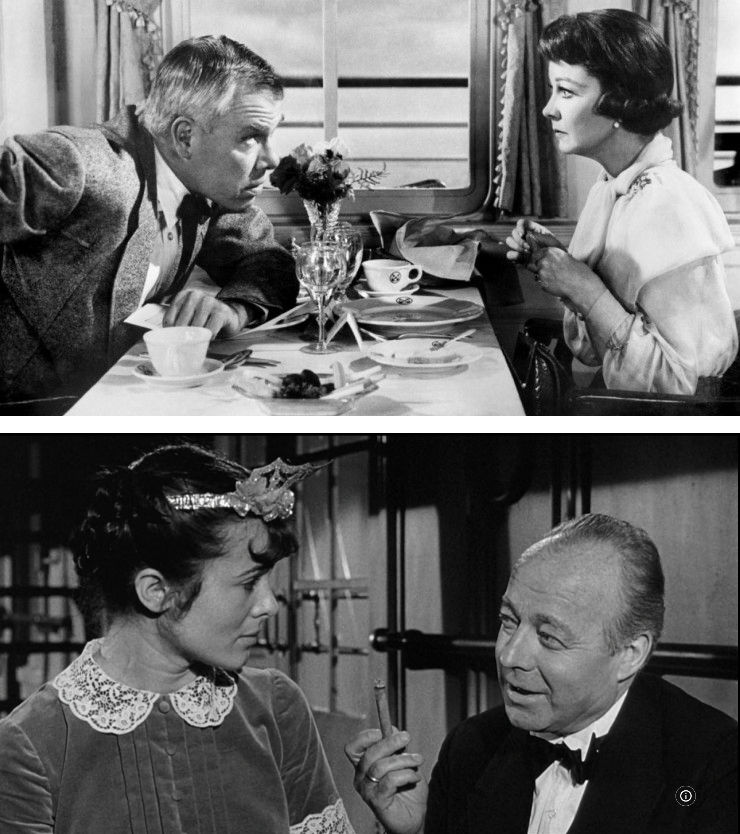
Ship of Fools was directed by Stanley Kramer, who was no stranger to complex topics, having also directed The Defiant Ones (1958), On the Beach (1959), and, later, Guess Who’s Coming to Dinner (1967), among others. The movie is adapted from a novel by Katherine Anne Porter, and features a dazzling ensemble cast, including Stanley Adams, Elizabeth Ashley, Michael Dunn, Jose Ferrer, Vivien Leigh, Barbara Luna, Lee Marvin, Heinz Rühmann, George Segal, Simone Signoret, and Oskar Werner. Fans of the original Star Trek series will recognize a few of those names: Stanley Adams played Cyrano Jones in “The Trouble with Tribbles,” Barbara Luna played Lt. Marlena Moreau in “Mirror, Mirror,” and Michael Dunn played Alexander in “Plato’s Stepchildren.” Ship of Fools was also Vivien Leigh’s last film, and she apparently struggled with both physical and mental health issues during production.

The film strays into soap opera territory from time to time, but brilliant acting (Dunn, Signoret, and Werner received Oscar nominations, and Leigh deserved one) and clever storytelling more than make up for that. Ship of Fools also has some of the most chilling movie dialogue I’ve ever heard: defending his loyalty to Germany, the good-hearted but naive Jew Lowenthal (Heinz Rühmann) says, “There are nearly a million Jews in Germany. What are they going to do, kill all of us?” Clearly this ship of fools represents all of us, but the question for the viewer is: what have they, and we, learned from the journey?
See You in the Falls
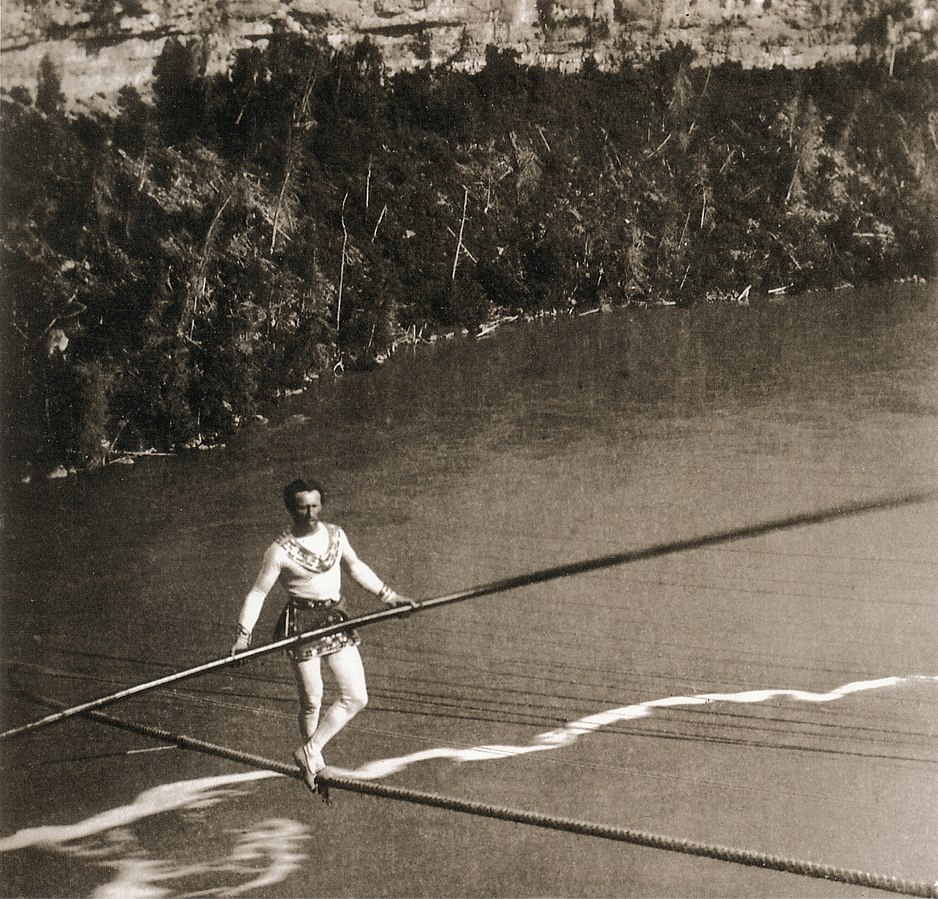
In 1869, Charles Blondin (1824 – 1897) became the first to cross Niagara Gorge by tightrope, 1,100 feet across and just downstream from Niagara Falls. This fact is mentioned by a tour guide more than halfway through Henry Hathaway‘s Niagara (1953). It’s filler dialogue, intended as background to the real action, but it’s a brilliant choice, because the movie is largely about the kind of control Blandin must have sought; it’s about individuals who conquer, or fail to conquer, the many desires that life has given them. I was drawn to watch Niagara – currently streaming on Plex – after re-reading Ian Fleming‘s From Russia with Love, where a poster for Niagara overlooks a dangerous night-time setting. Unlike 007, the characters in Niagara aren’t fighting for Queen and Country, but for the moral standards of Cold War America.

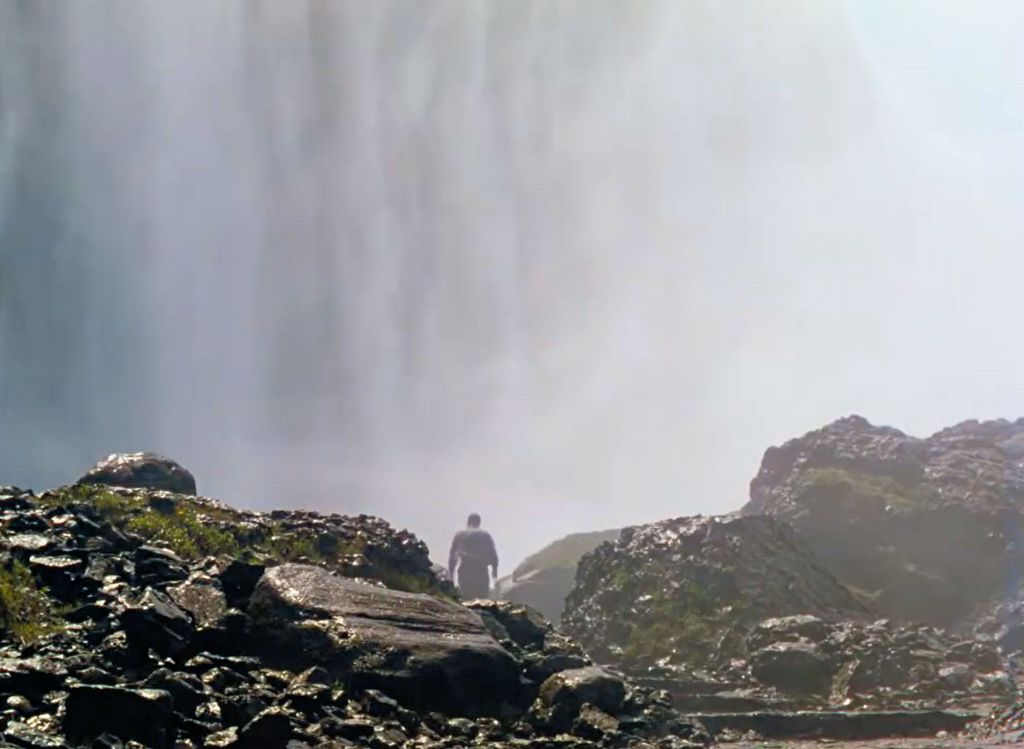
The film opens with a voice-over from George Loomis (Joseph Cotten) and a powerful visual of one man dwarfed by nature: “Why should the Falls drag me down here at five o’clock in the morning? To show me how big they are and how small I am? To remind me they can get along without any help?” Loomis is a former sheep rancher, bitter over having impulsively married philandering Rose (Marilyn Monroe). Staying in a cabin overlooking Niagara, George is furious with Rose (and himself), but stays with her, too weak to rein in his desire. He wants to start his life over, but will he get the chance? It soon becomes clear that Rose has more in mind than infidelity, plotting something nefarious with her lover Ted (Richard Allan).

The action is complicated by the arrival of Polly and Ray Cutler (Jean Peters and Casey Adams). The Cutlers are supposedly on a belated honeymoon but, clearly, they are really there for capitalism – talk about an unstoppable force of nature! – because Ray plans to meet his boss in the corporate headquarters that sits within sight of the falls. Where George is overcome by sexual desire, Ray’s desires are entirely suburban – hanging out with the boss and taking vacation snapshots. Ray is the perfect Everyman for Eisenhower’s America – though Ike was barely awarded the GOP nomination in July, 1952, not long before filming on Niagara wrapped. Even Ray’s attempt to take pinup photos of Polly is purely innocent, and when he does notice Rose’s swiveling hips, his attention never wavers long. But if there’s a true “hero” in Niagara, it’s Jean Peters’ Polly, the one character in the story who doesn’t appear entirely self-absorbed, and far from the “plain Jane” she’s presented as, even next to sultry Monroe. The Cutlers, in their kindness, get swept up in Rose’s drama without understanding her true nature, and that provides much of the film’s conflict. To disclose much more of the characters’ various foibles might involve spoilers.

A lot of films were still produced in black-and-white in 1953, especially noir dramas like Niagara, but this movie is wisely filmed in Technicolor – anyone who thought the world looked more interesting in black-and-white had clearly never seen what Marilyn Monroe could do with red lipstick and a magenta dress. Monroe had top billing in Niagara, the first time in her career. Despite her later reputation for dumb-blonde characters, Monroe is entirely convincing as the femme fatale. Marilyn, however, is not the real star of this movie; the real star is Niagara itself, always present, whether in close-ups of water spraying on visitors or long shots of the vast triple-waterfall. Niagara Falls provides a setting that is beautiful from a distance, but, like Rose, potentially life-threatening up close.
I don’t really know if Charles Blondin intended his tightrope walk as a way of communing with the falls or mastering them. Judging from the stunts he performed on later crossings of Niagara – pushing a wheelbarrow, carrying his manager – he must have imagined himself more the conquering sort. He seems to have been nearly as sinister as Rose Loomis – Blondin abandoned a wife and children in France to move to the U.S., where he remarried. But the characters in Niagara are all, to various degrees, overwhelmed by human frailty, which is no match for, and of no interest to, the enduring landscape. Blondin died of diabetes-related causes in 1897. As far as I know, everyone associated with Niagara is also deceased – director Hathaway died in 1985 – with True Grit (1969) among his many other credits – and the last surviving cast members were Peters and Adams, who both died in 2000. And according to Wikipedia, Niagara Falls itself will follow them, eroded down to nothing, in about 50,000 years.



 The Creative Life Adventure
Leave a comment