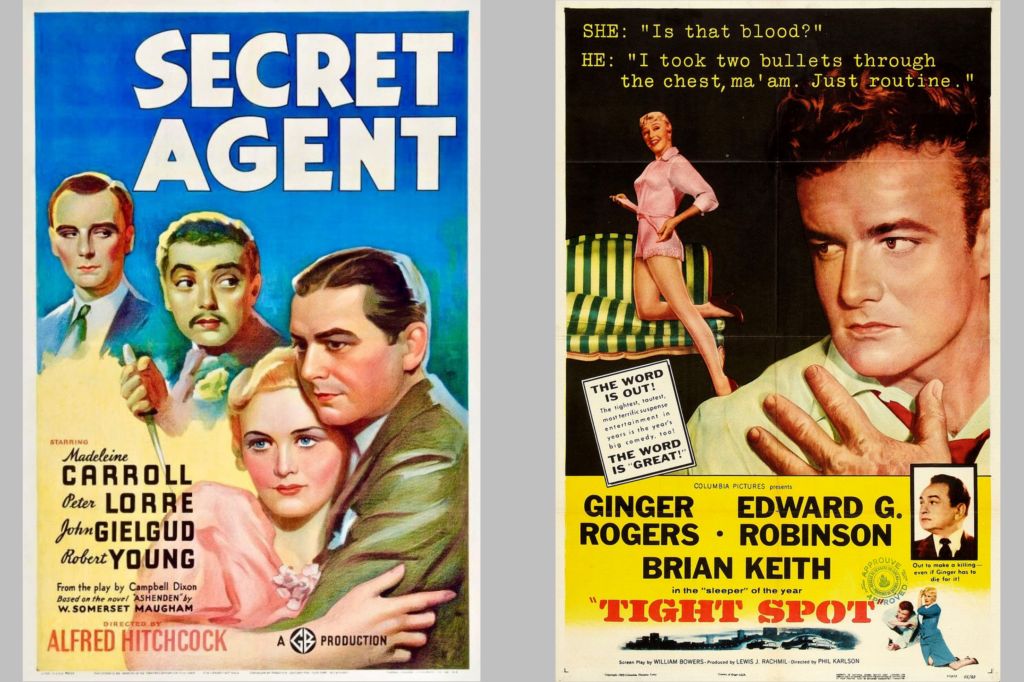
I’ve written in recent months about director Phil Karlson (1908 – 1982), with specific mention of 5 Against the House and Hell’s Island, two of four films Karlson released in 1955. Now I’ve seen a third, Tight Spot. (Supposedly, producers Albert R. Broccoli and Harry Saltzman wanted Karlson to direct Dr. No in 1962, but he demanded too much money, so Terence Young got the job.)

Tight Spot (1955) was inspired by Virginia Hill, who Time magazine described as “queen of the gangsters’ molls.” Hill was a Mafia courier and romantically involved with, among others, Joe Adonis of the Luciano crime family, and Benjamin “Bugsy” Siegel. To give a sense of the kind of people Hill shared her life with: Adonis was deported from the U.S. and suffered a heart attack during harsh interrogation by Italian authorities; Siegel was shot in the back of the head while sitting in his Beverly Hills home. In 1951, Hill was subpoenaed to appear before the Kefauver Committee, established by Senator Estes Kefauver of Tennessee to investigate organized crime. Hill provided nothing useful in her testimony, denied any knowledge of organized crime, slapped a reporter on her way out of the hearings, and soon left the country. She died in Salzburg, Austria, in 1966, of an apparently deliberate drug overdose.

Tight Spot takes this premise in a different direction. Ginger Rogers plays Sherry Conley, a “model” – and the movie clearly intends “model” to mean “prostitute” – already in prison and offered freedom in exchange for testifying against prominent mobster Benjamin Costain. Brian Keith (who was so good in 5 Against the House) is the police detective assigned to guard Conley, and Edward G. Robinson plays the U.S. attorney who puts Conley in an expensive hotel to help motivate her cooperation. The story revolves around two sources of conflict: will Conley agree to testify, and will Costain, in a genuinely chilling performance by Lorne Greene, succeed in his attempts to have her killed? Along the way, the script, sadly, takes time to do a little immigrant-bashing, but also calls out politicians, the legal profession, and the press for failing to serve the greater good. Tight Spot also skewers the still new-ish threat to motion pictures, television: every time someone turns on the hotel room TV set, they see a dimwitted entertainer who is not remotely entertaining. (The very next year, television will really stick it to the movies with the first network broadcast of The Wizard of Oz, which will become an annual tradition soon after.) The most enjoyable subplot involves a dig at capitalism, when Conley’s sister urges her not to testify, because guilt-by-association might affect her husband’s business.
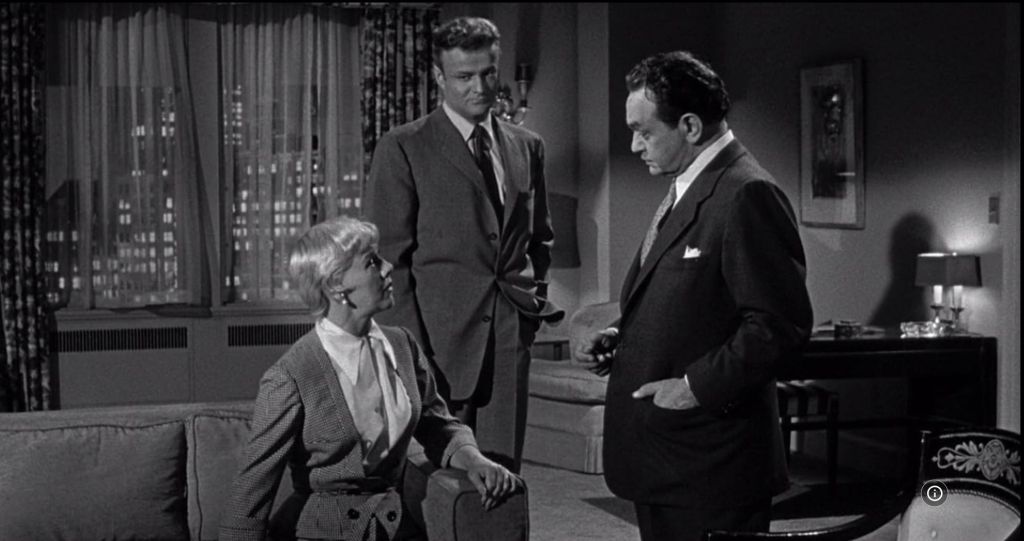
While we’re not hit over the head with it, the anti-immigrant sentiment really clouds a movie that is otherwise highly entertaining. Costain is an immigrant from an unspecified country, despite having no accent beyond stereotypical gangster-ese. The movie opens with the courthouse appearance of another immigrant gangster – who even arrives in Manhattan by ferry, as so many immigrants arrived by ocean liner – only for him to be executed in a scene that could have inspired a similar execution at the end of The Godfather (1972).

In every other way, Tight Spot is a fun ride. We puzzle over some intriguing ethical dilemmas and the pacing never drags. And the cast is outstanding. Brian Keith had a handful of film credits and a growing list of TV guest appearances by 1955. Ginger Rogers was already in the late stage of her career at the age of 44, playing a street-savvy dame that must have seemed very different from her days in RKO musicals. As for Edward G. Robinson, Tight Spot is one of numerous supporting parts he took throughout the mid-1950s. His first credited screen appearance was in the 1923 silent film The Bright Shawl. He also played one of the great screen gangsters, Johnny Rocko, in Key Largo (1942), one of five movies he made with Humphrey Bogart. Robinson was the first USO entertainer to visit Allied troops in Normandy after the July, 1944, landing. He was also highly critical of Nazis and fascism, and that’s a good thing, because if you don’t hate Nazis, you’re either insane or…well, really, insane is the only answer.
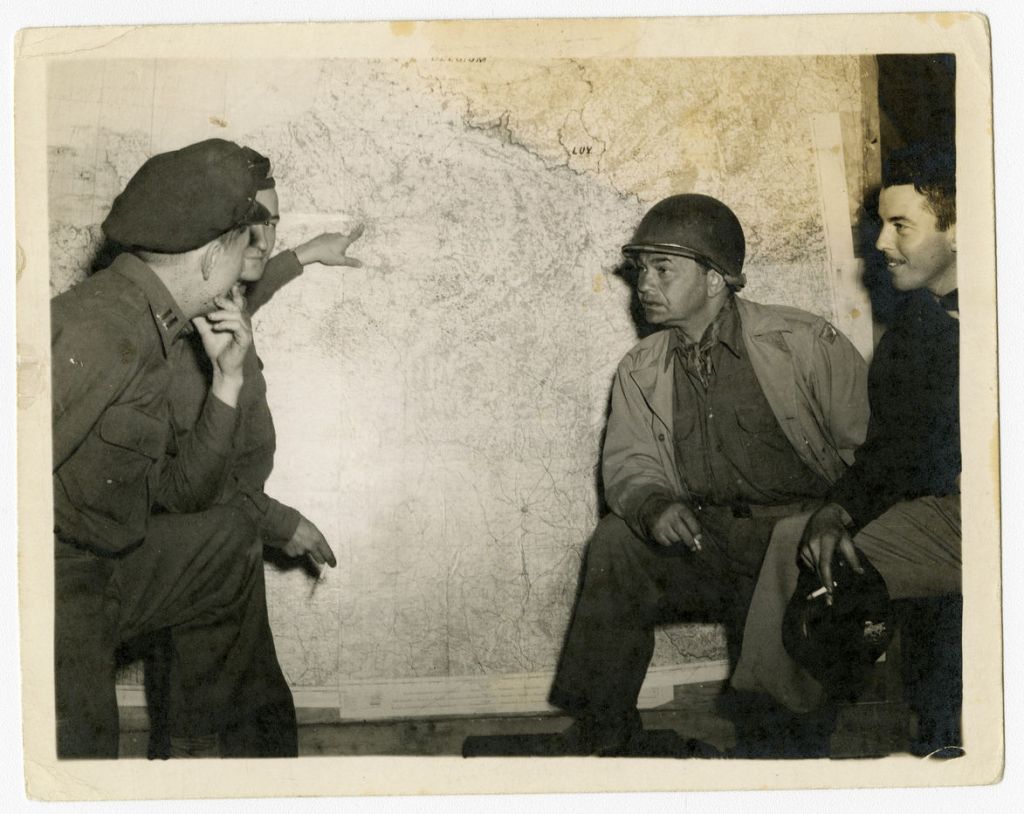
As a result, Robinson got caught up in the mania of the very pro-fascist House Un-American Activities Committee (HUAC), where he was called to testify in 1950 and 1952. Like many others threatened by HUAC, Robinson named others in Hollywood who he implied, but did not state, were communists or communist sympathizers. His alleged communist leanings left him at an awkward phase of his career by 1955, when he was essentially “graylisted” – only able to find supporting roles, and typically with lesser studios. (He did, however, receive a Tony nomination as best actor for Middle of the Night on Broadway in 1956.) Robinson had something of a career resurgence on screen in the late 1950s, but generally remained in supporting parts for the rest of his career.

I can only imagine how Robinson felt about a role that required him to persuade someone else to testify at the risk of life and limb. We can only speculate whether or not Virginia Hill’s life might have turned out differently if she had testified. Either way, the good thing about Tight Spot is that it spells out who the real criminal is: regardless of place of origin, the guy killing people over money is definitely the criminal we should unite against.
The Secret Agent Who Loved Me

W. Somerset Maugham‘s 1928 short story collection Ashenden: Or the British Agent is considered by some to be the origin of modern espionage fiction. (I’ve seen both 1927 and 1928 listed as the original publication date.) Maugham influenced Eric Ambler, Ian Fleming, Raymond Chandler, and many others. The stories relate the adventures of the British writer Ashenden, who is recruited by R (just as 007 reports to M) to perform work for British intelligence. The adventures primarily take place during World War I and were based on Maugham’s real-life experiences; the stories were so realistic, the British government wouldn’t allow them to be published until ten years after the war’s end.

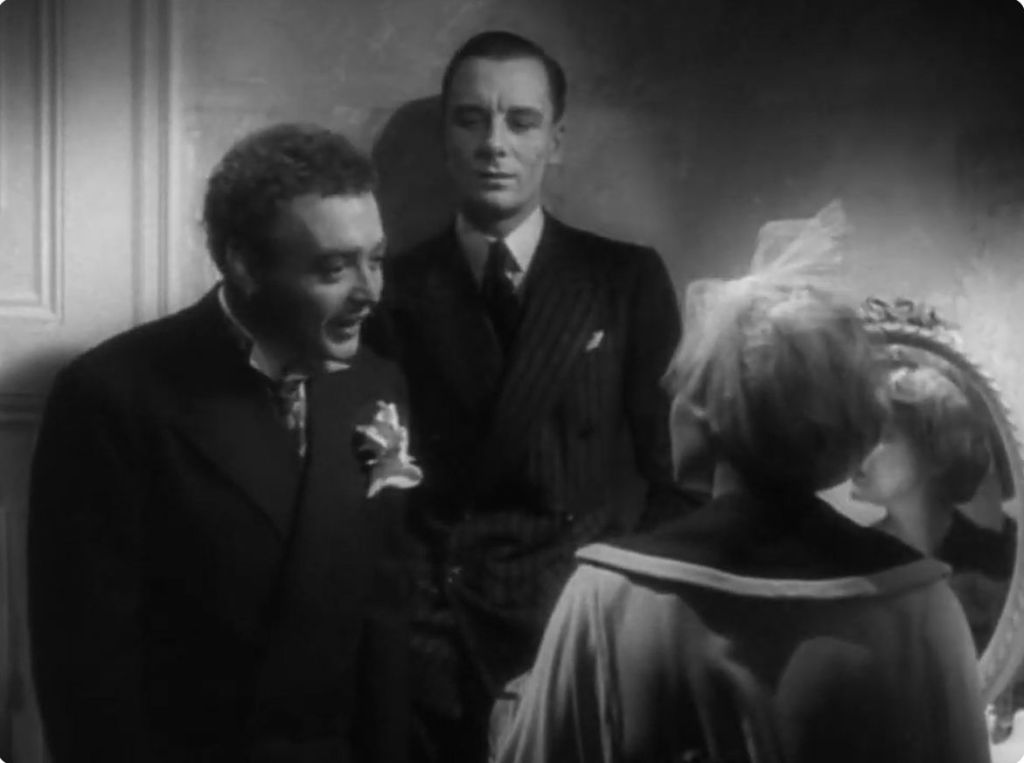
Playwright Campbell Dixon adapted two of the Ashenden short stories into a stage production called Secret Agent. In 1936, Alfred Hitchcock released his film adaptation of the play, also called Secret Agent, set in 1916. In the movie, the mysterious R (Charles Carson), takes the liberty of faking the death of British author and officer Captain Edgar Brodie (John Gielgud); R sends Brodie, now assumed dead and traveling under the name Ashenden, to Switzerland to “eliminate” a dangerous German agent. R assigns Ashenden help in the form of Elsa Carrington (Madeleine Carroll), posing as Mrs. Ashenden, and the Mexican General (Peter Lorre). Ashenden’s primary role is to gain entry to “civilized” company for the General, who is the real assassin in the trio.
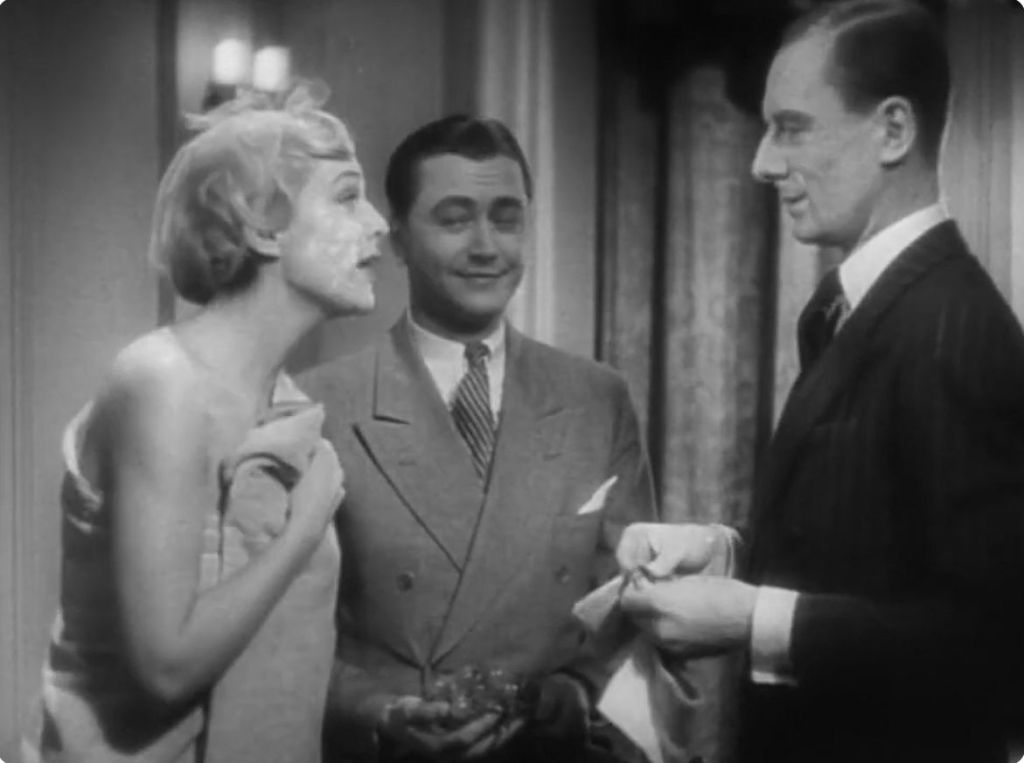
Secret Agent doesn’t get much appreciation, even among Hitchcock fans, who typically consider The Man Who Knew Too Much (1934) and The 39 Steps (1935) to be superior. I’m often out of step with cinephiles and the Letterboxd glitterati, and I find Secret Agent the most entertaining of the three. If a James Bond movie had been produced during the 1930s, this would have been it. The characters travel from London to Switzerland, then by rail to Turkey, even though the exotic locations are clearly created on a sound stage. Humorous banter is intermingled with genuine melodrama. The love interest, Elsa, provides some fairly bold sex appeal for the 1930s, and is torn between the reluctant hero Ashenden and the brash world traveler Robert Marvin (Robert Young). More importantly, she challenges the protagonist more forcefully than a lot of the early “Bond girls” did. The movie concludes with plenty of action on a train headed for Constantinople (later Instanbul), just as From Russia with Love concludes on the Orient Express leaving Istanbul. The Mexican General – who is neither Mexican nor a general, but does involve Peter Lorre sporting a perm and some bizarre brown-face makeup – creates an ethical counterpoint to Ashenden, who struggles with the reality of taking a human life.

That dilemma, the cold reality of war and military intelligence, is one of the movie’s lessons. If the good guys are as bad as the bad guys, what’s the point? The cast does a fine job of balancing their characters’ moral codes (or lack of) against one another. Madeleine Carroll also appeared in The 39 Steps and by 1938 she was the highest-paid actress in the world. John Gielgud and Robert Young are both so young here that I hardly recognized them. And Peter Lorre introduces his character as a bit of a fool, until he gets to the serious business and we realize that he’s almost as bad as the enemy. (In fact, in a different set of circumstances, he would be the enemy.) They all do a bang-up job, right up through the bang-up ending with some decent visual effects for the time period.
I won’t spoil the conclusion, but it’s a little too clean; the film makes a point of blurring the boundary between good and evil, then unblurs it somewhat in the final minutes. It’s a small complaint, because Secret Agent is still my favorite among the early Hitchcock films I’ve seen so far. Despite being an entirely different experience than Tight Spot, Secret Agent asks the same questions: How much should one person be asked to sacrifice for the greater good? And if they resist, how much pressure is justified to persuade them? Both movies are currently streaming on Tubi.


 The Creative Life Adventure
Leave a reply to docbravard Cancel reply