Mega-dilemma-opolis
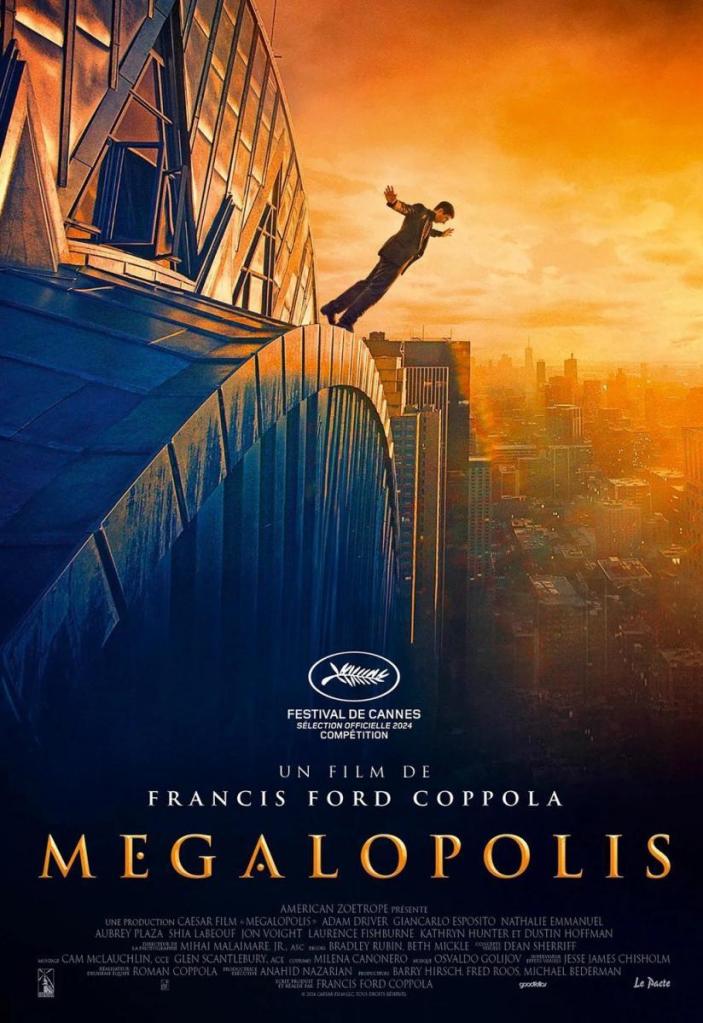
Separating the art from the artist – if or to what extent we should – has been a widely discussed topic in recent years. In my case, I’m a fan of many of Woody Allen‘s movies, but there’s a compelling argument that Allen might be a pretty terrible person. Am I wrong to keep watching his films? On the other hand, while I think Jon Voight is (or was) a good actor, I can’t watch his work anymore because of the raging lunatic he has become. This creates a moral dilemma out of my desire to see Francis Ford Coppola‘s Megalopolis (2024), which includes Voight in its ensemble cast. (Even worse, Megalopolis reportedly takes inspiration from Ayn “the Pain” Rand’s The Fountainhead. I tried to struggle through that train wreck of literary pretense years ago, and I can report that it is, to borrow a phrase from Roger Ebert, “a horrible experience of unbearable length.”) Others have written far more eloquently than I can on the boundaries between art and artist, including Claire Dederer, in her 2023 book Monsters: A Fan’s Dilemma, an expansion of her 2017 Paris Review essay “What Do We Do with the Art of Monstrous Men?“

The answer, of course, is that there is no one-size-fits-all answer. We each have to decide our own comfort levels. As Dederer writes, the “we” that we talk about is hardly a unified collective, but a range of individuals, including you and I: “The real question is this: can I love the art but hate the artist? Can you? When I say we, I mean I. I mean you.” Of course, there are appropriate social and cultural limitations to this individuality. Dederer points out that Richard Wagner’s Ring cycle “has rarely been performed in Israel.” And while I don’t support banning Gone with the Wind (1939), it should only be broadcast with cautionary context explaining the movie’s (and the book’s) white supremacist fantasy origins.
The Spacey-Time Continuum
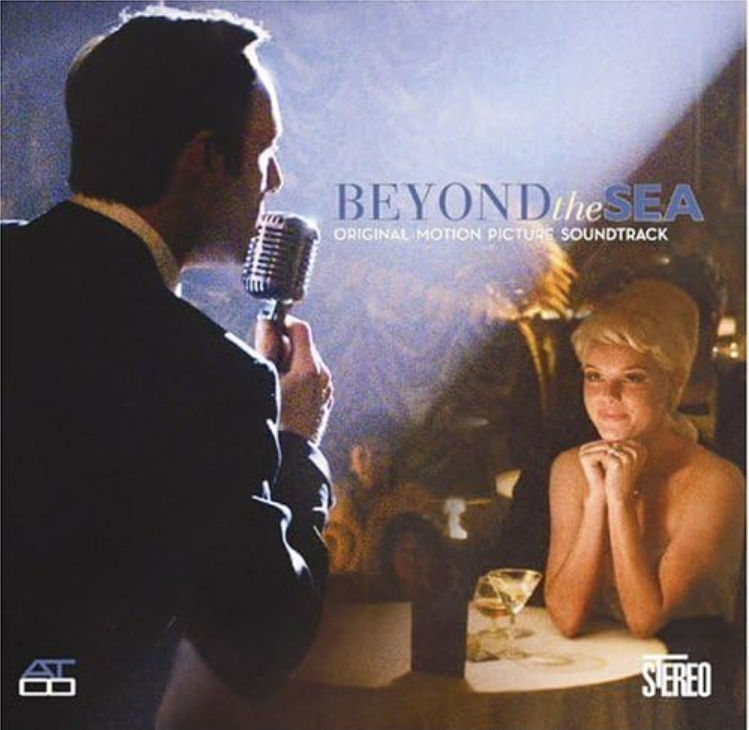
Either way, I’ve been thinking about the subject a lot this week after re-watching Beyond the Sea (2004). The movie is a musical biopic about Bobby Darin, starring, co-written, and co-produced by Kevin Spacey. Until about 2017, Spacey was a widely beloved stage and screen actor, receiving two Academy Awards, a BAFTA, a Tony, a Golden Globe, two Laurence Olivier Awards, and numerous other awards and nominations. He was also a surprisingly skilled vocalist, as Beyond the Sea confirmed. In 2017, of course, a cascade of sexual harassment claims – made by serious people – turned watching any Kevin Spacey movie into an entirely different experience. And that makes me angry for multiple reasons, one of them being that Beyond the Sea deserves a conversation that isn’t bogged down by the star’s misbehavior.

Beyond the Sea landed in the cinematic purgatory of “mixed reviews.” Some called Spacey too old to portray Darin – Spacey was in his mid-forties at the time, and Darin died when he was only 37. Others rejected the film’s unorthodox structure – Spacey plays Darin who plays himself in a biopic of his own life. Still others – and Roger Ebert, regretfully, was one of them – never fully appreciated Darin’s extraordinary talent. But those complaints were all raised at the film’s release in 2004. Now we have the even heavier burden of…that. I want to address these points because they are a gateway to talking about the man himself – Walden Robert Cassotto, known professionally as Bobby Darin.

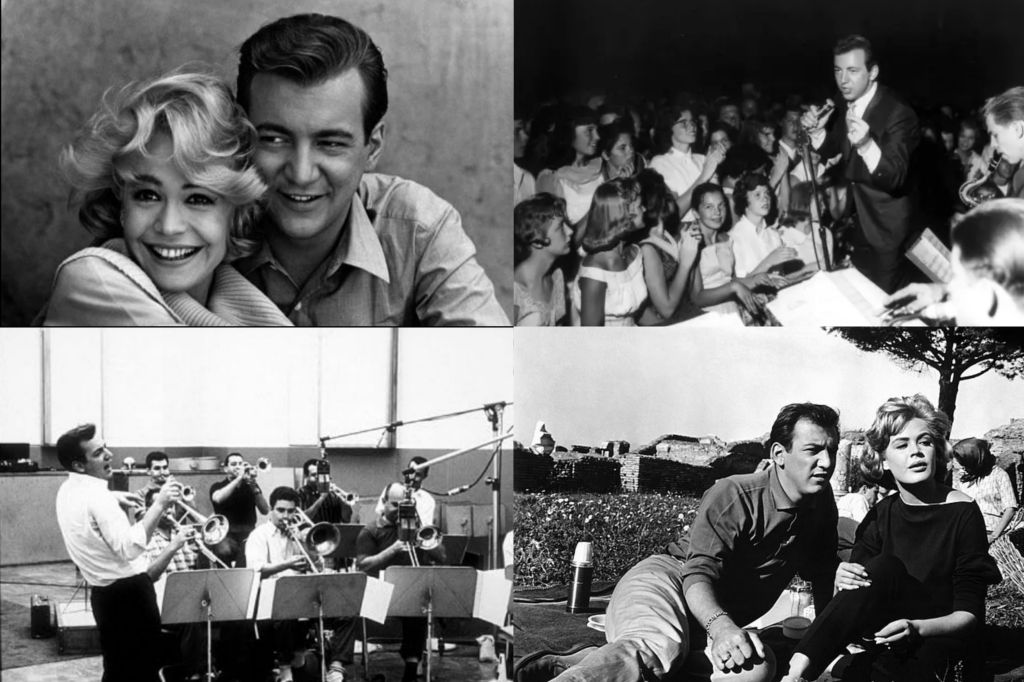
Spacey really was too old to play Darin. He’s convincing enough as Darin in his later years, but Darin was only 25 in his first major film role, Come September (1961). Even with dyed hair and help from Lord of the Rings makeup artist Peter King, Spacey’s age can be a distraction. Kate Bosworth is far more convincing as Sandra Dee, Darin’s first wife; the couple met while filming Come September. Bosworth not only resembles Dee but was of a similar age. The rest of the cast – including Caroline Aaron, Tayfun Bademsoy, Brenda Blethyn, John Goodman, and Bob Hoskins – bear a close enough resemblance to their real-life characters, but those individuals were generally behind the scenes anyway. They don’t occupy the collective visual memory the way Sandra Dee and Bobby Darin do.

The Kid Stays in the Picture Because the Kid IS the Picture
The movie’s structure, however, the very thing that many viewers criticized, resolves the age issue. “Isn’t the real truth that he’s too old to play this part?” a reporter asks at the beginning of the film. There’s a fantasy element to Beyond the Sea, almost as if Darin were a heavenly visitor to the filming of his own life story; throughout the movie, late-period Darin is confronted by himself as a child. Young Darin (played by William Ullrich) is the film’s conscience, showing up periodically to remind his older self to stick to the truth. (“The kid” is also a reminder of how rapidly the clock is ticking.) The movie does get the facts generally accurate, but adds considerable flourishes to emphasize the dream-like nature of Darin’s remarkable fame, with an ego to match. But there is so much more to Darin’s life than could fit in a two-hour movie, so that all we viewers really see is a collection of snapshots that give a sense of the full story. For a more facts-based analysis of Darin’s career, there is this excellent PBS documentary Bobby Darin: Beyond the Song.

The kid, young Darin, gets little discussion in reviews of Beyond the Sea, but he is the film’s real hero. He represents the past and the dividing line between the mere mortal, born Walden Robert Cassotto, and the eternal icon. “I’m the one who goes,” the kid tells his grown-up self late in the film. “Don’t you get it? Bobby Darin doesn’t die.” The kid dreamed of being as big as Sinatra, but Bobby Darin set the attendance record at New York’s Copacabana nightclub. It’s the kid who suffered a weakened heart from rheumatic fever, who doctors predicted might not live to adulthood. But like all great entertainers, Bobby Darin lives on in music, movies, and television appearances. And that, finally, brings us to the real point of Beyond the Sea: why the heck doesn’t Bobby Darin get the legendary credit he deserves?
He Knew Beyond a Doubt

Darin had no lack of achievements during his short career. He wrote or co-wrote many of the original songs he recorded. He released 27 studio albums and appeared in 13 motion pictures. He recorded rock, standards, and folk songs. He produced recordings for other artists, gave the song “Danke Schoen” to young Wayne Newton, and mentored future Byrds co-founder Roger McGuinn. He headlined at multiple Las Vegas casino/hotels. He had a short-lived NBC variety show, played multiple instruments, was a highly skilled chess player, and actively supported Robert F. Kennedy’s 1968 presidential campaign. He had a killer voice and loads of charisma on stage. On top of all that, his version of “Beyond the Sea” was featured in one of my favorite episodes of The X-Files, also called “Beyond the Sea.”
Darin himself said that his health motivated him throughout his life. Every day was a blessing and an opportunity. It seems unlikely he would have accomplished as much without awareness of his fragile heart. But how many of us would have done great things with the exact same knowledge? How often do we forget that the clock is ticking for all of us? “For the proper function of man is to live, not to exist,” Jack London wrote. “I shall not waste my days trying to prolong them. I shall use my time.” That seems to be the philosophy that guided Bobby Darin, and that is part of why I find his life – and the fantasy interpretation of his life in Beyond the Sea – so fascinating. He really was Sinatra’s creative rival, but Darin doesn’t get the recognition he deserves. Just watch this Midnight Special performance from March, 1973, only nine months before his death:
This is exactly the reason, for me, Beyond the Sea is important, in spite of…that. Kevin Spacey might really be a terrible person; far more terrible to his accusers than to a viewer like me, comfortably removed from Spacey’s alleged acts. Spacey’s bizarre 2018 YouTube video certainly creates a bad feeling. And, in a cruel twist of circumstances, while Darin supported one of America’s last great hopes, Robert F. Kennedy, Spacey supports the wingnut space alien RFK’s son has turned into. Beyond the Sea is not perfect, and the star may be a monstrous sort, but it’s a better movie than the critics claimed. And, for now, it’s the biopic we have, and it’s a good opportunity to be inspired for those of us inclined to find inspiration in Bobby Darin’s life and work. Darin’s life was short, but it was a brilliant show. May we all live our days so well.


 The Creative Life Adventure
Leave a comment