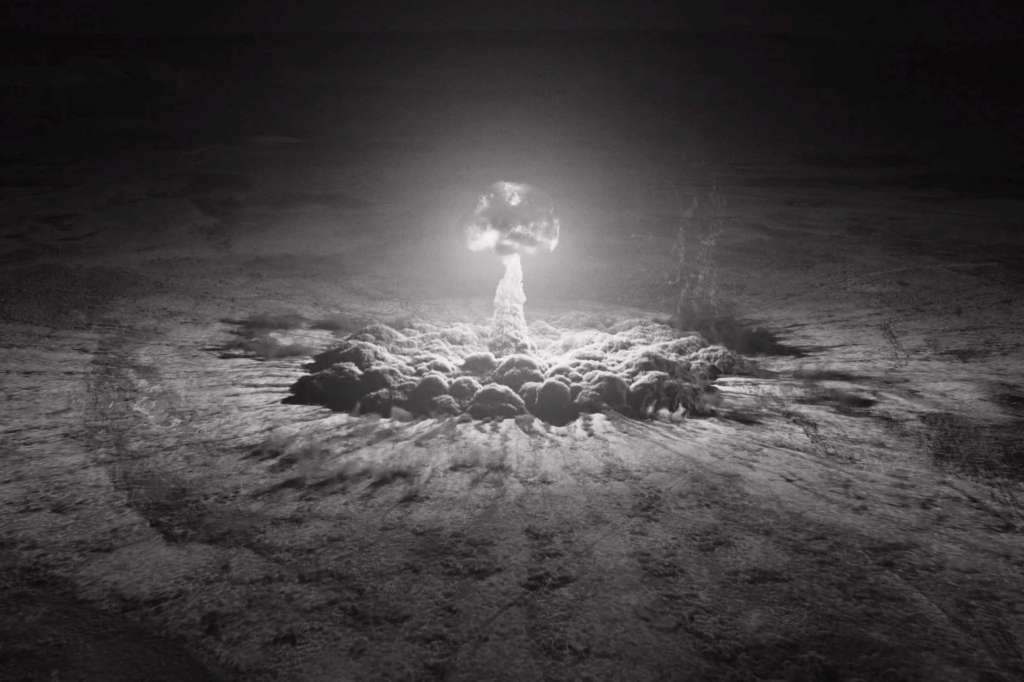

“When this kind of fire starts, it is very hard to put out. The tender boughs of innocence burn first, and the wind rises, and then all goodness is in jeopardy.”
–Catherine E. Coulson as the Log Lady, Twin Peaks: Fire Walk with Me (1992)–
If we had any doubt that 2025 would be a disturbing year, January has beaten that doubt into submission. The end of 2024, with the November election and a series of alleged, unexplained drone sightings in New Jersey, foreshadowed what was to come. (The fact that many of those “drones” weren’t drones at all only hints at what ticking emotional time bombs we humans have become.) Now here we are, not even three weeks into the year, and we’ve had an exploding Tesla in Las Vegas, a vehicular mass killing in New Orleans, massive wildfires in greater Los Angeles, and apparently the U.S. is on the verge of invading Canada and half a dozen other countries. And now David Lynch is gone, the one person imaginative enough to lead us through this surreal horror-scape of our own creation.
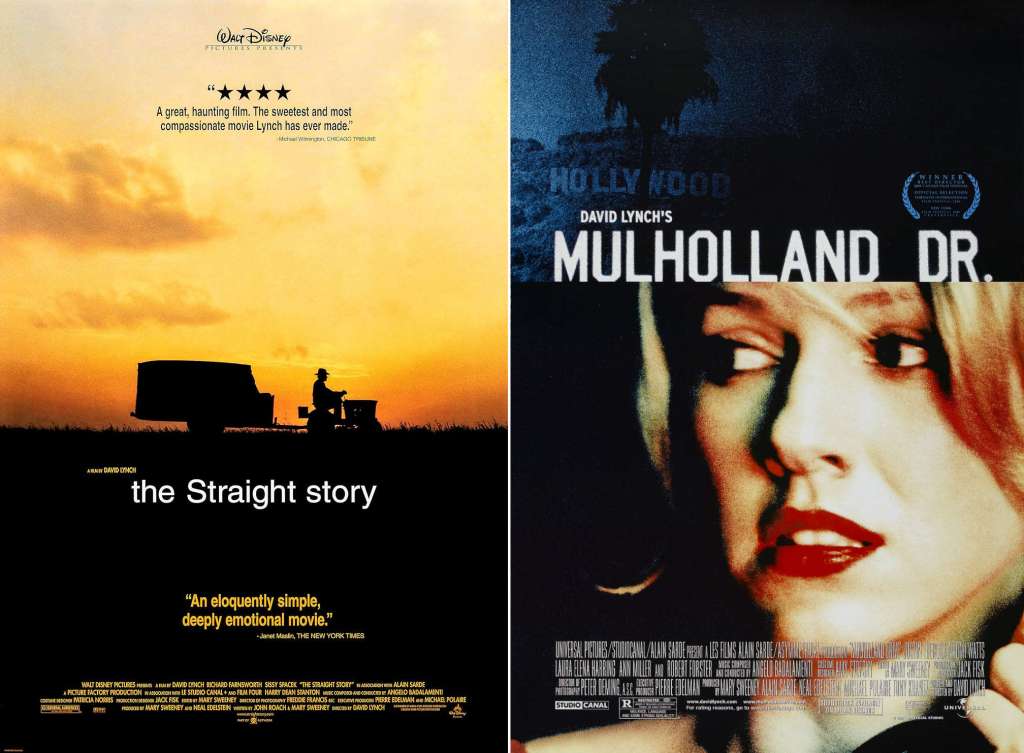
Lynch is often referred to as a film director, and if you haven’t seen The Straight Story (1999) or Mulholland Drive (2001), you’re missing out on two great cinematic experiences. (“It was a tribute to Lynch that the movie remained compulsively watchable while refusing to yield to interpretation,” Roger Ebert wrote of Mulholland Drive.) These two movies are wildly different in tone, and yet they perfectly capture David Lynch’s extraordinary world view. There are dark forces at work in the world; sometimes we elude them, sometimes we don’t. I haven’t warmed up to Blue Velvet (1986) yet, but I’m working on it. (Legend has it that Blue Velvet only came about because Dune (1984) flopped, freeing Lynch from directing a Dune sequel.) Lynch’s decision to generally avoid interpretations, leaving that experience to individual viewers, only made the films, and their director, more fascinating.

“If we tell you the truth, we don’t have to get our stories straight.”
–Dana Ashbrook as Bobby Briggs, Twin Peaks, Season 1–
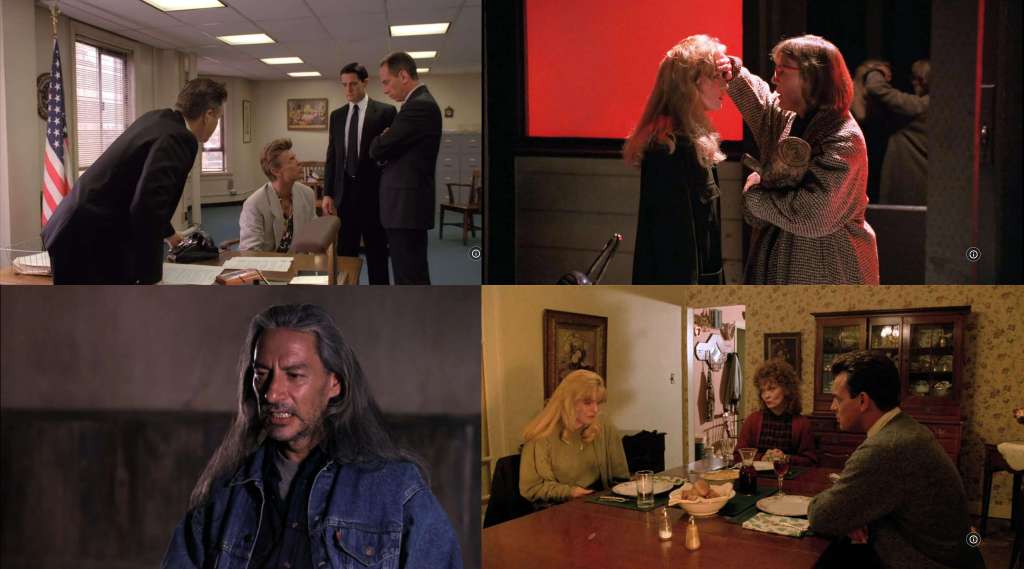
Of course, it’s his television work with Twin Peaks for which Lynch will be most remembered. I’m hardly the first to comment on what a revelation Twin Peaks‘ first season was in 1990. The show may appear quaint and eccentric today, but compared to the era’s programming – Beverly Hills 90210, Cheers, Doogie Howser, and Murder, She Wrote – Twin Peaks was a bonkers stretcher of boundaries. The psychedelic-murder-mystery-soap-opera, set in motion by the murder of small-town high school golden child Laura Palmer (Sheryl Lee), somehow merged into one production the melodrama of One Life to Live with the pure evil of modern-day Republicans, all touched by the compassionate heart of Sesame Street. FBI Special Agent Dale Cooper (Kyle MacLachlan) arrived to investigate, both a protagonist and a guide to the town of Twin Peaks, as Lynch used the visual arts to guide us through his own freewheeling dreams and nightmares. At the time, probably only Married…with Children and The Simpsons were even in the ballpark of pushing against prime-time TV’s limitations the way Twin Peaks did, but they didn’t have Sherilyn Fenn or Ray Wise. (To its credit, The Simpsons did have plenty of doughnuts.) With only eight episodes in an abbreviated first season, Twin Peaks created a richer, more compelling world than most shows do after years on the air. Streaming and binge-watching didn’t exist yet; I haven’t forgotten the weekly thrill of finding out what came next. And even though the series drifted during its second season, good luck sleeping comfortably at night after watching the series finale.
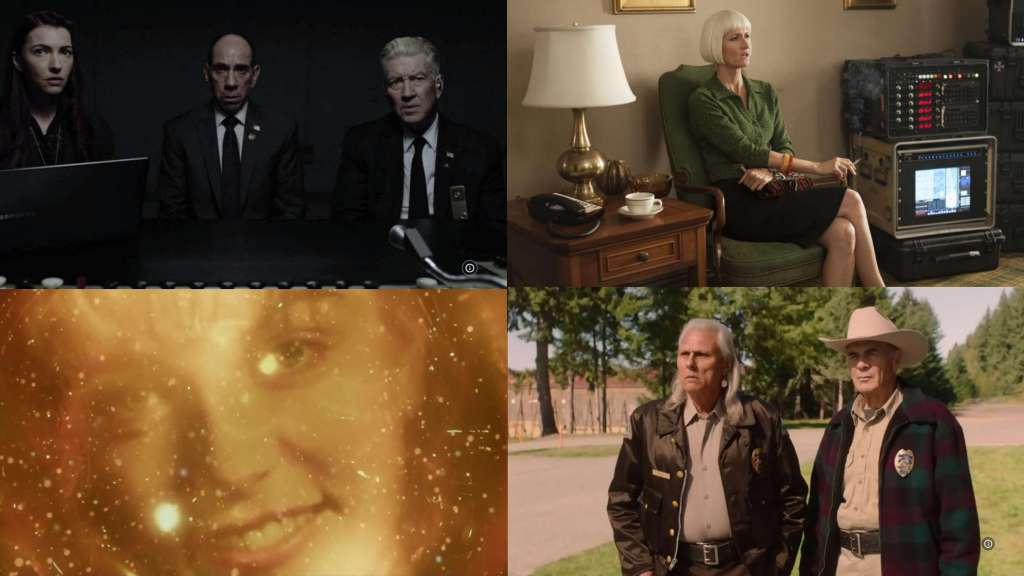
Except it wasn’t the series finale, and that became part of the beauty. The theatrical Twin Peaks: Fire Walk with Me (1992), added background to the network series and gave Laura Palmer an opportunity to speak for herself. I found Fire Walk with Me unsatisfying on first viewing; I felt that Lynch had become too self-indulgent in taking the franchise from TV to the big screen. (Clearly, “franchise” doesn’t have the same meaning with Twin Peaks as it does with a Marvel or DC production.) The problem wasn’t Fire Walk with Me, the problem was my own lack of patience. Because Lynch (along with co-creator Mark Frost, who rarely gets the Twin Peaks recognition he deserves), expanded the possibilities of television again with Showtime’s The Return in 2017, widely described as Twin Peaks Season 3. The Return was even more bonkers than the original. A stellar achievement on its own, The Return also brilliantly synthesized Fire Walk with Me and the original series, giving the prequel a meaning it could never have had otherwise. But the end was even more haunting than Season 2: believing he has saved Laura Palmer via inexplicable space-time maneuvers, Dale Cooper returns the Laura look-alike to her family home. “What year is this?” Cooper asks, just before Laura screams, the house goes dark, and we finally understand that Laura Palmer will always be in danger, the focal point of a tug-of-war between good and evil.
We can never change the past, but if we’re wise, we can give meaning to it.
“The battle is perennial. Victory is never assured.”
–Inaugural Address of President Joseph R. Biden, Jr, 20 January 2021–
After learning of Lynch’s death, I keep thinking about the parallels between the end of The Return and the end of the Biden presidency, with the pending administration. Like Hillary Clinton before him and Kamala Harris after, Joe Biden was the Agent Cooper we weren’t smart enough to know we needed. Guiding us through the peak of the Covid-19 pandemic, expanding overtime pay to four million workers, protecting pensions for two million union laborers, expanding the Child Tax Credit, capping Medicare prescription drug prices, a surcharge on corporate stock buybacks, expanded funding for IRS auditing of high-income tax cheats, support for Ukraine, and a long list of other achievements were insufficient to penetrate the addled minds of American voters. If we collectively make the boneheaded decision to reject that resume, we can only blame ourselves for how terrifying the next few years will be.
“There’s a sort of evil out there. Something very, very strange in these old woods. Call it what you want. A darkness, a presence. It takes many forms but… its been out there for as long as anyone can remember and we’ve always been here to fight it.”
–Michael Ontkean as Sheriff Harry S. Truman, Twin Peaks Season 1–
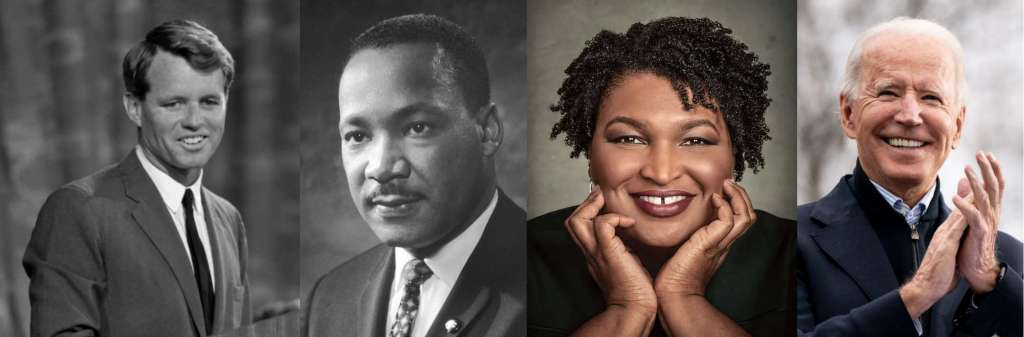
Freedom, like Laura Palmer, is always in danger. As the town of Twin Peaks depended on courageous individuals like Sheriff Truman, Hawk, Deputy Andy, or Agent Cooper, we Americans have relied on the occasional hero to pull us from the deluge: Robert F. Kennedy (senior, not junior, that’s a crucial distinction), Martin Luther King Jr., Stacey Abrams, and others have done their best to save us, despite our determination to surrender to the forces of darkness. (There are numerous local Cooper/Truman/Hawk/Andy parallels, but they’re harder to find because they don’t generate headlines the way bloodbaths do.)

Many of us had some hope that Lynch/Frost would revisit Twin Peaks one more time. Lynch himself had talked of a tale regarding Carrie Page, the Laura Palmer look-alike who Cooper tries to save at the end of The Return. Now, another return seems unimaginable. Worse, Lynch himself, who seems to have been a genuinely nice guy, is also gone, and if there was ever a moment when we needed insight into living through Lynchian times, this is it. Because we’re quickly losing whatever slim opportunities might remain to save ourselves. By embracing capitalism, with the insatiable greed, climate destruction, and lopsided power dynamics that capitalism demands, we have created questions that have no answers. As President Biden reminded us, “Victory is never assured.”
“Stories hold conflict and contrast, highs and lows, life and death, and the human struggle and all kinds of things.”
–David Lynch–
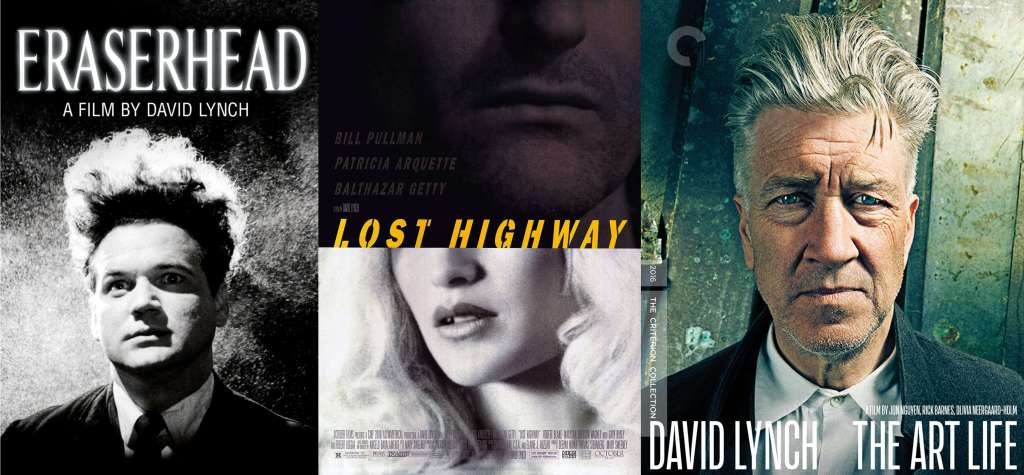
Revisiting Lynch’s work – including his paintings and music, projects rarely discussed on film sites – seems like a good start. If, like me, you doubt the stability of your fellow citizens, try watching the 2009 Interview Project, because they wouldn’t be Lynchian times without a dose of empathy: the project is described at the MIT Docubase site, and the actual interviews can be viewed on YouTube. If you move quickly, the 2016 documentary David Lynch: The Art Life is streaming free on the Criterion Channel for the rest of January. At the time I write this, Eraserhead (1977), Lost Highway (1997), and the documentary Lynch/Oz (2022) are available on the free streaming service Kanopy. If we watch, listen, and ponder, there may be no clear answers, but David Lynch might be just the person to help us ask better questions.


 The Creative Life Adventure
Leave a reply to docbravard Cancel reply