If you enjoy this essay, please share it on your favorite social media platform so others can discover my work.

Sadly, I can’t remember the first time I read Anton Myrer‘s 1978 novel The Last Convertible. I know it was sometime in the 1990s, because I do remember where I bought my aging mass market paperback copy: at BookBuyers, which opened on Castro Street in downtown Mountain View, California, in 1994. BookBuyers was a huge used book store with a dazzling selection of fiction and non-fiction. They also had a decent stock of used CDs. BookBuyers was a paradise for book lovers and I was a regular there until I left the South Bay in the late 1990s. And during those years I read The Last Convertible, an impulse purchase, at least two, maybe three times, because I enjoyed it so much. (The book was the basis for a 1979 TV adaptation; from everything I’ve read, it was a disappointment.)
Long before Band of Brothers or The Greatest Generation, Anton Myrer’s The Last Convertible told the story of the pre-Boomer World War II generation. The book is narrated by George Virdon, a scholarship student at Harvard, and describes the lives of George and his friends and their various love interests. The bulk of the action takes place from the late 1930s to the late 1940s, but later sections of the book follow the characters through the Vietnam years. The novel has a soap opera quality to it and doesn’t reflect my typical reading, but I’m moved by the story’s romantic view of life – not “romantic” in the conventional sense (though there is plenty of that), but in the classical sense of imagination, introspection, freedom of spirit, and the vast potential of life.

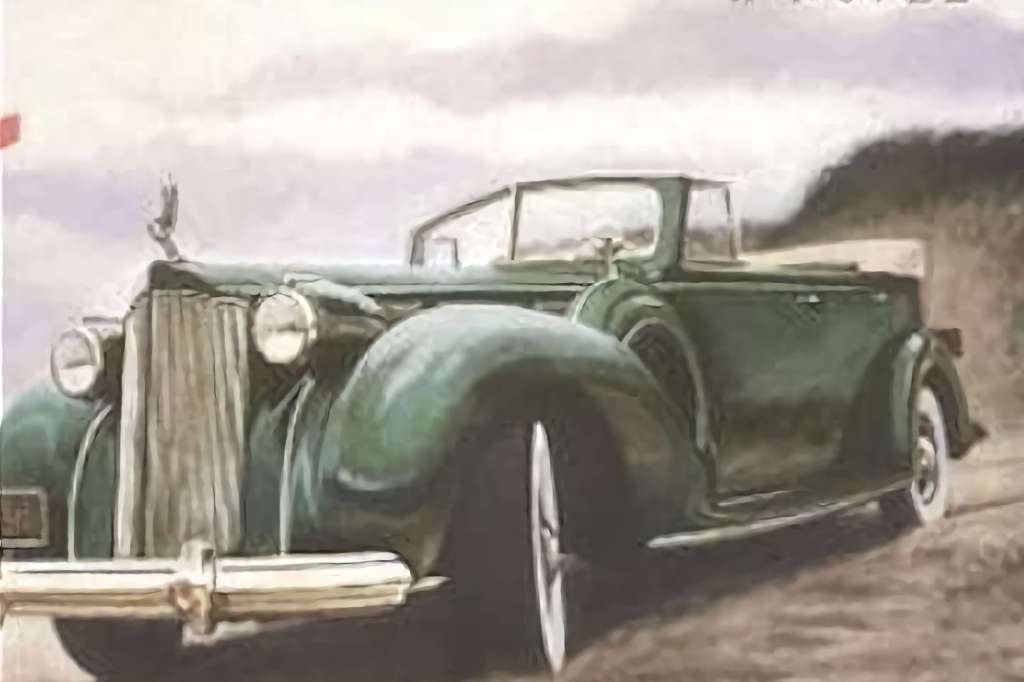
A symbol of the group’s friendship and nostalgia is the car of the title, a 1938 Packard Super Eight convertible. The car, nicknamed The Empress in the novel, is the setting for numerous significant story moments while changing ownership several times throughout the book. The Empress initially represents the group’s limitless potential, at a time when driving and car ownership did offer a type of personal freedom, before we created a car dependent culture with cluttered roadways and the inevitable economic consequences. Later, the convertible bears the weight of nostalgia, a bulky antique in a modern world.
Because the story follows its characters over a period of decades, one of the themes of The Last Convertible is how individuals, and our perspectives, change with the passage of time. This gave my recent reading a meta quality, considering how long this book has been on my shelf. For years, I considered re-reading this novel, but there were so many new books to read, and then there’s the time-consuming portion of life that, sadly, doesn’t involve reading books. The more time passed, the older I grew, the more reluctant I became to return to The Last Convertible. What if the book wasn’t as good as I remembered it? What if the passage of time stole the magic from this story that I remembered so fondly? So I procrastinated. For years.

Time can do that. The world changes and so does our experience of it. BookBuyers finally got priced out of the expensive Mountain View market; they tried an alternate location in Gilroy, California, where they hung on until 2022, before closing for good. Change is life, life is change. So I was thrilled to find that reading The Last Convertible is still a moving experience. Of course, I experience the book differently today than I did thirty years ago – now I better understand the allure and complexity of the characters’ nostalgia – but the book’s inherent joy and poignancy remain. Some experiences maintain a degree of purity no matter how much the world changes: I’ve seen many sunrises in many locations, and they were all different, but they were all beautiful. Maybe the moral is to accept the inevitability of change while never abandoning the fundamentals – even as we leave behind some things from yesterday, the good memories will always remain.


 The Creative Life Adventure
Leave a reply to Deb Davis Cancel reply