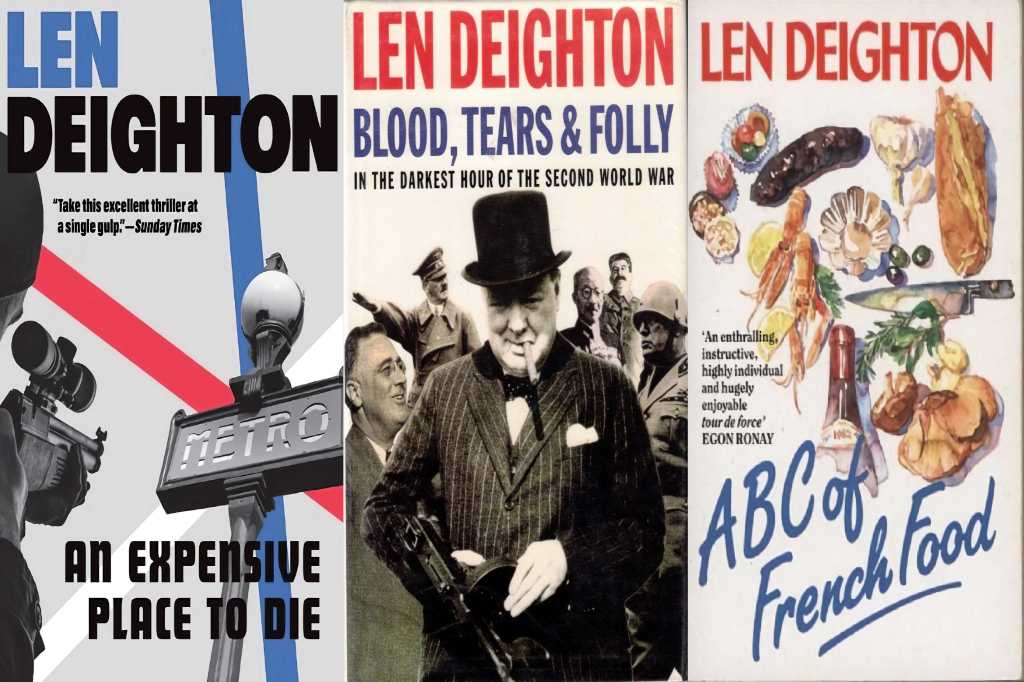
“The best thing about writing books is being at a party and telling some pretty girl you write books, the worst thing is sitting at a typewriter and actually writing the book.”
Len Deighton
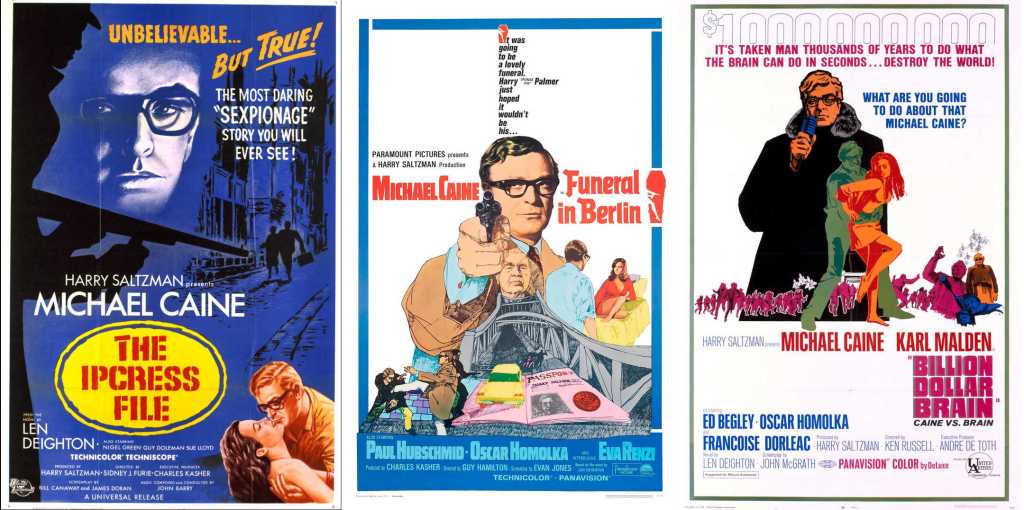
Len Deighton passed away this month at the wise old age of 97. Despite having only recently read a Deighton novel for the first time, I’ve been a tangential fan for a number of years. I came to Deighton’s work via the 1960s trilogy of films – The Ipcress File, Funeral in Berlin, and Billion Dollar Brain – featuring Michael Caine as Deighton’s best-known creation, international bloke of mystery Harry Palmer*. The films were, not coincidentally, produced by Harry Saltzman, famed co-producer with Cubby Broccoli of the early Bond movies; Palmer’s personality on page and screen had more in common with quick-witted cinematic Bond than with the grim literary Bond of Ian Fleming‘s creation. Deighton, in fact, was the original screenwriter for From Russia with Love (1963) before being replaced by Richard Maibaum and Johanna Harwood.
(*Purists, be patient. I understand that Deighton’s spy is not actually named in the novels. “Harry Palmer” is a name invented for the movies. In fact, Deighton himself indicated that the narrator-protagonist of later “Harry Palmer” books might not even be the same character as that in The IPCRESS File. Espionage is, after all, a confusing business. For simplicity’s sake, I’ll refer to the novel character as Harry Palmer.)
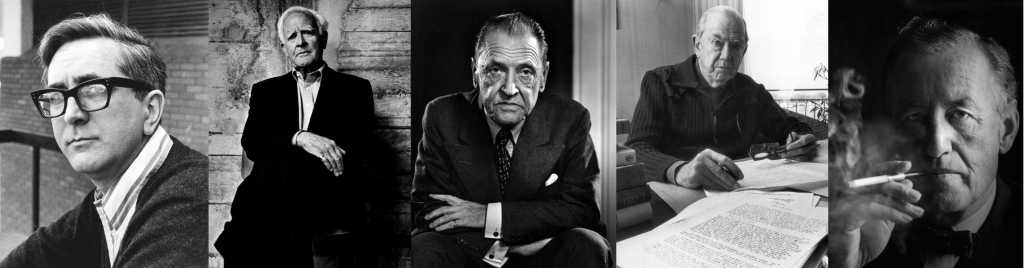
Deighton is often placed in the elite club of British writers who specialized or dabbled in spy novels, along with Ian Fleming, John le Carre, W. Somerset Maugham, and Graham Greene. Yet Deighton was a different man than those white collar writers and his master spy reflected that difference. Fleming, Maugham, and Greene were all born into the starched-collar world of the finer classes: Maugham’s father was a successful, Paris-based solicitor; Fleming’s father was a Member of Parliament and friend of Winston Churchill.* On the other hand, Len Deighton’s mother and father were a cook and a chauffeur. And is it just a cosmic coincidence that Deighton’s childhood home was near London’s Baker Street, where Sherlock Holmes resided?
(*As for John le Carre, his father seems to have been an itinerant swindler who was frequently on the run or in prison.)
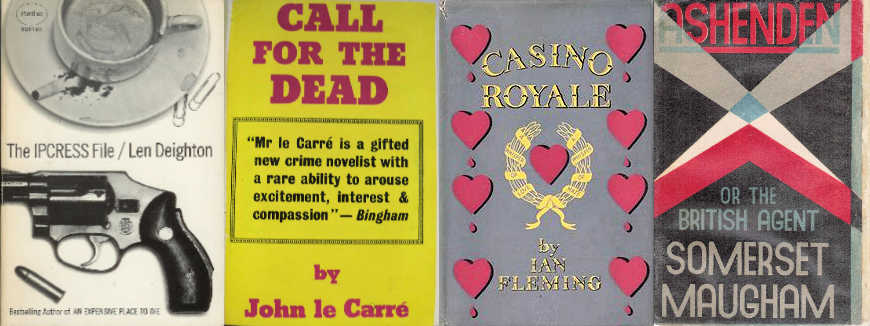
Regardless, this working-class background rubbed off on Harry Palmer, who is neither as cerebral as le Carre’s George Smiley or as fussy and angst-ridden as Fleming’s 007. I imagine this derives not only from Deighton’s background but the time in which he began writing. The first Bond novel, Casino Royale, was published in 1953; Greene’s first novel, The Man Within (not a spy novel but still a tale of international intrigue), came out in 1929; Maugham’s collected stories of writer-turned-counter-intelligence-agent Ashenden: Or the British Agent was published in 1927. Only le Carre was a publishing contemporary, releasing his first novel, Call for the Dead, in 1961, one year ahead of The IPCRESS File (which was largely written in 1960); Call for the Dead’s George Smiley, of course, was older and wearier than Harry Palmer, though both were insightful observers of class and the Imperialist flailings of post-war Britain. And timing is everything: The IPCRESS File’s year of release coincided with Dr. No, the first Bond movie. Cold war calamities only added to the public’s interest: the Berlin Wall was constructed in 1961 and the Cuban Missile Crisis followed in 1962.*
(*It was in the air. Other tales of global disorder published in 1962 included Ian Fleming’s The Spy Who Loved Me, Katherine Anne Porter’s Ship of Fools, Alistair MacLean’s The Satan Bug, and Philip K. Dick’s The Man in the High Castle.)
Fleming’s Bond novels are the British sleuth stories I’m most familiar with, so that’s the easiest point of comparison with my initial impressions of Deighton’s debut novel, The IPCRESS File. The two characters and their respective worlds could scarcely be more different; as noted earlier, Palmer’s attitude seems more in keeping with Bond of the movies rather than the novels. Bond’s Secret Service is globally known, whereas WOOC(P), which initially recruits Palmer in The IPCRESS File, is so obscure that its officers “ceased to be in the Army for all practical purposes and they were removed from almost all War Office records.” Palmer worries about back-pay and per diem expense reports; Bond seems to have an endless supply of cash for sumptuous meals and world-class hotels. Bond is supplied with trick briefcases from Q Branch, while Palmer endures the identity-changing bureaucracy of “Changing Papers.” Palmer smokes Gauloises of French loyalists, whereas Bond prefers his custom tobacco blend from Morland of Grosvenor Street. While Bond might spend several chapters, or more, arranging an encounter with his target, Palmer, in The IPCRESS File, brazenly confronts corrupt agent Jay with an offer of 18,000£ early in the book, making off for lunch at a strip club, a far cry from Blades or other such swanky hangouts favored by 007.
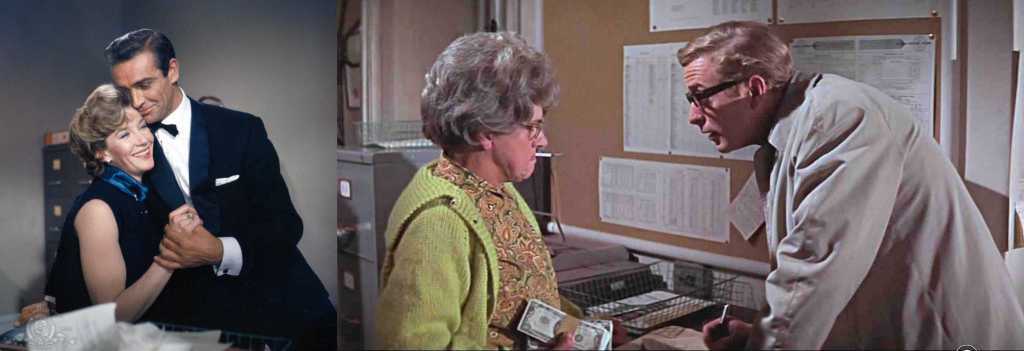
While Palmer’s observational skills are more aligned with George Smiley’s, his witty repartee is uniquely his own, a tone captured accurately in the film, despite several plot changes for the screen adaptation. Deighton credited the “barbed compliments and jocular abuse” of ad agency colleagues as inspiration for dialogue in The IPCRESS File. The first person narrative, in Palmer’s voice, is described most accurately by The Guardian: Palmer “seemed to be at one with the zeitgeist of London as the sixties began to swing.” In other words, someone like a young Michael Caine, who was only four years younger than Deighton and couldn’t have been more perfectly cast. Having watched the movie first, it’s hard not to hear Caine’s voice while reading the novel. And the text is so thoroughly immersed in a specific time and place that, at times, I’m not entirely sure what he’s saying. Yet I still find the tale compelling, and I’m intrigued by the book’s distinctiveness from previous entries in the spy thriller genre. Recurring daily horoscope entries obliquely foreshadow pending events; there are footnotes and appendices to document Deighton’s research. The book was widely popular on release, as it remains today. Ian Fleming himself listed The IPCRESS File as a book of the year in his writing for London’s Sunday Times.
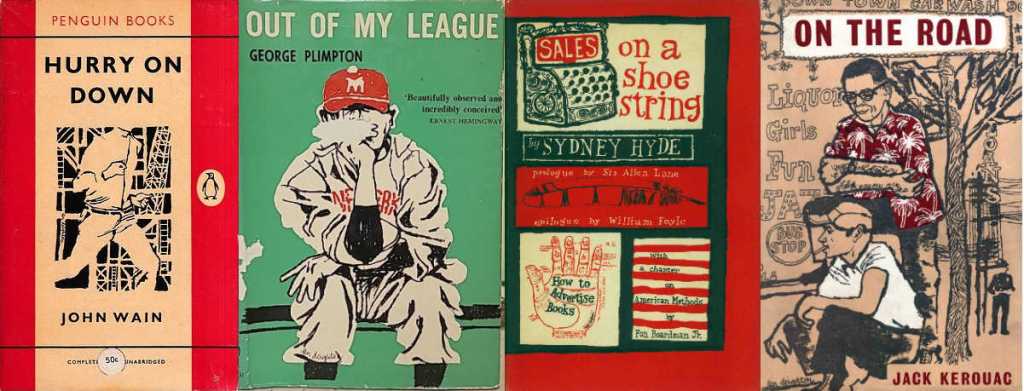
Deighton claimed to have written The IPCRESS File somewhat as a lark, already doing well as a commercial artist and graphic designer at the time, having obtained RAF training in photography and studied at the Royal College of Art. Deighton designed an impressive catalog of book covers, and the designs still look impressive today. A lover of cooking, Deighton created cookstrips, recipes simplified to a comic strip format, first for his own use, and then for publication before The IPCRESS File even hit bookstores. The format was popular in the 1960s and, like Harry Palmer, has stood the test of time*; in his later years, Deighton created a new series of cookstrips in partnership with his son Alex.
(*We’re still wild about Harry: A six-episode TV adaptation of The IPCRESS File aired on ITV in 2022; it seemed to receive generally favorable reviews while failing to live up to the 1965 movie.)

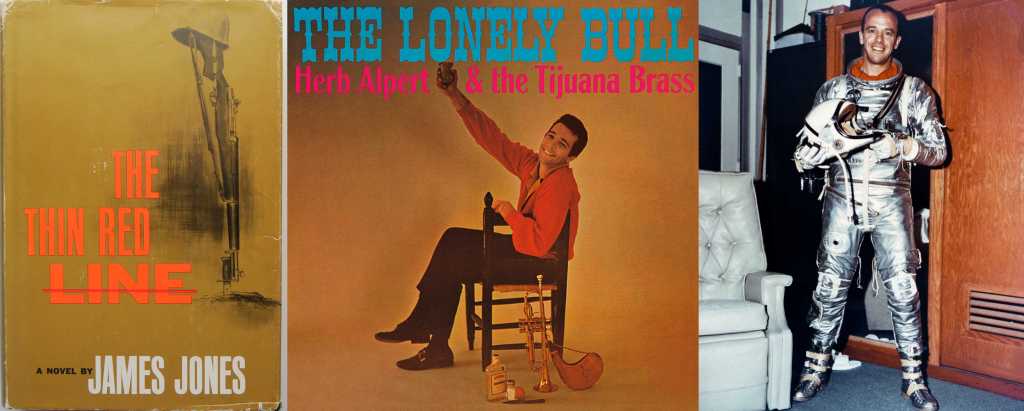
The cookstrips and the spy novels perfectly captured the early Sixties vibe, when dude-bros aspired to at least some level of sophistication, reading James Jones stories in Playboy (The Thin Red Line was excerpted in the August 1962 issue), listening to Herb Alpert & the Tijuana Brass on high-end hi-fi (their first album, The Lonely Bull, was released in ‘62), anticipating a disease-free future (Francis Crick, James Watson, and Maurice Wilkins received a 1962 Nobel Prize for their work in defining the structure of DNA*), and planning interstellar journeys (Yuri Gagarin was the first human in space in April 1961 and Alan Shepard followed in May). Through the eyes of nostalgia, it seems like a fairly glamorous era, one that Len Deighton helped shape. Maybe that’s the voice that Palmer/Deighton speaks with in The IPCRESS File: a generation whose childhood was disrupted by World War II, were relieved by 1960 to have the worst of the post-war hardships behind them, but were seasoned enough by the war experience to not give too much credibility to the Establishment, be it political or commercial. No wonder Sixties London was swinging.
(*There’s a compelling argument that Rosalind Franklin deserved a lot of the credit for DNA research, but, well, ahem, mumble mumble old white men mumble mumble boys will be boys mumble mumble…)
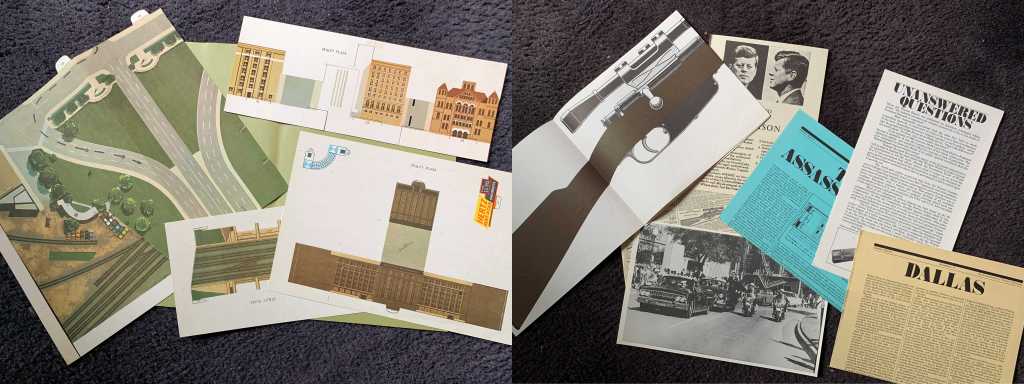
Of course, The IPCRESS File was only the beginning, and Deighton’s writing career extended for decades beyond the 1960s. Continuing to display adaptability, he authored not only novels but a series of nonfiction books, primarily relating to World War II military history, along with a few cookbooks. He was also a travel correspondent for Playboy magazine in the 1960s. And good luck figuring out where The Assassination of President Kennedy, for which Deighton co-wrote the text, fits into anyone’s bibliography. But the author claimed to enjoy research more than writing. Deighton’s creative career is a prime example of the virtues of a planned or accidental Plan B.
Len Deighton’s background in visual arts, his wide-ranging interests, his willingness to apply what he knew (his working class upbringing, for example) to his writing, and his passion for research, all contributed to his multi-disciplinary career, from commercial artist to food writer to novelist to military historian. Being an “obsessional” reader helped; in an Afterword to a 2009 reissue of The IPCRESS File, Deighton wrote, “…I read every book in sight. There was no system to my reading, nor even a pattern of selection. … I filled notebooks as I encountered ideas and opinions that were new to me…” He was also, clearly, a man of great patience; not that I’m anywhere near Deighton’s ballpark, but I know from experience that completing even one book is trying, much less a vast bibliography, and Deighton reportedly didn’t even enjoy writing. Pursuing one’s own interests is a good way to sustain motivation, but sometimes those interests have to be modified or redirected to give the audience what it wants. Whether or not you’re a fan of Len Deighton’s books, his approach to a creative life is a lesson for all of us.



 The Creative Life Adventure
Leave a comment