
“I’m sure I’d roll my eyes at the gentrification, but listen, honey, I’m old and I’ve seen a lot of sh–, and I’m telling you, let’s enjoy it while it lasts. Because this isn’t Mother May I. You’re not always advancing. I know it feels that way right now, but it’s fragile. You might look back in fifty years and say, ‘That was the last good time.’”
—The Great Believers, Rebecca Makkai–
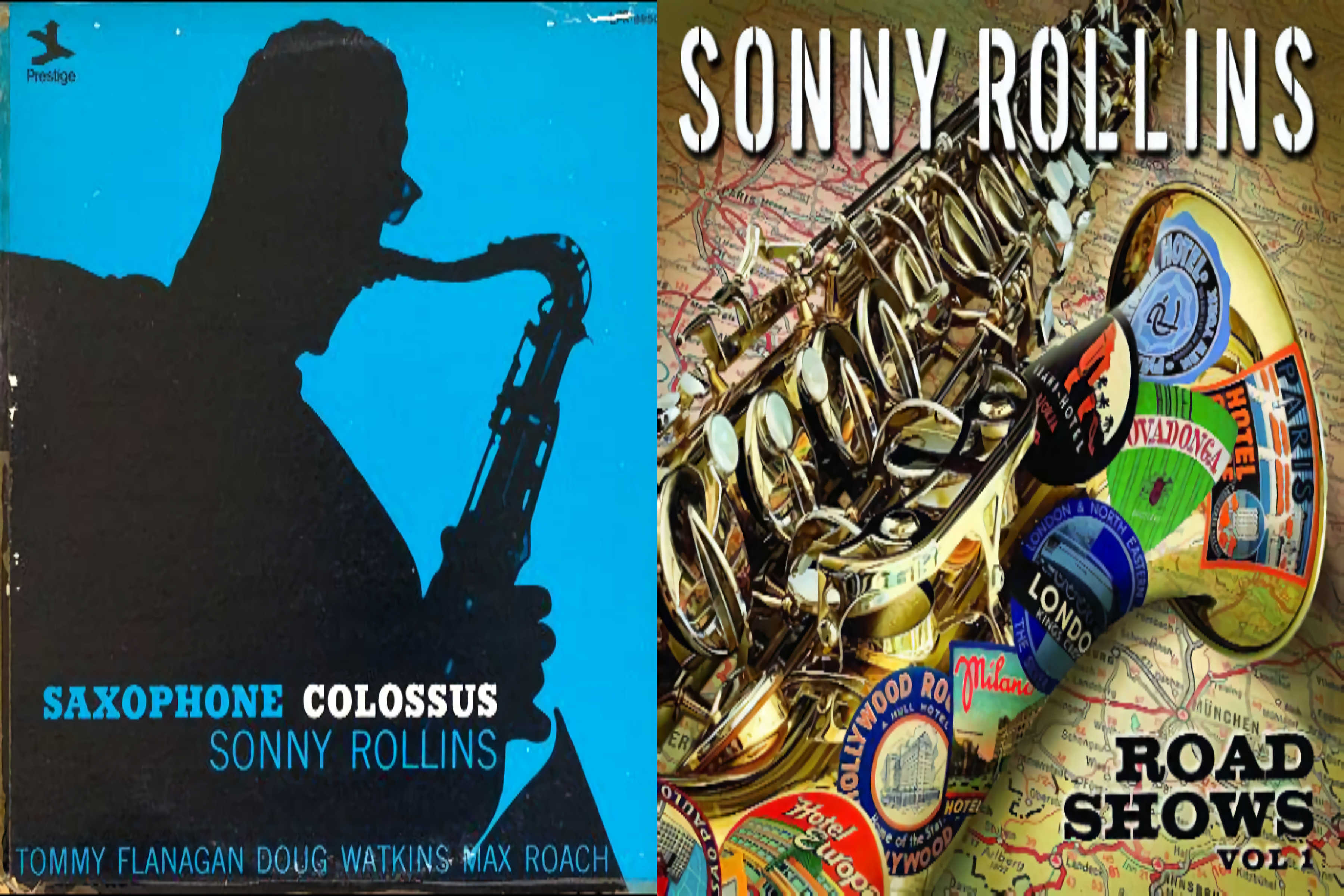
Sonny Rollins passed away on 25 May. He was 95 years old, which most people seem to accept as having lived a full life. Rollins may have lived a fuller life than most, but I’m inclined to believe some among us deserve immortality, and Rollins certainly qualifies. Considering the state of the music industry these days, it’s understandable if you haven’t heard of Sonny Rollins, but if you’re looking for inspiration, his life story makes for a page-turning read. It would be hard to invent a more compelling image than that of Rollins practicing on the Williamsburg Bridge during his 1959-1961 “sabbatical.” And if for some reason jazz is too “old-fashioned” for you – which might mean you deserve to be whacked over the head – just listen to his solos on three tracks of the Rolling Stones‘ Tattoo You album.
I only really began to appreciate Rollins’ talent and longevity after buying his relatively recent live Road Shows recordings, despite having owned a copy of Saxophone Colossus for many years prior. More importantly, I saw/heard Rollins perform live once, but I was far too clueless to understand what I was hearing. I’ve written in the past about living in the San Francisco Bay Area during the 1990s, when a good friend introduced me to jazz by going to a series of area concerts. One of those shows was a “super group” featuring Rollins and McCoy Tyner. Was the group a septet? An octet? It has been too long; I can’t even recall who the other musicians were. But they were all “names” in the jazz world, and as such each group member took a long solo during each song. My friend found this forced and lacking as an organic music experience. We left after the first set.
I, of course, understood nothing. Again, my memory is hazy. I definitely recall enjoying the music but the accumulation of long solos did drag a bit. But I had so much to learn. (I still have much to learn, but, as Billy Joel once sang, I’m getting closer.) Despite my impatience for nostalgia, as I get older I feel its pull more strongly every year. Ted Gioia’s remembrance of Rollins says it a lot more eloquently than I can, but it’s hard not to feel as though, in some ways, humanity’s best days are behind us, and equally hard to imagine that jazz as an art form will ever be as burning up with experimentation and passion as it once was. Maybe, musically, we really are past the last good time. So I may only be a bit wiser compared to 30+ years ago, but if I had known then what I know now, I would have stayed for every note of that mega-solo performance. I would have pressed it firmly in my memory and I would have sought out all of the artists’ recordings.
If only.
The death of one individual may not mark anything as momentous as a turning point, but we mortals can draw lessons from the likes of Sonny Rollins: None of us should trust that we have 95 years; Pay attention, because you never know when something might be important later; And if you’re in need of it, find your own Williamsburg Bridge, and visit it as often as it takes until you’re ready to tell your story.

Leave a Reply